Software
Houzz Logo Print
dviolet1

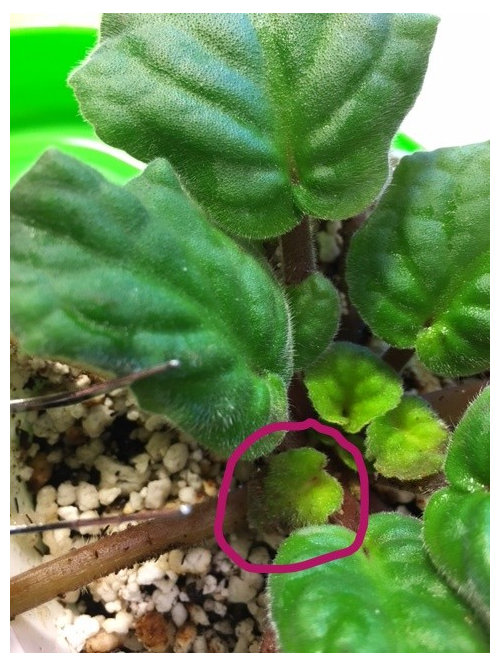
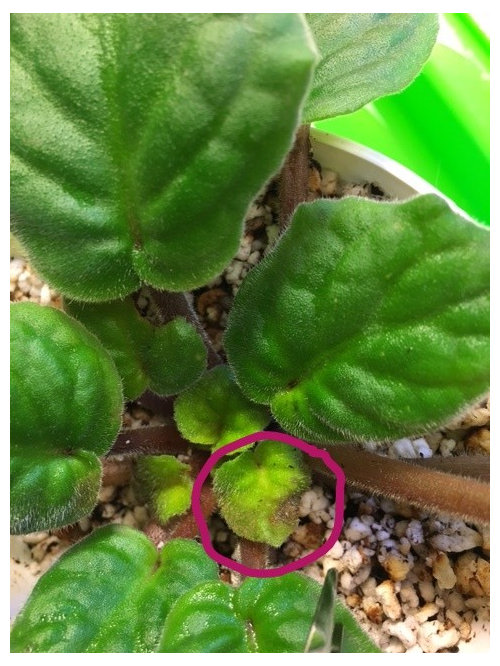
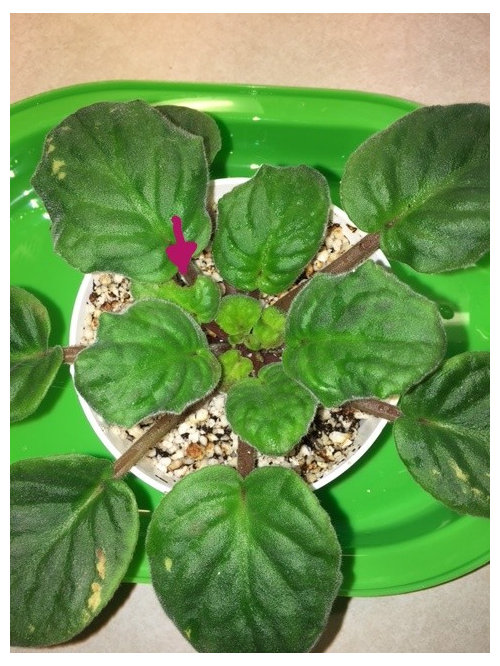
Brown inner leaves, bite out leaf where growing against a stem

8 years ago
Thanks everyone for being so patient when I bounce issues around here and there. I hope I will learn enough from you and get to the point where caring for violet problems will become second nature to me.

I'm having issues with one of my plants and though I don't think it was fertilizer burn, I went ahead and washed the leaves and leached the soil with a gentle shower of warm water. But I doubt it will help but I figured it couldn't hurt. This is a wicked plant and the soil doesn't feel overly wet.

The issues: 1) Looks like a 'bite' is burned out of a leaf where it was near a leaf stalk as it grew; 2) A couple more of the young inner crown leaves are browning.

Here are some pics. (Yellow spots on leaves is an old issue we discussed and is not related to the issue at hand, I think.)

Comments (28)

  • 8 years ago

    Sooo...I see a plant-popping day is in my future -- this pretty much is how all my re-potted plants look. Seems I have been burying them too deep.

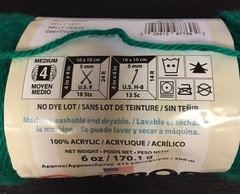
    As far as wet soil goes, it's a problem sometimes. I've tried to keep the mix light with at least 50% perlite. And I've been using a 4-ply acrylic yarn to wick. Maybe my yarn is too heavy. Haven't heard anyone else have to do this but I've considered re-wicking with only 3 strands of yarn. Though I wonder if that would serve to keep the soil moist enough. Willing to rework any variable to get this watering down pat.

    Sheesh. Thinking this hard on this Labor Day night is a little too much like work...

  • 8 years ago

    Correct me if I am wrong but from what I have read you dont want to use cotton for wicking something synthetic instead. The cotton can rot or get just yucky! Dont know if that would contribute but... I havent got brave enough to wick mine yet.

  • 8 years ago
    last modified: 8 years ago

    Alarm bells were going off.. Someone mention yarn?


    Un twist it.. Youll get 4 strands to work with. I use 4ply acrylic. My smaller cups are on one strand. The big ones on 2. But I did have them starting out with small -2 large- full 4ply.. It was too much. I've also noticing I need to up the perlite especially for the small. Youll figure out what ratio works best for you as you keep going

  • 8 years ago

    I currently use masons twine but intend to move to acrylic yarn once I have used it all up. The masons twine has worked great for me. It is what I started with when I began wicking.

    Since it works so darn good, I have decided to change to something new, unknown and probably problematic. Can't have everything perfect you know!

    I intend to get three different weights, three different colors, i.e., three different thicknesses of yarn. Then at a glance, I will be able to tell what size wick I have in a plant. If when I check it, it appears to be too dry, Ill replace the wick w the next size up, or backwards if its too wet. I may have to bump it to four sizes (add an extra thin) since I now have some really small minis on wicks.

    This has become necessary since I now have so many different size pots and plants to feed. I got tired of unraveling string, wondering of two strands is enough or should I go w three strands? Hopefully my new plan will alleviate some of that.

    We'll see. At any rate, I have backed off on both peat and vermiculite on my potting mix. Instead of equal amounts of the three, I now have a bit more perlite than the other two. Seemed like my mix was holding water a little to well for my liking.

  • 8 years ago

    Jeff, for wicking I eliminate the vermiculite entirely. It's purpose is to hold water and you don't want that. Without it, the half and half mix of perlite and peat works fine for me. I also use mason's string for all my wicks, regardless of pot size. Works very well and I'm not messing with success by switching to yarn. You're a brave soul. ;-)

    Anne

  • 8 years ago

    Good to know Anne. Up to this point, I have been using mostly one complete strand of masons string, mostly regardless of pot size. It has not been a problem for me either.

    I just can't stand ignoring the potential within my plants. I truly believe that if I can dial in my plants food and water intake a little better, my plants will show their appreciation.

    I have pulled too many plants that showed signs of being a little too dry and some that are a little too wet while the whole time, blooming and chugging right along. When I see that in the future, Im going to make a wick change. I may kill a few but I doubt it!

    Now that I am aware of it, I can't not do it!

  • 8 years ago

    Everybody's setup is a little bit different. I use mason twine #18 and I use more than one wick if the pot is large. But all my pots are sitting on the mat - so the combination of a mat and twine works well for me. People who use reservoirs - need to use yarn - the twine is not pulling enough and it dries if the wick is not touching the water or wet surface close enough to the pot.

    When I repot - I try not to compress soil leave on a loose side. If you lift the pot and it feels heavy - it is probably overwatered. You want the soil to be humid but not wet. With time the soil inevitably compresses and what was just right can become too dense and too wet. Usually if the plant is right for the pot or too large for the pot and the roots fill the pot - plant utilizes the water better. If the plant is overpotted - then too much water becomes critical. You need to watch your plants - and if they are not thriving as they were before may be it is a time to repot. Increased acidity of the soil is also detrimental.

    It is very rarely if you hit the sweet spot and even then it is not going to last for more than 6 months. I understand Jeff's desire to do it just right - but for me it looks more like a constant monitoring and steering when necessary.

    That's life, not a choice of the right nut for the right bolt.

    Keep tweaking!

  • 8 years ago

    I'm with Anne, if it's not broke don't tweak it! Mine are definitely broken. So onward I go with the tweaking! I read on GW that some people use 3-ply baby yarn which is thinner than what I'm using. Going to give that a try on my 4" plants that seem to overly wet all the time. My 2" pots are also too wet so for now I take them off wick to dry out every now and then, a PITA I shouldn't have to deal with with wicked plants. They'll also be rewicked with lighter or fewer than their 2-ply strands of yarn they're on now.

    While I work to fix this soggy mess of mine, I'm not liking the fact that the plants are getting damaged in the meantime. Not really a problem on my common Optimaras, but I'm bothered that my named, more expensive minis and semis have been getting ruined during the learning process. :-( I'm up for a good garden challenge just like any of you are, though certain types of plants are best left for the experienced, and in particular I mean the minis and semis.

  • 8 years ago

    I like that phrase: "constant monitoring and steering." I think that is a great reminder from Irina that nothing stays the same with our violets and we can't afford to become complacent. No change of wick size or material compensates for the need of fresh potting mix or a change of size in the pot. So while my string does well for me - NOW - I do keep an eye on the weight of the plants and the overall health of the plants. It may not be "broke" today, that doesn't preclude needing to fix something tomorrow. This growing AV's is a great hobby - certainly never boring. ;-)

  • 8 years ago

    Here here!!!!! Just when I think I have it down,,,,,well,,,,just stay vigilant!!! Rosie

  • 8 years ago

    Im just the right nut for this bolt. Good to know about the preference for yarn over masons string for wicking.

  • 8 years ago

    That was my problem with wicking, not watching it close enough. Well, that's not the whole problem come to think of it. I need to become a better judge of just what constitutes wet versus moist conditions. Anyone know of a water/moisture meter that could be helpful with that? The 3-in-1 meter I bought is a #$#%^*% piece of junk.

    Yesterday I got 2 soggy violets rewicked with 3-ply baby yarn. I'm going to experiment with this setup for a bit.

  • 8 years ago

    For me, wicking is a great mystery. I prefer yarn, mainly two strands per pot but sometimes only one on smaller pots or three on a large pot. It seems to me that no matter how thin the wick or how much perlite I add, the plants stay too wet. At least thats what my finger test indicates. But heres the kicker: the plants all seem to be healthy, bloom and grow with no rotting problems. When I examine the roots, they are white and often they are all over the wick and growing into the bottom of the reservoir. I don't get it but who am I to argue with success!

  • 8 years ago

    Terri, when you say 1 strand, do you mean one piece of yarn, or an untwisted piece of yarn with one of several strands? I'm getting ready to wick some streps and want to make sure. Most of the ones I've gotten from private sellers have a piece of yarn-not "un-stranded." They seemed fine but as I was only using mats at that point the yarn came out.

    Thanks!

    Judy

  • 8 years ago

    Judy, I buy 4 ply and then unravel that to use one or two of the strands. I do have a couple of large streps which I also wick. I generally use the whole 4 ply for them but when home, I allow them to dry out a bit. Smaller pots may get less strands. I actually prefer Oyama pots for streps but then I have to make special arrangements for their care if I'm gone for any length of time.

  • 8 years ago

    I don't know why, but yarn does not work for me. Have tried it. Don't know why. Rosie

  • 8 years ago

    Thanks Terri! I'll give it a try with strands for the little pots. There's a guy I found on Facebook that makes covers (for various sizes of pots) for the 1020 black tray bottoms. I ordered a couple to make it easier to contain the small pots. Works great and now it's easy to wick them. The mats worked well but the little pots always tipped on me and it got frustrating. Hopefully the wicking will work out to be far less work!

  • 8 years ago

    Got a pix of this Judyj? Sounds functional and interesting! Rosie

    PS, some of us don't have facebook.

  • 8 years ago

    I've seen these and I believe other growers really like them. As for me, I don't wick anything until the plants are ready for a 3" pot or larger. Thats because I only use individual reservoirs and there is no room on the stands for too many. Younger plants are all hand watered but are grown in the same wicking mix so they are ready when their time comes. I also don't grow minis but if I did, I expect my approach would have to be different.

  • 8 years ago
    last modified: 8 years ago

    Let's see if I can upload. He's got a patent pending on these.


    I can ask him if he'll join this forum. As far as I know he sells these through Facebook-and the shows of course. There are several different sizes-not the topper, the holes. He can send a template. This does not include the cups of course!

  • 8 years ago

    Unfortunately I have an under-watering habit. It works great with most of my orchids but not so well with the gesnariads. This should help me maintain those last fairly well.

  • 8 years ago

    So this top tray sits suspended on the rim of the 1020 tray, and there are holes to put little cups in and the little cups have a wicking hole in them. Then you plant into the cup and the wick now dangles into the reservoir below? Did I miss anything? Just trying to fully understand.

    Why would it work with orchids better than gesneriads? Should orchids be that damp constantly? I can see gesneriads liking it, but I am a little confused about orchids. What type of mix do you have your orchids in? This may open up a lot of possibilities for me!!!! Rosie

  • 8 years ago

    Maintain the gesnariads-not the orchids-sorry! And yes, the tray sits on the rim, and the cups go into the holes (your own cups, he doesn't supply them) with the wick through a hole in the bottom of the cup, down into the tray, which you put water into.

  • 8 years ago

    Comments - I have a couple, like the idea, but I do use them.

    1. You do not see how much water is left. You need to lift one plant and check / refill.

    2. Absolutely do not use a mason twine for wicks - it dries. Use yarn.

    3. The distance between the pots is fixed. So if your plants are getting too wide - you need to remove them.

    4. If you God forbid get root mealy bugs - you won't catch the infestation until everything is infested. They will swim from wick to wick. On the mats - you will see the buggers.

    Homemade alternative. A friend of mine in Tampa - I am praying for his safety now - came up with his own covers. You can buy a styrofoam in sheets - HD carries

    http://www.homedepot.com/p/Cellofoam-3-4-in-x-1-21-ft-x-4-ft-R-3-Polystyrene-Insulating-Sheathing-6-Pack-150705/205517302

    cut them to size, it is pretty rigid - and make holes. The drill bits for making wide holes will probably work for Solo cups - but I found a neat DIY recommendation -

    https://davidneat.wordpress.com/tag/cutting-smooth-holes-in-styrofoam/

    It is better to limit the amount of holes instead of crowding them all together if you plan to grow mini or s.m AVs.

    I.


  • 8 years ago

    I agree with this, Irina. It's definitely a possibility to transfer bugs etc since they're all sharing the same water source. However, I don't fill all the holes because mine are used primarily for streps and their leaves are too long-they'd get too crowded. There are the same things available for large pots too-I have a couple that are for 3.5 inch pots as well, so when they get bigger, I'll repot and put them in there. These are however, only $7/piece and given limited time on my part, it was easier than the DIY (though styrofoam works great-we use it for lettuce in the hydroponic system we have).

  • 8 years ago

    Thanks Judyj! Thought I was doing something backwards! lol Course I probably am somewhere down the line! I understand now! Rosie

  • 8 years ago

    Judy -

    whatever works. Everybody has his own know-how - and there isn't one and only one approach that works for all.

    I bet I met these guys at the Convention in Omaha - they brought the whole bunch of these inserts for different sizes pots. Very well made. They sold some but not everything.

    I got mine from Linda Row - just wanted to try. Hers are beige color, these are pure white.

    i.