Software
Houzz Logo Print
a1an

Taking Out some ~trunks~ on a Mophead

9 years ago
last modified: 9 years ago

A wild guess but a 60+ year Mophead.....

It's got about 3-5 thickish/trunish canes with offshoots on them. These off shots do fill out the overall shape. I took out one of these today - 4 offshoots coming off one trunkish cane, and lopped at ground level...LOL, wife was like WTF is that big gaping hole when she was leaving for work...

If the plan is to see how it grows/fills in back next summer, would it be okay to let's say take out 1 of these largish trunkish canes - once a year ?

Hell, depending out how the new growth look next year, I might even be envious to take out 2 more largish trunks. I want to get more room in the center for new growth instead of these large fatty canes/trunks hogging it up.

Comments (11)

  • 9 years ago

    What you have done is taken the first step in a rejuvenation program :-) Caning shrubs - like hydrangeas - are often recommended to be rejuvenated by removing 1/3 of the oldest growth down to the base in each of three succeeding years. It does encourage new basal stem growth and reduces the size of the shrub.......at least temporarily.

    Rejuvenation pruning is one of the few pruning methods recommended for old wood blooming hydrangeas to both reduce size while maintaining flowering ability.

  • 9 years ago

    GG. I guess you can consider it ~major/minor~ thinning it out....

    I guess I'm all in and will cut 2 other larger canes/trunks in each quadrant. I pulled off a pretty meaty dead one this spring and the trunk/cane flare/base is still there.... - plenty of wood there. Same obviously goes for a couple of these canes being discussed.

    I started another thread as I was mulling - on swapping it with a ES.

    ? on the root flares if you wanna call it that. While I see some new growth scattered here and there, there are large masses of wood with plenty of dead flush/semi flush canes cut off them already.


    Do I let dwarinisim do its thing and let it eventually die , can I take a small axe and chop these out, so that more greens can poke through where there is mounds of mass wood

  • 9 years ago

    I'm not sure I understand your situation :-) I have no hydrangeas that old but even very established ones have not produced what I think you are describing. Can you post a photo of the base of the plant? I would be reluctant to do any serious "chopping" but if you can access, you can certainly prune out all deadwood at the ground.

  • 9 years ago

    It's sorta like exposed tree root flares....

    In spring, there was one dead largish cane/semi trunkish. Instead of lopping it, I just used my hands as I thought it would just snap off. It did snap off indeed, but it snapped off taking a chunk of the root flares/base I'm describing...

    When I was doing some selective early fall pruning this morning, I just observed how it was still intact (the root flarish thing I'm describing)


  • 9 years ago

    The old trunk with 'root flair' can be planted in a pot. Keep the trunk - you will cut it off when the new growth pops up in the spring. The new growth will come from the base of the old trunk. I have really good success doing this with both Macs and Serratas. Using the old thick branches with roots get you ahead start on the way I mentioned above.

  • 9 years ago
    last modified: 9 years ago

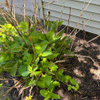
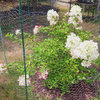
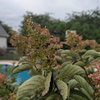
    Tried to take some pics GG, but it was kinda hard as I'm literally working with a full on leafy bush....and I'm just peeking/poking through it's leaves.

    Opho - I took out 2 more or the the largish canes/semi trunks. One of them and the other one I took out yesterday, appear to be sitting on the main plant/root flairs. In slowly eyeballing the mass, I don't really see ANY new growth in around the root flares. Maybe they never got enough light. I DO see little leaves here and there but we're just talking leaves around the base. A wild guess is the winter snow does potentially kill any new growth that I'm seeing and or in the past, between the heavy foliage, not enough sunlight to give these new growth some chance. I've got some nice open pockets in the shrub right now.

    There are also 2 older areas where it appears there was old trunks/canes that were cut and that have a small hole within it, but no new growth in/and or around it. Still sitting ontop/connected to the root flair mass.

    Just thinking outloud. The purpose of this was to get some new growth in the center. I took out 3 largish canes in each quadrant of the bush *90, 180, 270*

    If no new growth is happening due to the mass of older stems/root flare mass in said areas after next spring/summer, would it be safe to potentially consider just ~axing out said areas~ where it's a woody mass of cut trump/canes with a largish mass of root flair.

  • 9 years ago

    a1an, could you add your zone to your name? You'll get more answers appropriate to your climate zone, especially if you post to broader interest forums, like Perennials.

    I mention it because if you are in a colder zone you wouldn't do a big pruning job now. New growth now would get zapped by freezing.

    Interesting, ophoenix, you live in zone 8b, and you're saying wait 'till spring. So your plants obviously have a seasonal growth cycle.

  • 9 years ago

    Hi Marie- thanks for the tip. Will mod. Zone 7B.


    I did a major dustup in spring. With the current growth in effect (before it becomes all just bare canes(, I'm doing this now because I can see how the shrubs is currently filled out, and where I can thin out respective of the growing stalks.

  • 9 years ago

    "Interesting, ophoenix, you live in zone 8b, and you're saying wait 'till spring. So your plants obviously have a seasonal growth cycle."

    Yes, this is a four season climate :-) We have a distinct winter here - hydrangeas and other deciduous shrubs DO lose their leaves and go dormant, just as they do in colder winter climates. It just never gets cold enough that we need to worry about a lot of stem die back or flower bud damage..

    btw, late season pruning is not recommended anywhere that is exposed to freezing winter temperatures. Pruning will encourage growth and any growth produced this late is much more vulnerable to cold damage than if it had all growing season to mature and harden off properly. Pruning after the plant is dormant (lost all its leaves) however poses minimal risk.

  • 9 years ago

    I don't know much about the climate(s) in zones warmer than 6 or 7. I've been to New Orleans in December and SF in April. Cold enough in both places to need heat from the single central heaters in hallways. Standing over the floor unit at my grandmother's in NO was very pleasant.

  • 9 years ago

    Marie, our climate is considered Marine. It is on the edge of Mediterranean and has relatively cool dry summers with low humidity and wet winters. The PNW ranges between 7, 7b and 8 and 8b using the USDA Climate Zones. Our zone 8 is quiet different from the zone 8 and 8b on the east coast of the us. We do have hard frosts and snow in the winter. Perennials freeze in many locations and our lawns go brown and dormant without summer water. Hydrangeas have grown in our PNW climate since prehistoric times and hydrangea fossils can be found in many dig sites. Climate on the coast is tempered by the mountain ranges and the ocean currents keep temperatures moderate. On the eastern side of our coastal mountain ranges the climate is much more extreme and closer to very hot and dry summers and cold and freezing winters. If you google a Sunset Climate Map you will see that the PNW is divided into many different zones to reflect these differences and the multitude of micro climates that we see due to our mountains, foothills and the influence of the ocean currents.