Software
Houzz Logo Print
jim_trevanion

Citrus tree problem

8 years ago
last modified: 8 years ago
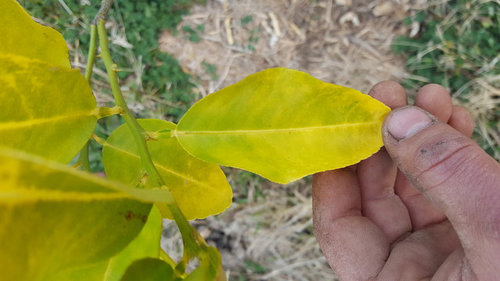
G'day everybody, i have a bit of a problem with a few citrus trees i planted about a year ago and am hoping someone can tell me whats going on.

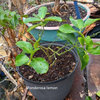
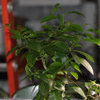
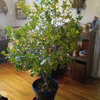
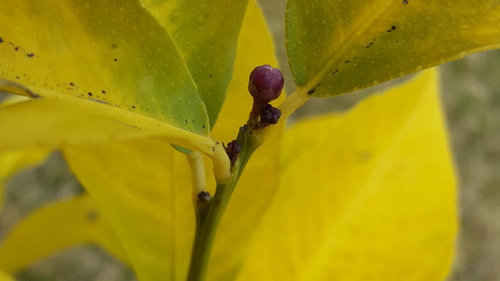
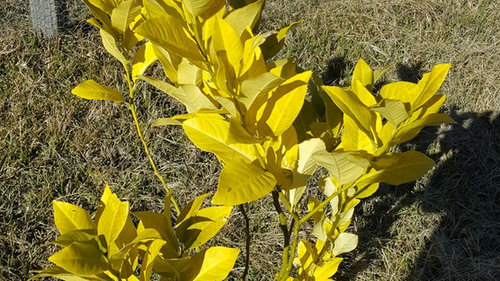
There is an orange, lime, lemon, lemonade, blood orange and mandarin tree which all show a similar problem but at a different serverity. The leaves are turning yellow and then falling off. I have attatched a few photos for a look.

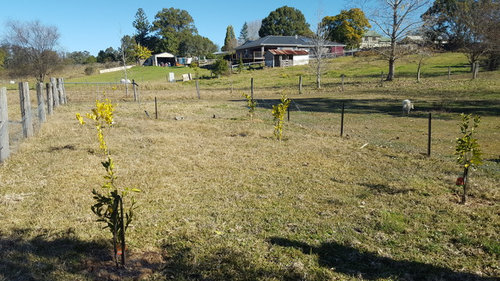
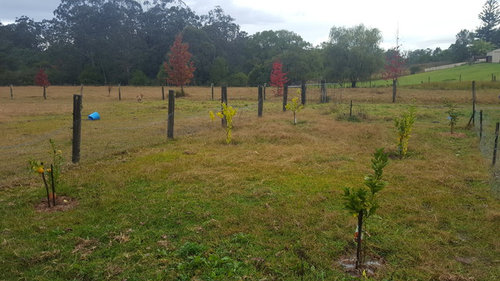
The orange is handling it a lot better then the rest and its position is slightly more shaded. Also they are planted on a flat bit of land which was quite heavily clay, but i did dig generous size holes around 500 x 600 for them and used a mixture of potting mix and a citrus potting mix to fill each hole. But i did not use any gypsum as i didnt know about it at the time.

Due to us building a house on the property we have been busy and unable to watch out over them as much as we would of liked but im hoping someone could provide some help with what exactly is going on, ive researched a few problems but cant tell exactly what it is

Thanks very much.

Jim.

Taken today

Taken today

Taken nearlly 2 months ago. Can see how some are affected more then others.

Taken around 3 months ago during a rainy period.

And another from around 2 months ago

Comments (21)

  • 8 years ago

    Jim what do you use as fertilizer and how often? How much and how regularly do they get water?

  • 8 years ago

    What kind of soil do you have? If your soil is calcareous, you have a major problem with citrus; it is about the only kind of soil that will not support citrus.

  • 8 years ago
    last modified: 8 years ago
    Hi, Jim. Do the trees show evidence of any pests?

    You don't say what region you're in, so perhaps you're in an area affected by Asian Citrus Psyllid and Huanglongbing. Here's a site with info on identifying ACP and HB: http://californiacitrusthreat.org


    [Edit for typo.]

  • 8 years ago
    last modified: 8 years ago
    When planting a citrus tree, you should never dig larges holes, thinking that you are doing the tree a favor. What you actually have done was to create a lake that the trees root systems are now setting in every time you water.. The correct method of planting a citrus tree is to dig a hole just large enough for the root ball to fit in, and use ONLY the dirt created from digging the hole as backfill, add no admendments. Also, for soils that are largely clay, and thus normally wet soils, the best root stock to use are trifoliate orange . With poor draining soil every time you water, your tree's roots are setting in water, which is not good.

  • 8 years ago

    I'm going to disagree with the above :-) Citrus are really no different from any other tree and the planting methods will be similar. If the soil is well draining to begin with - as citrus and most other trees prefer - there is NO issue with a larger planting hole creating a lake. The typical recommendation is to dig a planting hole twice as wide as the current rootball but not quite as deep. If you have poorly draining soil, create a raised bed with fast draining soil for growing your tree or plant high, with the top of the rootball above grade. Just mound the excavated (and unamended) soil up to the top - but not over - the rootball.

    The photos of the OP's plants look like they are experiencing a nutrient issue. Soil pH could certainly play a factor in this scenario. Has the soil been tested? Where are you located?

  • 8 years ago
    last modified: 8 years ago
    I have experience with citrus that covers more than 50 years; more than 50 countries; and 5 continents. I think if you don't have experience with citrus you should not be giving advice. I am completely in agreement with Silica....a rare thing in itself. We have 35,000 Meyers planted in ground and every one is planted in a hole the size of the root ball; and not fertilized until it begins to grow. The lack of fertilizer encourages the roots to grow in search of food; and only after the roots grow will the top begin to grow. My somewhat limited experience with container citrus is if you re-pot to a container only a little bit bigger, you get new growth in about 2 weeks; if you plant to a significantly larger container, you may not get new growth for 2 months or more.

    As for the OP's soil, I am constantly amazed that people plant trees, that they are going to live with and nourish for a lifetime without first checking the soil where they are planting. One of the very first things I do when approving a new associate grower of my Meyers is to visit their land and do soil and water testing to see if it is suitable for our trees. I have had associate candidates who were great, but their land was not; and some of them actually went out and purchased other land so that they could be Meyer growers.

  • 8 years ago

    "I think if you don't have experience with citrus you should not be giving advice."

    And that is an assumption you are in no position to make!! While personal but nonetheless anecdotal experience is great, it does not negate what virtually every other published authority on inground planting of citrus trees confirms......well drained soil of appropriate pH and with a wide but slightly shallow planting hole.

  • 8 years ago

    I choose never to engage in a battle of wits with an unarmed person.

  • 8 years ago
    last modified: 8 years ago
    Gardengal, you are not only disagreeing with me concerning planting citrus in large holes, but also Dr. Manners who holds the Citrus Studies Chair at Florida Southern College. I stand with what I wrote, and with the Universities. However this is still America and you can believe as you wish. If you red Jim Trevanion's post carefully his trees are planted in CLAY soil, and a large hole in clay definitely will form a lake.. Further, trees planted in clay soil would be best served if they were growing on trifoliate rootstock.

  • 8 years ago

    The question still remains where these trees are.. that can have a significant effect on the solution (s). The bigger issue is what to do now that the trees are planted in the manner they were. I fired my supposed tree experts who planted 35 citrus the same way and possibly worse (crown in a bowl). I lifted some, others took an extra year to get traction. OP may not need to do much other than get an appropriate feed and irrigation schedule in place. Let's get more info... George.

  • 8 years ago

    Still, the first and most important question, BEFORE YOU PLANT, is soil analysis. Water analysis is not so critical; you can always change your water source, or modify it.

  • 8 years ago
    last modified: 8 years ago

    Johnmerr is correct, in that Jim should have deterred his soil and planted accordingly , but then from reading Jim's post I think Jim knew almost nothing about the planting of citrus trees, nor what root stock the trees are on. Molewacker ask---- "what to do now". If they were my trees, I would replant them in the correct manner, or in a raised bed. As they are now, Jim is going to have a long term problem.

  • 8 years ago
    last modified: 8 years ago

    Yes with 6 trees I'd be tempted to lift and replant. But we cannot say that is the best solution without more info. No one that I know in a residential area tests their soil , although they should. (I did not but knew the Danville soil i have is leftover depleted fill. Junk clay.... so didn't really need to).

    Just thinking out loud... if the potting mixes are shrinking and the trees sinking as I suspect they are, a possible solution may be to poke large holes and fill them with native dirt.

  • 8 years ago
    last modified: 8 years ago

    John's rule of thumb.... hold up your thumb in front of you at arms length; turn 360 degrees; if you did not see any citrus tree, there is likely a very good reason...THEY DON'T GROW THERE!!! Of course you can always go the container or greenhouse route or use other draconian measures; but know from the beginning that it will be a battle.

    George,

    We are not dealing with potting mix here; these trees are planted in the ground; and first impression for me is that is just bad soil. I have two Meyers that I planted in my Antigua garden at the request of my wife to shield the solar dryer (clothesline); they look like the OP's trees; because our garden used to be the HQ of a coffee farm with lots of brick and rock and concrete in the soil. Once the roots of the tree get below the "calcareous" level, they will green up and grow well; until then it is a struggle to get them to grow... and I know a thing or two about growing Meyer lemons.


  • 8 years ago

    John, OP post clearly states potting soils. Let's see more info.

  • 8 years ago

    Sorry, George, I missed that.


  • 8 years ago

    Well first of all, Wow! thanks very much everyone for all your advice and imput, I do enjoy hearing all the different perspectives.

    I am actually from Australia. on the east coast of NSW. Also why i havnt replied untill now.

    - I have used seasol fertiliser mostly as well as a citrus fertiliser from Richgrow just a couple of times, but never together. I have probably fertilised them about 6 times all up. around 3 - 4 weeks between. I only get to the property 1 -2 times a week when i will water them but it has been a fairly wet season so there has been many times when i haven't had to.

    - When the leaves started getting yellow early on i did use Yates Trace Elements to see if they responded but did not notice anything major.

    - There are no signs or evidence of any pests that i can tell.

    - I did test the ph of the soil which was slightly Alkaline, i cant remember the exact reading, but i think it was around 7.5 - 8 maybe. so for that i did use some yates liquid solfur to help reduce the level.

    There are many citrus trees nearby, one neighbours Tangelo tree grows well over our back fence with many fruit. The closest would be our side neighbours 2 citrus trees only 20m away (65ft :) ) which are nice and green with fruit aswell. The major difference between her trees and ours are that hers are halfway up the hill rather then on the flat like ours. I would of preferred to have them further up the hill but with all the building and excavating going on it was not possible at the time. However if it was necessary to re plant them we probably could find a spot for them now out of the way, I have also heard similar things to what John was saying about it been hard at first but once, and if the tress do get established in clay soil they will thrive and become good, strong plants.

    I would prefer not to move them, possibly mound them up more, but if thats what i have to do to get some yummy fruit, then thats what ill do. looking forward to seeing you you have to say. Thanks.


  • 8 years ago

    Citrus do not absorb iron from the soil when the pH of the soil or water is over 7.5; you have to use chelated iron. I am not familiar with the fertilizers you mentioned; but if they are organic that is contributing to your problem... organics are notoriously low in nutrients. I guess you have a combination (perfect storm) Of high pH, inadequate food, and maybe too much water from your low lying soil.

  • 8 years ago
    last modified: 8 years ago

    echo JohnM, also it's your cool season... wondering if the cool roots are not taking up the nutrients. I've heard this called winter chlorosis. With adequate food, the trees should start pulling in the nutrients and either grow and / or green up (it depends on the individual cultivar). I see some yellowing in the winter / cool season and it takes several days of 80F+ to warm up the ground and leaves to grow / green up.

    I also started with organic fertilizers, but switched due to poor results (terribly weak).

    Do remember that as you put the food down, you must also provide consistent hydration for these young trees. I had many of my trees planted in clay... and it took a while for them to get traction - because I was not generous nor consistent with irrigation.

    Good luck and please update us with your progress. - George

  • 8 years ago
    They were organic fertilisers. For a bit of a plan im thinking of finding a good non-organic fertiliser and trying that see how they go coming into the warmer months. i will also check the ph levels this weekend and if they are over 7.5 i will use some chelated iron untill the ph level is reduced. ill give this a go and see what hapens in the next few months. thanks again.
Sponsored
Kuhns Contracting, Inc.
Average rating: 5 out of 5 stars26 Reviews
Central Ohio's Trusted Home Remodeler Specializing in Kitchens & Baths