Software
Houzz Logo Print
dlcooper52a

Ailing Hedge

9 years ago
last modified: 9 years ago
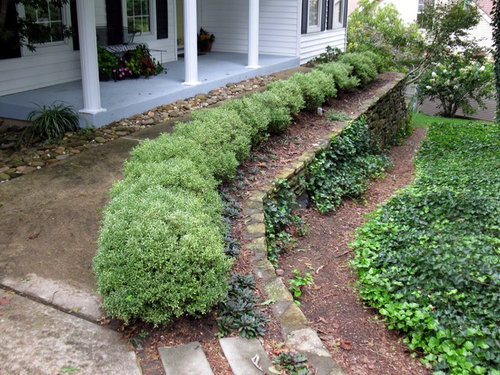
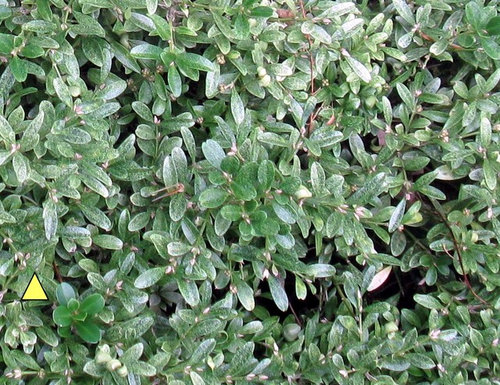
We have an evergreen hedge that seems to be ailing.
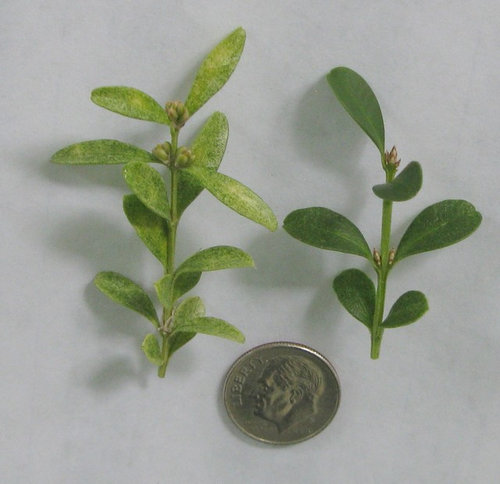
New leaves begin as a normal dark green but eventually take on a mottled appearance.

It is so generalized and uniform that a damaging source like insects doesn’t seem possible. A close examination of leaves reveals nothing even so small as mites. Suspicion thus arises as to a bacterial or viral disease, like “mosaic”. The hedge was already like this when we moved in 4 years ago.

There is noleaf curl or stunting, just discoloration.

We’re hoping it’s not “mosaic”, as there is apparently no control for that.

Replacing the hedge would be a possible solution but we don’t want to wait years for itto again look nice (we’re oldsters) and we fear that any virus has probably infiltrated the ground and would soon infect new susceptible plants. We may just tolerate the mottling. There seems to be no transmission to any of the many other plants that we have.

We’d welcome any comments regarding our problem.

Comments (12)

  • 9 years ago

    this is one of the reasons we try to suggest diversity of planting .. so when some plague comes along.. you dont lose it all ... think about that.. if you eventually replace ....


    that wall and sidewalk is really cool ...


    ken

    Donald Cooper thanked ken_adrian Adrian MI cold Z5
  • 9 years ago

    I agree that the stippling is caused by spider mites, likely Eurytetranychus buxi, the boxwood spider mite. Try calling your local NC State Extension Center to see what the county horticulturist suggests. Try to speak with an agent rather than one of the volunteer gardeners, if possible.

    Donald Cooper thanked rhizo_1 (North AL) zone 7
  • 9 years ago

    Thanks, all. I'm a bit leery. I know what spider mites look like and there simply aren't any present. However, I will apply a systemic insecticide for that possibility and watch to see if new growth remains unmottled. This could be quite a pretty hedge if darker in color.

  • 9 years ago

    Stippling - the mottling you are seeing - is a pretty sure diagnostic tool for detecting spider mites :-) And they are almost microscopic in size so unless your eyesight is way better than mine (and that's entirely possible), they are virtually impossible to detect with the naked eye. Boxwood mites also produce no tell-tale webbing.

  • 9 years ago

    OK, people, the consensus is clear. Eliminating mosaic would be a godsend.

  • 9 years ago

    Have you looked with a magnifying glass?

    Donald Cooper thanked floral_uk z.8/9 SW UK
  • 9 years ago

    Unless you are aware of some boxwood ailment I am not, viruses do not play much of a roll in affecting them. In fact, in all my plant pathology references I could not locate any mention of viral issues and boxwood. Lot of other problems that could come into play - most notable recently, boxwood blight - but that doesn't present anything like what's happening to your hedge.

    Mites can often be controlled by just ramping up the humidity......they prefer things hot and dry so spraying down the hedge on a daily basis could make it far less habitable to them. Or you can control with a good all season horticultural spray.

    Donald Cooper thanked gardengal48 (PNW Z8/9)
  • 9 years ago

    Thank you all for your helpful suggestions. The standard, effective way to check for mites is to place a piece of white paper beneath foliage and tap it vigorously. Then examine the paper for mites, which will tend to move about.

    Voila! There they are! Mites. So your experiences and advice have surely confirmed my problem, for which I'm quite grateful. It's a big relief that it's not (intractable) mosaic. .....and it's comforting that there are wise, unselfish gardeners out there like you, willing to help we who are puzzled.

  • 9 years ago
    last modified: 9 years ago
    Donald, spider mites are not easily controlled with systemic insecticides.....your results may be disappointing. This is especially true for outdoor plants as opposed to greenhouse grown or indoor plants. Spider mites are more successfully controlled by physical means than OTC chemical insecticides.

    Gardengal's suggestion of horticultural oil is exactly what I would suggest....these products create a very fine emulsion when mixed properly with water, coating the plant surfaces and soft bodied arthropods (insects and mites) and their eggs with a barely detectable coating of oil.

    It is very important that you apply the mixture to the underside of the leaves as well as the top or spider mites can escape the treatment.

    After you gain control of this unimpeded population of pests, treatment with plain water may help. It's not something that I've found to be helpful outdoors but it can't hurt.

    Donald, there really isn't anything else that will cause that sort of stippling. No type of insect or disease. You can trust us on this one.

    Donald Cooper thanked rhizo_1 (North AL) zone 7
  • 9 years ago

    OK, Rizo. Thanks. I'll start with insecticidal oil. So much better than any "poison".

    I am especially concerned about the effect of of the neonicotinoids on our precious, innocent bees. Bayer, the big culprit, is "hanging in" in the US after losing in Europe. We need common sense as well as commerce, and should shun scorched-earth procedures. The advent of the four-step lawn treatments was a big step backward. Where are the toads, snakes, mantises, et al that I remember blessing my youth?

    I will be careful to spray the leaf undersides, though complete, 100% coverage won't be possible. However a repeat treatment should get most of the first time "escapers".

  • 9 years ago

    Insecticides are designed for insects, and mites aren't insects - more closely related to ticks and spiders. Use of insecticides may worsen the problem since it will kill insects that prey on the mites, hence the disappointing results when using insecticides for mites.