Software
Houzz Logo Print
sam_md

Abelia meatballs

9 years ago
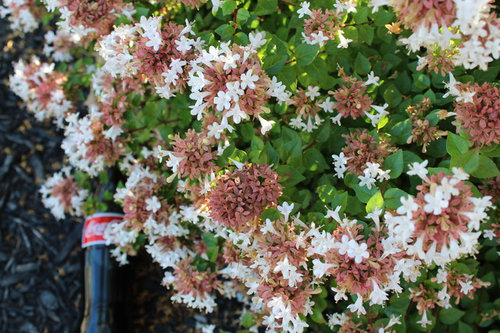
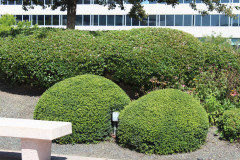
"Meatball" pruning refers to the insatiable desire many have to shear shrubs into an unnatural, rounded shape. This kind of pruning results in greatly diminished flower and fruit production. Nevertheless, there are those who will insist on meatballing every shrub they have access to. If you know someone like that, point them in the direction of Abelia.

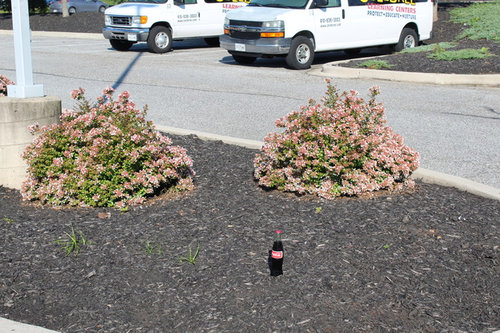
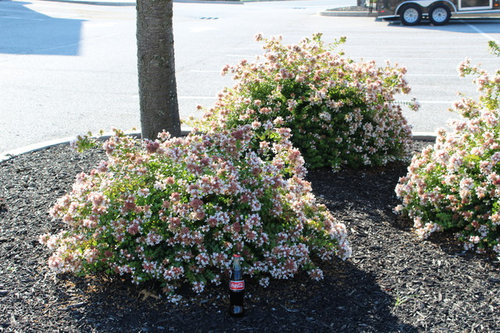
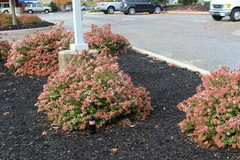
These pix taken this morning in Maryland parking lot islands. They are sheared back very close in winter. Notice how heavily flowered they are because they make flowers on new wood. White petals, pinkish calyx, faint fragrance. These are very attractive to bees & butterflies. This one may be a cultivar which is somewhat compact regardless, am not sure. Great example of late summer/early fall flowers.


Comments (15)

  • 9 years ago

    Interesting. Last evening my spouse and I were taking a stroll through the garden and walked by a grouping of three Abelias I planted in an island bed similar to your picture. I commented on how awkward they look and was questioning whether or not I had planted the right shrub. Are you implying that this might be a shrub where hard annual pruning makes sense (a la Hydrangea arborescens)?

  • 9 years ago

    when you answer maakia ... do note z4 with the probable z7 in that parking lot ... would she have a long enough season to squeeze in a mid sept flowering????


    one other thought ... a lot of the meatballing or whatever you want to call it.. is or was caused by improper siting back when planted ... putting that cute little plant a foot or two from the foundation .. with no clue of the potential of the little monster planted .... then selling the house... lol.. and giving the new owner a lifetime pruning job ...


    man.. for some reason.. i am craving an ice cold coke in a bottle.. lol ...


    ken

  • 8 years ago

    Hmmm... just this evening I walked past my 3 dwarf Abelias that are close enough to look like one plant, and I was all ready to give them an admiring glance. Had the smile ready to form and everything.

    But... they didn't get one. I think I was wearing a look of surprised scrutiny. On a brief, closer look, I noticed they sported an awful lot of twigs not far underneath their leafy dress.

    I just might give them a bit of a wakeup. We are 3 weeks into spring here, and I watered the garden one or two days ago due to very little rain of late. Maybe I should get out the shears tomorrow. Any thoughts?

    They were in flower maybe a week or two ago but there wasn't much going on. I think I thought I'd be seeing more flowers but now I don't think so.

  • 8 years ago

    Pruning abelia in my experience produces a bevy of tall water spouts. Nip those and you trigger even more. So I would like to know if this particular kind maintains that mound shape WITHOUT shearing, because otherwise I think you're looking at a very intensive maintenance job.

  • 8 years ago

    Kitasei I agree...a pain to maintain.

  • 8 years ago
    last modified: 8 years ago

    Hmm... yes... well, I got out the shears and gave them a light trim. Then a bit more. And a bit extra for good measure. The husband was biting his fingernails in the lounge room.

    In the past, I have only cut off those stray wild bits that poke through here and there and have been happy with the results. But, as I said above, these three Abelias growing as one were no longer filling me with joy when walking passed. No longer was I inclined to give them a pat. Something had to be done. I neglected to say in my first post that the leafy dress they wore was rather see-through.

  • 8 years ago

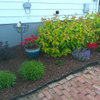
    Here they are today, more calyx than flower. I will say that this kind of pruning encourages flower production at least on Abelia.

  • 8 years ago
    last modified: 8 years ago

    Agree abelias in photos here are dwarf cultivars. A-ball-i-as are more geometric, with much of the flowering having been cut off. And new growth soon poking right out of the artificially tight outline like antennas, except in winter.

  • 8 years ago
    last modified: 8 years ago

    " It's hard to find a nice evergreen, flowering, full-sun, mounding shrub for the Mid-Atlantic."

    Agree, I used to dismiss them...but they are very effective in certain situations. I've spotted some in more sheltered sites that were continuing to bloom just a few days after the big freeze, so that have that as a benefit too. I probably wouldn't plant them, but it's not like I want to barf when I see them either.

    (the flowers/buds of the fall blooming Forsythias are similarly freeze tolerant...I wonder if a certain clone of Forsythia is more prone to that, but do not care enough to investigate the matter. I've been slowly taking them out and will soon be a 1 Forsythia garden. I'm keeping the one that tends to bloom in the fall, because at least it has that going for it.)

  • 8 years ago
    last modified: 8 years ago

    Warm, sunny places consistently characteristic locations for wild Abelia species in nature.

  • 7 years ago


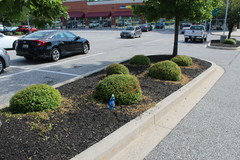
    Today's pic tells a little bit more. It's the same parking lot. Apparently the crew needed something to do. How about this, head on down to the work site and meatball all the shrubs, no thinking involved. Will these shrubs bloom in September/October? No problem.

  • 7 years ago
    last modified: 7 years ago

    Without talking to somebody involved with a given episode you never know for sure what the back story is, one phenomenon that occurs is property owners noticing "overgrown" flowering trees and shrubs because they are in bloom. Resulting in them being attacked at the worst possible time - in my area it is frequent to see trucks driving by with cut branches full of flowers in them during spring.

    Otherwise in this instance it could just be when the location shown happened to be on the schedule - my area is peppered with commercial properties in particular where the most visible contributions to their upkeep by landscape maintenance crews is recurring mowing - mowing of the grass (if there is any) and similarly close mowing of the shrubs. (The Plant Amnesty membership organization calls out of context formal shearing of informal plantings undertaken to keep them frozen at a specific size maintenance shearing).

    Stripping is also repeatedly seen here, wherein all the lower branches are pruned off, so as to leave previously more or less well furnished specimens looking leggy and damaged, as though heavily attacked by browsing animals like deer or goats. With in addition many kinds of shrubs not having attractive stems, that reward them being made highly visible.

  • 7 years ago


    More meatballs. This time abelia in the back, Japanese holly in the front. This is a rooftop garden on the Baltimore Convention center. Have you ever seen Japanese holly unpruned? They can be really interesting, sort of zig zag. Shearing shrubbery into meatballs is like mindlessly mowing grass, no thought required, do it whenever you please. No thought given to what effect it has on the plant. July/August is the absolute worst time to prune shrubbery. Sadly this treatment has become the rule rather than the exception.

  • 7 years ago

    "Have you ever seen Japanese holly unpruned? "

    You bet! Except for hedging purposes, I see no reason to prune Japanese holly at all. In fact, other than for hedging purposes, I see no reason to shear back any shrubs but would much prefer to allow them to assume their natural growth habit and size but that is a matter of 'right plant, right place' that commercial plantings and maintenance workers apparently disregard.

    There is an older residential neighorhood in Seattle where every single shrub in every single garden is sheared back into a rounded mound.....almost as if it were an HOA requirement (it's not). Makes for a hugely bland and uniform landscape when driving through.

0