Software
Houzz Logo Print
midwestguy33

Replacement Vinyl Windows

9 years ago

I am looking to replace some Crestline single hung windows myself in our house (all of them eventually) and have a few questions:

1. Are Okna DH500dx double hung Insul-Tec Deluxe good windows?

2. Would $330 per window be a good price for this window at 29 1/2 W x 47 1/2 H with tempered glass (bathrooms)?

3. How difficult is it going to be replace the Crestlines? I have plenty of tools, am pretty handy and will have assistance (father who has replaced one of his windows in the past). The house is sided and the two windows are on the second floor so I would prefer to do all the work from the inside if possible. Also, our house has 2x6 walls so I know I will have to tear out some drywall (I plan to repair with wood trim).

The Crestlines are absolutely terrible and leak air BADLY during winter. I want to try these two small bathroom windows to see how difficult they are and see if I want to tackle the rest of windows myself (in stages). Thanks in advance!

Comments (15)

  • PRO
    9 years ago
    1. Yes.

    2. Impossible to say as prices are fairly market sensitive but I am guessing that is materials only? That is very aggressive (i.e. low) as tempered glass isn't cheap.

    3. Depends on your level of experience and skill. If we are talking about a wood pocket set, it isn't rocket science but there is a reason that most folks leave it to pros.


    Totally doable if you go that route, but plan on the first several taking more time than you think and how are you going to handled the exterior trim work (if you are pulling the outer stop)?

  • 9 years ago

    Thanks for the response. I actually just received a quote back for Simenton 5500 Reflection Double Hung windows for the same two windows. Price is about the same ($320 a window). How do the Simenton 5500 Reflections compare to the Okna DH500dx double hung Insul-Tec Deluxe?

  • PRO
    9 years ago

    The okna is a much better window. As far as price, you are getting the window under cost. I dont know how your contractor is selling you a window and losing money. Makes absolutely no sense but whatever.

  • PRO
    9 years ago

    More glass, less air leakage, better thermals, better design pressure.


    Pretty much better on every single measurable way.

  • 9 years ago
    last modified: 9 years ago

    1) Carefully read the manufacturers measuring instructions prior to order and confirm what you measured to the order taker. Generally there are ways to measure: Net frame (the actual size of the window (width x height)) and Net opening (manufacturer will take deductions to arrive at net frame). Make sure that he/she is also competent. Otherwise if something comes wrong, there will be a lot of finger pointing.

    2) Read the installation instructions before so that you have all the right materials and get any questions answered beforehand.

    You are smart to start with smaller windows. I usually recommend that as a learning experience. I applaud your initiative but it isn't for everyone as I have seen mistakes by even the "experienced".

  • 9 years ago

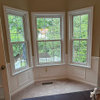
    Thanks all for the responses. Here are a few pictures of the single hung Crestline windows currently installed:

    Any suggestions/tips on how to install replacement Okna windows? I contacted Okna asking for instructions but they just referred me to a dealer. Are there any good websites that explain replacement in depth? Thanks!


  • PRO
    9 years ago

    Pm, unfortunately installations don't get much more complicated than yours. This is not an easy "pocket replacement" application at all. There are various ways to do this with varying degrees of difficulty and protection. None of these offer an opportunity to work from the interior only. My strongest recommendation would be to hire a pro. If you are set on doing this however, I can tell you the 3 options that we offer our homeowners in this application, from most preferred to least.

    1) Full removal of existing unit with nail fin, install new window with nail fin, flashing tape, etc. Since your siding runs right up to the window with no trim, this means you either need to r&r siding around the opening(s), or cut siding back to facilitate this and install trim boards in the new gap.

    2) cut the nail fin away from the existing window using a multi tool, carefully cutting between the siding and frame. The nail fin remains embedded. Install a new window size on size with no fin. Ideally you would retrofit head flashing and then use foam and caulk as applicable for sealing. The window would be fastened through the jambs.

    3) Same procedure as above, but downsize the window to fit inside the drywall return. This method allows for the window to be set at a depth that you prefer and allows for the fact that your existing single Hungs may have a jamb depth less than 3 1/4", which can be problematic for option 1 and 2. This does necessitate installation of some sort of exterior trim to tie into the existing flashing system (typically bent aluminum), as well as interior stops added to finish the the install on that side.

    As far as resources, no manufacturer instructions will offer more than the most generic, and basic guidelines. They will be useless on this. Option 1 is mosy comprehensive and fairly standard as a new construction install, you will be able to find resources on that. The wrench in it is the siding issue

  • PRO
    9 years ago
    last modified: 9 years ago

    Option 3 is by far the most common by us. If you choose option 1 or 2, you would need to cut back the dry wall to accomodate the new 3 1/4" jamb depth.

    i would NOT attempt to do either method yourself. You are playing with fire.

  • 9 years ago

    Thanks guys. My plan was to go with option #2. My father installed a replacement window (not Okna) at his house and I believe option #2 was the way he did his. I plan on having him help me. As for the drywall, I plan on reframing using oak (like at the bottom of the current window. I understand there may be some work outside (caulking) but I would imagine the majority could be done from inside. I guess I'm missing what is so complicated/easy to screw up with method 2????

  • PRO
    9 years ago
    last modified: 9 years ago

    Window1 is absolutely right about the cutback if the current is less than 3 1/4... I also need to mention that I flip flopped option 2 and 3 as far as which is superior. Option 3 is, and may be the most common application.


    As far as what is complicated about #2, not too much. Cutting the nail fin with damaging the siding/j channel can be tricky as is the interior cutback if needed for depth. The thing is this install is the least comprehensive. It relies heavily on the existing water management system behind the siding/window interface being watertight (most in this time period unfortunately are not), and then on caulking which requires maintenance. When the caulk fails, the integrity of this install does as well

  • 9 years ago

    Thanks! When we had the house built over 10 years ago I specifically asked the builder for a different brand than Crestline but they said that is all the offered (builder had a contract with Menards where they had to use certain products sold by Menards). The windows leaked terribly to the point drafts would extinguish a lighter held nearby on windy winter days (the drafting always seems the worst in winter). I complained to the builder who had a Crestline rep come out to take a look. Crestline basically said the framing was the issue. The builder went bankrupt shortly after.

    I've done some testing on the windows and it seems the majority if the drafts are coming from the windows themselves (not around the frames). I've used the plastic window sheeting in past winters and that does help but it looks tacky and I'm sure new windows would insulate better. So my plan is to replace the two smallest windows (bathrooms) and see how it goes. My father and I are pretty handy (built both our back decks, framed in our basement, etc) so I feel pretty comfortable we aren't getting in over our heads. Is there an issue with using the non-expanding Great Stuff around the windows and framing....is there an issue with this?


  • PRO
    9 years ago

    Could very well be poor installation, but as you've seen, the windows are at LEAST contributors to your drafts. Your experience and assessment with that product seems to be the general rule.

    As far as utilizing foam, it is absolutely recommended. Closed cell, low expansion is what you need. The great stuff brand is probably my least favorite as it expands quite a bit making it tricky to work with, but it can get the job done if you apply it properly. Invest in a $50 gun and use the appropriate cans. This gives you greater control in the application.

  • 9 years ago

    so you have terrible windows with a bad installation, although at least they were well meaning carpenters. Now you are going to upgrade the windows, but do a diy install in a very diy-unfriendly application. Not sure if this is a recipe for success. Making progress, but I'd suggest skipping this step and going for a good window and installation and save one more bad experience to learn from .

  • 8 years ago

    Good morning. Picking up two, small Okna windows (bathroom) today and planning on installing tomorrow. I plan on cutting the nail fin away from the existing window using a multi tool, carefully cutting between the siding and frame. Then I will install a new window size on size with no fin insulating and caulking around it. The window would be fastened through the jambs. Like I said, I have plenty of tools and will buy whatever I need. My dad (who has previously replaced one of his windows in this way) is going to help me. Any tips/advice/suggestions on the actual installation. We have 2x6 framing so I understand I am going to have to cut drywall out around the window. Thanks!

  • PRO
    8 years ago

    A drip cap is never a bad idea here. Also plan on some window and door foam or other manner of sealing between the RO and the new window.