Software
Houzz Logo Print
mar9en

How far gone is too far gone?

8 years ago
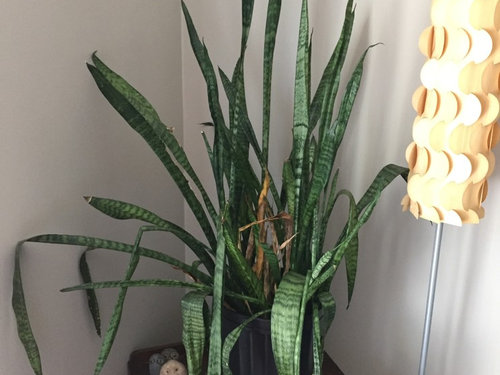
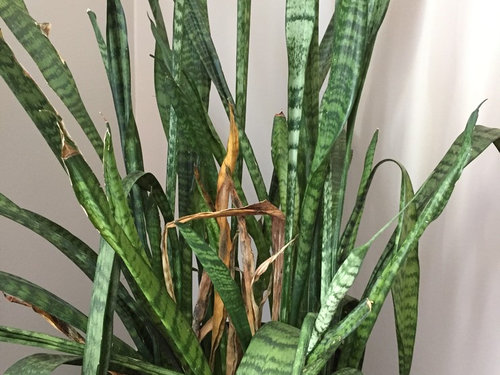
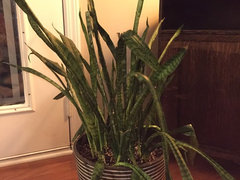
This Sansevieria

  • Has never left the soil and pot it came in
  • Has been in a shady corner for over a year (brightness of photo misleading)
  • Has not been watered in well over a year, maybe even two years or more

It wants to live! Can it be saved and if so, how?


Comments (29)

  • 8 years ago

    Umm, I shouldn't...I really shouldn't...but why hasn't it been watered in over a year?

  • 8 years ago

    woodnative - Thank you, will do! So if the roots and soil look good, I keep the soil, just soak the whole thing in warm water? I have a gritty mix I can plant it in if Sansevieria like that. In fact, I had planned on repotting it in that way back when.

    How close should I cut any leaves? If the tip is dead does that mean that leaf will never grow again? Is it worth keeping the really tall, thin leaves that had tried to grow?

    dbarron - Well, I started out trying to figure out how long it took the soil to almost dry out before watering it, which turned out to be quite a while. And then in that process I would forget to water it... and then in the middle of that I moved, which lead to more neglect... until I hadn't watered it in a really long time. Yet somehow, at that point, the plant seemed totally unchanged. So then it turned into a mix of "well, it's not dying yet" and morbid curiosity about when it would...

  • 8 years ago

    I see, it's likely it would benefit from new soil (before you water would be best/easiest I think). Would suggest at least a cactus/succulent mix, but preferably home made if you're up for that challenge. Folks on CS forum can suggest the best mix I think.

    Mare TN z7a thanked dbarron
  • 8 years ago

    New soil is probably good, but getting it hydrated again is important. That is why I said look at the roots and sol. As dbarron mentioned it might be good to repot it with fresh soil now. If you decide not to I would definately do so in Spring. Cutting the leaves back is mainly aesthetic so you decide where they would look good. As you can tell although Sans, especially green trifasciatas, will SURVIVE a long time without water/light it does not mean they thrive under such conditions. Given more light, good soil, a reasonable water schedule it will reward you with nice growth. Gritty is ok though the trifasciatas seem to appreciate a little more soil moisture than some of the other Sans species and certainly more than most cacti/succulents. I prefer a mix with good drainage but still some organic "stuff" in it.

    Mare TN z7a thanked woodnative
  • 8 years ago

    These plants are amazing...
    I bought one from a grocery store as my first house plant ever, and when I read the directions of "Water infrequently"
    I thought, 'I'll just drop some ice cubes on top of the soil every month or something' I'm so smart.
    And then I'd forget about it, and it'd look no worse so I'd keep forgetting about it.

    It eventually started looking shriveled and I thought it meant I had watered it too much, so it got worse.
    Then I said heck with it and gave it an actual, thorough, watering thinking I'd either kill it or rule out watering as the issue, and it perked right back up in just a few days. I've learned a lot since then...

    I still can't believe it put up with me.
    My only problem ever was with soil too water retentive on a different sans once. I've made my own gritty mix for all my plants now.

  • 8 years ago

    [This is a copy/paste from some time ago.]


    After college and the military when I finally got my first house I
    bought a Sansevieria at Albertsons for 29¢ and put it on top of the
    water heater in the mud room and forgot it for several months over the
    winter. Spring cleaning I tossed it and it started growing in the trash
    pile.

  • 8 years ago

    Until you take care of this plant properly you are not getting a puppy!!......

  • 8 years ago
    last modified: 8 years ago

    This is quite similar to a subject raised in a Facebook group recently, when someone noticed necrotic spots after a long dormant period, and observed that some such plants recover and some do not.

    It did not look "dormant" to me. It looked long neglected. I explained:

    If they are left "dormant" or without irrigation for too long, the vessels through which liquids circulate can collapse. Then, if the tissues don't die, once watering is resumed, they will eventually reconstruct these capillaries, but the old growth will often reflect internal scarring.
    ~~~~~~~~~~

    This mainly regarded the hard-leaved species of Sansevieria, rather than S. trifasciata, like the plant in the OP.

  • 8 years ago

    Thanks for the stories and advice everyone!

    I have pine bark fines, turface, and chicken grit that I use to make gritty mix. Could I use those in a different combo for a soil the Sans would appreciate more?

    I'm going to work on it today - I'll try to post pics!

  • 8 years ago

    Facebook groups are probably necrotic spots that have killed gardening forums as we know them.

  • 8 years ago
    last modified: 8 years ago

    I like forums and facebook for different reasons. Both have their place.

  • 8 years ago
    last modified: 8 years ago

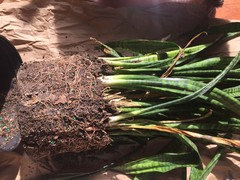
    The soil didn't look too terrible...


    So I put the whole thing in a pot of warm water (now inside out of the sun) and clipped off the dead leaves.

    How long should I leave it in the water?

  • 8 years ago

    An hour or two?

    Mare TN z7a thanked dbarron
  • 8 years ago
    last modified: 8 years ago

    @whyohwhy: Not killed, superseded -- just as forums replaced mailing lists.

  • 8 years ago
    last modified: 8 years ago

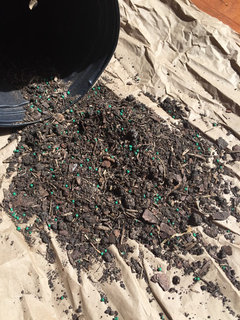
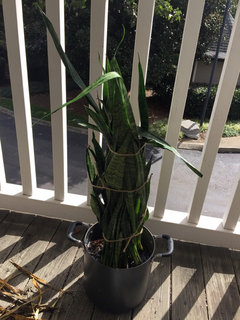
    Well, it was in the water for 6 hours. I made a mix of 5 parts pine bark fines to 1 part perlite, used the water to knock the existing soil off the roots (there was SO much fertilizer!), and replanted it in the new mix. Then I watered that until it was draining from the bottom. So here it is!

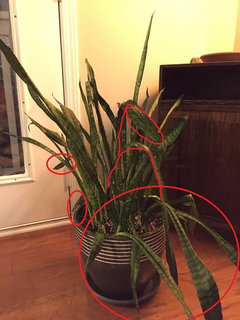
    I will probably retie the leaves upright until they can somewhat hold their own. Will the drooping/bent leaves ever straighten back out or are their structure permanently affected now?

    By the way, even with the severe neglect this plant has had, at the bottom of the stems there were still new bright green shoots trying to push up!

    P.S. Are forums not where people go much anymore? I think they'd be easier to use and browse than Facebook for this kind of thing...

  • 8 years ago

    I think most of us agree with you that's why we're still here

  • 8 years ago

    Forums are easier to browse and move easily from one area to another. It's the extreme specialization and collecting opportunities that are mostly on fb now, although there are notable exceptions.

  • 8 years ago

    Forums are not dead, we're forum'ing right now. FB is fun for ephemeral sound-byte-size tidbits and nothing more is possible without some kind of radical change of format. I check out plant groups on there if/when I have time after forum'ing. Forums are for more serious, in-depth, and long-lasting discussions.


  • 8 years ago

    Thanks, y'all! How often should I be watering this Sans while it's recovering? It was essentially bare-rooted. Does it need more water to help replenish its leaves and build roots, or less to prevent rotting while it heals?

  • 8 years ago
    last modified: 8 years ago

    mar9en, I think standard, consistent conditions will serve it best for the next four to six weeks. Excess water is never healthy, except in an emergency (like when you began restoring it), when you might immerse the entire plant. Then I would let it return to normal cycles -- reducing then stopping irrigation and no fertilizing for three months through midwinter. That will allow it to concentrate its strength in its thickest rhizomes and prepare to grow with renewed vigor in the spring.
    Towards the end of their dormant period, during which they may rely on some moisture stored in leaves, I remove less desirable leaves, leaving only those that reflect the form I am cultivating. Dormancy can also show you the leaves that are less supportive to the plant. The weak or older leaves may become rubbery, shriveled or even show dieback. Most of the leaves can still be used for propagation, in non-variegated plants (variegation does not pass into leaf-propagated plants).
    After winter dormancy, return slowly to normal patterns by gradually increasing the moisture in its growing medium that will have been thoroughly dry for a month or two by then. The rhizomes will reawaken and produce more feeder roots, and you will begin to see new shoots in the next couple of months.

    Mare TN z7a thanked Silk Knoll
  • 8 years ago

    Thank you for such detailed advice! I had planned to start a twice-a-week watering schedule to see how it did, and move it into some filtered light next week. But are you basically saying I should pretty much do what I was doing before, keeping it in a poorly lit corner with no water? (haha)

    I have the leaves tied loosely together right now for support, since I was assuming it would (hopefully) start growing more roots for support. A vast majority of the leaves are either rubbery, shriveled, or showing dieback, and I didn't notice any of them perking up following the soak. Should I watch for them to improve or are those leaves likely too damaged to recover?

    Sadly, this used to be a quite attractive plant with lovely tall, wide leaves. I don't think any of those leaves are salvageable now unless they can refill themselves with moisture, because they're the rubberiest and wrinkliest. If I cut all these weakest ones off, it'll be a pretty scrawny-looking plant. But I guess it needs a fresh start!

  • 8 years ago


    With winter moving in, twice a week is too often for any sans. Yours is in a good size pot. Once a week is likely too much unless it's outdoors in the summer. Cutting out leaves you know won't recover will take your plant to a healthy looking state. It won't look scrawny.

  • 8 years ago

    I've been cutting off the most wilted leaves, but leaving ones that I'm not sure will recover in case the plant can reincorporate the moisture and nutrients from those leaves back into the rest of the plant -- is that what happens or are they useless to the plant at this point?

    I've watered it once since repotting it, but I won't water it again anytime soon, thanks. What indicator should I use that it needs water, since the state of the leaves might not be the best measure right now?

  • 8 years ago
    last modified: 8 years ago

    Sorry I missed your earlier post. I agree with all Laurie wrote. However, I discourage watering by the clock or the calendar -- by a certain amount in specific intervals. The amount is always drenching until water flows out the bottom. As for the interval, there are too many variables that affect the amount of moisture in the soil to follow a fixed regime: the plants changing needs (health, growth stage, increased size of root ball, decreased size of root ball, preparation for blooming, season, annual cycles, maybe how safe it feels!), ambient temperature, ambient humidity, air flow around the plant, light exposure, probably barometric and other intangibles I'm unaware of. So, for me, that leaves three ways to know when the soil is dry enough to water again:
    - by touch -- poke a finger well into the soil. If it is bone dry as far as you can reach when it was not a few days or a week earlier, then there is probably moisture below your reach, but not so much that it would not benefit from water during active growth;
    - with a hygrometer -- same principle as the finger, it just reaches deeper into the soil;
    - when the leaves begin to soften or wrinkle (when it is not from the age of a specific leaf) after being firm and smooth.

    I do not recommend waiting for the third indicator. I've never even had healthy leaves become soft after three months without water in mid-winter.

    Did you happen to take a picture of the root system when you changed the soil?
    For me, changing soil or repotting is an opportunity to separate the rhizomes, removing and withered sections (they can be added to the new soil as biomatter to break down and feed the plant), examining all the rhizomes for health. respacing plants for ideal growth conditions, possibly starting extra pots for my use or to give away or for restoring weak plants, growing out extra offsets and propagating extra lengths of rhizome. Isolated pieces of rhizome or excessively long rhizomes leading to healthy growth but with no growth points showing will probably die back. So, I remove them or snap them off to propagate in a separate container or containers, where they are likely to sprout new growth. I'm an incorrigible propagator.

    That's enough for one post! I'll respond to your other questions in a bit.

  • 8 years ago

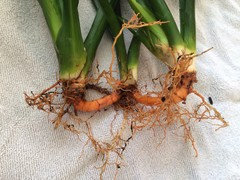
    Thank you so much for this, Silk! I don't have a photo of the root system, but to me they all looked like roots, not what I would think are rhizomes (what are they supposed to look like? Fatter roots/knobs?). A lot of those roots came off in the process of removing the old soil.

  • 8 years ago

    The rhizomes are the fatter orange connecting roots. There were more finer roots but some came off rinsing the old soil off (not the healthiest specimen)

    Mare TN z7a thanked robin98
  • 8 years ago

    Robin is right, although the rhizomes are not always orange and can vary in size and shape with the age and species of the Sansevieria. The small roots are feeder roots and are fragile when they are healthy, but, in dry periods, they can die back completely without affecting the health of the plant. It's best to avoid damaging or removing them, but it's inevitable when removing old soil for repotting and when dividing rhizomes.
    From what I saw of your plant before you started resuscitating it, I expect the feeder roots you found were not active and probably resembled Spanish moss. It hurts nothing to leave the dead roots attached. They will just break down over time like compost, rich with nutrients that will be reabsorbed into the plant. Your plants are probably well on their way to replacing their feeder root system.


    Mare TN z7a thanked Silk Knoll
  • 8 years ago

    I don't remember if I had rhizomes that looked like that... it may be that I didn't wash the soil off completely enough to reveal them, or they weren't as thick as those. I think there may have been, however, because several of the plants didn't seem to want to come apart, as if they were connected like that, but the rhizomes holding them together I think would have been smaller. I figured their roots were just tangled up and I didn't want to force it.

Sponsored