Software
Houzz Logo Print
pvecholane

Alogyne huegelii (Hibiscus)

8 years ago

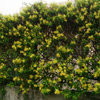
Summerwinds has a 40% off sale and I grabbed this very cool plant and it was only after I got home that I realized it was said to be only hardy to 25-30'degrees. Can anyone confirm it's hardiness? Unless climate change will rescue me, I live where it can get below 25 degrees at least once or twice in winter and sometimes less, though not very often.

Comments (6)

  • 8 years ago

    I live in Houston and can't keep it outdoors in our mild winter. Love that plant but it doesn't love my garden,

    echolane thanked bossyvossy
  • 8 years ago
    last modified: 8 years ago

    It's almost certainly not going to be killed outright (unless the Bay Area has another winter like 1990) so you might as well try it in a sheltered spot and see what happens. I would have figured they were common enough in most parts of the Bay Area that you'd know whether you'd seen them around your neighborhood or not. I know it's all about the microclimates there.

    Saw it or a related species all over SE Australia...probably the most common native shrub after Callistemon. Did not know this particular one was from western Australia...which makes me think reports of difficulties in Houston or Florida have as much to do with the summer as with the winters. Perth is much closer to LA than Orlando, climate wise; and many western Australian shrubs have trouble even in mild Sydney. (summers about as warm as coastal Rhode Island, on average!) Even if they appear not to...the summer can really be setting the stage for a winter failure.

    echolane thanked UpperBayGardener (zone 7)
  • 8 years ago
    last modified: 8 years ago

    Sunset used to have a plant database on their web site but apparently took it down. Otherwise if you don't have the book it is likely to be at a nearby public library. Or garden center. You would find where you are on their climate zone mapping (near the front) and then look the shrub up in the plant encyclopedia section.

    Basically the USDA hardiness zones only involve winter cold and not summer conditions. Whereas the Sunset climate zones are based on the entire picture.

  • 8 years ago
    last modified: 8 years ago

    The Sunset system is no doubt conceptually superior. However, especially for the non-western parts of the US, there are probably areas of improvement in terms of how the lines were drawn. The USDA/Harvard system was useful in its time, because the limited ability to crunch data back then meant looking at the single factor of mean minimum temp made the most sense. Well, it is still useful I should say...just with limitations. Listing monkey puzzles as "zone 7 hardy" is fine according to the USDA map, because they survive zone 7 in the PNW. They generally don't survive zone 7 in the east with our warm nights and sometimes heavy summer precip. What I think would be cool would be a complex multidimensional coding system that would take into account summer temps (night AND day), winter averages and extremes, and patterns of precipitation. So each plant might have a target value, like L7a, indicating conditions in its native habitat AS WELL AS what it is known to adapt to, and your proximity to that value would give you a sense of how likely you would be to be able to grow it. It would produce a strange looking map but that really wouldn't matter these days; you needed maps before computers and smartphones because they were the easiest way to distribute geocoded data. Now, the USDA or whomever comes up with my proposed map could just create a GPS enabled app that tells you, ok, wherever you are right now in the USA is plant adaptation zone K8c. Or whatever.

    However given that, let's face it, ornamental horticulture is an increasingly arcane topic, we should just consider ourselves lucky for having gotten a final update to the USDA map, which I think is pretty accurate these days. Nothing like I propose will ever happen because for one thing, the current landscape plants industry doesn't really give two you-know-whats if, for example, a bunch of people in Raleigh, North Carolina try to grow a new variegated Drimys 'Happy Mornings' ® (real cultivar name: 'Vrukbarf') and it dies after a year, as long as they made a net profit on those sales.

  • 8 years ago
    last modified: 8 years ago

    Believe it or not, Alogyne is not listed in either of my Sunset Western Garden books, both of recent publication dates.

    Hardiness became of great interest to me after I lost a lot of plants many years ago. The temperature dropped dramatically outside the norm to 9F according to my min/max thermometer, and it certainly sensitized me to the issue. I already knew that there are a zillion microclimates in our area but I had to learn by experience that I happen to be situated in a colder microclimate within my larger Sunset microclimate, even colder than many in my own small town. Many plants sold in my area are not hardy enough for my garden so I'm pretty careful about checking hardiness. That's why I was so surprised to notice hardiness AFTER I returned home with this plant.

    David, why do you say that ornamental horticulture is an increasingly arcane topic? How tragic, if true! OTOH I would have no trouble believing that the landscape industry has a careless attitude about hardiness. Maybe an App will come along that fits your proposal.....