

Philodendron Micans sap (?)
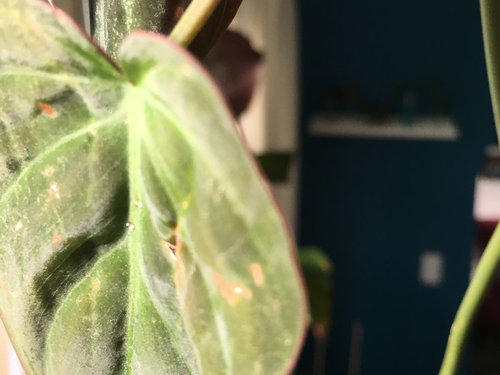
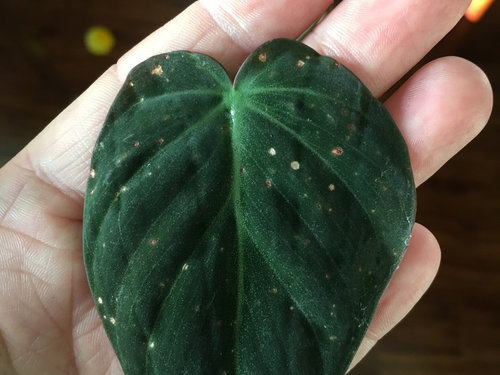
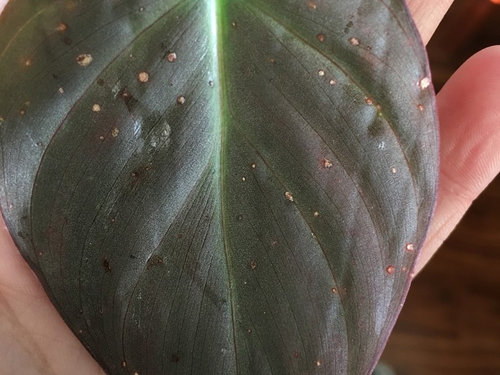
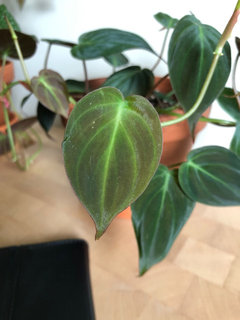
I bought a micans a few weeks ago and I sprayed it with 3 in 1 before bringing it in the house with my other plants. I noticed that on a few of the leaves there was some tiny spots that I thought was potentially from some sort of pest that had been eradicated previously because I couldn’t find any other evidence. Today I was noticing while on my “plant patrol” as my husband calls it that some of the leaves had tiny dots that looked like water droplets or dew. It is sticky to the touch. And when I wipe it away it leaves the scar on the leaf that the others have that are almost see through. So I immediately thought of honeydew that comes with mealybugs and other sucking insects but I can not find a single insect/pest anywhere. Any thoughts?
Comments (45)
 8 years ago
Isolate the plant asap. It sounds like it may be scale. Here is a link:
http://www.guide-to-houseplants.com/scale-insects.html
The quicker you treat any bug or disease the easier they are to beat.
If you have never treated a philo, look into a treatment you are thinking of using, and if it is stronger than neem oil, make sure it won't harm your plant by googling the active ingredient. I have always found a link that gives the plants not to use a particular insecticide on. Good luck. Bugs are the worst.
 8 years ago
Plants that were living under berry like fruit tree often have that sign, caused by ripen fruit that crack on tree.
Related Professionals
Richmond Landscape Architects & Landscape Designers · Springfield Landscape Architects & Landscape Designers · Martinsburg Landscape Architects & Landscape Designers · Macon Landscape Contractors · Salina Landscape Contractors · Alexandria Landscape Contractors · Aiken Landscape Contractors · Lake Havasu City Landscape Contractors · San Luis Obispo Landscape Contractors · Panama City Interior Designers & Decorators · Ottumwa Interior Designers & Decorators · Milwaukee Interior Designers & Decorators · Saint George Interior Designers & Decorators · Kalispell Interior Designers & Decorators · Pierre Interior Designers & Decorators 8 years ago
I don't see any pests. The dripping from the leaf tips is normal, called guttation.
Cassandra H
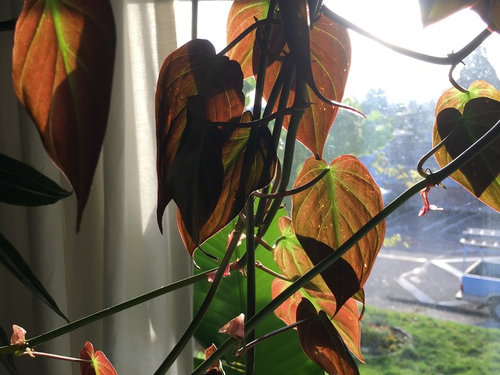
Original Author8 years agoI can’t find a single pest on the plant! Nothing! It’s so bizarre. I took it down yesterday and looked and just about every leaf. I shook the plant nothing flew off. There’s no hard armored scale, no mealy bugs, no mite’s webbing, no tiny aphids. I even went to get a magnifying glass and looked and there’s nothing I can see. It does appear to be mostly on the lower sets of leaves but not all of them. They see the most sun though. Maybe I should move it to a less direct location and see if it continues? Maybe I should just get rid of the plant because I don’t want it to infect my others if it’s sick in some way. It’s so weird.
I’ve seen guttation happen before on my Monstera if I watered it later in the day instead of the morning. Usually the next morning it would have water droplets on the tips. But that felt like water. I’ve also seen one of my alocasias do it. But it always feels like water and it always is on the leaf tip. This is sticky like sap or sugars from the plant.
This is happening to tons of the leaves and leaving scars all over them.
 8 years ago
I'm not an expert by any means, but this looks a lot like bacterial leaf spot, aka xanthomonas infection. It's hard to tell because the leaves are so dark, but that's the best match I know of for the symptoms it's showing. I would quarantine the plant and take a cutting (in a ziploc) to a nursery for confirmation.
Cassandra H thanked Sage TX 9a- 8 years ago
I have had guttation from my Setcreasea pallida, aka Purple heart and from a sweetheart Philodendron. The leaves stayed dry, as water escaped from the tip. Plants are so amazing.
In your first picture, Cassandra; I see brown dried up spots that are larger than what is seen on the other leaves, did those spots start out like the ones on other leaves? I googled Sage's suggestion. It seems like the best fit so far to me. Lots of info to read if you choose to. Good luck.
Picture from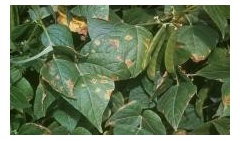
EPPO Global Database
Cassandra H thanked Laurie (8A)  8 years ago
Hi! I have been looking all over the internet for something like this because I'm finding the same exact thing on my Philodendron Micans as well. Did you ever figure out what the issue was? The plant seems fine aside from the spots and it continues to grow. I have had it near lots of other plants as well and have not seen it spread. Any help appreciated!
Cassandra H
Original Author8 years agoI could not find anything wrong with my plant ever. The only thing I could figure was that it possibly was in too sunny of a location because it only affected the lower leaves hanging in the window. It did not spread to any other plant and the roots looked totally fine. Is your plant potentially in a space like mine was?
- 8 years ago
Hmmm.... mine sits on a shelf that gets some sun from sky light during the day so maybe that is the issue. Good to know there were no further issues though. I cut off some of the most affected leaves and will see how it does from now on, maybe in a new location. Thanks!
- 8 years ago
Hi, I am wondering if Cassandra and Carina are still having this same issue with their micans. I am also having the same issue with mine. Any updates? Thanks!
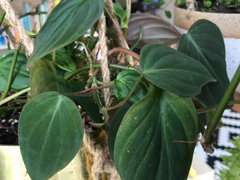
 8 years agolast modified: 8 years ago
Hi I have the same problem with my Micans sticky sappy thing under the leaves. I also notice it in my calathea.
I have treatedwith neem oil it dosent seem to work. I try using fungicide with active constituent myclobutanil 0.05g/l I even use pyrenthrum insect pest spray. No improvement either.
Please helllp
Cassandra H
Original Author8 years agoCan you post some pictures?
Have you checked for scale and mealy bugs and the usual sticky substance.
I still am not sure what was happening to my plant. I think two things were possible, some type of bacterial/fungal leaf spot or maybe micans like some other philodendron have extra floral nectaries to attract pollinators.
- 8 years ago
i don't know if my experience is relevant... but a couple of years back, i had something that seemed similar. i looked and looked and looked for signs of pests. never saw any. i had the problem on aglaonemas and homolamenas (didn't have any philos). my sticky droplets tended to be on the bottom side of leaves, but otherwise looked and sounded similar. also, after a while, the homolamenas began to get more of the watery spots near the outer edge of the leaf to the point that whole areas looked watery, and then leaves would die from the edges inward.
also, the infection moved up through the stems of the plant... so it wasn't possible to cut off fresh growth for cuttings. it was systemic - ugh.
whatever it was, it moved through my entire houseplant collection.
my advice would be to google "bacterial ooze test" and then click for image results. you can test your plant by cutting a stem with a sharp scissors or knife and suspending the cut stem in water. if white latexy fluid begins to fall toward the bottom of the glass. give it a while, but mine didn't take more than a few minutes to show up.
if it is "ooze," toss the plant on the compost pile or in the trash can, and use 10% bleach to clean all of your houseplant tools and things that you might have handled after touching the plant.
i tossed my entire collection and will start again later this year.
cheers,
nancy
ps i hope it's not ooze. bacterial leaf spot sounds like it is much easier to treat.
pps the ooze rarely killed the plant, but it stunted growth and the plant simply wouldn't grow properly. it took me a long time to realize what was going on. i don't think the problem is common.
- 7 years ago
Any update on the treatments y'all tried for these sticky droplets and spots without any evidence of pests? The plant otherwise looks happy and healthy and has been growing very well! I've been casually googling what it could be, until I found this thread today. I applied Systemic Granules Insect Control today (which covers a multitude of pests, but just like you all, I can't find any real pest evidence). Even my cuttings are doing well water propagating despite the spots and sticky drops (last two photos).
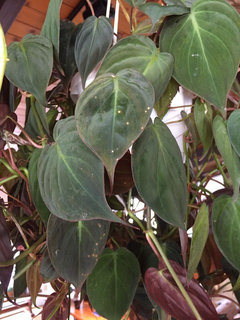
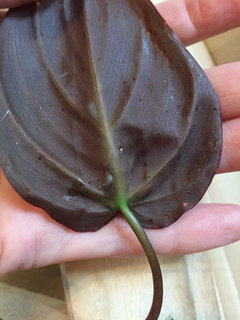
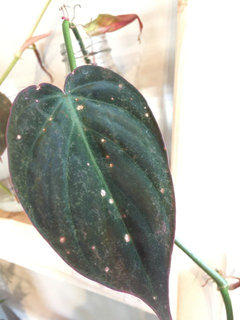
 7 years agolast modified: 7 years ago
I am also experiencing this problem! I've repotted several times and do not see pests anywhere. I don't have any sticky sap though. Please help!
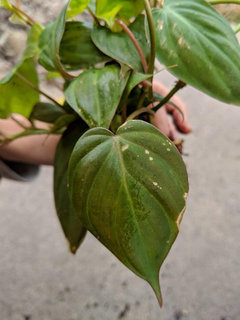
- 6 years ago<?xml version="1.0" encoding="UTF-8"?><md>My micans is doing the same!!! What did you all end up finding was the cause?! I love this plant, it’s growing like a weed with zero pests that I can find, but it has lots of these weird little spots? Hope it’s not the ooze as mentioned above!!!
- 6 years agolast modified: 6 years ago
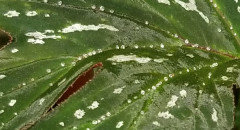
It is probably Cystolith which is an excretion of excess calcium carbonate - no harm to the plant, just its way of ridding these minerals (think of kidney stones in a way).
It seems like philodendrons and one species of begonia that I know of (B. aconitifolia) have this common issue.
Here is bottom and top views of some on a leaf of B. aconitifolia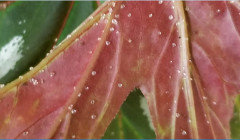
- 6 years ago
Hello, I have the same issue and cant see any pests either. Plant was perfect until it sat in my house the last few days.
First received: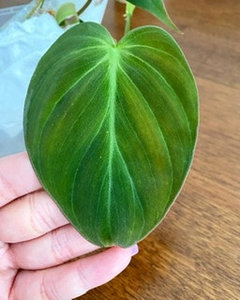
after a few days: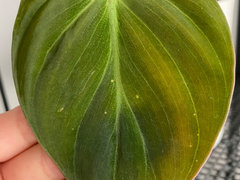
the back of the leaf...little water spots before it form a brown spot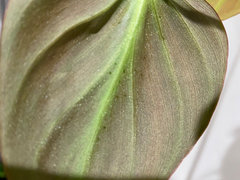
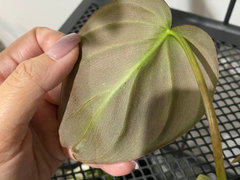
Little marks on the back
I have just gone crazy on insecticidal soap wipe down of the leaves and then quarantined it away from my Glorious and sprayed the surface of the soil too!
Help! How did everyone’s go?  6 years agolast modified: 6 years ago
I bought my first micans about 3 weeks ago and it only had a few spots, couldn't see any sign of pests but over the weeks it progressively got worse to the point where the second newest leave looked like it had chicken pox..
I was searching for pests every few days, 2 days ago I found a tiny white thing (wish I took a photo) that looked like a single mealy bug. I got rid of that but the dots kept getting worse.
Today I decided to wipe the leaves down with a wet tissue and soap and actually found hundreds of microscopic dots, sort of a brownish/red colour - no clue what they are (also wish I took a photo of these). If I actually looked close enough I could see them all over, I wasn't expecting them to be this small, literally would need a microscope.
Some of the other symptoms were also little spots of "sap" and possibly stunted growth? I know for a fact they were some sort of pest but if anyone knows more about them it would be greatly appreciated - also INB4 I don't think they're spider mites, these are way smaller.
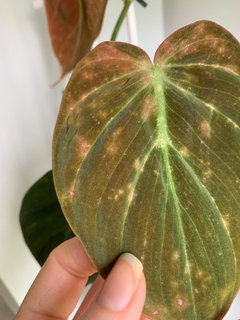
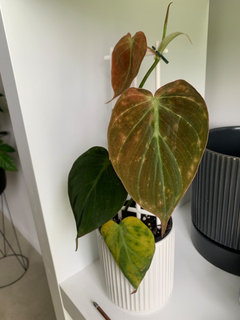
- 6 years ago
Ella, maybe it is spider mites - philodendrons often get a bad infestation of spider mites. The old leaves are pretty well shot and if spider mites, then best to remove them. Spray your new leaves to keep them fairly pest free. PS - this philodendron is sensitive to cold - seems more sensitive than others so when I bring mine indoors for winter (late October) the leaves often show cold damage within days. They fall off eventually and the process starts anew. The important thing is to keep your vines healthy (and as pest free as possible).
Last August - the tray is filled with P. micans along with a couple of others. It and others have been in this tray for years with one large hole drilled through the tough plastic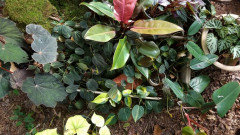
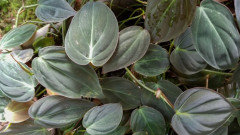
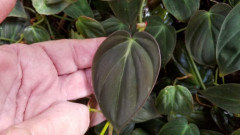
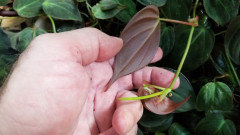
It looked better 10 years before (same tray) since it only competed with the tradescantia.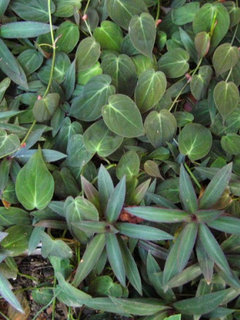
 6 years agolast modified: 6 years ago
I’m going to hop on this too. Same issue. I ordered mine and it was already having this problem. I thought it might go away with the new growth but no luck. I thought it might be like edema on jade so I have reduced watering. I’m now going to try RO water and not tap water. Maybe I’ll try propagating it but sounds like that wont work either. I think I might end up buying another one. I really like this plant. this seems like a very common issue so I feel like I’ll buy another one and it’ll have the same thing happening. If it is bacterial, how do you go about treating that?
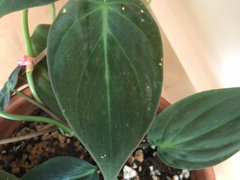
- 6 years ago
Have you tried wiping down the leaves and stems? Mine was defs mites and is looking great now after spraying a few times with miticide :) I think they are just a magnet for pests
- 5 years ago
I have the same problem. It IS CONTAGIOUS and will spread to your other plants!!! Currently my micans, philodendron snowdrift, philodendron ring of fire, alocasia frydek, various calathea, ctenanthe and stromanthe have all been infected. I have started spraying regularly with a neem solution which should be fungicidal.
I don't think this is a pest unless the bug is microscopic. I believe it's a fungus or a disease. I have made a post asking for help on Facebook and reddit (r/plantclinic/comments/inr5yr/small_dots_with_sticky_liquid_behind_leaves/?utm_source=share&utm_medium=ios_app&utm_name=iossmf) and I intend to seek professional help from a nearby university. This has already spread to a dozen of my plants, many are very valuable and all are extremely precious to me. I will update you all on what I find and would greatly appreciate any feedback on what has worked in treating this.  5 years ago
rollinlynn King and queen... what if there is no ants nest, does it still occur? And @ella Robinson- your picture looks exactly like spider mites but what is happening with the others does not.
- 5 years agolast modified: 5 years ago
I’m having the same problem here! So glad I found this post because there really isn’t much information out there about this I’m going to contact the shop I bought it from to see if they have any ideas
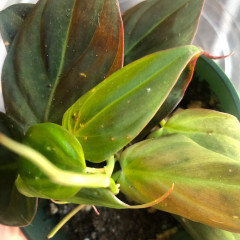
 5 years ago
A friend of mine is having the same issue with her Pink Princess Philodendron. Has anyone figured it out? She DID have aphids, could they cause this? 5 years ago
Also have this issue, mine looks like all photos posted bar Ella’s. No insects whatsoever.
Looking further into extrafloral nectaries and it seems plants do this even without an ants nest (or other insect nest) present so this may be the case, especially since we all seem to have sticky sap rather than the typical transpiration?https://en.m.wikipedia.org/wiki/Nectar
I’m baffled as to what else it can be as growth and rest of the plant is still fine.Hopefully we can get a definitive answer one day!
Chloé
- 5 years agolast modified: 5 years ago
I have the same problem with mine. It's been growing new leaves and they look great! However, some leaves have yellow tiny dots. Any idea if it's fungal? I don't see any insect or webbing.
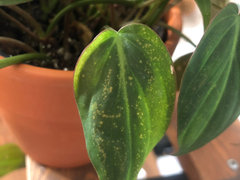
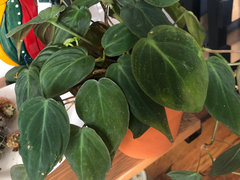
 5 years agolast modified: 5 years ago
Hi. I have a similar problem, but I think we all can have slight differences. Mine look like holes, more brownish. But no white, no signs of pests, no water spots on the other side. Just tiny holes and sometimes cracks. Somewhere I read an opinion that this could be caused by too hard water.
.
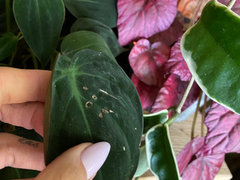
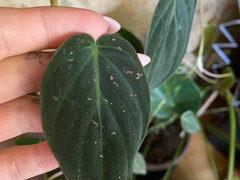
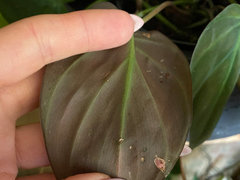
- 5 years ago
Maybe there is some vitamin or mineral deficit?y other plants have some cracks, but not holes....maybe it is true about the hard water. I use just tap water.
 5 years agolast modified: 5 years ago
I am having the same issue with my micans. Has anyone figured out what it could be? I bought this plant a little over a week ago and it had no holes in the leaves. Now it seems to be taking over a majority of the leaves.
- 5 years agolast modified: 5 years ago
This was answered a couple months ago by rollinlynn-kingandqueen.
One of my micans has done this with no signs of pests and the plant is perfectly healthy. It looks exactly the same as the original poster’s photos and many other photos in the comments. In the wiki link below under growth habit, it explains what is happening.
https://en.m.wikipedia.org/wiki/Philodendron#Growth_habit
And if you want to get really scientific, this explains it much greater depth.
https://academic.oup.com/botlinnean/article/180/2/229/2416558
 5 years ago
The sap question seems to have been answered; however, the spotting is bacterial leaf spot (have also seen the term "bacterial blight"). You'll want to treat the plant with a copper fungicide, and I've seen others use an addition of neem oil (must be pure, not "extract") for good measure.
See the top answer on this reddit thread; the use of fungicide and neem oil produced results within a couple weeks:https://www.reddit.com/r/plantclinic/comments/gfb7af/please_help_me_diagnose_my_philodendron_micans/
I also found this academic report helpful; scroll down to the steps for controlling bacterial disease:- 5 years ago
My berkin who has not had her soil switched to my quick draining mix looks to have a freckling on the leaves...this is an answer not yer seen on this thread...i thought i would toss it out there.
Cheers best of wishes plant parents
 5 years ago
Pests.... What pests?? 🪳🪰
🚨Yes, you heard me right those are not pests. Lately I saw few posts on facebook and instagram regarding these spots on leaves. So, I thought to share with you.
Micans are one of the types of Philodendron which have extrafloral nectaries, nectar glands which produce a sticky sap on the leaves and stems of the plant. This nectar is harmless but can leave small round marks on the leaves which can be confused for pest damage. So, please don't cut those leaves. 💚🧡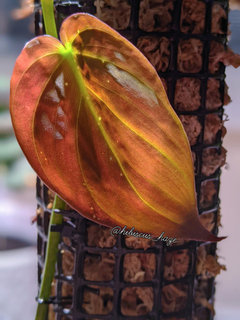
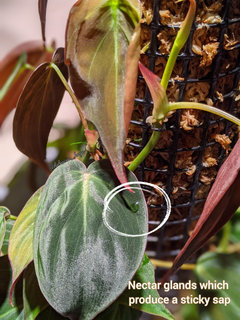
- 5 years ago
If anyone finding this while trying to diagnose their micans. I messaged the nursery I received my plant from which arrived with thlse dots in question. Turns out it is extrafloral nectaries. Some further reading with photos as well. https://plantcircle.co/everything-you-need-to-know-about/extrafloral-nectaries/
 3 years ago
I have the same problem withwithmostwith most of my velvet leaf Philodendrons. my Philodendron Melanochrysome, Philodendron Gloriosum and Philodendron VerrucosumVerrucosum also . and I'm pretty sure their extrafloral nectaries is causing that. I wish they stoped producing it but they don't
- 3 years ago
Philodendron produce extrafloral nectaries (the tiny pin-holes) see https://academic.oup.com/botlinnean/article/180/2/229/2416558?login=false, which are glands that secrete nectar to attract ants (when in nature). The Philodendron, in turn, obtains nutrients from the surrounding ant nests and the aggressive nature of ants protect the plant from other insects that would be happy to munch on it.
 2 years ago
I have the same exact issue with my tree philodendron. yellow spots, sap-like water drops on the back part of the leaves. Spots keep increasing in numbers, mainly on the bottom leaves. The plant is growing quite fine.
I did the OOZE test, i can see somewhat movement in the water. it's not super white, but i see the same exact flow as shown inOOZE test videos. So i'm thinking maybe it's the early stage of a bacterial wilt. I'm so upset because it's been growing so great :((( does anyone know how to treat bacterial wilt?- 2 years ago
I have the same exact issue with my tree philodendron. Yellow spots, sap-like water drops at the back of the leaves. And the spots are increasing slowly, mainly at the bottom leaves. And the plant is growing fine. shooting new leaves and everything.
I did the OOZE Tests and i can see a very similar flow in the water but not so white, not so significant. So maybe it's a light bacterial wilt :(( I don't know and i'm so upset. Is there a treatment for bacterial wilt?
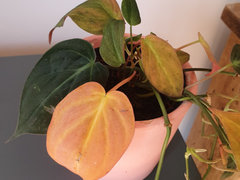
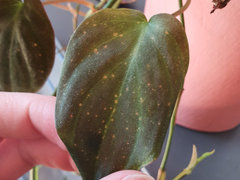
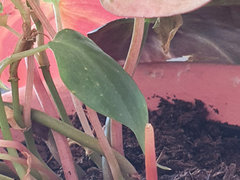





RollinLynn KingandQueen