

POLL: Home Value vs. Mortgage Amount
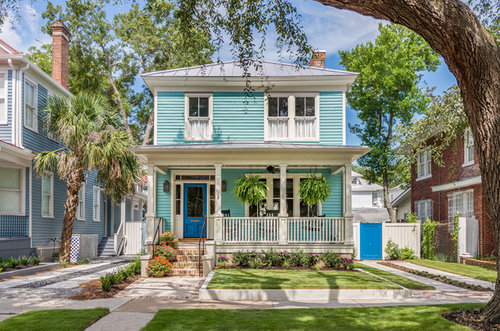
Do you have a mortgage or other financing for your home? If so, does your financing total more than half the value of the home?
Vote and tell us below!
Comments (108)
 8 years agolast modified: 8 years ago
@bry911
Hah, my older brother is the one who is broke in my immediate family. I could share several anecdotes about other people I’ve encountered that would support the theory of ‘nurture influence on financial behaviors in adults’, but instead I’ll just say that line of thinking stops short of any claim that it’s the sole consideration.
Maybe I was more inclined to look to my parents as examples and to follow a similar approach financially. Maybe it’s just random. My brother *was* the one who had more freedom to do whatever, growing up, and sometimes that whatever was less than responsible (like quitting his job when he had truck payments to make and my parents co-signed, which is why they told me they would not be co-signers when it came time for me to buy my first car. Their lesson became my lesson in a way...).
 8 years agolast modified: 8 years ago
I could share several anecdotes about other people I’ve encountered that would support the theory of ‘nurture influence on financial behaviors in adults’
I fail to see the relevance of this to the topic at hand. Of course, you can find the effects of nurture influence on our behavior, after all we are essentially culmination of our experiences. Our personalities don't develop in a vacuum. However, that isn't relevant. The question isn't whether or not our environment affects us, but whether or not it creates a predictable outcome. And it doesn't.
The reality is actually fairly simple, look at those raised in poverty, most will continue in poverty largely because of the socio-economic factors of poverty. However, when we examine those who make it out some will be spenders and some will be savers. The ratio of spenders vs. savers in that group is largely the same as the general population of the area.
The spenders will tell people that they grew up watching their parents have nothing and so want nice things immediately. While the savers will use the same verbiage except note that they don't want to be in that financial situation.
In reality the question largely suffers from a confirmation bias. You set out to explain something and so you do. Grab a group, find some commonalities, and then proclaim understanding. However, those commonalities may be just as common among people who didn't ascend or descend into the studied group.
In the end, risk appetite is the real big predictor.
Related Professionals
Youngstown Architects & Building Designers · Bronx Architects & Building Designers · Amherstburg Design-Build Firms · Martinsburg Home Builders · Sioux City Home Builders · Medford Home Builders · New Braunfels Interior Designers & Decorators · Dubuque Interior Designers & Decorators · Rockford Interior Designers & Decorators · Sedalia Architects & Building Designers · Temecula Architects & Building Designers · Coos Bay Architects & Building Designers · Woodward General Contractors · New London General Contractors · Middletown Flooring Contractors 8 years agolast modified: 8 years ago
Growing up I thought we were poor but it was just my dad living way below his means. I am pretty good with money we have decent retirement accounts for our ages, 6 month emergency fund, and our only debt is our house. My sister only has mortgage debt as well... she doesn't save for retirement but is a bit of a cash hoarder. My brother's are both pretty broke and live above their means. We all grew up in the same household.
- 8 years agoUnlike my parents, who kept their finances a secret from their children, when each of my kids got to the age of 15, I sat each one down on bill paying day and showed them the monthly bills, the mortgage, and what I had in my checking account on pay day. They were astonished at the cost of living. I tried to teach them to first pay your bills and what's left is for all the other stuff like groceries, etc. I encouraged them to have a savings account for emergencies and piece of mind.
They are all in their 20s now and understand, value and appreciate their money. We are debt free, in our 50's, with a home and lake cabin. On one income. My 5 siblings are different in their use of money. I hope my kids continue to respect their income but it could change because life is ever changing.
Make a financial plan that lets you sleep at night. Whatever that is. - 8 years ago
Yes, Sammy, I do have a business degree, and a JD (magna) and an LLM. I also don't live in a bubble and I see the people struggling with low wages and high housing costs. So your are saying that income distribution, income inequality are not a problem in this country? You probably don't belive in climate change either.
- 8 years ago
FWIW, I did not have a sheltered start in life. However, wondering when we would lose our home to the tax collector certainly taught me some lasting values! I knew enough to conserve assets when I did have them. (
(mojomom -- I believed that we were discussing management and mismanagement of assets, not how they came to exist. I do not understand why you would want to post conjecture about my personal life or finances or how that pertains to this discussion. I agree completely about the dangerous and growing disparity between rich and poor in our nation. I'm surprised you do not know *that* about me!) I am extremely worried that my nation will disappear without a backbone middle class.
I am not disparaging people who are living hand to mouth out of necessity. My dismay is to see Americans willingly living in debt, *over-consuming* -- apparently unconscious of any tomorrow.
Is this the new American Way? How long has My Life on Revolving Credit been a norm? Is this sustainable?
- 8 years agoMortgage debt is different than other debt because the underlying asset is different. State laws vary, but owned homes and some types of retirement savings are protected from being seized by creditors in a bankruptcy. That is the reason my father advocated that a mortgage should be paid off ASAP and never pledge that home as security for any loan. He has seen many agricultural bankruptcies in the past and survived the high interest years with some prudent decisions and a focus on reinvesting in the business when cash was available.
I am happy to have the freedom to make decisions without the stress of making payments. Yes, I could make more and bigger deals with other people's money, but I have more than enough headaches with the handful of properties that I now own. I did have credit arranged for a specific foreclosure property that interested me but that deal did not happen. I don't have the appetite for risk because I don't have a psychological need for more money. I can afford what I want to have and am comfortable forgoing opportunities to make big profits with borrowed funds because I don't have the stomach for the potential losses. - 8 years agolast modified: 8 years ago
Chisue, I apologize, my comment to you was uncalled for and I will edit it out. I do understand your concerns about the shrinking middle class. My point is that some people by necessity must devote a significant portion of their income for housing and simply do not have the opportunity to pay down their mortgage any faster and often have to borrow for necessary repairs, making it difficult to build equity in their homes. Affordable housing is becoming an increasingly troubling problem in many areas.
Yes, many overconsume on credit and that will continue to happen, but I think (hope) that tightening of credit and lessons learned from the recession will have an impact.
Actually, Lyndee Lee brings up a good point where that lesson was learned in agriculture. Follwing some good years during which farmers overspent for land and equipment on credit thinking the good times would continue, crop prices crashed in the early 80s and land values tanked. At the same time interest rates were skyrocketing. There were many agricultural bankruptcies back then. Agriculture just went through another nice boom ending about four years ago, but the landing has been much softer. While this has been painful for some, but not as devastating as the 80s farm crisis. In part the softer landing was because of a change in lending practices brought about by the 80s, and, in part, because farmers are more prudent. Maybe consumer borrowing will follow suit.
- 8 years agolast modified: 8 years ago
Mortgage debt is different than other debt because the underlying asset is different. State laws vary, but owned homes and some types of retirement savings are protected from being seized by creditors in a bankruptcy.
Homestead exemptions protect up to $22,975 of home equity ($45,950 if MFJ) in bankruptcy. A few states may add a bit to it, but it is a fairly small amount. That is both paid in equity and unrealized gains on the property and so it is absolutely not a reason to be without a mortgage. It is a better reason to never let your equity exceed $50,000 because it is at risk, but that is a pretty bad financial position anyway so you are better off just ignoring bankruptcy protection.
Furthermore, Alaska, Arizona, California, Hawaii, Minnesota, Montana, Nevada (for the last 10 years), North Carolina, Oklahoma, Oregon, and Washington are all non-recourse states and banks can't attach to you for mortgage default. In other words, banks can foreclose but can't recover any deficit against other assets. In those states mortgages are much better than paying off your home. (Note: many of these don't include refinancing.)
Additionally, Idaho, Montana, and New York are one action states (as well as California and Montana for other real secured loans) which means banks are limited to one action against you and therefore, are effectively non-recourse states. In these states a bank may foreclose, or get a judgement against you for your loan balance but not both.
---------------------
No matter the interest rate, a 30 year mortgage can be paid off in 5 1/2 years if you make a "double payment" every month
I was going to correct this earlier but was typing on a tablet. This is mathematically impossible. When interest rates get lower a lower percentage of your payment goes to interest and making double payments is less beneficial (less interest avoidance).
At current interest rates doubling up on mortgage payment alone, will require a little over 10 years of double payments to pay off. Doubling the entire payment including escrow will get you down to just over 9 years.
At the 3.5% interest rates that many people refinanced at, it takes 2 more years to pay off doubling your payment.
I am on a 15 year 2.75% loan and doubling my payment takes me from 15 to 7 years.
- 8 years agolast modified: 8 years ago
I have a big ask for the people reading this... For a moment forget your position and really try to internalize this next bit.
This thread is largely conflating two related but very separate ideas. Debt may or may not be from overspending and overspending may or may not result in debt. There are many people on a thread about mortgage debt who are testifying about overspending, while they believe they are commenting on debt. They are not, in fact, most of the thread isn't talking about debt, rather overspending. It certainly isn't talking about mortgage debt. I will join you in some of the sentiments about overspending.
So if the question becomes should you pay extra on your mortgage or buy a new gadget that you don't need. Well the answer is pay extra on your mortgage, but that isn't because paying extra on your mortgage is great, but because buying things you don't need isn't even good.
However, if the question becomes should you pay extra on your mortgage or invest in properly diversified mutual funds. Well the answer is a lot more complicated. Both get you some financial security, so you should naturally pick the one with the best return at the lower risk. Which is the mutual fund, they have better returns so more financial security and lower risk than houses. I know this is a shocker, but houses are not really a risk free investment. I am reminded about questions I have seen on this board about tax assessments, major repairs, etc.
For ultra-safe returns, a 30 year $100,000 treasury bond purchased today will have earnings totaling $188,500, whereas a 30 year mortgage today will have total payments of $186,170.
So what if 30 year treasury bonds don't appeal to you? Well, looking at the current rates of money markets they will grow up to $173,312. In other words the cost to have instant access to your $100,000 at any point is about $36 per month. Whereas a house you have to get the property in a marketable condition and pay a realtor to sell your home.
You don't need superhuman powers to make investing a smarter move than paying off a mortgage. Almost any properly diversified investment will make investing smarter than paying off your home.
---------------
When looking at homes, it is important to remember we buy things with cash, and the farther from cash the more we risk not being able to pay for things. A lot of the logic behind always having a place to live doesn't hold up to reason. Believe it or not, houses aren't edible and I have yet to find a doctor who is willing to get paid in bricks. It seems to me that actually being alive is an important part of the equation.
Cash can be used to pay off the house so you end up in the exact same position you would have been in if you started by paying off your house, but that is only one of its uses. It can also be used to pay for food and doctors.
-----------------------
This conflation of two separate questions is very common in financial situations. A completely unrelated, but powerful, example is the refinance question. It goes like this:
Suppose you have paid for 25 years on your current 30 year 5% mortgage. The bank offers you a 30 year 4% loan with absolutely no closing costs or fees. Should you do it? The correct answer is, obviously, yes, (even if your goal is just to pay off your house), but if you ask 100 people this question 98 of them will say, "no, you only have 5 years left."
- 8 years ago
bry -- Do we assume that the mortgage holder will be able to earn more than the 4% interest he'll be paying the bank for the use of the money?
- 8 years agoAs I said, state laws vary. In my home state, the exempted value of a primary residence is unlimited for up to one acre in city limits or 160 acres on a farm. With decent land and buildings, that exemption could be several hundred thousand dollars. Florida also has unlimited value on a home but in such cases, there are rules about residence in the state and length of ownership in the property.
My grandfather was among the multitude of people who lost their property during the Great Depression so that experience did influence my father. I happened to make some very good purchases when I had cash to spend and the best deals were only available to buyers with cash; that experience influences me. No one is an average person with 2.3 children and no academic study is ever going to successfully accoount for the natural variations in humans and their behavior. Ignoring the effect of individual beliefs and behaviors will throw a monkey wrench into any system which depends on logical and rational decisions by the participants
From an academic point of view, refinancing a mortgage for lower rates without fees would be an obvious winner. Ordinary people might refuse the offer because most of us don't have extensive experience with situations where you can manipulate the assumptions to determine the correct answer. I have never seen a no cost, no fee, low interest mortgage in the open market so my knowledge of the improbability of the situation distracts me with curiosity about the nature of the question. - 8 years agolast modified: 8 years ago
bry -- Do we assume that the mortgage holder will be able to earn more than the 4% interest he'll be paying the bank for the use of the money?
Although that will be great, we don't have to. I used 2.95% for Treasury bonds (which was last night's rate) and 1.85% for a money market (yesterday's Citibank rate). In reality we would probably want at least some of the money invested to beat the 4.625% interest rate that I used. However, I am largely using your criteria for economic safety and not economic gains. In reality, I would put most people in a mutual fund of some sort that I expected to beat the 4.625%.
----------
With decent land and buildings, that exemption could be several hundred thousand dollars. Florida also has unlimited value on a home but in such cases, there are rules about residence in the state and length of ownership in the property.
Again, you seem to be missing the most basic premise of this. You seem to continuously bring your bias into your reading. There is no situation where having a paid off house ever beats owing money on a house and having the cash to pay it off.
This isn't rocket science! No one loses their house because they owe money on it! NO ONE! People lose their house because they don't have the money to pay off what they owe on it. Just because someone has a mortgage doesn't mean that they can't pay off their house. You all can't seem to separate being in debt from having debt.
I have quite a bit of low interest mortgage debt, in fact, several times my annual salary. However, I have liquid assets, that can be converted to cash within about 72 hours, which are many times greater than my low interest debt, and much of that money is protected in bankruptcy.
The entire bankruptcy thread is absolutely ridiculous. If you have $200,000 sitting in the bank and owe $188,000 on your mortgage, and start seeing signs that you might be in financial trouble, then withdraw $188,000 and pay off your mortgage and then you are in the exact same position as someone who had a paid off house! Even forgetting the fact that it is a lot harder to be in that situation when you have $200,000 of liquidity. There are probably some time constraints, but it isn't hard to protect yourself.
Additionally, there may be several advantages to a loan as you approach bankruptcy conditions.
---------------
From an academic point of view, refinancing a mortgage for lower rates without fees would be an obvious winner. Ordinary people might refuse the offer because most of us don't have extensive experience with situations where you can manipulate the assumptions to determine the correct answer.
It isn't academic, and the problem isn't with the question, nor is it even an esoteric answer. The problem is that people read things into a question that are not presented in the question.
Were I to present the actual two questions separately most people could answer them individually. In fact, people have in this very thread.
Question 1: If your goal is to get your house paid off faster, which is better - paying more or paying less?
Question 2: If your goal is to get your house paid off faster, which puts more money to principal - a higher interest rate or a lower interest rate?
The answers are easily higher payment and lower interest rate. So in the refinance question the solution is to refinance at a lower interest rate, but continue making your current payment. The home will be paid off in 58 months instead of 60.
As for specialized training, admittedly I can do an amortization table faster in excel than I spend finding and using an on-line calculator, but if I have Chrome open I often just use an online calculator instead of opening up excel. So my extensive experience with situations is largely just getting the facts before I make a decision, and using Google.
For fees, just plug them in and see. Fees should be checked when the interest reduction or time in the home is low.
I have never seen a no cost, no fee, low interest mortgage in the open market so my knowledge of the improbability of the situation distracts me with curiosity about the nature of the question.
No one said anything about a low interest mortgage, maybe the prevailing rate was 3.25% at the time and 4% has a 3/4% penalty. This is just further evidence that your preconceived notion bars you from simply addressing the question at hand
 PRO8 years ago
bry911, you make perfect sense and validate my original comment on debt way back in December of 2017. Taking out debt and using it responsibly is a smart strategy. The problem is that emotions come into the equation and blind people to the facts.
It's similar to those who never want to owe money for income taxes. Rather they love getting a fat refund in April, thus giving the government an interest-free loan for 16+ months. Their reasoning is that they don't have the discipline to save the money and pay it on April 15. So the government becomes their banker and their mommy :(
 8 years ago
I'll have a reasonable amount of debt when I am done with my build but y net worth is still quite positive. That's the right measure, I think. A lot of debt with a lot of assets, and decent liquidity seems like a rational move to me - esp in this era of super low interest rates.
(and I am hoping Amazon picks Raleigh for their 2nd HQ and I can capitalize on the influx of people to the area. LOL!)
 PRO8 years ago
With savings accounts earning next to no interest, it makes no sense to underpay ones taxes. I slightly pay more than TurboTax says I should pay on my estimated taxes as I don’t like surprises. I usually have a refund to ally to my 1st qtr estimated taxes. I like that.
As for being mortgage free- we’ll i suppose that would be nice, but I’ve preferred to refinance in order to make improvements to my house. Each time, I got a much lower interest rate as well. All were 15 yr fixed rate mortgages. I now have a mortgage that is about 1/4 the value of my house. I can easily afford this payment. I have other savings and could pay most of it off if I wanted to do so. I don’t. I’m not rich but I’m comfortable if I make wise choices. My only other debt is my car lease. Leasing works very well for me.
i like having substantial cash assets probably due to all the years we had none due to living on a teacher’s salary. I sleep well at night. I pay off my credit card in full each month.
We all have different comfort levels, and so long as one is not “comfortable “ with huge debt, it’s fine that these may very. One size need not fit all.
- 8 years ago
My only other debt is my car lease
Just curious why you choose this method. I've had many clients in the finance world and not one of them recommended leasing unless it was a business expense you were compensated for by your employer. Not criticizing just want to understand your reasoning.
- 8 years ago
Today's Chicago Tribune had a story that goes along with what I'm seeing in our foundering RE market north of the city. Where once you needed to bribe someone for a boat mooring in the lake, now there have so many slots available that they've removed some.
I guess I've failed to realize that the Great Recession isn't over -- here, anyway.
- 8 years ago
Eh, we were slowly paying off our last house (which we lived in for 15 years) and then we realized that there's no way the house would work for us in our old age. Too many stairs. Not wheelchair or even crutches friendly. Too much to shovel and care for.
So we scrapped it all and moved to an urban condo in an elevator building... re-starting the mortgage again. We aren't even bothering to pay off the mortgage faster as we figure this isn't our forever-house either. 10 more years, then we can sell and take the profits and move some place cheaper.
Or do like the last owners did and rent our place out to pay for our retirement.
 8 years agolast modified: 8 years ago
So your are saying that income distribution, income inequality are not a problem in this country?
Correct. One of the watershed moments of my college career happened in one of my first Econ. classes, where I learned that the “pie” that is wealth, isn’t a fixed size: we can all have bigger pieces of it. Were you not taught the same thing?
You probably don't belive in climate change either.
Is that a question?
Here’s the thing: Had you not been so rude/dismissive in your remarks to Mrs. Pete and chisue, I probably would not have even commented. But you were, so I did.
- 8 years ago
Today's Chicago Tribune had a story that goes along with what I'm seeing in our foundering RE market north of the city
That is not relevant to the discussion at hand, as it doesn't differ between alternatives. Your house's value is not dependent on whether or not you have a mortgage.
- PRO8 years ago
Leasing works better for me for several reasons. I would never go out not my cash reserves to buy a car outright- like to have that cash "in case of bears". So that means financing a car. I still drive 3 days each summer for my annual vacation, so my car needs to hold a lot and still be comfortable to ride in on that 2nd and 3rd day.
If I buy, I would have to finance for 60 months and I'd have a car that is out of warranty, subject to expensive repairs and still be paying for it as well. I have a certain amount of disposable income, but would be afraid of spending it in case of an expensive repair. And in order to afford the payments, it wouldn't be that comfortable a car.
With a lease, I'm under warranty the entire time of the lease. My car is a fixed expense, except for gas and I can just drive less if the price skyrockets.
We used to keep our cars forever and drive them 8-12 years. We had a catastrophe with the last car we owned - we were just plain unlucky. We started the day with a car worth about $5500; two hours later, a part failed, destroying the engine and who knows what else. We sold it for $1000, getting that much only because it had 4 two month old Michelin tires. Never again.
If I quit going on that long vacation, I'll reconsider whether to continue to lease, but till then, I can drive a much nicer car, pay a lower monthly payment and always have a car under warranty. This works for me. Everyone is different. The key is to lease a car with a high residual value, and a long warranty and that usually means a European car. I lease an Audi Q5 - I'm on my 4th and love it.
- 8 years agolast modified: 8 years ago
Just curious why you choose this method. I've had many clients in the finance world and not one of them recommended leasing unless it was a business expense you were compensated for by your employer. Not criticizing just want to understand your reasoning.
I don't doubt your story but it just proves that sometimes people in the finance world can't do math either.
If your credit is OK, a lease that has a purchase option at the end of the lease is a great option.
Let's look at a Honda (Honda's information was the first I found). Currently, you can lease a Honda Accord LX for $249.00 per month for 36 months with $2,399 due at signing. Or you can get 2.9% APR for 60 months, which if you put the same $2,399 down, gives you a payment of $394.00.
From Honda's lease website Actual net capitalized cost $21,956.76. Net capitalized cost includes $595 acquisition fee. Dealer contribution may vary and could affect actual lease payment. Total monthly payments $8,964.00. Option to purchase at lease end $14,189.70.
So now let's math it out, -- $394.00 - $249.00 = $145 of monthly savings x 36 months = $5,220 of total savings. So when your lease is up, you decide to buy the car for the agreed upon $14,189.70 and you apply your $5,220 of savings to the deal and finance $8,969.70 at 2.9% for 24 months so your payment will be $385 per month for the remaining 24 months, saving you a total of $216.00 by leasing rather than buying.
So realistically that is a pretty minor savings or it might sometimes be a pretty minor expense. However, the advantage to the lease is you get a reevaluation point after 36 months. If the car is only worth $11,000 then don't buy the lease out, if the car is worth $18,000 then buy the lease out.
- 8 years agolast modified: 8 years ago
Whether you lease, take a loan, or buy outright cars are depreciating assets, totally different than a house. You have to calculate your run-rate and do what makes sense for you.
We right now have a 12 year old car we bought for $10K ten years ago. We put less than 5000 miles a year on it as I WFH, and hubby bikes to work. Our insurance and gas costs are low. But it has needed repairs (pretty much something different every year, though never anything too costly) and is on its second pair of tires. Overall this has been cheaper for us, but leasing is definitely tempting!! An Audi sounds lovely, Anglophilia! If this car conks out we will probably lease, unless by then (cross fingers) we're in a driverless society. Or maybe just bite the bullet and uber everywhere instead -- cost wise it may be a wash for us.
Meanwhile you walk through our condo building's garage and our car is the crappiest one in there. It's seriously embarrassing! Though we own one of the nicest condos in the place. Our priorities have always been more towards housing than cars.
- 8 years agolast modified: 8 years ago
bry911 I think you're missing the point here. People who lease don't buy the car at the end of the lease. They get a new lease on a new car. So they are paying a constant $249 a month-- less repairs and maintenance!
Depreciating asset. Makes sense.
It's the equivalent of renting vs owning. The monthly rent is the same but every few years you can upgrade to a brand new home. And you don't have to pay for the repairs and maintenance, since you aren't the owner.
- 8 years ago
I have a very micro view of the benefits of home ownership.
For most people, assuming they didn't use it as a piggy bank or buy bigger and more expensive housing, their house when paid off will represent their greatest asset when they retire. I've seen a lot of my neighbors being able to get reverse mortgages based on their equity and I could always sell and take my equity and fund myself for quite a number of years.
My parents bought their house and paid it off and then lived mortgage free for another 10 years until they retired. Their mortgage payments were ridiculously low - and living in New York City - their property taxes were also low because of the special rates afforded to private homeowners.
I followed their model in terms of living in the condo I bought many years ago. The amount I paid for mortgage, taxes etc. was pretty much what I would have been for rent - especially after tax deduction. And then my housing expenses became 1/3 of what it might have cost me to rent equivalent housing. My mortgage is so low and the interest rate is also so low that it makes no sense for me to pay off the paltry amount I still owe.
So no real financial benefit for me to have rented in lieu of purchasing because it wouldn't have given me extra funds to "invest" and for many years, I would have been paying a financial penalty if I hadn't bought because rent would have far exceeded what my condo was costing me for everything - mortgage, taxes and maintenance.
So it's really disingenuous to make a claim that home ownership isn't financially beneficial for most people. I wouldn't have wound up with a greater net worth at this point if I had rented - I don't need complicated formulas because I wouldn't have had extra money to invest in more theoretically lucrative investments.
I had a low interest rate and low monthly payments. I would have been paying the same amount each month for housing in the beginning and I would have been paying far more for housing for many years about five years into my mortgage if I had continued renting. So in my simplistic view, my modest down payment resulted in quite a valuable asset as opposed to renting when I would have no asset to show for it.
- 8 years agolast modified: 8 years ago
So no real financial benefit for me to have rented in lieu of purchasing because it wouldn't have given me extra funds to "invest" and for many years, I would have been paying a financial penalty if I hadn't bought because rent would have far exceeded what my condo was costing me for everything - mortgage, taxes and maintenance.
So it's really disingenuous to make a claim that home ownership isn't financially beneficial for most people.
----------
In reality buying the least expensive house that you find satisfactory to avoid rent is a good financial decision so long as your stay in the house will overcome the transaction costs of the purchase and move.
However, that isn't relevant to the current discussion of whether to pay it off early or keep it financed. So while the decision to purchase a house is often a very good financial decision, a subsequent to decision to pay extra on it often isn't.
- 8 years agolast modified: 8 years ago
It seems like we have been here before. If a lease is mathematically better, then it is mathematically better! If people can't make purchases responsibly that isn't a defect in the lease, but in the people. If your point is that people are too stupid to make their own financial decisions and we should all be encouraged to wear financial safety helmets, then make that point.
Maybe it's late but I have no clue how you got that from what I'm saying.
But if you want to focus on the math, okay:
My very first car had a payment of $215 a month. This was in 1987. My next car had a payment of $249, just like your Honda lease, this was in the late 90s, and it in fact was a Honda!!!!
I drove that car like the other into the ground -- but like the other, I paid for repairs and maintenance even after the payments were gone. I did the math, yes I did. I bought a new car when my monthly cost (after it all being paid off) became greater than the $249 payment. (for simplicity's sake we're not even talking insurance or gas here, just repairs and maintenance).
Flash forward, I gave my last fully paid off car (a Toyota) to my daughter when she turned 18. Which she proceeded to drive into the ground, with me footing the bill for repairs and maintenance, but that's another story. But yeah her repairs/maintenance were easily $249 a month, near the end much more than that.
Meanwhile I bought a 2-year car outright for $10K. That car has lasted 10 years, so $1000 a year or $83 a month. Except that's not including repairs and maintenance, which has put it more in line with the $249 per month cost. Even though I drive the dang thing less than 5000 miles a year....
Clearly I am used to paying about $249 a month for a car. Why wouldn't leasing make sense for me? I could get a brand new car every 18 months when the lease runs out. Heck, I don't even ever need to send it through the car wash or get it detailed (yet more expense there) if I'm going to trade in that frequently.
The only reasons I haven't done this are not actually economical: 1) I worry about the environmental cost of brand new cars every 18 months and 2) I am awaiting a driverless society, or 3) electric cars -- which right now are beyond my $249 a month budget.
Uber? I haven't tried a whole month of just uber'ing but I think it may be less than $240, not counting summer, when we do drive back and forth an hour a way to the beach every weekend.
YES I did the math.
- 8 years ago
I think you're missing the point here. People who lease don't buy the car at the end of the lease.
OK...
What you are essentially saying is that leases are better, however, people shouldn't use things that are better because they are not smart enough to do it right.
- 8 years agolast modified: 8 years ago
YES I did the math.
You didn't do the math on leasing a car versus buying a car, you did math on the way leases are used versus the way purchases are used. So, you didn't compare leasing a car to buying a car. You compared driving a car until the wheels fall off to driving a new car every three years.
It isn't a fair comparison. Leases result in lower costs than purchases if you want to drive a new car every three years. They have lower costs than purchases if you want to drive the same car for 5 years. Leases have lower costs if you want to drive the same car for 10 years. Therefore, leases cost less. At every point in an apples to apples comparison, leases result in a nearly equal or lower cash outflows.
However, if you want to know if it is more expensive to drive a new car every 3 years than it is to keep a car for 10 years. Amazingly enough it is.
So the question why get a lease is answered simply by these responses.
- I like driving a new car every 3 years and a lease is the best way to do that.
- I like to keep the same car for 5 years and a lease is slightly cheaper than a purchase, plus it adds some protection from trouble cars because I can always turn it in at 3 years.
- I like to keep the same car for 10 years and a lease is slightly cheaper than a purchase, plus it adds some protection from trouble cars because I can always turn it in at 3 years.
It should also be noted that prior to leasing becoming a consumer option, many people still upgraded cars every few years.
- 8 years ago
Um, no... you were saying the math is better when people buy the car at the end of the lease. I was saying that people who lease don't buy the car at the end of the lease. And, that is the critical flaw in your math. And that is how their math works out.
For the record, I've never leased a car, but I can see why people do.
I was sold long ago on the "pay it off, and drive it into the ground" line of thought. I don't believe that anymore, except for non-financial reasons.
A car is a depreciating asset, end of story. It's not like a house you buy with land and are care taker and every $ you sink into it appreciates it in value. It's more like the clothes on your back. You can clean, repair, mend (all of which cost you in actual $ or time) but eventually your clothes are going to fail you and need to be replaced.
- 8 years agolast modified: 8 years ago
Um, no... you were saying the math is better when people buy the car at the end of the lease. I was saying that people who lease don't buy the car at the end of the lease. And, that is the critical flaw in your math.
That is not how math works. What if the person doesn't want to drive the same car. Is it cheaper to buy a new car every three years than get a lease?
A car is a depreciating asset, end of story.
Let's ignore the fact that depreciation is actually a rational allocation of an asset's cost over its revenue generating life. Cars do lose value and that is what is important, thus holding everything else constant the best way to purchase a car is the method that pays less money.
Your point seems to be that people who lease cars not as disciplined as people who finance cars. OK, that is a fair point. But that doesn't mean there is a problem with the lease. If people make the same payment in leasing versus buying, they can cut out anywhere between 1/2 and 2 payments, that is the entire point behind my post. Which answers why someone who is financially savvy might want a lease.
- 8 years ago
Your point seems to be that people who lease cars not as disciplined as people who finance cars.
That is far from my point and I have no idea how you've concluded that. I'm done here. Obviously we are just not communicating.
- 8 years ago
Again, I am coming from this at a micro level but the best way to buy a car is with cash.
And the best way to be able to purchase a car with cash is to buy a car and use it for as long as it is functional - put away what you would have spent on lease payments or loan payments and then use that money to purchase the car.
The only car I took out a loan on was my second car - a reliable Honda = and thereafter I never had to borrow for a car.
The only reason to lease a car is if your business is paying for it or you want to continually have payments on a car.
- 8 years agolast modified: 8 years ago
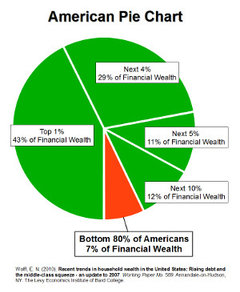
Sammy, it's not the size of the pie, but the slices that matter. What has been happening is that will the pie grows, the poorer and madeleines class slices don't grow in the relation to the wealthier. Yes, my comment about climate change was a question. The same beiple who deny that there is an income inequality in this countend to be Thrumpites who dentpy climate change.
 PRO8 years agolast modified: 8 years ago
I buy cars ( usually in 20 minutes ) for cash. ........I loathe a monthly ANYTHING if not necessary. Can't help myself. Then it's me and my "baby" until I get another "baby". I get a bit attached, like a familiar old friend. Ridiculous.
- 8 years ago
Good for you Jennifer M for moving on. This thread has become a wealth of useless secondary information and far too many personal opinions.
 8 years ago
People who lease don't buy the car at the end of the lease. They get a new lease on a new car. So they are paying a constant $249 a month-- less repairs and maintenance!
Actually we have done exactly what Bry suggests doing. We have leased our car with a one payment lease. Why the one payment? Because the rate for a single payment is more favorable. Then at the end of the lease we bought the car (paid cash) and kept it another year since it had a 4 year warranty/maintanence and the value of the car was more than the lease. After the year, we traded in the car for a new model and did the same lease arrangement. If next year when the lease is up, the car is worth more than the buyback, we'll again buy the car.
- 8 years ago
Sammy, it's not the size of the pie, but the slices that matter. What has been happening is that will the pie grows, the poorer and madeleines class slices don't grow in the relation to the wealthier.
I don't like getting into income distribution discussions as they are far too technical to discuss on boards, but I am going to try to add some input.
There are many popular income distribution theories and a large number note that wealth distribution isn't really the problem most believe it to be. Many consider it a strong indicator of other problems, but most would argue that we can't use the wealth disparity in non-industrialized countries to establish the effects of income disparity in advanced economies. The idea being that in pre-industrialized countries the disparity develops by removing consumer choice where in advanced economies the disparity is the result of consumer choice.
It should be noted that the very wealthy keep little of their wealth out of the economy. So long as wealth is in the economy, it is working for the betterment of everyone in the economy. Essentially, the wealthy create access to money for the middle and lower classes. In a far too simplified example, they put money in a bank, the bank has to loan it out so it lowers interest rates to entice borrowing, the middle and lower class take advantages of lower interest rates to drive better cars and live in better houses. This is way oversimplified as most of the money is actually in equity and debt securities rather than deposited in banks, but the overall idea is similar.
The real problem is that the purchasing power of those at the bottom is insufficient. Which is what we need to fix. This is where too much focus on income distribution and disparity can be problematic. If we give consumers more money, they will buy more stuff and those who supply the best stuff will essentially get more of their money, so the poor will be better off, but the rich will be richer. In essence, wealth disparity in advanced economies is simply the result of a more informed consumer combined with more efficient production and distribution.
It is ironic that many of the wealthy fight against the very thing that will actually make them wealthier. Living wages would largely result in more consumption and less risk. This is good for most businesses, although it is bad for businesses whose model is really exploitation of the poor, such as payday lenders. The result of more consumption is higher sales, which put more money into the hands of the owners.
However, there are undoubtedly some problems with wealth distribution other than simply purchasing power and the plight of the poor. So while addressing wealth disparity might be counterproductive to helping the poor, there are other things that are problematic. The two most prominent are the influence of money in politics and monopoly behaviors. Even Adam Smith was concerned about the monopolistic influence of free markets and believed that it would only work well in Democracies where the people could force redistribution of wealth when power became too concentrated. However, I am not sure he envisioned the dramatic influence that wealth has on us today through the media.
I have skipped a lot of stuff and way oversimplified other stuff and this isn't even a highlight reel of a highlight reel.
- 8 years agolast modified: 8 years ago
We have leased our car with a one payment lease.
I can't say enough good things about a one payment lease. The interest charge on a one payment lease is incredibly reasonable. For a $25,000 Honda Accord it runs about $400 in interest charges and for that amount you get the option to turn it in if the car is trouble.
Just make sure you have gap coverage that is calculated as if you were making payments. Thus if you total the car in the third week you get most of your one payment back.
- 8 years agolast modified: 8 years ago
When you compare buying v. leasing "a car", are you including financing to buy and some standards for the vehicle? (Annual mileage? Mid-range v luxury car?)
My 12 year old Jaguar X-Type has 38K miles on it. I paid $35K (trade plus cash) for the prior year's model from a dealer; 6-year warranty; no financing. It's had near-zero repairs and new tires. It's market value is $3K, but saves me buying a new car for $45K.
Are my circumstances too unique to figure my mistake in not leasing?
- 8 years agolast modified: 8 years ago
Are my circumstances too unique to figure my mistake in not leasing?
There is nothing particularly unique about your situation, other than asking about a 12 year old deal.
If I am understanding your situation you bought your car new in a model year end clearance. I am guessing the 2005 model year. Jaguar x-types had fairly aggressive lease residuals at around 58%, but typically only saw around 50%. Given that your fee on a one payment lease would be about $700. The typical purchase premium would have been about $2,100 greater than leasing.
Having said that a quick search found that lease buyouts for Jaguars are are actually closer to $1,800 to $2,000 under residual, bringing actual total lease savings down closer to $1,100 - $1,300.
Those are numbers for a typical lease, it sounds like you would want a bank or credit union to do an ultra-low mileage lease to get savings, which I don't have residuals for. You wouldn't want a residual based on 30k miles for a car driven 6,000 miles. That will have a cost rather than a savings of about $700.
However, that cost does come with a benefit, that being the opportunity to walk away after 3 years if the car somehow underperforms.
- 8 years ago
Thanks, bry. I only remember that we were offered at 1% finance deal, but setting it up was a lot of paperwork and not free. haha Yes, it's a 2005 X-Type VDP. We went in to buy a larger car. This was something they were trying as an 'introductory' model. Amazingly reliable -- and Jag-pretty inside.)
- 8 years agoBry is right. I used to believe debt free was the way to be. Paid my mortgage off, cash for cars, etc. a year ago, I decided to reinvest in my current residence through a major rebuild. I went and got a new 1st mortgage. In an effort to offset the payments while waiting for the money to be spent, I decided to dabble in stocks. Over the past 12 months, I’ve paid 24k in interest which I get to right off, 12k in principle repayment and my investments have gone up $185k. I do live near SF, CA so my house has been a great investment but it doesn’t appreciate at 27%. And there are maintenance costs, etc. I realize I’m aggressive with my moves and mutual funds might not reap the same kinds of gains but even a slacker mutual should come up with a solid 8%. I hope to keep this cheap loan as long as possible.
- 8 years ago
All I can murmur is 2008 recession in terms of thinking investments are always on an upward spiral.
There is a lot to be said for sleeping well at night. I wouldn't invest money in speculative ventures versus paying off a mortgage nor would I borrow money to invest. That is what a lot of people did from 2004 to 2008 when they essentially thought of their homes as glorified ATM machines to finance other stuff.
- 8 years ago
chiflipper - double payments will shave significant time off the mortgage, but does not pay off a 30 year mortgage in 5 1/2 years. More like 10-12 years.
- 8 years ago
Many people took money out of housing-bubble-appreciated homes to buy depreciating STUFF, not to use the money to make more money. As long as you have not literally 'bet the house', invest away!
I remember Bush bragging about the record rate of 'home ownership' (actually bank ownership) before the '08 crash. I think it was over 60%. I don't think there is as much home ownership -- or as highly leveraged ownership -- in other first world countries.
- 8 years ago
Everyone can have their own ideas about what to do with their money and property - what works for one might be the worst idea ever to someone else.
Just remember it’s all going to be useless after each of us is gone from this world - you can’t take it with you. ;) (Not everyone plans on passing down sizeable inheritances either, but it’s their money so who gets it or doesn’t is entirely up to them!)
- 8 years agolast modified: 8 years ago
All I can murmur is 2008 recession in terms of thinking investments are always on an upward spiral.
I don't mean to be rude, but I get so absolutely exhausted correcting these erroneous statements. Realized losses in the housing market were astronomically higher than the stock market, I would guess it was hundreds of times higher. If we use the Wilshire 5000 as a proxy for the entire market (which it is) then the stock market crash in 2008 wiped out less than three years of stock market gains, and about 10 years of housing gains, and a bit more 12 years of realizable gain.
Let's put this into perspective, if you bought your house in any of the twelve years before the market collapse the realizable sales value of your house was less than you paid.
On the other hand, if you bought an investment in equities in nine of the twelve years before the market collapse the realizable sales value was positive. In only three of them was it negative.
In the three years that equity investments were negative, only about 5 months had a larger loss than houses. Since the average length of U.S. home ownership was about 9 years, we can prove that stocks were a better investment than houses for about 95.2% of Americans.
What about recovery? Stocks had completely made up their losses by April 2011. Same home sales price continued to drop through 2010.
I don't know how to represent that in a percentage. But let's consider this a moment. The 4.8% who were better off buying a house than investing in stocks, continued to lose money, while stocks appreciated.
It is important to understand, those were not realized losses. Your house going up and down in value means nothing to you, your investments going up and down in value mean nothing to you. Actually getting money from selling your house or investment in the only thing means something to you.
----------
So why does anyone think that houses are better? Well the answer is that most people think of money incorrectly. They simply don't understand fungibility. They see having a paid off house as a safety net, when, in fact, it isn't.
- 8 years agoI’d like to point out that I didn’t take out the loan with the intention of investing it in the market. It was a parking spot to try to offset holding costs while I waited out a drawn out window until construction starts. Still waiting btw. And the money is still growing. It was a lucky lesson that I’ll carry forward with me and share with anyone who will listen because it’s turned my beliefs upside down. I really don’t mind the waiting at this point.











dsnine