

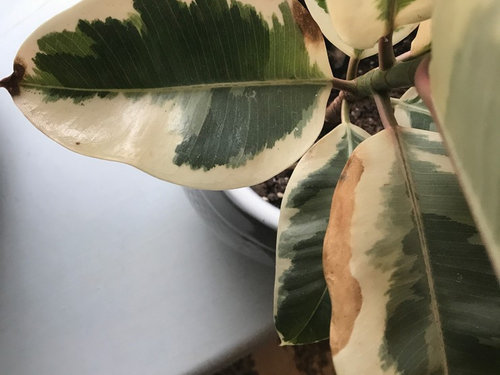
Brown spots on variegated rubber tree
8 years ago

Featured Answer
Sort by:Oldest
Comments (9)
 8 years ago
Related Professionals
Springfield Landscape Architects & Landscape Designers · Hopkinsville Landscape Architects & Landscape Designers · Owensboro Landscape Architects & Landscape Designers · Charlotte Landscape Architects & Landscape Designers · Beatrice Landscape Architects & Landscape Designers · West Palm Beach Landscape Contractors · Baltimore Landscape Contractors · Gloucester Landscape Contractors · Grand Rapids Landscape Contractors · Huntsville Interior Designers & Decorators · Forrest City Interior Designers & Decorators · Ashland Interior Designers & Decorators · Saint Joseph Interior Designers & Decorators · New Braunfels Interior Designers & Decorators · Farmington Interior Designers & Decorators 8 years ago
 8 years ago
 8 years agolast modified: 8 years ago
- 8 years ago
- 8 years ago
 5 years ago
- 5 years ago
Related Stories

HOUSEPLANTSGet a Dash of the Rain Forest With Madagascar Dragon Tree
This living decoration reaches up to 15 feet, has minimal needs and adapts to different light levels — just steer clear of fluoride
Full Story
LANDSCAPE DESIGN10 Flowering Trees Landscape Architects and Designers Love
These blooming beauties make lovely additions to gardens — bringing color, fragrance and pollinators
Full Story
EDIBLE GARDENSThe Enticing Garden: How to Grow Bananas
Sweeten your dining table with surprising flavors of banana cultivars while adding tropical flavor to your garden
Full Story
TREES11 Japanese Maples for Breathtaking Color and Form
With such a wide range to choose from, there’s a beautiful Japanese maple to suit almost any setting
Full Story
MOST POPULARMeet a Lawn Alternative That Works Wonders
Carex can replace turfgrass in any spot, is low maintenance and adjusts easily. Add its good looks and you’ve got a ground cover winner
Full Story
LANDSCAPE DESIGNYard of the Week: New Pool, Grill Area and Stylish Lounge
A landscape designer updates a coastal home to suit a family’s lifestyle and create a welcoming spot for guests
Full Story
PLANTING IDEASStretch the Budget, Seasons and Style: Add Conifers to Your Containers
Small, low-maintenance conifers are a boon for mixed containers — and you can transplant them to your garden when they’ve outgrown the pot
Full Story
LANDSCAPE DESIGNProblem Solving With the Pros: How to Build a Garden in an Urban Canyon
Skyscrapers, noise and deep shade create an unlikely sweet spot for a timeless green retreat in New York City
Full Story
TREESVisions of Magnolia Blossoms From Coast to Coast
Houzz readers in the U.S. and beyond share their best shots of these splendid spring-flowering trees
Full Story
GARDENING GUIDES12 Japanese Maples for a Sunny Garden
The right maple in the right place shines in hot summer sun
Full StorySponsored

Innovative & Creative Custom Closet Designer Servicing Franklin County



tapla (mid-Michigan, USDA z5b-6a)