Software
Houzz Logo Print
leigh_maslij

Two Perfectly Heathy Fiddle Leaf Figs not growing at all. Help!

8 years ago
Hi there!


I just found this forum and think it's amazing! So many useful tips :) Would really love some help on this issue if anyone knows! We currently have two fiddle leaf figs, neither of them are big (around 2 foot tall). I have two questions about these and will outline them below.


Some helpful tips

  • Location: Melbourne, Australia
  • Weather Conditions: Dry heats. The cold season generally lasts up until the last month of Spring
  • Fiddle Fig Locations: Brightly lit room with indirect sunlight in Spring-Autumn. In the bathroom for humidity with a very bright filtered roof light during Winter.


1) Fiddle Fig One

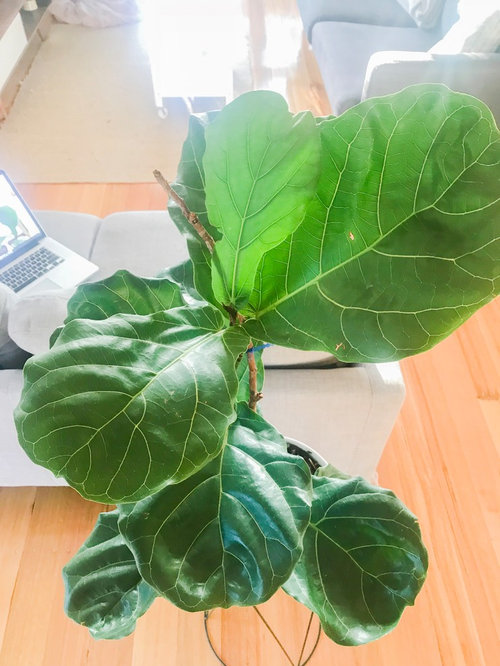
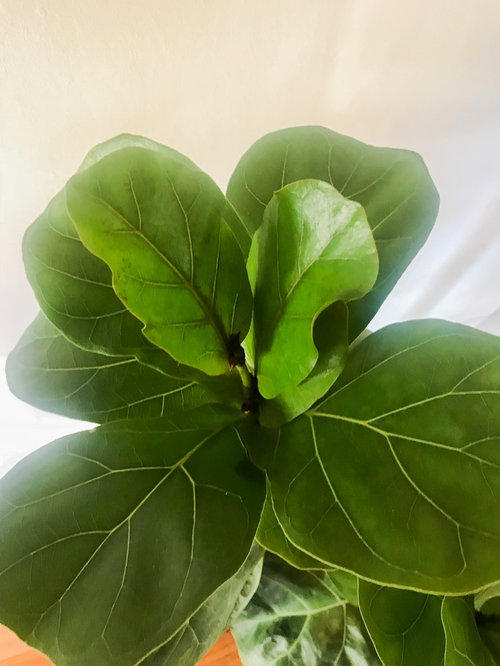
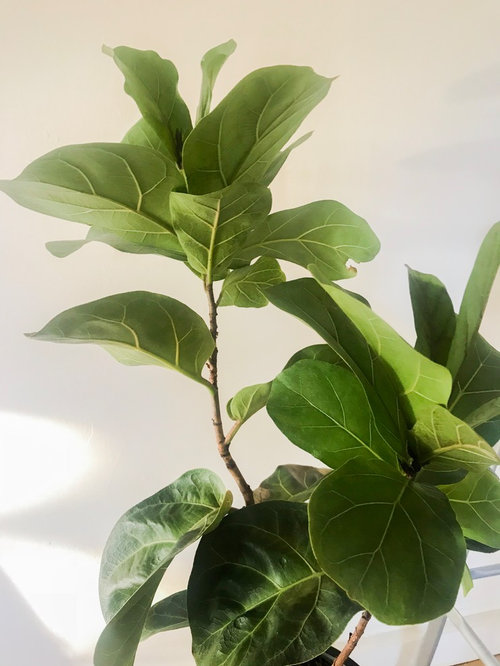
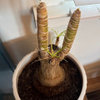
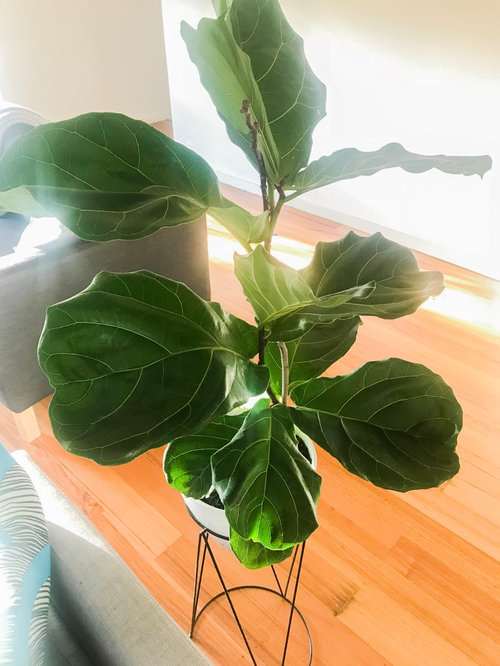
We have had this guy for around 9-10 months (along with a second one purchased some time before but with the same problem) and were experiencing a good amount of growth at the start before winter. It started growing it's last leaf and stopped during the colder months (understandably). But now Spring has passed and we're into the first month of summer and haven't seen any growth whatsoever. He looks very healthy + lush, in a well lighted room and water only when the soil is dry 2 inches below.


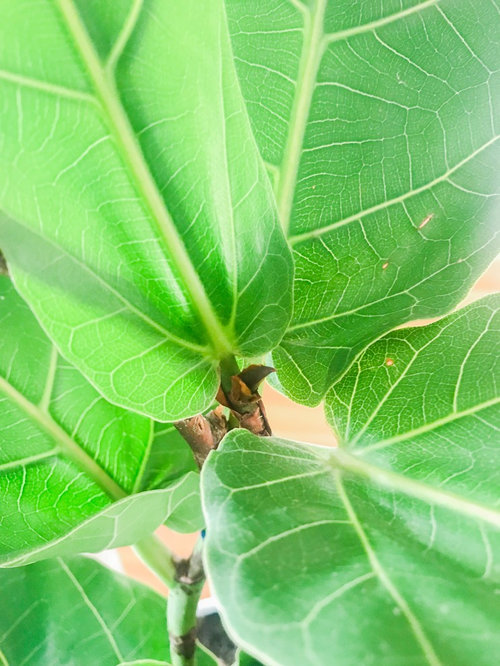
The only movement we've seen on the stem is as if it looks like a leaf is about to come through (we can see a little bit of green popping out) and all of a sudden it just turns brown + dry and the stem grows right through. There have been one or two times that a leaf has grown a tiny bit (1cm) and then fallen right off. I've uploaded some photos below.


Does anyone know why there is stunted growth? It seems like no one else has this problem on a healthy plant.


2) Fiddle Fig 2

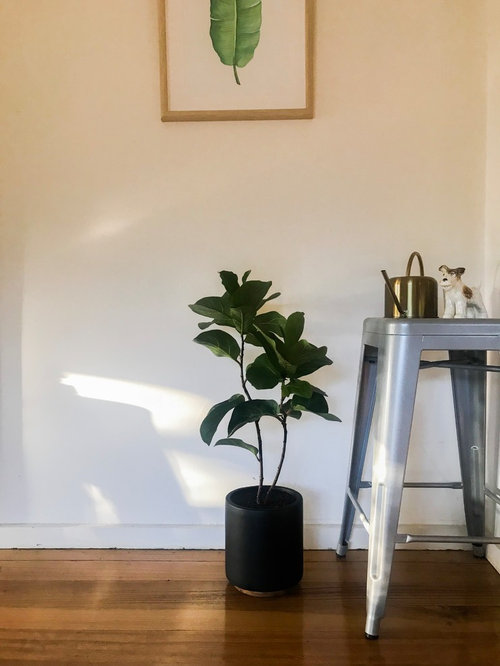
This one is just more of a curiosity question, this is about the first fiddle fig we bought almost two years ago. He is a very small guy and his leaves are smaller than any other fiddle fig I've seen. Is there any reason why the leaves are so small? Is it because he's just in an infancy stage?


Any insight would be much appreciated. Thank you!

Comments (12)

  • 8 years ago

    Get them right up in front of some windows that receive full sun.

    Lack of light is definitely an issue.

    These trees grow to their full potential outdoors in full direct sunlight.

    Yours are too far from any light source.


  • 8 years ago

    I agree with Dave. They definitely need more light.

    Do you fertilize? If so with what and how often?

    Lastly, I believe your smaller leaved is possibly a cultivar that I have seen labeled as ‘bambino’. It has smaller leaves.

  • 8 years ago

    Maybe your watering habit only enough to maintain it's health, no longer enough to support new growth. A bulb on top of the plant will sprout 2-3 big leaves at once in just 2 days. If it doesn't get enough water in time, the leaves won't grow, only stem and it will die back. Need longer time waiting new growth because the apex has gone. Try bigger pot, or if not, if you see new shoot coming, give water little bit more than usual.

  • 8 years ago

    Thanks so much for all of your help! I have felt like I have been diligent in keeping our plants happy and healthy but it's looking like I'm quite novice at all this.


    Dave - thanks! I thought direct sunlight harms the leaves though? I have seen these plants in Indonesia outdoors as big trees (15m tall) and always wondered why most blogs online state they should only receive filtered light, nothing direct.


    Cassandra - We fertilize probably once every two months. Sometimes a little more regularly and a little less in Winter. And yes! It's definitely a bambino - I definitely got robbed when I thought I was buying a proper sized one.


    Al - Thank you so much for your comment. I've read your linked article and it has helped me so much. It's definitely time to get into some reading about the roots and proper care outside of the general watering, light conditions etc.

  • 8 years ago
    last modified: 8 years ago

    It’s because they’re grown in lower light so they’re not accustomed to full sun. Acclimating them solves that.

    Sun shining though a window is not direct sun, it’s filtered by the glass.

    My Ficus trees grow indoors in the winter in front of a window with full sun and grow lights over head. In the summer, I move them outside and they grow in full direct sunlight. That’s when they put on their best growth.

    Theres a lot of misleading info on the internet. Most people interpret it the wrong way, stick their plants on a dark corner and wonder they they aren’t thriving.

    What may seem like a bright situation to us doesn’t seem anywhesr near as bright to a plant.

  • 5 years ago

    Hi , I am sorry to say that with my ficus lyrata which I have it for more than two years , I tried everything but not growing at all !!!
    It’s giving four to five leaves in the summer and then stops growing.
    It’s looks alive and lovely and it’s close to the window all the time, but I agree that mine is a bambino too . Even in the spring and summer I am using fertilizer every two weeks and sometimes in the fall and winter , still nothing happens.
    Sherry

  • 5 years ago

    Please post a picture of the entire plant and pot. It will help us identify any issues it might be struggling with. First thing that pops into my mind when someone has a plant that's reluctant to extend is root congestion, possibly low nutrition. What are you fertilizing with? Have you ever repotted or potted up?

    Al

  • 5 years ago
    last modified: 5 years ago

    if its putting out 4 or 5 leaves how is it you say its not growing ... plants having annual cycles.. they dont necessarily grow constantly ...

    perhaps its your expectation that isnt right ...

    welcome to the forums ...

    it is usually suggested you provide a pic or two .. and start your own post ...

    add your location.. big city name ...and what direction does the window face ... and what kind of pot .... [location tells us about furnace and humidity on some level ...]

    imo.. nothing needs fert every two weeks ... unless its highly diluted .. when you water.. do you allow it to run out the bottom .. so that there is a need to continually add more fert in the top ???

    ken

  • 5 years ago

    Thanks to Tapla and Ken ,

    I really appreciate your thoughts. I was thinking probably I wasn’t doing a great job or enough for my plant .

    Thanks again.

  • 5 years ago

    I have a bambino and it is not in good shape I'm thinking the pot I put it in is too big. does anyone have advice on pot size for a dwarf FLF?

  • 5 years ago

    W/o an understanding of what the medium you chose to grow in is like, no one can divine what size pot might be appropriate, but how the appropriate size pot is determined might surprise you. I wrote the following simply because this question comes up with a fair amount or regularity.

    Choosing an Appropriate Size Container

    How large a container ‘can’ or ‘should’ be, depends on the relationship between the mass of the plant material you are working with and your choice of soil. We often concern ourselves with "over-potting" (using a container that is too large), but "over-potting" is a term that arises from a lack of a basic understanding about the relationship we will look at, which logically determines appropriate container size.

    It's often parroted that you should only move up one container size when "potting-up". The reasoning is, that when potting up to a container more than one size larger, the soil will remain wet too long and cause root rot issues, but it is the size/mass of the plant material you are working with, and the physical properties of the soil you choose that determines both the upper & lower limits of appropriate container size - not a formulaic upward progression of container sizes. In many cases, after root pruning a plant, it may even be appropriate to step down a container size or two, but as you will see, that also depends on the physical properties of the soil you choose. It's not uncommon for me, after a repot/root-pruning to pot in containers as small as 1/5 the size as that which the plant had been growing in prior to the work.

    Plants grown in ‘slow’ (slow-draining/water-retentive) soils need to be grown in containers with smaller soil volumes so that the plant can use water quickly, allowing air to return to the soil before root issues beyond impaired root function/metabolism become a limiting factor. We know that the anaerobic (airless) conditions that accompany soggy soils quickly kill fine roots and impair root function/metabolism. We also know smaller soil volumes and the root constriction that accompany them cause plants to both extend branches and gain o/a mass much more slowly - a bane if rapid growth is the goal - a boon if growth restriction and a compact plant are what you have your sights set on.

    Conversely, rampant growth can be had by growing in very large containers and in very fast soils where frequent watering and fertilizing is required - so it's not that plants rebel at being potted into very large containers per se, but rather, they rebel at being potted into very large containers with a soil that is too slow and water-retentive. This is a key point.

    We know that there is an inverse relationship between soil particle size and the height of the perched water table (PWT) in containers. As particle size increases, the height of the PWT decreases, until at about a particle size of just under 1/8 inch, soils will no longer hold perched water. If there is no perched water, the soil is ALWAYS well aerated, even when the soil is at container capacity (fully saturated).

    So, if you aim for a soil (like the gritty mix) composed primarily of particles larger than 1/16", there is no upper limit to container size, other than what you can practically manage. The lower size limit will be determined by the soil volume's ability to allow room for roots to ’run’ and to furnish water enough to sustain the plant between irrigations. Bearing heavily on this ability is the ratio of fine roots to coarse roots. It takes a minimum amount of fine rootage to support the canopy under high water demand. If the container is full of large roots, there may not be room for a sufficient volume of the fine roots that do all the water/nutrient delivery work and the coarse roots, too. You can grow a very large plant in a very small container if the roots have been well managed and the lion's share of the rootage is fine. You can also grow very small plants, even seedlings, in very large containers if the soil is fast (free-draining and well-aerated) enough that the soil holds no, or very little perched water.

    I have just offered clear illustration why the oft repeated advice to ‘resist potting up more than one pot size at a time’, only applies when using heavy, water-retentive soils. Those using well-aerated soils are not bound by the same restrictions. As the ht and volume of the perched water table are reduced, the potential for negative effects associated with over-potting are diminished in a direct relationship with the reduction - up to the point at which the soil holds no (or an insignificant amount) of perched water and over-potting pretty much becomes a non-issue.