Software
Houzz Logo Print
jopa241

hardiness

8 years ago


are the macros 'early sensation' and twist and shout really hardy to zone 4 or is this just a marketing ploy?

Comments (21)

  • 8 years ago
    last modified: 8 years ago

    Merry Xmas, jopa241. Well, I would take it with a grain of salt, not knowing what y-o-u expect to happen. ;o)

    What I would expect to see from those rebloomers is that the stems that the plant has in the Fall should die off during winter and theeen new growth (new stems) should develop in mid-to-late Spring and produce bloomage in the Summer. I would not expect to see typical (early Spring) hydrangea blooms. Early Spring hydrangea blooms originate from flower buds that develop in July-August but these flower buds typically get zapped by Zone 4 winters so, you will only see blooms later in the Summer from the new growth (new stems).

    Typically, in cold zones like 6, reliable blooming in early Spring is difficult because either (a) the flower buds are killed or (b) the stems are killed. In Zone 6, you can try to winter protect but in Zone 4, winter protection may be difficult to make it work and get early Spring blooms. The roots will remain alive if well mulched though so, that leaves you waiting for blooms produced by new growth. You have to wait for new growth to get of certain size before new growth can produce flower buds and bloom. This usually happens by summertime. In some locales, the length of the growing season is short and some of these new growth stems do not achieve a tall enough season to produce blooms reliably every year. Based on the number of negative posts in the forum regarding ES not blooming, this may be an issue with ES. But other macrophyllas do not 'produce' so many negative "no bloom" posts so, other reblooming macros may be worth trying out. The Together & Ever Series and Let's Dance Series may be worth a try.

    A lot of people post of 'no bloom issues' with Endless Summer Original in zones 6 and colder but, rarely, does anyone post about problems with the two that you mention. I hardly see very little negative posts about the Forever & Ever Series.

    I would recommend planting them early (in your Spring time, not in the Fall) so they get a chance to develop a good root system before winter "shows up" in your area. Then mulch them well (2-4" of organic mulch) year around and use snow to insulate. Winter protection can also help produce reliable blooming in Early Spring in warmer zones but, I think that may be tough to do in Zone 4. Another suggestion is to grow them in containers and keep the pot in a basement (remember to water it though) during winter. Or grow Annabelles or paniculatas. Serratas are mophead/lacecap-like but not as large and they bloom later (useful in Z4).

    Does that help you?

    Luis

  • 8 years ago
    last modified: 8 years ago

    Have a TS that dies to the ground each Spring, come mid/late Aug. it’s full of blooms

  • 8 years ago

    alas, Boston is zone 6.

  • 8 years ago

    Yes Z6 no winter protection, Z4 I think you’ll need to protect ... I feel all ES series Hys need WP in in the northeast... have. a Blue Billows for over20yrs and never done anything,


    blooms every year

  • 8 years ago
    last modified: 8 years ago

    I won't be buying any more macrophyllas. They bloom some years but not others, so just not worth it to me. We get to between -20 and -25F every few winters and down to -20 most years. If there is good snow when it's really cold, they may bloom well, but otherwise, the bloom on new wood tends to be late, often too late in my short season.

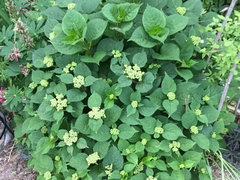
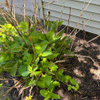
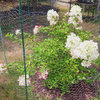
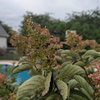
    One that blooms for me regularly, even when frozen back to the ground, is H. serrata Tuff Stuff, but it is a lacecap. I have had it 4 seasons and it has bloomed every year after growing from the roots. Here is mine this year on June 23, getting ready to bloom.

    or look at H. arborescens cultivars or H. paniculata cultivars, though neither of those include blue colors.

  • 8 years ago

    Are the reblooming lacecaps just more hardi / reblooming / remotant than just the reblooming macro's in general ?

    1st Rebloomer currently in container - waiting to be planted for 2018 is a bloomstruck. I'm planning to try three Let's Dance series as well - diva, rave and their rhytmic blue, depending if the yard had all 3

  • 8 years ago

    I don't think lace cap vs. mophead has anything to do with it. Instead it is the particular species and cultivar that determines hardiness or reblooming or height or stem color or whatever. H. macrophyllas are available as both mops and lacecaps. I am not aware of any mophead form H. serrata cultivars.

  • 8 years ago

    re-wording the inquiry, but do the reblooming lacecaps/serrats, like T&S and TTS/TS being mentioned in this thread, seem to infer these fare better than reblooming macros in the the same cold climate

  • 8 years ago
    last modified: 8 years ago

    The fact that a shrub is a rebloomer and-or a serrata can give it an edge when it comes to blooming in cold zones (up to a point of course).

    Rebloomers are actually not rebloomers like roses are. They are hydrangeas that (1) develop flower buds from old wood in late Summer/early Fall like any other mophead/lacecap H. macrophylla or H. serrata does... those buds stay unopened and invisible until they open and bloom in early to mid Spring; that works fine as long as winter does not kill the stems and-or the buds; (2) later on, these rebloomers again develop flower buds but from n-e-w wood (new stems that started growing in the Spring); once those new stems get tall/old enough, you get bloomage. Item 2 gives rebloomers an edge -blooming wise- over non-rebloomers in cold zones.

    The first set of flower buds from old wood typically gets zapped by the cold temps in winter in cold USDA Zones. Say 6 and colder. But even in my warmer 8 zone, I can sometimes loose those flower buds and-or all stems due to the weather in winter.... like it happened in the winter of 2016-2017. The second set of flower buds in rebloomers develops in a much warmer time period and those stems/buds stand a better chance of blooming in cold zones or my warmer zone.

    H. serratas are a version of H. macrophyllas that originated from mountains in Japan; they do not grow as large as H. macrophyllas and they tend to leaf out late. Some people consider them part of H. macrophyllas; others do not. But naturally growing in cooler mountains and this tendency to 'wake up' late protects their stems and flower buds from getting zapped by late frosts/etc. Within reason, serratas are able to survive winter issues and bloom in late Spring using flower buds that developed from old wood in late Summer/early Fall. This gives them an edge. There are also a few serratas that are "rebloomers".... like their H. macrophylla cousins: their new stems will also develop flower buds if the new stems get tall/old enough; these flower buds will open/bloom in early to mid Summer. Tuff Stuff is one example. By the way, snow is a good insulator and, within reason, can help protect any hydrangea.

  • 8 years ago

    Thanks for all the replies. Most helpful.

    Do you think this is a true statement:

    In zones 4 and 5 Macrophyllas will NOT overwinter and will bloom only on new summer growth.

    TRUE OR FALSE?

  • 8 years ago
    last modified: 8 years ago

    Probably true but I never say "never" when it comes to weather. There is such a thing as a micro climate that can make your statement be oddly false sometimes. I have some hydrangeas that survive weather issues when most of the others do not so, you or someone else near may have that happen too in freak winters that only happen once in ???. Two Januarys ago, I had blooming roses, azaleas, camellias, quinces. My hydrangeas -some- started leafing out a month later. Some never lost foliage. Talk about weird! Very good winter protection in combination with some snow or "mild" weathers in winter may also affect the true/false outcome. What is the weirdest weather you have noticed in plants or trees?

  • 8 years ago

    From my experience I would say a Big Fat True without Winter protection ... you might get a few blooms at the bottom

  • 8 years ago
    last modified: 8 years ago

    Depends on the winter, and depends on snow depth based on my experience in my garden. Winters that are mild and winters with 3'+ of snow early on might give you a full shrub of blooms, but unless you have room to spare, it most likely isn't worth it.

  • 8 years ago

    Then again it’s when the temps drop into the teens or twenty’s in late April


  • 8 years ago

    Jopa I would say true too. Twist and Shout has done the best so far here for me though, but I'm a little warmer here than z4.

  • 8 years ago

    I have a Tuff Stuff hydrangea that I planted last year in the shade. It never bloomed. Should I move it in the Spring time to a sunnier area? I'm in zone 5b.

  • 8 years ago

    it will not bloom in the shade. give it lots of sun.

  • 8 years ago

    "it will not bloom in the shade. give it lots of sun."

    It depends on how heavy the shade is but in general, macs and serratas are shade dwellers.....they are by nature woodland understory plants and prefer shade to full sun. Even in my very northerly and cool summer climate, these hydrangeas in full sun will be stressed and the colors bleached out.

    The "ideal" setting for macrophyllas or serratas is morning sun/afternoon shade or all day dappled or filtered shade. Only very heavy shade is likely to retard flowering.

  • 8 years ago
    last modified: 8 years ago

    If it was small, it may have just been growing roots the first year. However, I am somewhat north of you and grow mine with sun from early morning until about 2 PM without it looking stressed. It blooms well there. So I agree with jopa to move it to a spot with more sun but with some shade in the later part of the day when the combination of strong sun and heat can make the plant look limp or even damage leaves unless you can be sure it will get enough water in those circumstances.

  • 8 years ago

    garden gal and Babs, thanks for the info. I'll move it to a sunnier area come Spring - 73 days and counting!