Software
Houzz Logo Print
elsa2016

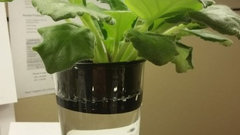
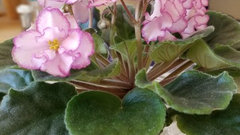
3 african violets.........the mermaid version

8 years ago
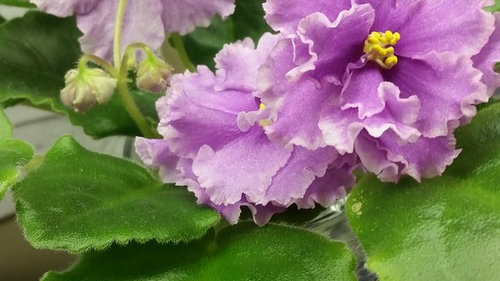
I would like to share my experiment in growing African violet in water, just water and thin fertilizer.....nothing else.

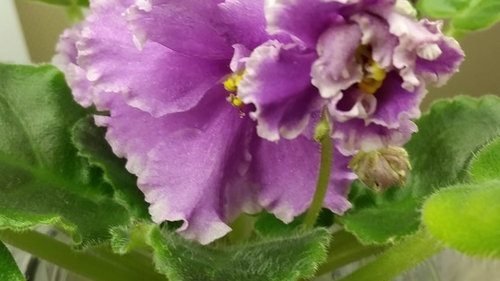
The first candidate is Bold Party Girl's offspring. It is an adult plant which I used to grow in soil. After growing in water, the size and color of flower didn't change. I find it very convenience to grow in water in office. I don't need to bring it home to repot it. I don't need to ask Co worker to water it when I'm on vacation. I just make sure it has enough water for the number of days when I'm away.


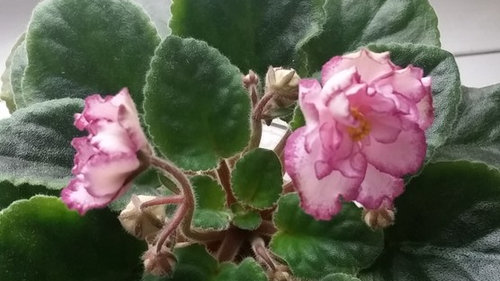
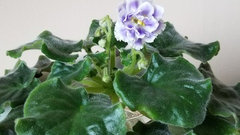
The 2nd candidate is Ian Minuet. It's also an adult plant which I converted from soil to water in July. This is the first time that it flowers after I grow it in water.

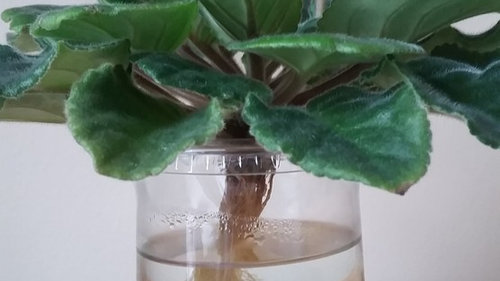
The 3rd candidate is Blue Mist. I propagated from leaf and it grew in water from the beginning. It has some flower buds right now but they are still very tiny. I will post pictures later after it flowers.

Comments (58)

  • 8 years ago
    last modified: 8 years ago

    They look to be doing well so far. :-).

    Being that you are using clear containers, have you had an issue with algae?

    Do you ever change out the water? And if so, how often?

    "Jeff Zenner

    I guess since there is no air amongst the roots, you don't have many worries about root rot."

    Actually, Jeff, there is, I imagine, quite a lot of air amongst the roots -- specifically the ones above the waterline. That area of the roots would remain moist (due to wicking action and the high humidity within the jar/glass) which would facilitate oxygen uptake. The pool of water may be shallow enough to permit sufficient O2 diffusion into the pool. Even if not, the above water portion may very well "pick up the slack." Whilst the set is unlikely air tight -- which would be beneficial with regards to allowing at least some fresh to seep in -- I would wonder about the air being too stagnant thereby leading to mold blooms.

  • 8 years ago

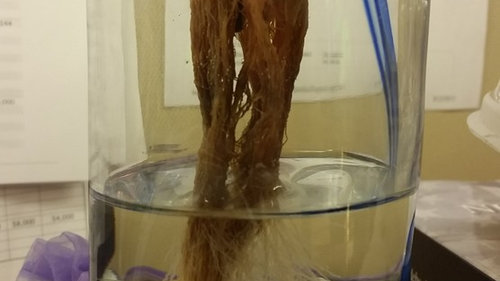
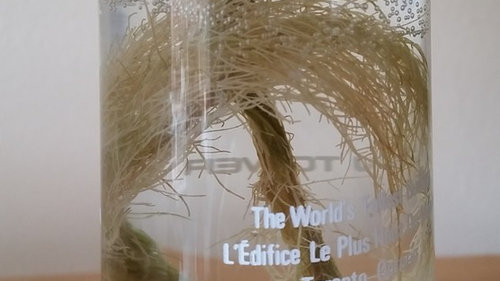
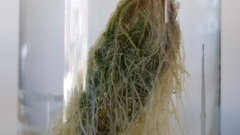
    I change the water every week. There is algae for the blue mist. I add 1-2 drops 3% hydrogen peroxide once a while into the water and it clean up most of them. See last picture which I added hydrogen peroxide, you can see lot of bubbles, and the roots float in the middle of the container.

  • 8 years ago

    Paul,

    I learned this method from an African violet forum in Hong Kong. It seems no one complain about mold bloom even the whether in Hong Kong is much humid and hot comparing to Florida. Some people claim that AV has less tendency to get root rot by using this method and is easier for AV to get through the hot summer there.


  • 8 years ago

    Yeah Paul, I meant the part that was underwater. Additionally, as interesting as it is, it also seems that it may be slightly more labor intensive than a traditional wicking arrangement. Still, very intriguing.

    Not sure what conditions are necessary to bring on the onset of bloom mold. It doesn't sound good though.

    I have already picked out a couple of propagating leaves that I am going to subject to this treatment. Hopefully Elsa will continue to update us over time.

  • 8 years ago

    OMG,,,,,fascinating!!! I need a step by step tutorial. Step 1: Start with a potted violet and,,,,,,,,,,,,,,??????

    Please someone fill in the blanks? How do you do this???? Please write it as though you are talking to someone who knows absolutely NOTHING. Rosie

  • 8 years ago

    Looks to me like you just take the water only, leaf propagation theory, to a whole new level.

    Put your leaf in the water, wait for it to grow roots and then continue to wait. I can do that.


  • 8 years ago

    But how do you convert an already soil potted violet? And I don't have luck rooting violets in water from the beginning. Oh I need sooooo much information. Rosie

  • 8 years ago

    You want to try - lop the crown and root it in water.

  • 8 years ago

    That's it???? Just lop off the crown and reroot it in water??? Just like that???? Rosie

  • 8 years ago

    You can put on a tutu - and dance cancan around it... If you wish. We will expect the video to be posted of course.

    The stem is not submerged in water - only roots. So you start with the crown, wait until the roots are long enough - and reduce the water level so the roots are in and the stem is out. Otherwise sooner or later it will rot. I think you need to add a little bit of fertilizer to water after the plant reaches its mermaid stage.

  • 8 years ago

    Ahhh, got it. I was thinking all around it about rot. You explained that very well. This fascinates me and I am already looking around to see who I can "lop" off. hmmm, maybe I will just buy one from Lowe's or Meijer. After all,,,that would be a good way to get them out of that crummy poor excuse for soil that they are in. AND I won't be sacrificing one of mine. Sounds like a plan.

    But I don't understand about the tutu? Rosie

  • 8 years ago

    OH wait!!!! I think I understand the tutu. You thought I was making something so simple very hard??? Rosie

  • 8 years ago

    Irina is right.

    Here is the diary for my first experiment on bold party girl.

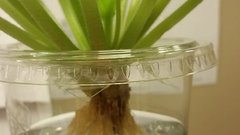
    3/12/17: took the adult plant out of the soil and removed all the root. It is important to remove all the soil root. Otherwise, it can rot in the water. Rinse the tap root in water and then put in a glass of water. Put the plant in humidity doom, zip lock bag or plastic bag.


    3/13/17: since it was done in the office and I don't have any resources. I put the plant in a grocery bag to keep the humidity.


    3/22/17: the plant was recovering from the surgery. Altogether, it lost 3 leaves during the recovery.


    4/4/17: It grew some water root. The tap root below the stem was quite short because I accidentally broke part of it when I removed the soil root.


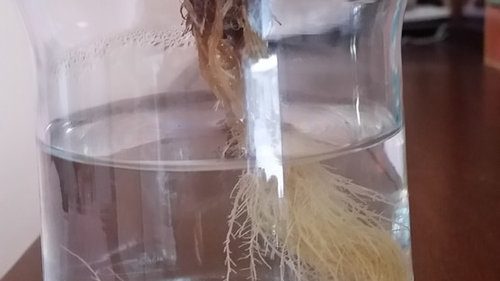
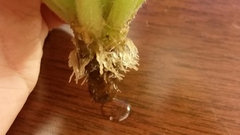
    The following picture is another bold party girl which I did the surgery recently. The white root are new water roots. Some how, more roots were grown on the top rather than the bottom. Probably some one here can explain why.


    4/18/17: more roots.


    5/2/17: the flower bud was there before the surgery but it was very tiny. I'm surprised the flower bud survived.


    Once the root grow longer, you can lower the water level so that water will not travel upward to the center. I converted 4 AV so far, none of them were killed because of water travelling to the growing point. Some species don't mine the new leaves are wet all the time but some are more sensitive. So far none of them die.

    Warning, if you want to try this method, choose the AV you like less as an experiment.

    Below are the routine maintenance:

    1. fill the container with 1/3 water. (I usually fill 1/2 of the container when the root is long enough. It seems new root keep growing if it has contact with water.) According to people in the other forum, fill in 1/3 water will prevent rotting. I think it allow air flow?

    2. add very thin fertilizer per week. The person said the proportion of water to LIQUID fertilizer is 1:3000. ( I never follow this because my math is terrible. I usually add about 1 part fertilizer in 6 part water. I use optimara African violet food)

    3. change water in the container weekly. You can add 1 to 2 drop 3% hydrogen peroxide in water if you want to get rid of algae grow on the roots.

    Thanks

    Elsa

  • 8 years ago

    Elsa, thank you for the explicit directions. As soon as I find a suitable "guinea pig" I am going to try this! Seems as though your project took about 2 months for good results.

    Just want to be clear. On 3/12/17 when you first put the bare neck violet in the water, the bare neck was actually in the the water? And as it grows new roots you gradually back down the water level until you get it where you want it?

    Again,,,,thanks! This is my New Year's Project! Rosie

  • 8 years ago

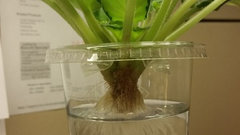
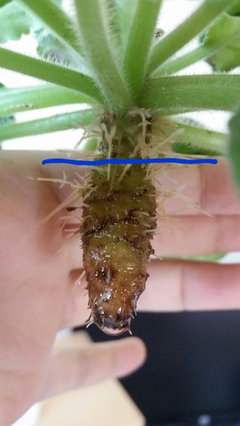
    Yes, the neck is in water. As Irina said, if the stem or leaves touch the water, it can rot. Please see the picture below. The water is upto the blue line. There are roots grow at the base of stem because the humidity in the dome, and it grows root in the air.

    yes. when the root is long enough, you lower the water level.

    Thanks

    Elsa

  • 8 years ago

    Got it!!! Thanks!!! Will let you know what happens! (when it happens, lol) Rosie

  • 8 years ago

    Nice! I'm still learning. I just follow the instruction and don't know what is the logic behind it. Maybe some of you try the method and can explain the logic. :D

  • 8 years ago

    Elsa - are you trying to find a logic in the instruction on how to do it - or WHY?

    Why - is what bothers me more. I understand that in a high temperature high humidity climate AV is susceptible to the root rot and this method eliminates contact with soil and soil born problems.

    In more moderate climate it is an interesting experiment to run - but IMHO it is more time consuming than a conventional one. And with a good size collection it is not practical.

    And we all know that AVs are like potato chips, you never can have only one...


  • 8 years ago
    last modified: 8 years ago

    Irina,

    I understand it's impossible for people who have large collection to use this method. I find it more convenience for my 1 and only 1 AV in office. Majority of my AVs are still in the soil. I just try different method to have fun. And I have 16 potato chips only. :D

    The logic that I meant was when Jeff asked Paul about air among the root, which I never think about it. Actually it's out of my knowledge. I find the following discussion. It' quite long.

    This is for Jeff.

    http://forums.gardenweb.com/discussions/1995634/how-does-root-get-their-oxygen

    Thanks

    Elsa

  • 8 years ago

    Well,,,,I just read every single post in the above link. I must say,,,,I now have an anurysm! Of epic proportions!!!! I did not understand everything and it seems like everyone has their own opinion.

    I don't know if I will do this or not. It raised more questions for me than answers. I am going to leave it at that. My head hurts. Rosie

  • 8 years ago

    Rosie... just forget it. NO aneurysms - these things are deadly. Let's call it an AV hemorrhoid.

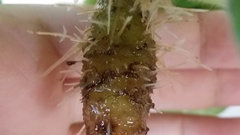
    I think it is more of a curiosity piece... a beautiful plant - with very hairy legs exposed...

  • 8 years ago

    - hahahahahaha! So funny. I can see her n her hairy legs. But it’s those hairy legs that give her the beauty.


    I would try it for certain occasions. Think a office would be perfect. I wouldn’t want a dead plant when I return from a winter storm, or a period that I was away with the flu or hospital. Mb, A friend who also was ill and in no position to b required to also learn the requirements of a perfect Gifted AV. ( I might cover her legs to save her dignity with a wrapping of some sort) ( the plants hairy legs, I mean - lol)

  • 8 years ago

    Thanks Irina. Still confused by all that information. BUT I may try it. If I do I will post results from beginning to end. Rosie

  • 8 years ago

    I just received this journal from avsa and would like to share with all of you.

    Growing Tip Journal | African Violet Society of America

    No Dirt! Growing Violets Hydroponically

    http://www.avsa.org/growing_tip_journal

  • 8 years ago

    I've been killing box-store african violets all my life but can't stop myself getting one every now and then. I currently have a 2 dollar AV from the box store again and I think I will try this! Who knows, maybe it will work out better than my old ways!

  • 8 years ago
    last modified: 8 years ago

    So true bourbon, there isn't a plant I haven't killed at least once. I find the box-store ones seem to be of the "disposable" variety in my house. I enjoy the blossoms, love the plant and then it dies. That is why I am here, I have spent the last week enjoying and studying various tips and techniques from the experts on this forum. I will keep my violets in dirt until I fully understand how they grow. But this is interesting.

    I think a key point is in the AVSA society link from Elsa, you need to remove all the dirt and roots from the crown. She talks about scraping it with her fingernail.

  • 8 years ago

    Thanks for pointing that out. Elsa's AV's roots look super super clean! I am converting a soda bottle tonight. People used to use wicks with this set up but seems to me like it can be wickless just as well.

  • 8 years ago

    I keep reading and reading this thread. I do think I will try this. But one more question. In the last pix,,,,,the roots are so long and thick they are curling up and it looks like the container could fill up soon. Do you graduate the plant to a larger glass as the roots fill the one it is in? Or do you trim off the bottom rows of leaves after they are done blooming and also trim the roots??? You know the rule. Some off the top, some off the bottom??? Rosie

  • 8 years ago

    I had the same question about the size of the container too. The person in the other forum said it doesn't matter what size of the container. The root in the above picture is about a year old. I never trim it and it always in the same container. Maybe I can experiment it by trimming it and see how the AV react. I only remove the leaves which turn yellow or aged, same as what I did to those grow in soil.

    Thanks Elsa

  • 8 years ago

    I guess I asked because with my wicked av's, when they have stopped producing bloom in the last two rows is when I take those leaves off and repot. I do not want to put it in a larger pot so I also shake off a good amount of soil and backfill so it fits in the same pot again. Which is why I wondered about the amount of roots in the water container! How full is too full. And have you ever noticed any "dead" roots in the water yet? I mean won't some of them die eventually? Rosie

  • 8 years ago
    last modified: 8 years ago

    The roots at the top that is not in water turn brown but I don't see any of them come off and flow in water. So far I haven't see any dead root flow in water. Let me observe and keep you posted if I see anything. Recently i add water all the way to the top after i read the avsa journal, more roots grow on the top since it has contact with water. I think I have to wait and see how long it takes the root to fill in the container.

  • 8 years ago

    Ok,,,but I am thinking that it should not hurt to keep the water level up high enough to cover all roots. I don't know why not,,,,do you? Rosie

  • 8 years ago

    Is it risk of getting the crown wet if the water level is high?

  • 8 years ago

    Yes, if too high, the crown get wet. Some AV adapt to it and has no issue and some take a while to adapt.

  • 8 years ago
    last modified: 8 years ago

    I would think if the bottom of the first row of leaves got wet, it would just grow babies! After all,,,,,,they do sprout in water don't they? And I don't mean to let the actual crown get wet,,,,I just meant it shouldn't harm it to let the water touch the bottom stem. Rosie

  • 8 years ago
    last modified: 8 years ago

    Sadly, I've never successfully sprouted a baby from a leaf cutting. The petioles turned brown in the water and death traveled up along it to the whole leaf.

    Mourfully yours,

    AV-grim-reaper.

  • 8 years ago

    For some reason I cannot either. I USED to be able to in the early 70's, but lost my touch. I now use the soil/baggie method. Works for the most part. Rosie

  • 8 years ago

    AV grim reaper.....I like this name XD. I wonder what factor will turn the petioles brown. Is it because the temperature too warm and bacteria grow in water? If add 1 to 2 drop 3% hydrogen peroxide in water, can it prevent bacteria from growing? It' just my thought.

  • 8 years ago

    The petioles will turn brown if the leaves were bruised or old to start with.The cut should be made with a sharp blade - so you do not mash the tissue at the end. Yup - too cold and too hot - is uncomfortable for us and for AVs. Peroxide will help.

    There are stubborn varieties that will rot no matter what - starting them in vermiculite helps. It is sterile.

  • 8 years ago

    From what I have learned about hydroponics, and granted it is not much LOL, if all the roots are submerged then the plant starves for oxygen and the roots rot and die. That said, this theory applies to lettuce and only 2" of water is needed constantly in the bottom of the container once the plant has sucked up the rest and grown down to the bottom. I am not sure how this applies to an AV.

  • 8 years ago

    Updating my post on 12/30/17 about Blue Mist. It was propagated from a leaf in water since Nov 2016. It takes so long for it's first bloom.

    This is Ian minute update....

  • 8 years ago

    Geeze Elsa,,,,,they look very nice! Rosie

    Elsa thanked Rosie1949
  • 8 years ago

    Love both of those

  • 8 years ago

    gorgeous!

  • 8 years ago

    Elsa, any new updates? I also wanted to ask what lighting situation you have at work? I would love to try this with an AV at my office but have no windows. I currently keep an orchid under a blue/red LED lamp though.

  • 8 years ago
    last modified: 8 years ago

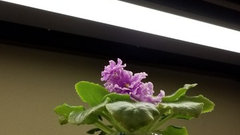
    There is no special lighting in my office. It just ordinary florescent light fixture installed under the cabinet ( common office setting). I don't have any window in my cubicle. Actually, I think the plant doesn't get sufficient light, especially in weekend. It is totally dark but there is nothing I can do. However, it's still have flower but not a lot because it doesn't get enough light. You can see the picture above that all leave are upward asking for more light.

    Maybe you can try Russian. There are people from other discussion here said Russian need less light.

  • 8 years ago

    Thanks, Elsa! I have hope I can make it work at my office too, now. :-)

  • 8 years ago

    Here is the lighting, not bright at all.

  • 8 years ago

    Thanks! Very helpful. :-)