Software
Houzz Logo Print
massey516

Remove older leaves or not?

When leaves start to wilt and die (not from any damage or disease, just natural shedding), do you remove them or not? May be a silly question but I have read that letting it naturally shed allows the plants get every last bit of energy from the leaf. Then I have read that the leaf is dying taking energy from the plant and is wasted because the leaf is dying.

So do dying leaves provide energy to the plant or do dying leaves steal and waste energy from the plant?

Comments (21)

  • 8 years ago

    What kind of plant are you talking about pls?

  • 8 years ago

    pothos, philodendron, "lucky bamboo", spider plant, begonia

  • 8 years ago

    Always remove dead or dying leaves on the plants you've mentioned, besides them taking energy from the parent plant, I find them un-sightly IMHO

    massey516 (NW Montana z 4b) thanked christine 5b
  • 8 years ago
    last modified: 8 years ago

    I can't speak to the science, but I remove dead leaves from all the plants listed above. Dead or dying leaves are unsightly & leaf debris can encourage insects & rot.

    I'd guess if one has attended to appropriate mix, potting, light, water & fertilizer maybe I'd think of this, but after 15 yrs. on these plant forums, this rarely comes up, so I conclude it doesn't matter in the way you think it might.

    massey516 (NW Montana z 4b) thanked Karen S. (7b, NYC)
  • 8 years ago
    last modified: 8 years ago

    I’ll remove leaves after they’ve turned completely yellow, brown or come off easily.

    I don’t remove leaves that have the slightest patches of green, even if they’re mostly yellow.

    massey516 (NW Montana z 4b) thanked Dave
  • 8 years ago

    So it probably is personal preference. I can see where both is beneficial. Thanks!

  • 8 years ago

    Remove. The primary plant system has already cut off the shipments of water and dissolved nutrients to that leaf....it has said, "you're dead to me". And the photosynthates delivered from the declining leaf to the rest of the plant body is negligible.

    I always consider a senescing leaf as a sap on overall energy reserves.


    massey516 (NW Montana z 4b) thanked rhizo_1 (North AL) zone 7
  • 8 years ago

    It depends on the day of the week. If is the day before the housecleaning service comes (To do some feather dusting and lightly swish the shower.) then remove them.

    massey516 (NW Montana z 4b) thanked albert_135   39.17°N 119.76°W 4695ft.
  • 8 years ago

    Looking at the question from the plant's perspective can be quite different than from the grower's. Leaves in the process of being shed are being shed for a reason. If it's not the result of drought stress, it's probably due to the fact that the leaf is not pulling its weight when it comes to energy production. When this situation occurs, as it very often does, chemical messengers within the plant send a signal to 'plant central' that it's time to be rid of the leaf. The plant then begins to salvage those nutrients and biocompounds in the leaf that are salvable. Prematurely removing the leaf denies the plant the ability to reclaim a part of what it's invested in that leaf. The removal might be of very little significance (to the plant) if it's from a robust plant that's growing well, but could be much closer to a life and death matter for a plant that's already circling the drain. Too, if the leaf if still green or partially so, the fact that it is still capable of photosynthesis (producing food [sugar] for the plant) should be taken into account.

    Some growers have no interest in investing the time/effort it takes to reverse the course of a plant in steep decline; others never give up until not a mote of hope remains. I think it's helpful to the later body of growers to know that even leaves with the recently determined and eminent destiny of being shed can still contribute to the o/a wellbeing of the plant, and to keep that thought in mind when confronted with decisions that are critical, again, from the plant's perspective.

    Al

    massey516 (NW Montana z 4b) thanked tapla (mid-Michigan, USDA z5b-6a)
  • 8 years ago

    Part of the problem in our society is we assign feelings to things that do not actually have feelings. Plants do not get depressed, or get happy. We can say they’re happy when they’re healthy, but it’s not like the plant is sitting there saying, “Gee, today I feel green and I want to dance”. Nope. WE are the ones who are happy when a plant is healthy because it means we are doing our job.

    Keeping a plant well groomed-keeps it healthy. If a plant is full, there is no reason to keep dead or dying leaves on it. A plant has X amount of energy- so why force it to carry dead or dying leaves? I can see if it only has 2 leaves, and one is still partially green, then I would say leave it on to try to save the plant.

    Plants’ perspective reminds me of people naming a lion and thinking it’s warm and cuddly and we should be able to pet it. It is the person who wants it to be warm and cuddly, not the lion. It is part of nature.

    My point- let the dead leaves go.....

    massey516 (NW Montana z 4b) thanked Lily Roberts
  • 8 years ago
    last modified: 8 years ago

    In any given houseplant do we have any feel for whether the abscission layer is in the resorption or the protective formation phase?

    massey516 (NW Montana z 4b) thanked albert_135   39.17°N 119.76°W 4695ft.
  • 8 years ago
    last modified: 8 years ago

    The thoughtful teacher can use anthropomorphic analogies to make a point or convey a concept without promulgating the idea that plants are people. When I say, "From the plant's perspective ......", it means from the perspective of what is good or best for the plant, as opposed to what's good/best for the grower; this, because the perspectives are very often mutually exclusive. In no way does what I said suggest I'm assigning human traits to a plant. I'm only responsible for what I say, not for what passed you by. It doesn't matter a tittle to me what someone else wants to do with/to/for their plants, but I do have an interest in providing information that help others make decisions ..... and that's what I did.

    "Keeping a plant well groomed-keeps it healthy." No, the statement is far too broad. Keeping a plant well-groomed can only CONTRIBUTE to good health because it reduces the number of places insects can hide, reduces shading, and in some cases it can decrease the potential for fungal or bacterial issues; but to be accurate, it doesn't ensure good health (keep it healthy"). If that were the case, every forum related to container gardening would have a very long and very old thread about appropriate plant grooming, and that's all we'd concern ourselves with. Plants, in situ, have groomed themselves (via shedding) since they appeared on the earth, with not one soul about to offer assistance. "If a plant is full,
    there is no reason to keep dead or dying leaves on it."
    There is no reason to keep a dead leaf on a plant, but there is reason to keep a dying leaf on the plant until the abscission layer is completely formed. I covered the why/wherefore above, but you must have missed it. I also said that the decision's relevancy varies in a direct relation to the plant's state of vitality."A plant has X amount of energy- so why force it to carry dead or dying leaves?" Actually, the amount of energy a plant can call on is finite, but ever in flux, so it never has X amount of energy. But to the point, we can't force [a plant] to carry dead or dying leaves. Plants are shedding organisms and will shed the leaves that it needs to shed to keep itself orderly with no help from the grower. That isn't saying the grower doesn't or shouldn't be able to decide what (s)he wants to do. Too, dead/dying leaves are not a negative in the sense they sap the plant's energy reserves. In fact, as I outlined above, until the abscission layer is complete, a dying leaf can still be contributing to the plant's wellbeing because the plant is salvaging mobile nutrients and biocompounds and translocating them to other plant parts. "I can see if it only has 2 leaves, and one is still partially green, then I would say leave it on to try to save the plant." I said the exact equivalent of that.

    "My point- let the dead leaves go....." I actually didn't have a point. My only intent was to relate reliable information re what happens while a leaf is being shed so others might make more informed decisions based on their plants' state of vitality. I never suggested anyone should leave or remove dead leaves, so I'm not sure what the real beef is.

    Al

  • 8 years ago
    last modified: 8 years ago

    Albert asked: In any given houseplant do we have any feel for whether the abscission
    layer is in the resorption or the protective formation phase?
    It depends on the plant, the grower, and what's causing the shedding. The leaves of some plants can turn all brown before the abscission layer is complete, and other plants can remain green long after the layer is complete. In some species, a drought response can cause leaves that appear green and healthy to be collectively shed within a very short time. This means that the abscission layer would have formed without conspicuous symptoms. If the leaf is brown and the abscission layer incomplete, it's likely because the green pigment in leaf tissues (chlorophyll) has been broken down and the Mg component translocated elsewhere in the plant.

    In a scenario where you have a failing plant that's shedding lots of leaves, and saving the plant outweighs a tidy appearance, you can tap or wiggle some of the leaves. If they detach easily, the abscission layer is complete. If you look the leaf over and remove the others that are similar in appearance, it won't add or detract to the plant's physiological wellbeing, but it might make it easier on the eye.

    As I noted above, "Prematurely removing the leaf denies the plant the ability to reclaim a part of what it's invested in that leaf. The removal might be of very little significance (to the plant) if it's from a robust plant that's growing well, but could be much closer to a life and death matter for a plant that's already circling the drain." In no way does this advocate for not keeping your plants tidy, and I can't see how it could be read that way. Basically, the healthier the plant the lower is the impact of removing even living leaves here, there, or en masse. I use partial and full defoliation as a tool on most plants I grow as a way to balance energy flow, so I have no aversion to pruning, defoliating, OR removing dead leaves that spoil a plant's appearance.

    Al

    massey516 (NW Montana z 4b) thanked tapla (mid-Michigan, USDA z5b-6a)
  • 8 years ago

    Thank you Al, I will now wait til the leaves are dead rather than when they show some green, your posts are so informative, I wish I knew 1/2 of whats in your brain !!!

  • 8 years ago

    I have to laugh, sort of. Every time I post something that even slightly irks someone, I get a lecture and then someone else comes along and lauds the alternate advice. Fine with me, I don’t care, other than it does take away the point of having differing opinions on a message board where newbies come for advice and letting them make their own decision.

    Life is short- and we are supposed to enjoy it (which can include having fun with your plants).

    massey516 (NW Montana z 4b) thanked Lily Roberts
  • 8 years ago
    last modified: 8 years ago

    There's a difference between dead leaves and dying leaves. Dying leaves still serve a function by recycling chlorophyll and anything else that can still be of use for the rest of the plant. This reduces waste and overall requires less of the plant's energy, instead of having to produce those things all over from scratch.

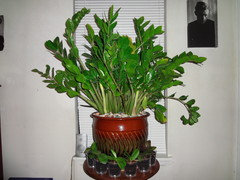
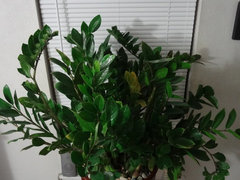
    My ZZ plant has become a monster since I first bought it. During that time, it hasn't shed any of its leaves, just a handful of leaflets. But now a couple of its leaves are dying back completely. Would it hurt my plant to prune them away prematurely? Of course not. But it's also growing new leaves as well. Since my plant is so huge, with lots of dense foliage, it could easily afford the loss of a few dying leaves, but I've chosen to leave them alone anyways. It's not costing my plant any energy to let these leaves die. It's saving it energy by recycling those nutrients, rather than letting them go to waste.


    ^^^ The dying leaves are hidden in the center of my plant. They have since turned even more yellow. Once they've completely died back, that's when I'll finally remove them. Leaving dying leaves doesn't hurt your plants. They may not be producing energy for your plants, but they are making one final contribution to them by letting your plant reabsorb anything that can be reused elsewhere.

    With growing plants, patience is most definitely a virtue.

    I often find that people want instant gratification from their plants, and they want them to appear to be in immaculate condition, too. Now there's nothing wrong with wanting good looking plants, but having dying foliage doesn't mean that your plant is sick or in need of help. It can also mean that your plant is growing and in perfect health.

  • 5 years ago

    @tapla (mid-Michigan, USDA z5b-6a)

    this thread has been really useful ! there are so many websites that say things along the lines of


    "If the leaves have more than 50% damage then remove them as they are draining the plant of energy that’s being wasted on a leaf that won’t heal"


    I'm assuming this is incorrect as if the leaf was draining energy the plant would have shed it?

  • 5 years ago

    It’s incorrect. Dead bits do nothing and green bits photosynthesise. Other than for aesthetic reasons or to get rid of pests, you can safely leave the removal of foliage to the plant.

  • 5 years ago

    "If the leaves have more than 50% damage then remove them as they are draining the plant of energy that’s being wasted on a leaf that won’t heal"

    I'm assuming this is incorrect as if the leaf was draining energy the plant would have shed it?

    Yes, that's true. For healthy plants with lots of leaves, removing the spoiled foliage isn't a big deal; but, for plants clinging to only a few ratty leaves as they circle the drain, discretion in how much photosynthesizing (food-making) leaf surface is sacrificed on the altar of appearance would be the watchword.

    How plants know when a leaf isn't carrying its weight:

    The primary factor in leaf abscission is the growth regulator/hormone, auxin. All plant tissues synthesize auxin. Most is synthesized in the growing tips of branches (apical meristem), but some is synthesized in leaves as well, and younger leaves produce more auxin than mature leaves on a per mass basis. Auxin's flow is polar - it only flows downward toward the roots.

    There is a "zone" where leaves attach to the branch, the abscission zone. A certain amount of auxin must be flowing through that zone in order for the leaf to remain attached. When the volume of auxin created in the leaf drops below a certain level due to any of several reasons (too wet, too dry, spoiled leaf, low light, too much light, .....), the plant's chemical messengers signal the plant to start the process of resorption, during which the lazy leaf is sort of cannibalized for the good of the whole organism. During resorption, nutrients and bio-compounds useful to the plant are extracted from the offending leaf and repurposed elsewhere within the organism. Soon after resorption has begun, the lack of auxin flow causes formation of an abscission layer at the attachment point. The layer will become corky, and eventually wall off (compartmentalize) the leaf. Eventually, the weight of the leaf or air movement will cause the leaf to fall from the branch, leaving leaf and bundle scars as witness to the fact a leaf was attached at that point.

    Immediately above that leaf scar, there will be a row of buds waiting to be activated. Whether or not they are, depends on several factors, but one of the primary factors is still the flow of auxin. Another of auxin's jobs is suppression of those dormant buds waiting to be activated. Often, it take another disruption of the auxin flow (pruning) to activate those latent buds ....... but I'm straying now from what I originally set out to explain.

    Al

  • 5 years ago

    @tapla (mid-Michigan, USDA z5b-6a) wonderfully informative answer as always ! thank you ☺️