Software
Houzz Logo Print
bopwinter

Cordyline australis

8 years ago
Hi,

Not sure if this is the right place to ask this question.

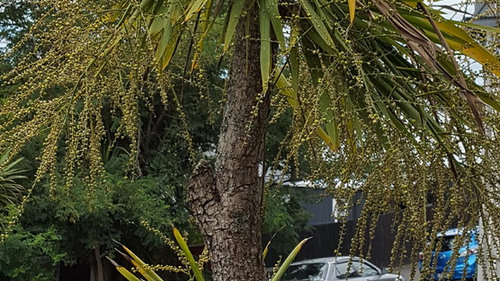
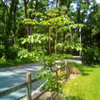
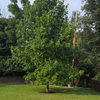
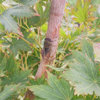
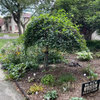
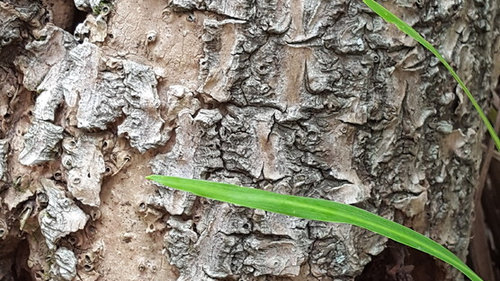
I have a Cordyline Australis outside here in New Zealand and I have noticed that it looks a bit stunted and yellow leaved. I looked at the base of the tree and noticed that there is a bit of a hole and a lot of ants.

Question is. What could have caused the hole, the ants or something else and would this be the cause of it's stunted growth?

Thanks for your help.

Ben


Comments (4)

  • 8 years ago
    last modified: 8 years ago

    It looks from the closeup that there is mulch around the tree, right up to the base. When mulch is against the trunk, it holds moisture and can cause rotting which can attract insects. I would start by pulling back the mulch around the trunks but I am not sure if it will survive. Give it time. It is usually suggested that when mulching trees that you do a donut shape, leaving a space around the trunk unmulched.

  • 8 years ago
    last modified: 8 years ago

    Just guessing by the pictures, any chance this is at the lowest elevation of the property and a lot of water runs off and settles in the area of its roots? I assume they grow wild in parts of your town? Often plant health issues start at the roots. I feel like in their native country, they are only attacked by insects when already weakened...assuming that's even a factor. The ants are probably just opportunistic.

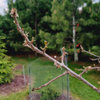
    Also wonder if the power utility has been cutting it away from their wires? Was that picture taken from a 2nd story window?

    I saw hundreds if not thousands of Cordylines when I visited the South Island and hardly saw any unhealthy ones at all. I would have been looking for them (unhealthy ones) because I was trying to find the coldest areas where they grow. (for the record, they are wild around Lake Wanaka, they become somewhat uncommon in Alexandra though still found in gardens, and there was only 1 in Ophir but it had a short trunk. Suggesting one of the coldest towns in NZ is still zone 8b at worst. This was corroborated by my discussion with a resident who said it got to -10C "once in a while, but not often". Alas, none of them had seed, anywhere I visited, because birds eat them over the winter. Ranfurly is probably colder than Ophir but I didn't have time to drive there. I saw wild colonies of Phormium further inland...as expected because the plain green form is the hardier plant in Northern Hemisphere gardens. After driving past Alexandra I started to see cold-injured zone 9 Eucs, indicating the transition to a colder climate.)

  • 8 years ago

    Thanks both for your responses. The tree is at one of the lowest parts of the property and we get a lot of rain during winter, so could be an issue. Maybe I will check next time it rains if it is boggy.

    In terms of mulch I will remove it from around the trunk (was done by the previous owner) and fingers crossed, as you say davidrt28 they grow everywhere, especially up here in Auckland (hundreds around me). Also good point they have probably been cutting it away from the power lines.

    Thanks

    Ben

  • 8 years ago
    last modified: 8 years ago

    Great, glad we could help. FWIW, I have read that there are scores of recognized ecotypes around the North and South Islands. If we combine this with the reports that the alpine species Cordyline indivisa is difficult to grow in Auckland, I just wonder if years ago a nursery-produced plant was planted there, that might not have had the local adaptability of the ones you see all over Auckland. So for example, I happen to know one of the biggest NZ seed companies is on the South Island, what if they collected local seeds, sold them to an Auckland area nursery years ago, and then that plant came from there? It might have failed in an urban setting with wetter than optimal soil.
    Relatedly perhaps, I just read there is a pathogen affected them. Causes a disease called 'sudden decline'. Hopefully yours doesn't have that. Cordyline banksii is resistant: https://en.wikipedia.org/wiki/Cordyline_banksii

    At any rate, I'd say it's time to completely remove that, and replant something that doesn't grow as high.