Software
Houzz Logo Print
blurayrad__

Ceiling Type Range Hood?

8 years ago

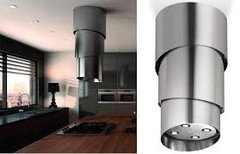
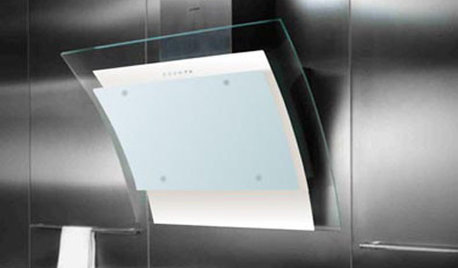
We are renovating our kitchen and will have an island in the middle. We don’t like the look of the hanging-type range hoods, and we want to be able to see across our kitchen. I think the standard range hood would block our view, so we were looking for something different. My friend found a ceiling-style range hood that doesn’t block the view.


Does anybody have experience with this type of range hood? Do you know if the suction will be okay? We don’t do a lot of cooking, but I like to know that it will still function properly as we do enjoy making our own food. I would rather not have a range hood block our view, but I also would like something that will work..


The ceiling mount range hood is called sky and sold by victory ranges?? Here is the unit: http://www.kitchenhoods.ca/shop/ceiling-mount-range-hood-victory-sky.html


Please let me know if you have used a unit like this or if you have any suggestions for us? Thanks in advance!!


Richard and Mary

Comments (9)

  • PRO
    8 years ago

    We have used different versions of the ceiling mount hoods. They work better than no hood - but if you have your hood on while your AC or heater is running - the airflow in the room will be sideways - not vertical. So the hood will evacuate some - but not all. Think of the blue smoke you get up at the ceiling when you burn toast. It will evacuate the air that reached the ceiling and doesn't get pulled past it toward your air return.


  • PRO
    8 years ago

    They allow a great deal of drift and expansion to the cooking plume before it only haphazardly gets captured. It's better than nothing. But, if you cook, you will want a real overhead hood.

    Perhaps consider an alternate layout.

  • 8 years ago

    This looks great, but I wonder how effective and/or practical it is? If you must have an exhaust fan (some people do well without one), how about a retractable exhaust vent that comes up from the counter?

  • PRO
    8 years ago
    last modified: 8 years ago

    They are useless the hood needs to be approx 30” from the stove surface to work but there are retractable hood fand that retract out of the way but up.

  • 8 years ago

    How high is your ceiling? What type of cooking do you do? What type of stove (gas vs electric/induction)? To me, those ceiling "hoods" look like they would offer very little benefit while requiring a lot of hassle for maintenance. But, if all you use your stove for is boiling eggs or heating soup, I guess it wouldn't be so bad.

  • 8 years ago

    And if your ceiling is higher than 8' they don't work at all. That is the maximum recommended height of those.

  • 8 years ago

    Thank you for all of the helpful ideas and tips! We won't be cooking a ton in this kitchen, so I think it might be okay. Our ceiling is 8 feet, but perhaps we should consider doing a slight drop ceiling since a lot of people on here are suggesting that the suction might not be quite enough. Our priority is to have this looking nice and not obstruct any views. We considered the retractable hoods, but it seems that those provide even less suction from what we have heard.

    Thanks again! I think we will go through with this and see how it works out. As soon as we finalize with our contractor, we can move forward and hopefully have something beautiful in our home..

  • 8 years ago
    last modified: 8 years ago

    While vacuum cleaners work by suction, so long as the nozzle is mere millimeters from the dirt, please wipe your memory clear of the idea that a kitchen hood captures cooking plume effluent by suction. Suction indirectly supports the containment aspect, but capture depends on the hood aperture overlapping the rising and expanding cooking plumes that can have a velocity over a meter per second. Even without cross drafts, a ceiling aperture has to be fairly large to handle the plume size when it gets there. This is why commercial hoods mounted with a seven foot (from the floor) aperture are so large. The penalty is that they draw a lot more air to keep their flow rate high enough to contain the momentum of such a fast moving plume rising into the baffle space.

    Flush ceiling ventilation in commercial usages utilizes most of the ceiling for plume collection, and techniques such as UV to break up the grease that is collected. $$$

    Regular, conventional hoods are the most practical choice for residential applications.

    That said, given a plan for a poser kitchen, minimal to no "hood" performance is certainly an option. Such configurations may be widely seen in magazine articles where the kitchens being photographed are assembled to sell something; this is fine along as it is understood what is being sold isn't clean air. And as a bonus, make-up air doesn't need to be considered.

    Performance, aesthetics, affordability -- pick any two.