Software
Houzz Logo Print
bonniewilson11

self watering planters

8 years ago

I was wondering if anyone uses a lot of self-watering planters
and if so do they work well? I have not tried
any yet but I have a huge peace lily I am thinking of putting in one. It is difficult to water because it is just
so darn heavy especially right after watering.
I don’t think it has outgrown its current pot so I was thinking of
putting it in a self-watering planter around the same size. I am basically looking for an easier way to water this plant.

Comments (20)

  • 8 years ago
    last modified: 8 years ago

    I have not had good luck at all with typical self watering pots that use soil. I have been using Lechuza self watering pots with their Lechuza Pon as the substrate and no soil. My plants have been doing very well in them. All except rhizomatous begonias--avout 50% of them die in the Lechuza pots and I have not figured out why. A peace lily would be great in a Lechuza pot.

  • 8 years ago
    last modified: 8 years ago

    I do not recommend them. Any pot must have drainage holes in the bottom no exceptions.

  • 8 years ago
    last modified: 8 years ago

    self-watering pots have a liner inside with holes that is elevated above the water level or an inner plastic pot with holes of course!

    most tropical plants that are moisture loving (like Peace lily) would do very well in them. however since the soil will be moist for longer period of time then with normal watering - it would be better to add 30-40% perlite to soilless mix for aeration and fast drainage. you will still need to water occasionally from the top to flush the soil from salts, but it'll make your watering a breeze.

    I grow most tropicals on self-watering wicks, but instead of a liner with cavity to absorb water from the bottom, I use a nylon braided acrylic rope 3/8" that is inserted inside the mix circling in the bottom and rising around the perimeter to the top. and use standard African violet mix with 30-40% perlite added for moisture loving plants. for the ones with medium water requirement I substitute about 30-40% of soilles-mix with small bark and/or coco-coir chips to lighten the mix.

    when there is less peat - the soil-mix will wick less water (bark does not wick,coco-coir chips wick a little-bit, but enough for some succulents, perlite wicks a little too), but peat is necessary to wick well, at least 40% by volume - so African violet or succulent mix is good (succulent soilless mix usually contains 50% peat).

    I have a variegated Peace Lily : Spathiphyllum 'Domino' that is very happy with this set-up. the pot with mix sits elevated in the 2nd pot that has water in it.

    it is considered passive hydro or called semi-hydro often, as the plant has roots in soilless-mix and grows roots into the water overtime.

    however the wick by itself will provide enough water usually, but the mix needs to be moistened initially to start the wicking.

    with this method it is better to underpot or at least make sure that the roots are filling the pot well through-out the mix before you start giving water from the bottom (similar to Lechuza method of top watering for 3 mo to allow roots to penetrate all the mix).

  • 8 years ago

    Thanks for all
    the comments. Very interesting to hear what everyone is using. I have read up on the Lechuza pots and they look like they work well. Although the big ones are pretty pricy but to
    save my back I think it will be worth it.

    I
    never thought of using just the substrate and no soil. Any idea how long it would be before I have
    to change it out? Do you still need to fertilize? I am assuming using
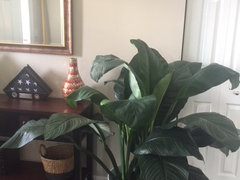
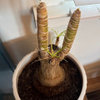
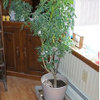
    the substrate pretty much eliminates pests such as gnats. Which seem to love peace lilies. By the way here is a pic of my plant.


  • 8 years ago
    last modified: 8 years ago

    wow! it's Giant Beauty! it needs A LOT of water! Lechuza would be per-rfect for it!

    but lechuza substrate has no nutrients - it's high fired clay , it just holds the roots, so fertilizing is a must. as far as I remember, you can add regular soilless mix on top of substrate (I would add perlite to av mix by 30%), but you'll still need to fertilize, even in winter. I am not sure how long the clay lasts - but it must be 5-6 years or even longer - it's like hardened ceramic, it won't decompose. it should say on their site.

    get yourself a liquid fertilizer and add it to water. check the hydroponics forum - they'll have plenty of info on that. you can feed it with orchid fertilizer or anything balanced like 15-15-15. if you water from the top - you can use time-release granules for flowers 14-14-14.

    but when you constantly fertilize - you'll need to flush it well once a month (3-4 times the volume of the pot), since it's an Aroid and they are sensitive to salt accumulation.

    so with lechuza you'll need to wait until it uses ALL the water in the reservoir and then pour clean water thru it for refill - no fertilizer for one cycle.

  • 8 years ago

    When I saw this plant at Lowes I had to buy it because was so
    big and beautiful. However, I first realized
    how big it really was when I tried fitting it in my car. Then once I got it home I realized how hard
    it is to water. It is still in the
    plastic pot it came in which I don’t like.
    It is one of those ones that only has one hole in the middle on the
    bottom and holes along the sides. It drains but when I tip it on its side more
    water drains out of the side so only so much comes out of the bottom. I could
    probably deal with lifting it straight up long term but trying to tilt it to
    the side is really really difficult.

    So, you think I would be better using soil on top of the
    substrate. I don't have any African violets so I am not familiar with the
    soil they are grown it. Do I basically
    just buy a bag of AV soil and mix in the perlite? I will do some research on this. I don’t plan to repot until the spring anyway.

    I didn’t think you needed to fertilize any plants during the
    winter. Therefore, I haven’t fertilized
    it since the fall (maybe September). I
    used a 20-20-20 from Shultz.

  • 8 years ago
    last modified: 8 years ago

    Since Pon is inorganic, it will be years and years before it needs changing. I am actually not sure how I will know when it is time to change mine out! Maybe if it looks discolored from salt build-up? It does need fertilizer, but NOT right away--it comes with fertilizer pellets mixed into the mix. You can see the little round, brown balls of fertilizer in the Pon. I have not fertilized in the almost year I have been growing in the Pon. I will probably start with Dyna-Grow this summer.

    Lechuza recommends growing orchids in all mix, no soil and since Pon is so close to the gritty mix in terms of particle size, I decided to use it 100% without soil for everything. I am very happy with it. It does remove any fungus gnat problem and it is much less messy than any soil. I think it also allows more oxygen to reach the roots. I grow all my succulents 100% in Pon, but not in the Lechuza pots, just in regular pots with drainage holes. It is a very fast draining mix and I have not needed to add perlite.

  • 8 years ago

    I read about lechuza sev years ago - it's a german product and widely used in Europe. but it's rather expensive ;). especially for bigger pots..

    normally you just use pon on the bottom of the pot between the soil-mix and water - sort of like hydroton , I guess.

    this is a quote from the site

    http://www.lechuza.us/LECHUZA-PON/PON-TERRAPON.html

    LECHUZA PON consists of:

    Zeolite, German washed pumice, German, light Lava and a fully coated premium quality fertilizer. PON is free from contamination and pollutants.

    it can be used permanently, no need to change.

    the terrapon mix contains peat:

    TERRAPON is a combination of humus, high quality peat, the mineral components washed pumice and expanded clay as well as a fertilizer.


  • 8 years ago
    last modified: 8 years ago

    Oh wow, permanent use, I did not realize tbat! Fantastic. Worth every penny to me! :)

    I should mention I do wash the Pon in a sieve to get rid of dust and tiny particles. So much easier than making the gritty mix.

  • 8 years ago
    last modified: 8 years ago

    >> So much easier than making the gritty mix.

    agree 100% :).

    >> I didn’t think you needed to fertilize any plants during the
    winter.

    tropicals continue to grow given good conditions (light warmth moisture).

    in poor conditions, especially cooler temps (at 65F and lower) they go semi-dormant almost, then they should be kept much drier and no feed is necessary.

    otherwise, if they are warm and you see new growth pushing out at a slower rate - feed at half strength.

  • 8 years ago

    I found i was putting off repotting plants to their detriment when I had to mix up the gritty mix! I still have the raw materials in my garage.

  • 8 years ago

    Again, thanks for all the comments. I really do want to try the pon, it sounds
    great for plants that don’t need much water. Sounds like a no brainer for succulents or snake plants. However, for plants that like to stay
    moist how do you know when to water? Especially
    if you don’t use one of the lechuza pots.

    I am assuming you can reuse it also when the plant grows and
    you have to move it to a bigger pot.

  • 8 years ago

    The Lechuza pots come with a water indicator. Once it goes to its lowest point, you wait about a week and water until the indicator shows the water at its highest point.

    I think a self-watering pot with Pon is fantastic for moisture loving plants. I was just on vacation for 3 weeks and everything in my Lechuza pots thrived. I would suggest rigging up your own Lechuza pot if you do not want to buy an official one. Maybe buy a solid outer pot without drainage holes, a mesh inner pot and a water indicator. You could probably put something together cheaper than a Lechuza pot, but the idea of the Lechuza pot with the Pon is what you want.

  • 8 years ago

    https://goo.gl/images/UnvtQY

    The water indicator is visible here.

  • 8 years ago

    ok so the pon only works with lechuza pot or something designed similar to it and is self watering. I am not sure I would want to try to make my own self draining pot at this point. Everyone seems to like their pots but I have so many plants I wouldn't be able to put them all in these pots unless I win the lottery. I will probably try it with the peace lily and maybe a couple smaller plants to see how they do.

  • 8 years ago
    last modified: 8 years ago

    The pon can be used either with Lechuza type pots for moisture loving plants, or in a regular pot with a drainage hole for succulents.

    They are pricey so for sure try just one to see if you like it. I would suggest the peace lily. Watch for sales and coupons. Especially around Mother's Day.

  • 8 years ago
    last modified: 8 years ago

    Lechuza is the royalty of self-watering pots.

    you can now buy cheap self-watering pots in HD or on-line and make your own mix like i posted above: just add perlite 30-40% by volume to the soiless mix (African violet or succulent are easy to get, but any soilless will do). for small plants you can use regular perlite, for pots larger then 6" large size horticultural perlite is best.

    OR you can use any plastic pot with the same ratio mix and insert a wick inside and trailing into the water reservoir below. it's not expensive, except you need an extra pot . there are many bath baskets that look pretty good and you can get them on sale. you put a small 6" plastic pot inside upside down in the tall basket and then put your plant pot on top of that. small pots will hide inside the basket completely. large ones will sit on top.

    I posted more details about it in many other places, here's a post about my Ficus Alii with a picture of the double pot it's in [this thread [(https://www.houzz.com/discussions/semi-hydroponics-opinions-dsvw-vd~4976144?n=16)

  • 8 years ago

    Thanks for the info. I think I will try one lechuza just to see with the peace lily. Those pots are definitely expensive but they seem to work well and are easy to maintain and for that monster of a peace lily I need something easy. I think I will try making my own for some of the smaller plants I have to see how well that works as well.

    I will definitely try the PON because it sounds like it is worth using in a lot of different plants. I am assuming it will take some time to adjust my watering habbits since I am used to only using soil at this point. I appreciate the comments because I have learned a lot about the different options.

  • 8 years ago

    Great. Definitely post back about your experience with Lechiza and making your.own pots.

    The learning curve is not bad. With the Lechuza pot, I water much less. Every few weeks really. Just watch the indicator and leave the dry period of a few days. For the succulents, in winter I keep them under lights and water maybe every 3 weeks. In the heat of summer that goes to every few days. The Pon really cuts down on succulent rot for me.