Software
Houzz Logo Print
hzdeleted_19707328

Seedlings

8 years ago
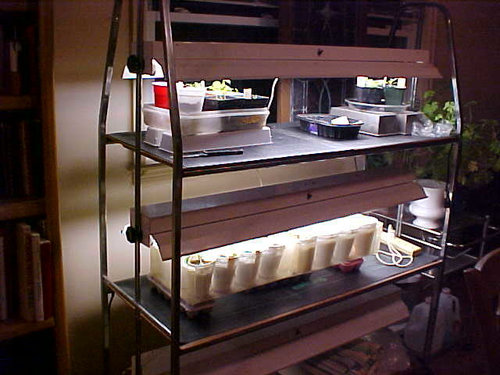
I wanted to share with you the progress
my seedlings are making by this time. Every year I neglect to write
down every time I do something and I always wish later I'd done it.
I keep thinking it would be nice to have one of those little
hand-held dictation machines that I could just talk into, but nine
chances out of ten, I wouldn't be able to find it any easier than I'm
able to find pen and paper every time I need it. I think I planted
most of these seeds around the first week of January. I always give
my seeds an overnight soak in water. This time I put a little
“pinch” of Epsom in the water as it seems to help germination and
makes for healthy-looking seedlings.

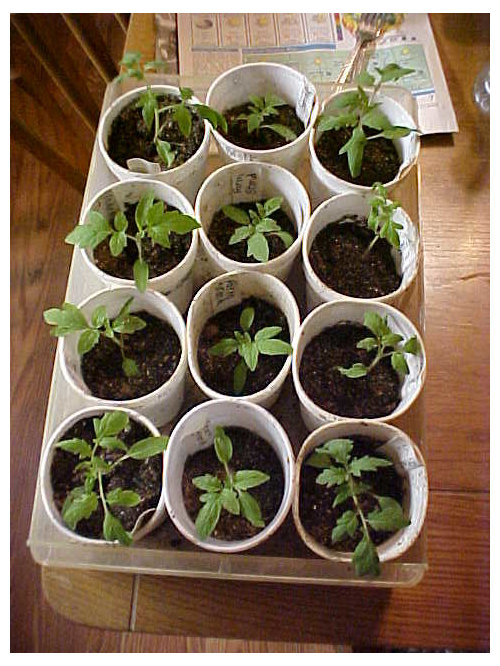
Yesterday I transplanted some of the
tomato seedlings out of their little “communal pot” and into
their own little styro cup. Normally I make newspaper cups but I
just didn't get around to making any, and I had these out in the shed
from a previous year. Might as well use what I have. This is what
they look like this morning. I have two containers of the
transplanted ones and I think I have a pot or two to divide yet.

The tomato varieties that I started
were all hybrids this time: Farm Stand, Steak Sandwich, Independence
Day, Front Runner, Super Steak . They're Burpee seeds. I swore I'd
never buy Burpee again a couple of years ago when I got so hacked off
at them over some mail-order mess-ups they kept making, but since
Atwood's has moved out along the highway where they can compete with
Tractor Supply, they have stopped carrying seed from all the other
seed houses. Atwood's is about the only store I have found, so far,
that sells seed during the off-season. So few retailers have caught
on to the fact that there are many of us who start seeds in January.

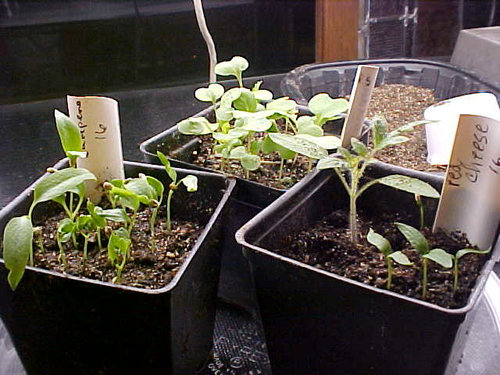
These are my peppers and the Golden
Acre cabbage. I have yet to get the yellow cheese and orange cheese
pepper seed to germinate. I started some from a newer seed packet
about two weeks ago and not seeing anything happening there, either.
So today I'm soaking an even newer batch that are seed for mixed
yellow and orange colors and am hoping something will develop from
them. There's still time, and this is one of the reasons why I don't
wait till February or later to start my seeds as I want time to try
again if something happens (or doesn't, in this case). Yes, I know
there's a tomato plant in with the red cheese pepper plant. Not
intentional. But I like surprises, and not sure what variety it will
be or whether it's a seed I dropped while planting/soaking, or one
that escaped from lunch.

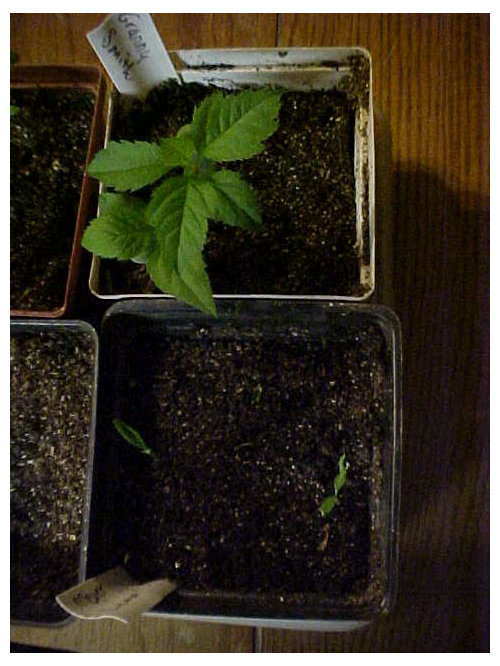
This picture shows my little Granny
Smith apple tree seedlings and the Meyer lemon. I just had one Meyer
lemon up for the longest time, but this morning I see several
starting to poke their little heads up out of the soil. Yes, I know
the apple tree may not come true to variety. Yes, I know the Meyer
lemon will not survive winters here and will have to be kept inside
then. These are just seeds out of grocery-store fruit and I hope
you'll be patient with me as I like to play. And yes, I know there's
a tomato plant in the pot with the lemon tree seeds.


The potting mix that I use for my
seedlings is equal parts of finished compost, vermiculite, and peat.
I always bake my finished compost to kill insect eggs, and I soak the
peat in water before combining it with the other two elements.
Usually I will sprinkle some worm castings on top of the soil in the
pots after the seeds are planted, before I water for the first time.
It's been said you could plant in 100% worm castings and there would
be no “fertilizer burn” as happens with other fertilizers. But
that would not be necessary to get the benefits and would be
wasteful, considering that worm castings would end up being a little
expensive if used that way. I've been told that the iron that's in
the worm castings is what makes the seedlings green up so nice and
look so healthy. I don't pretend to “know it all”. I make
plenty of mistakes and so I try not to be too
sensitive about it when people correct me. I actually welcome other people's viewpoints.


I'm taking a Master Gardener class and
I had an established master gardener tell me, during a break on that
first day of class, that I can't grow tomato seedlings successfully
without a greenhouse. So I don't know what that is I've been
starting every winter since, gosh, maybe 2005?? I do wish I had a
greenhouse, though. Maybe someday.....


Comments (8)

  • 8 years ago

    The seedlings look great. I do have a question though: Isn't it too early to sow tomatoes? Tomatoes usually don't get sown until mid March here, for planting in May, as we sometimes get frost all the way into May. We had a few inches of snow in 2013 I remember, on May the 3rd, though that's not normal at all!! Just curious. Maybe it's different in OK!

    Course, the last year or two have been very early springs, and it's allowed for earlier plantings. I suspect this year will be different however, as the weather has been so sporadic this past winter. We were at -8 a week ago one morning and now we're getting 0 frost and highs in the 50's. I suspect the spring will stay cooler and possibly sporadic. I'm a weather nut lol.


    I've started a tray full of Australian Brown Intermediate Day onions as well as about half a tray full of American Flag leeks, hopefully to put out in March, but that's likely the most of what I'll sow until late next month. Though I may start some brassicas for putting out under cover in early March in a couple weeks. I would love to get an early crop before summer crops go in, so that I have more space for summer crops.


    I'll post a thread showing my greenhouse/low tunnel seed starting experiment when I get the time later tonight


  • 8 years ago
    last modified: 8 years ago

    I will have to try your container mix recipe. I usually use a Happy Frog mix. I like it because I don't find the need to fertilize since it has bat guano, fertilizers, etc. in it. It's expensive however. I wonder if I can convince my parents to let me put compost in the oven to bake lol

  • 8 years ago

    Jacob, I have a "canning kitchen" out in my garage. Canning in the summer in my kitchen overburdens our AC unit. So I bake my compost in that oven. It does emit a distinctive odor, not like baking rotten stuff, but I don't know that I'd want my house smelling like that inside, either. Sometimes there are little gnat-like things, not sure if they are whiteflies or what they are, that hatch in compost. It is not necessarily true that the heat generated when compost is decomposing will kill weed seeds and insect eggs, anyway I haven't found it to be. But I've had some people tell me they wouldn't bake their compost anyway because that might kill the beneficial bacteria. There is a mushroom farm in Miami, OK and they only use their compost once and then sell it by the truckload. Lots of people buy that. In fact, I've seen it in bags at Lowe's. I don't know if you would end up with anything less expensive than Happy Frog, as everything costs something. I buy my peat in a big cube and vermiculite in the biggest bag I can find. I did discover that one of the local greenhouses' prices on these things is less than Lowe's price, plus they often can have it available year-round when Lowe's doesn't always. For "insurance", I make sure I have enough of all my components by the end of the previous year's growing season, just in case I can't find it for sale anywhere during the "dead of winter".

    So, do you do any canning?


  • 8 years ago

    I have only canned preserves and pickles in the past. I'm hoping to can a lot more this year however. Tomatoes (crushed tomatoes, salsa, etc.), green beans, preserves, pickles, radishes, beetroot, sauerkraut (love sauerkraut), etc. I'll probably freeze quite a few vegetables like broccoli and cauliflower as well. That's the plan anyways. It all depends on how everything grows! Of course, I can get tomatoes pretty cheap at local farmers' markets or orchards for tomato products. I've been told to get "seconds". I'm not relying too much on our tomatoes, as we usually can't get any crop whatsoever before Septoria Leaf Spot or Early Blight wipes out the crop, but I'm going to try this year. Assuming everything grows well, I'm hoping that the canning and garden work will keep me busy this summer lol

    . I get most of my compost off of a guy in town for about $20 a yard. It's a simple green waste/garden compost. The guy owns a lawn mowing business and uses all of the grass clippings and yard waste to make his compost. Pretty good idea. I'm hoping to have some more of my own next year, but it takes quite a lot of materials to get even a small pile!


  • 8 years ago

    We went around and picked up bags of leaves that we saw sitting on the curb on our way home from town, for several years. Left them in their bags in the garden till I needed them for mulch. After the end of summer, they'd be in good enough shape to till in. And then I started hearing about people who got a dose of herbicide in leaves they'd picked up, so I started being more careful about looking over the place where we picked up the leaves: Did they have a lawn-care sign in their yard? Pass it up. Those people drive big tank trucks and spray stuff all over the yards. I have no clue what's in that stuff. But if it's just the homeowner in a middle-class neighborhood, and their yard doesn't look like some kind of showplace, the leaves are generally safe. We quit picking up any bagged leaves AT ALL the year we got a few bags full of oak leaves, and there were a bunch of oak mites on the leaves. They make little blisters on skin when they bite and we just decided it wasn't worth it.

    The trees we planted are getting to a size where they are providing us with a few leaves. And I bury my kitchen vegetable-type scraps directly into the garden, just by digging a hole and dumping the compost pot into the hole, then covering it over. This year we had something digging into the hole and I had to put something on top. I never found out for sure what it was. There are rats out in the nearby pastures. They come up to our house when the local ranchers burn their pastures, an annual thing for them as long as I can remember in Oklahoma bermuda-grass country, but not so much lately since starting a "controlled burn" and it becoming a wildfire can destroy your home and all your accumulated bales of hay and all that of your neighbors.

    We have established a friendship with a local small-business tree trimmer. He brings woodchips to us and dumps a load right on our property, wherever we want it, if he can get his truck there. It benefits him because he doesn't have to pay a dumping fee. Normally he takes it to his ranch and dumps it out in one of his pastures, but we are located between town and his home so it keeps him from driving his truck all the way home to dump. You have to let woodchips age before you put them in the garden, or they will suck out all the so the first year I use them for mulch or I spread a thick layer in the walkways. Bermuda seems to love living in the woodchips, though....

    I read this guy's blog sometimes and he has a nice post about woodchips here, with a pic of his garden:

    http://jimlongsgarden.blogspot.com/2013/02/wood-chips-are-they-good-for-your-garden.html

    The big tree trimming companies are not all that interested in dropping off woodchips to the local gardener. I think this is because they are far enough removed from the people who own the company that they don't reap any advantages to saving however much a dumping fee is. And also, the employees often bring their haul-off stuff to work and put it in the back of the truck with the wood. You don't really want them dumping off a load of chipped wood and and old sofa onto your property. So if you want woodchips, you need to talk to a guy that does the work but is also the owner of the business.

    My son made most of his spending money by mowing neighbors' lawns in the summer. He always did a good job and was a nice kid so people liked him and he always had plenty of work. Now that he's grown and his step-children are always needing spending money, he takes them out lawn-mowing and it has become a family enterprise. He also learned how to repair lawnmowers and would do more of that if he didn't have a full-time job as well. At first he used the mowers that people had. One man did not want him bringing in a lawnmower because he said he didn't want "other people's weed seeds". Gradually he got so he could afford to buy a nice mower out of his income, so that he could cut grass for people who didn't have lawnmowers of their own. These days, he drives a pick-up and tows around a big trailer on which to put his riding mowers, all his trimmers and other tools.

  • 8 years ago

    That's a great idea, especially taking advantage of any time we get an early spring. I wonder why people think red makes a difference?

    We sometimes get wood chips from the city. They have them for free, as long as we come load them ourselves. Ive had issues with them harbouring ants, no idea why! So I usually keep them in the paths...

    I do mow our neighbor's lawn during the summer. It's a good way to make some extra money. Plus, I've become good friends with the lady, so I like to help her out when needed with any work.

  • 8 years ago

    There is an untapped source of income, generally, in doing odd jobs for older people. We're not supposed to be up on ladders, for instance. Many of us have adult children but we don't like to call on them for things we can't do because there is that sigh, and the rolling of the eyes, that tells us it's a nuisance to them. So we might as well spend our children's inheritances by paying someone to help us with stuff we can't do, right? LOL And older people make really good friends and have much to share with you, if you're interested in getting to know them. You seem like you are such a nice young man, your neighbors are lucky to have you nearby.

Sponsored