Software
Houzz Logo Print
amymondo

Scale Help Please!!

8 years ago
last modified: 8 years ago
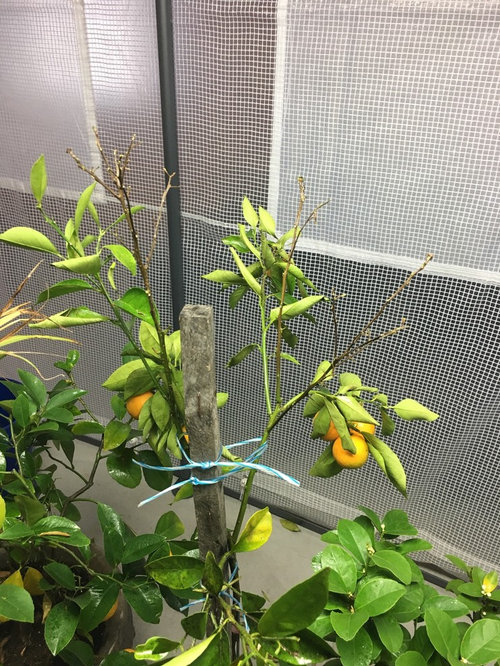
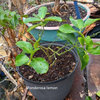
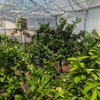
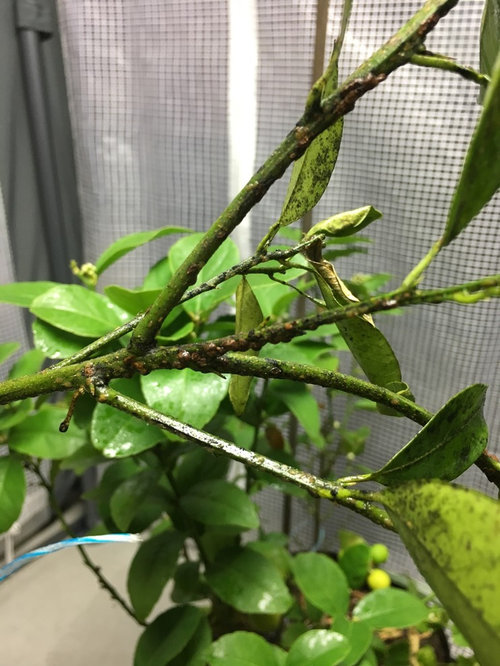
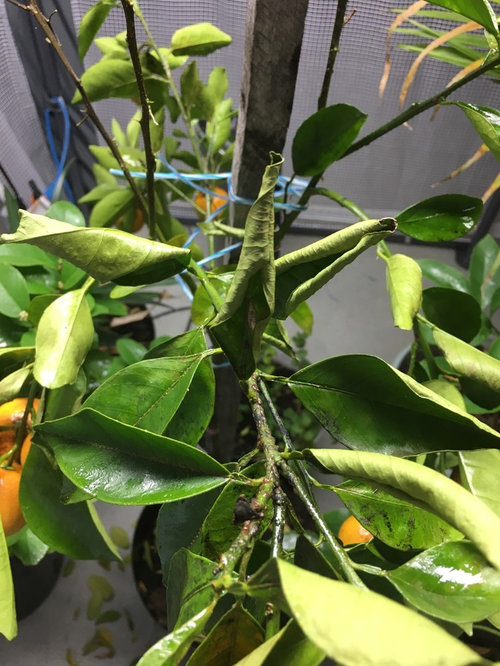
I added a key lime tree to my small potted collection this past summer and with it came scale. I’ve tried numerous rounds of neem oil and another product I found at a Lowe’s (can’t remember what it was but I attached it to the hose and sprayed). I’m getting pretty desperate because my dwarf Meyer lemon, blood orange and key lime trees are pretty covered in them. Not sure if it’s related to the scale but the blood orange tree recently had the leaves on 3 branches curl up, get crunchy and fall off.

Would love to hear suggestions that have worked for others. I’m in MA so anything I’d do would need to be done in the greenhouse in my basement unless we got a warm day and I could take them outside. Want to add more citrus to the collection but don’t want to do it until this scale is gone!

Anyone have any experience or thoughts on these products:

PyGanic Gardening 8oz, Botanical Insecticide Pyrethrin Concentrate for Organic Gardening https://www.amazon.com/dp/B01MSWWEX1/ref=cm_sw_r_cp_api_8n4CAbGDD8XYB

Azera Gardening 8 oz, Botanical Dual Action Azadirachtin/Pyrethrin Fast-Acting Insecticidal Concentrate for Organic Gardening. https://www.amazon.com/dp/B06XJZG44X/ref=cm_sw_r_cp_api_Lu4CAbACKMVC4

Monterey Fruit Tree & Vegetable Systemic Soil Drench 32oz https://www.amazon.com/dp/B00APQYEMY/ref=cm_sw_r_cp_api_6u4CAbHJ4XEXN

Last photo is more leaves on the blood orange curling up and getting crunchy.


Comments (25)

  • 8 years ago
    last modified: 8 years ago
    In daytime under good sunlight remove as much as you can by hand and spray with horticultural oil or water and alcohol mix, repeat every 5-6 days until gone. Isolate the tree from your other trees.

  • 8 years ago

    HI, I usualy use a mix of half alcohol/water + dash of palmolive soap. Work like a charm for me!

  • 8 years ago

    Scale is a very common insect that attacks many types of plants including citrus. Fortunately it is also a very easy insect to eliminate. Spray the tree with a 1 to 2% solution of a good horticultural oil, plus 1 teaspoon of a surfactant per gallon. Spray all parts of the tree. Horticultural oil is safe to plants, animals and humans, even OK for organic operations. What ever you use never spray a citrus tree during the heat of the day.

  • 8 years ago

    I will strongly disagree with the notion that scale is an easy insect to control. It is not and most sources and references will confirm that assessment. Not easy at all but it can be controlled with constant attention. However, if the infestation is too far gone, it is almost impossible to bring it back in check and often it is best to discard the plant to save others that are not yet affected.

    Yours looks pretty far advanced as there is already the presence of sooty mold. I would need to see more to determine how salvageable it might be.

    Part of the difficulty with scale is that there are many different types broken down into two categories: soft and armored scale. Citrus is prone to both. Armored scale is much harder to control as each insect is covered with a shell that prohibits exposure to the pesticide being used. One can treat for armored scale only when it is in one of its immature, crawler stages.

    This fact sheet from UCDavis outlines both types and how best and when to treat: Scale Insects.

    btw, you need no surfactant with a horticultural oil.....oil IS a surfactant itself!!

  • 8 years ago
    last modified: 8 years ago
    Gardengal. everyone has their opinion. In my area all we ever see is soft scale. I've been growing citrus for 30 years, and in my experience scale is very easy to control. Every time 1 or perhaps 2 ( I wrote 2 spray times but off hand I can't remember ever having to spray twice) applications of Ultra-Pure Horticultural oil, and scale is history.....really not much of a problem. btw. I also like adding a good surfactant, I think it keeps the oil in suspension longer. I never ever ever ever bother with neem.

  • 8 years ago
    last modified: 8 years ago

    Gardengal, oil is not a surfactant. Surfactant molecules have hydrophylic and hydrophobic parts and oils are only hydrophobic. Oil/water emulsions tend to bead on leaf surfaces and adding a surfactant prevents beading.

  • 8 years ago

    Silica, why don't you use neem oil? Neem oil smothers the insect azadirachtin in neem oil is supposed to be a good insecticide.

    Are you concerned about spraying on blossoms? I read that oils cause blossoms to drop.

  • 8 years ago

    Please, further your research a bit!! Horticultural oils are themselves added to various pesticidal compounds to act as a surfactant!! Horticultural oil needs no additives to adhere fully on plant tissues and is use as a defense against scale only means it needs to cover the insect (or its offspring) itself and its oleaginous consistency makes that happen. Since hort oil is used as s surfactant in its own right, it is a bit redundant and unnecessary to add another.

    And Neem oil, as its name might imply, is considered a horticultural oil as well.

  • 8 years ago

    Gardengal, oil molecules are entirely hydrophobic while surfactant molecules have hydrophobic and hydrophylic parts. The former binds hydrophobic moilecules (e.g., oils) while the latter binds to water molecules. This is why surfactants are also emulsifiers.

    Please provide a reference in support of your contention that horticultural oils are surfactants.

  • 8 years ago
    last modified: 8 years ago

    Gardengal, thank you for your incite, but I find it best to continue with the use of a HO surfactant blend. It works better than HO alone. Vladimir, your correct that HO will cause damage to citrus flowers after they are opened, and therefor one should not use HO at that time. However, a 1% spray concentrate, which is the recommended use rate on the product label, can be used when the flowers are present but have not yet opened, with no damage. I purchase Ultra Pure brand HO in 2.5 gallon jugs. I like to make a spraying after blossoms start but before fully opened to insure no damaging insects are present.

  • 8 years ago

    gardengal, thank you for the references.

    I just learned that an oil can act as a surfactant to lower the surface tension of water as a monomolecular layer on a water surface (or by forming an emulsion). So, you are correct.

  • 8 years ago
    last modified: 8 years ago

    Good, now that all that is said, We will always continue to add a good surfactant to our HO sprays as we find the surfactant improves the efficiency of the solution. Sorry aphids, scale and mealy bugs.

  • 8 years ago

    Bonide's HO says it is self-emulsifying with a spreader sticker.

    In my case, I cannot actually see any scale (found a few suspect areas, so perhaps i caught it early). I don't see aphids (source of honeydew) so I am assuming scale.

    If I saw large groups of scale I would remove them by hand, with iso alcohol. It seemed like a good idea to remove the honeydew, so I used soap/water in a spray bottle (no access to a hose). It was not as effective as I'd like. I wonder if iso alcohol (diluted) would work.

    Am I correct that once HO is applied and 'smothers' the target, it has no residual effect? Whereas, neem does have residual? Or is the residual only for some pests. Again, since I cannot see the scale, I also cannot see any crawlers, and it sounds like you need to apply the spray when they are active to have an effect.

  • 8 years ago
    last modified: 8 years ago

    I have used undiluted isopropyl alcohol to remove sap from citrus. Diluted may work OK. I used the undiluted on my papaya to remove scale and now the leaves are wilting, so be careful applying it.

    I believe you are correct: neem oil has residual effects while HO does not.

  • 8 years ago
    last modified: 8 years ago

    Scale have been my bane for years--ever since I brought home a tree from CA. It only takes one survivor hidden in a crevice to spread the "infestation" because they can reproduce asexually. The problem only crops up indoors due to the lack of natural predators--in the summer, they are usually very well controlled by them. I normally use HO in the winter because it doesn't stink as the oils oxidize; in the summer, I prefer neem because of the residual effects. When it comes to honeydew, I just hit the trees with a hose and it takes care of it. One of these years I'll finally eradicate the abominations.

    -Tom

  • 8 years ago

    Thank you guys, this has been a very instructional discussion. I use Bonide All Seasons HO and it says this on the back (I'd never paid attention to this before, but have noticed that it completely emulsifies when it hits the warm water): "All Seasons HO and Dormant Spray is a self-emulsifying spray oil, composed of paraffinic oil with emulsifier and spreader sticker..." I usually mix it with Pro-tekt anyways bc I also add a tad bit of FP when I spray and I figure it does not hurt. I multitask...spray for bugs and feed ;) . I too have been battling scale on one tree that I thoroughly sprayed before bringing inside several times. Tom is right...one tiny one that is not killed off becomes a problem later. I have not seen any lately, but I have been spraying and just in case, hacked off a few limbs that were more severely affected. It was on my Persian lime that needed a pruning anyways.

  • 8 years ago

    I have never used any other HO other then Ultra-Pure HO, which once was called Ultra-Fine HO. I'm gratified to see that some of the other HO brands include spreader stickers and additional emulsifiers. They really help with the efficiency.

  • 8 years ago

    Oil is not a surfactant and neither is horticultural oil as Wikepedia seems to claim. It is misleading at best. But it is really outright wrong information.

    Bonide's HO contains 2% emulsifiers and spreader sticker as Laura mentioned. That is the surfactant. All oils will need a surfactant to be able to mix with water since as we should all know that oil and water do not mix. I suspect Ultra Pure HO also contains surfactants since its end use is to mix it with water.

    If you want to increase the effectiveness of HO, mix in pyrethrins. They are highly soluble in oil and perhaps there are other such oil soluble insecticides. In this sense, you could think of HO as a carrier for other oil soluble insecticides.

    Scales as you all know are hard to eliminate. If you catch them early when their shells are still soft, oil/soap can be effective. Adult hard scales have to be physically removed.

  • 8 years ago

    Wikipedia aside, take up your argument with the other, reputable horticultural and agricultural sources that contradict your interpretation!! This is a pretty well established concept, if you bother to do the research.

    And not all hort oils require an emulsifier.....many products do not suggest adding anything more than water (Volck oil as an example). It depends on the refinement and consistency of the oil involved.

    And btw, an emulsifier is quite different from a surfactant!

  • 8 years ago
    last modified: 8 years ago

    I have bothered myself with plenty of research. Name one reputable source (I cannot find one) that says hort oil of any kind IS a surfactant. I will be glad to learn and admit my fault.

    Surfactant is a chemical engineering concept and it has a very specific meaning. And this one from the same damn Wikipedia (and Monsanto seems to agree too :))

    "Surfactants
    are compounds that lower the surface tension (or interfacial tension)
    between two liquids or between a liquid and a solid. Surfactants may act
    as detergents, wetting agents, emulsifiers, foaming agents, and
    dispersants."

    Oil does not fall into the surfactant category.

    Oil, in general has better sticking/adhesion property. Lighter oils have better penetration property and that is why they are used as spreader sticker or dispersants. A good example is WD40 which adheres, disperses and penetrates very quickly. Try mixing it with water. Gasoline, which is even lighter spreads even faster but will always stay at the surface. Not all dispersants are surfactants.

    Surfactants are used as emulsifiers where appropriate. I very well know that all emulsifiers are not surfactants and vice versa. But most commonly used emulsifiers are surfactants. Lecithin from egg yolk is used to emulsify oil to make mayonnaise and it is categorized as a surfactant.

    I have no experience with Volck oil but sounds like a dispersant type light oil. It is a commercial name for horticultural use and it stands to reason that they have added appropriate ingredients for mixing with water. Scotts product label has undefined 3% extra ingredient. I bet that is a surfactant and/or emulsifier.

    Here is one piece of info on Volck oil I found at: http://pmep.cce.cornell.edu/profiles/insect-mite/mevinphos-propargite/petroleum-oils/insect-prof-petroleum-oils.html and this is the relevant part:

    "Some formulations are applied directly to sites but usually oils are formulated with emulsifiers which permit them to be diluted with water"

  • 8 years ago

    Thank you Tropicofcancer --- very good information. We add surfactants to all of our HO sprays as it helps keep the HO in solution, instead of the oil just rising to the top of the spray tank. We find adding a surfactant gives a much better kill.

  • 8 years ago
    last modified: 8 years ago

    Tropic, thank you for backing up what I said above about oil not being a surfactant,. However, as I said above, oil, as a monomolecular layer, can act as a surfactant to lower the surface tension of water.

    Gardengal, your posts have been very educational and I have learned from them. I am not a degreed horticulturalist like you. I am a degreed (Ph.D) molecular biologist with some knowledge of chemistry. In fact I have taught college chemistry courses.

  • 8 years ago

    Thanks Vladimir. Now I have to look up the info on monomolecular films :)

  • 8 years ago
    last modified: 8 years ago

    For bayleaf which is kinda indestructible i have used rubbing alcohol and soap spray even direct alcohol spray and wipe.

    For citrus i primarily use a mix of neem oil and castile soap .