

Raised Beds
I'm giving in and planning to make a series of raised mostly ornamental beds in my front yard
I plan to use wood for the beds. I have very little shade in that area. I'm looking for advice on the best height and width.
Also, the best way to set up the watering system.
Building plans or pictures of all of your designs for both the beds and the watering systems, or perhaps you can point me to a web address with some good ideas.
For those of you with raised beds already, how often are you having to water your beds in the heat of summer, and how high are your beds?
Thank you all!
Denise
Comments (7)
 8 years agolast modified: 8 years ago
If you make walls you can sit on the tops of then you don't have to stand and bend while working.
Related Professionals
Little Rock Landscape Architects & Landscape Designers · Longview Landscape Architects & Landscape Designers · Youngstown Landscape Architects & Landscape Designers · Sanford Landscape Architects & Landscape Designers · York Landscape Contractors · Wichita Falls Landscape Contractors · South Bend Landscape Contractors · Monroe Landscape Contractors · San Angelo Landscape Contractors · Wilmington Accessory Dwelling Units · Hopkinsville Accessory Dwelling Units · St. Louis Accessory Dwelling Units · Bangor Accessory Dwelling Units · Newport Accessory Dwelling Units · Amarillo Accessory Dwelling Units 8 years ago
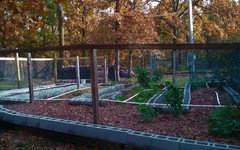
We're just beginners, so can't speak with any authority whatsoever. Will leave it to the experts. Here's a pic of ours. . . two things to say: They have not been cheap--with all compost and raised garden soil, hay. Sure glad we have tons of leaves here; and second, we love them. The one in the foreground WILL require foot traffic--I'm going to use the center as the "walking path, with plants on both sides.
- 8 years ago
I think the real determining factor about the height of the beds for me is that it depends on the soil beneath them. If it is dense slow-draining clay, I prefer a taller bed that is 8-12" above grade level, and if it is a faster-draining sandy loam or sandy soil, you probably could raise the bed only 4" above grade level. Do whatever works for you with your soil. As for the size, again it is just personal preference. I like beds that are not too wide for me to easily reach the middle of them in order to weed, harvest, plant, etc. so most of mine are only 4' across.
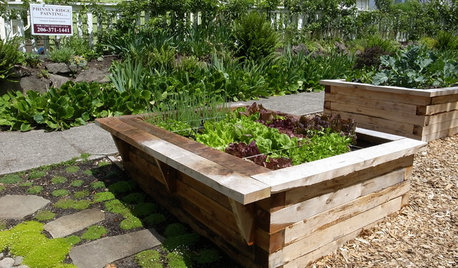
Because we have voles that eat all root crops (and many flowers with tuberous type roots like dahlias and lilies) if they get a chance, we have built three 2' tall raised beds (4' wide by 12' long) lined with 1/4" or 1/8" (don't remember for sure if all three are lined with the same size, so I listed both) hardware cloth to exclude the voles. We only plant root crops in these beds and, so far, the voles never have gotten into these beds. By contrast, when we grew root crops in regular raised beds that weren't lined with the hardware cloth across the bottom, the voles would eat the root crops some years (though not other years) and often, they didn't start eating things like the potatoes or carrots until you were starting to harvest them and you'd be digging potatoes and find one that recently had been chewed on....sometimes the first clue was when you stuck the shovel into the ground to dig and it went in very easily because the voles already had excavated tunnels in the beds. For us, the voles didn't show up until around 2010 or 2011, and we had built our first garden bed the year before we moved here, so that would have been 1998. I am not sure why they weren't a problem from Day 1, but they weren't
As for irrigation, we use various systems in various years. I'll spend more time setting up drip irrigation lines if I am expecting a drought summer, and will spend less time fretting and worrying over them (voles will chew through the driplines sometimes for the water, so that's a problem here....) in a normal year. Sometimes I just use soaker hoses or hand-water if needed with a water hose. In a rainy year, I often don't have to water until late July or early August, so I'll just use a handheld water hose. I try to avoid the use of overhead watering with sprinklers as all the moisture it puts on leaves can lead to fungal problems. I don't necessarily do the same type of irrigation exactly the same way in any two years in a row. My favorite way to grow in containers in a drought year is to hook up drip lines that run from one container to the next and put them on a timer. That is about as foolproof as gardening gets, although as the summer goes on and it gets hotter and drier, I have to change how often the containers get watered and for how long to suit the current conditions. You cannot just set up the timer once and be done with it---you have to change it as needed. Here in our climate, if your driplines are not buried below the freeze line, you need to lift them up, blow them out to ensure they are empty and dry and then store them away for the winter. You cannot leave drip irrigation lines out there in your landscape on top of the ground, even if underneath mulch, because any water left in the lines can freeze and crack the lines or the emitters.
Dripworks is one online retailer of irrigation supplies that has an online planning guide you can use. They also will work with you to help you design your system and they also sell kits. My first drip irrigation system was one of their kits. Back when I started using drip irrigation, the supplies were not easy to find, but most big box stores and nurseries sell all the components in the brick and mortar stores now, or you can find many sources for them online.
While my veggies, herbs and flowers get water as needed (and I am definitely not one of those people who water every day because all that does is encourage roots to stay up near the soil surface, which is the opposite of what you want), when it comes to ornamental plants in the landscape, I try to select proven tough plants, often native in origin, that can tolerate our specific soil types and frequent droughts without irrigation once they are established. I might have to water them regularly the first couple of years until they are established, but after that, they get to sink or swim on their own. Anything that needs constant moisture all the time isn't going to be happy here, so I don't plant it in the first place. Once I gave up attempting to grow thirsty plants here, life became so much easier---even native plants can suffer in the worst drought years but they generally survive. I tend to choose plants that are xeric, not mesic, even though it means some plants I love never will be planted here. Life is too short to spend all summer every summer doing nothing but watering plants!
Dawn
baabaamilker
Original Author8 years agoThank you all for the pictures and information. I guess the biggest reason I need the raised beds is because I tried ornamental directly in the ground. Inevitably the Bermuda grass gets ahead of me, I can't mow in between as easily with random drip irrigation lines sprawled out. Though my garden was beautiful in spring I just now managed to uncover everything by mowing, it was that bad.
The beds will give me the more distinct garden and mowing areas. With the drip irrigation lines elevated I can still mow the paths and slip underneath the draping line that goes from one bed to the next to mow.
A couple of years ago I had raised beds using some salvaged cinder blocks. It just seemed the blocks dried the beds out so fast. I thought wood would help the beds retain moisture a little better?
Do you all find that maybe there's a tiny bit less fight with Bermuda with the raised beds? If it gets too bad can you just solarize the beds? Also, do you find there's less of a fight when the beds are at 12 inches rather than 4 inches? The area I'm putting them is in the front yard that's almost nothing else but Bermuda.
Since this is the front yard and the beds will be mostly ornamental is there a way I can set the beds up to be eye appealing yet practical for drip irrigation watering? I'd prefer not to set them in rows but I like convenience as well. Maybe some U shaped beds?
Voles are not an issue for me. My back garden is my main vegetable garden and they don't really touch my root crops, that whole garden (2500sq. Ft.) is grown in the ground. We have about 5 outside cats who regularly patrol my garden so I'm sure that helps.
Amy, I was concerned about bowing with 12ft. Boards. Maybe a 2x4 crossbar every now and then would help with that. Did you use pressure treated boards?
Dawn I'm all for the plants that when you totally neglect them during the summer and expect them to die, yet are pleasantly surprised to find them still alive at the end of the year.
I just mowed everything down and found I had Dames Rocket, Mealycup Sage, Flax, Aster, and Hollyhocks still looking alive.
- 8 years ago
Raised beds do not deter bermuda grass one iota. The grass runners will crawl under the wooden edging and right into the beds where they will spread quickly in the raised beds' amended and irrigated soil, so strike that thought from your mind. To keep bermuda from creeping under the wood, you can try buying metal landscape edging and hammering it into the ground several inches deep. This works for some people and not for others depending on their soil composition and how deeply they have put the metal edging in the ground. Sometimes the bermuda grass finds its way over the top of the edging and then underneath the adjacent wood and pops up in the beds anyway.
Some friends of ours did find a way to keep bermuda grass out of their beds by pouring a perimeter of cement sidewalks 3' wide completely (100%) around their home, with their planting beds lying between the house and the sidewalks. The planting beds were filled with some sort of mulch rocks like you tend to see as total yard replacements in some desert areas, and only an occasional xeric type plant within the rocks looking like islands floating in a sea of rocks. I am sure there is a heavy-duty landscape fabric beneath the rocks. The sidewalk serves as a fire barrier---as does the rock landscape mulch and I think it is just a bonus that the rocks and sidewalks combine to keep the bermuda grass under control. I believe they were going for a lower maintenance landscape as they aged (he's got to be well into his mid-80s now and she must be in her 70s as she;s quite a bit younger) and also for fire protection as they live on a ranch and are surrounded by nothing but grassland in all directions.
There is no good solution to keep bermuda grass where you want it and only where you want it because it will keep trying relentlessly to go where it isn't wanted. The best way to eradicate it is to use a sod cutter to remove all the bermuda sod, going down several inches to get all the runners, stolons and roots. However, if there is any bermuda left in adjacent areas, it will fill back in that spot where you removed the bermuda unless you put down something like concrete that it cannot penetrate. Thus, if you are going to have a bermuda grass lawn, then you'll always have to deal with it trying to invade garden beds. There is no quit in bermuda.
My brother once tried to outsmart the bermuda grass by putting down thick (probably 4 or 6 mm) black plastic he bought on rolls at Home Depot. He rototilled the ground and raked out all the pieces of bermuda he could find. He put down that thick black plastic and covered it several inches thick with white marble rock chips bought in bags at HD. He cut a few holes (not many) and planted small shrubs in the holes and surrounded them with the white rock mulch. He had a bad back and never wanted to deal with that bermuda grass again. About 10 years later with a very bad back (in even worse shape than before) and bermuda grass growing through the rocks and up through the holes in the plastic where he had planted the plants, I fixed it for him (somewhat) by scooping up all those rocks and removing them one small and heavy bucket load at a time. I lifted up the plastic and found long white bermuda grass stolons and runners everywhere---white because the combination of black plastic/white marble rock denied them light for 10 years---and that grass only turned green where it came up through the holes cut in the plastic for the plants. If 10 years of being denied light won't kill bermuda grass, I don't know what will. Anyhow, we took out the shrubs and let his ornamental beds revert to bermuda grass lawn because it was easier to mow a lawn (he actually had goats that helped keep the grass under control) than to try to keep digging out the bermuda grass that infiltrated his white marble stone mulch and grew up through the holes in his black plastic.
I just dig out the bermuda as relentlessly as it invades my beds, and it is a never ending chore. Some people control it by spraying herbicides, but I don't like using herbicides near desirable plants and just won't do it. There are some grass killers that only kill grasses and not broadleaf plants and some over-the-top herbicides that can be used to kill grasses in ornamental beds for people who choose to go that route. Since I won't use synthetic chemicals on our property, I choose not to go that route.
As for the voles, back when we had a 4' tall garden fence (actually, two of them spaced 3' apart like a moat to keep deer out of the garden since deer can jump high or wide but not high and wide at the same time), our garden always had bobcats in it and I think they were controlling the voles. Our cats had totally controlled the moles and gophers by killing them all within months of us moving here, but the cats had to be indoors at night because of the cougars, coyotes and bobcats, so the voles had free reign at night when the cats were indoors. So, at night and often in the daylight hours, there always was a bobcat in the garden. If it saw a person or car approaching it would jump the 4' fence and run away. Once the deer finally figured out (after about 8 years) that they could jump sideways, land inside the area between the two fences, and then jump again and land inside the garden, our garden was being eaten to the ground. To keep the deer out, we removed the inner fence from the moat and raised the outer fence to 8' tall. This keeps out 100% of the deer but also 100% of the bobcats, so it was a year or two after the fencing change that the voles became an issue inside the garden. About 10 of our 14.4 acres is heavily wooded, and the woodland lies on all three side of my garden, so the pine voles always will be here. Coyotes eat them, but they don't eat all of them. I feel lucky because they are not a problem 365/24/7. They mainly are a problem in July and August of very bad drought years when whatever they are eating naturally in the woodland dries up or becomes depleted, which drives them to the garden to eat whatever they can find. Or, if we are in a multiyear drought, they can become a problem for the duration of that drought---even in winter. I've had them eat onions some years almost as soon as I planted them, and the same thing happened with seed potatoes. Hence, the hardware-cloth-lined beds.
We all have to work with what we've got, and I've got red clay, voles, bermuda grass and its more aggressive and larger sister, Johnson grass, etc. Oh, and abundant wildlife since the Red River lies to our west, south and east and we also are surrounded by a lot of Wildlife Management Area land.....and the wildlife will travel through our neighborhood to get form one area of river bottom land to another. It sounds like you have (at the very least) bermuda grass and, of course, being out in SW OK, the need to irrigate....which just makes irrigated areas more attractive to the bermuda grass.
Before we moved here, we had St. Augustine in our yard in Fort Worth in the 1980s and 1990s. I loved that stuff. It not only was gorgeous and grew like crazy as long as you irrigated, but it crowded out bermuda grass. In fact, my neighbors would complain that it would invade their bermuda grass lawns. (I told them to put down a metal barrier hammered into the ground to stop it, but that was more work than they could be bothered to do.) If I knew back in 1999 when we moved here that we even had bermuda grass here, I would have rented a sod cutter and removed it completely from all the land anywhere close to our house. Then I would have relentlessly used Round-up to keep it from coming back, but there was so much about our land that I didn't know yet. What we had was tall-grass prairie, until we mowed it down short in late summer so the builder could begin building our home. There was no grass during the time that our future yard area was a construction site. Our home was finished in the winter---still no grass. We moved in and waited to see what prairie grasses would reappear when the weather warmed up. I was hoping for buffalo grass. Alas, what appeared was bermuda grass instead. One of our old farmer neighbors stopped by one day, saw the bermuda grass sprouting and told me how lucky we were that someone apparently had planted bermuda years before for hay and that the bermuda couldn't compete with tallgrass prairie as long as the prairie grass wasn't mowed...but once the tallgrass prairie was mowed, there was the bermuda....emerging to take over. He was overjoyed for us. I was just shellshocked and mumbled something like "oh, aren't we lucky". Wish I'd known them to fight that bemuda head on......
I'd plant St. Augustine to crowd out the bermuda here if the St. Augustine was cold-hardy enough, but it really isn't We get just cold enough a few nights a year to kill it---that even happened occasionally in Fort Worth if we had a really severe cold spell, but it was one of those once every ten years type of cold spells. Here, we get that cold virtually every winter.
What has worked best for me with bermuda near the house is to plant enough shade trees and tall shrubs that eventually as they grow and spread, the bermuda grass gets shaded out. It cannot survive in heavy shade. Then, of course, you have to plant a shade-loving ground cover to replace it, but I'd rather have the ground cover than the bermuda grass. Well, except venomous snakes hide in the ground cover, but they are plentiful here and we'll never get rid of them all so we just watch where we put our feet and hands during snake season.
I tried planting mint right into the bermuda grass to see which one would win. Here's a hint: that mint is all gone and I didn't remove it. Other than the St. Augustine grass that likely would die out most winters, I haven't found anything that outgrows, outcompetes and outlast bermuda grass, so I'm resigned to just always having to deal with it.
Dawn





AmyinOwasso/zone 6b