Software
Houzz Logo Print
ellenoir17

Converting mulch to clover?

8 years ago
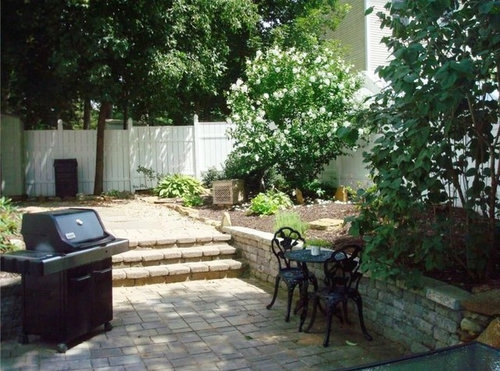
We recently bought a house that has mulch beds interspersed with bushes. I would like to change the mulch over to something green, mostly for the benefit of our dog.
Thanks to some advice I found here, I think I’ve settled on white clover due to the durability, our 6B zone, and the south facing / afternoon sun only location.
So my next question is, how do I go about this conversion? Do I need to remove all the existing mulch? What’s the best method for seeding? When do I do it?

Comments (6)

  • 8 years ago
    last modified: 8 years ago

    How thick is the layer of mulch? Is there landscape fabric beneath it? If there is landscape fabric you will need to rake off the mulch and store it, remove the landscape fabric and seed the clover. You can cover the planted bed with a light sprinkling of mulch to help keep the soil moist, but the soil and mulch together need to be less than 1/2". If there isn't fabric, it will depend on the depth of the mulch.

    From what I read, soil temperature should be at least 45F when you plant clover, and it germinates best around 70F though it will germinate in less than a week if temperatures are at least 60F. You will most likely want to scatter inoculant specific to white clover when you plant since it will be healthier or more dense. It's a bacteria that grows in association with the plants' roots to help them fix nitrogen. Plant 1/8" - 1/4" deep and don't let it dry out entirely before it germinates - lightly moist is your goal. It will need regular water until established.

    That said, there are more attractive groundcovers and if you want other suggestions, let me know. The ajuga suggested in your other thread would be more attractive and less likely to camouflage solid dog waste so that it can be removed. If your dog will be using this area to relieve himself, plan to pour some water over the spot each time to dilute the urine so that it doesn't burn the plants. Otherwise you will have lots of brown foliage, regardless of what you plant. You will also have to keep the dog off the area while it establishes, so you might want to half this year and half next year so half is always available to the dog's use.

  • 8 years ago
    Thanks for your reply NHBabs!
    I guess I was under the impression that ajuga would grow too tall and then would hide his droppings, or generally be less walkable. If not I’d love to hear your thoughts on it or others. I had also considered thyme but it seems to not be the best match for the sunlight I get.
    The mulch is about 1/2”-1”. It’s at the point where I’d normally add more mulch. There is no landscaping cloth. The beds appear to go pretty deep- around 3’. And it’s good quality planting type soil.
    How do you plant seeds down that deep over such a large area? Do you just dust new soil over the top?
  • 8 years ago
    last modified: 8 years ago

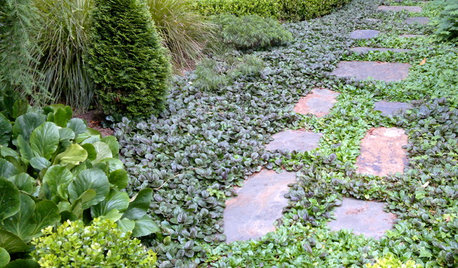
    Ajuga flowers might reach 5" or so, but they are narrow and won't hide the droppings and are only present for a few weeks. The leaves of the ones I've grown are quite flat. Many have leaves that vary some in color, which is good as far as helping camouflage any foliage damage that does occur despite diluting the urine.

    Ajuga plants can often be bought by the flat and will spread fairly quickly. Starting clover from seed may take more than a season to fill in, though I am not sure. If you do grow clover from seed, I would remove most of the mulch before planting, just rake, though you don't need to be very complete about it. For the ajuga, just push the mulch aside where you want to plant and then nestle it back around the plant. Regardless, keeping an eye on moisture is important for new plants, and even more important for seeds and seedlings.

  • 8 years ago
    Thank you! I will definitely look into ajuga more. Luckily for my groundcover, but not so much for me, my dog has elected to pee on the herb garden, with a particular affinity for the rosemary bush. I will have to figure out some barriers before I replant it...
  • 5 years ago

    First clover, even grass and certainly ajuga will be discolored by dog pee and poop. Anything like ajuga will fill in rapidly but will be easily raked out when getting up the dog poop. In addition, many dogs, especially males kick back after doing their business, further digging up plants. He is peeing on your Rosemary probably due to the height and the smell. Or another dog has been peeing on it and he is trying to mark his territory. Depending on where you live, it could be coyotes peeing on amd your dog is trying to clear their smell out. There are no plants that take dog pee and poop without discoloring. It will need to be neutralized with lime water - can’t tell you how much lime to add to water because I don’t know how big an area you are working with. But you can mix up 1 tablespoon with 1 gallon of water and carry it out when cleaning up each week and pour on discolored areas or behind where the dog goes each time. Keep in mind, this will alter the pH of the bed quite quickly and can kill anything growing nearby like your shrubs, trees, ground cover, etc. if they don’t like that high a pH. Note plain water will help flush the urine but it takes a lot of water and done immediately like a gallon on each spot. Once it’s sunk in, the damage is done to the green plants and the roots, and it will yellow and possibly die. Just depends on what’s planted. Plain water is safest but doesn’t neutralize. You can try something like Ivy, honey suckle, euonymus — but they need to be well established so they don’t get dug out.
    If planting clover, it requires the mulch to be removed completely, good rich top soil (not big box bags of what is called top soil — it’s not top soil at all, they are fine ground bark, peat Moss and sometimes ground up landscaping debris. The soil pH needs to be around 7-7.3. It can take a little shade, but prefers full sun most of the day and need watering until we’ll established (hear or so). It would be the same as establishing grass seed in those regards. I question the comment “ high quality or good planting soil 3’ deep”. Most places don’t have that good of soil 3’ deep — if it has been in bark for a long time, it could be the bark has broken down and looks dark like top quality top soil that’s been leaf and manure enriched would look. You can always call your County or City extension service to obtain soil testing kits. That will tell you it’s fertility. PH, and how much lime it needs, etc. for what you want to grow or what’s already there. Don’t forget the shrubs in place. They may even send someone out to assist in your decisions.

    Testing usually runs around $10/sample and is more than worth while but must be done correctly - have to remove the mulch or compost lying on top to get to the soil. Clover doesn’t like acidic soil and won’t establish well. It also likes moisture so if the area is dry and compacted, it won’t grow well. If in fact you have native soil and not broken down fine bark — the way to find out besides testing — is to dig down until you can’t dig anymore (past the 3’ of what you are calling high quality planting soil — to see if you note any change in the color or texture. At that depth and usually sooner you will hit subsoil. Most native top soil is likely to be just a few inches deep and if bought in, might be 6-18” depending on someone’s budget. High quality top soil is expensive.

    One final word, clover blooms all season and draws bees — some dogs don’t take friendly to bees if stung on the feet or mouth. You can also buy pre-inoculated clover and if not, then you have to buy a package of specialty clover inoculant and do it yourself. I prefer to buy the pre done then I don’t have to worry if I got the correct one.

Sponsored
Peabody Landscape Group
Average rating: 3.5 out of 5 stars8 Reviews
Franklin County's Reliable Landscape Design & Contracting