Software
Houzz Logo Print
psolyn

Gaps in blooming

8 years ago

A post in the "What is the vision" thread referred to 365-day garden interest, including the winter, in areas with cold winters. Succession of bloom is an even more widespread concern, because every garden is prone to times during the growing season when not much has flowers or attractive foliage.

I happened to be re-reading Anne Scott-James's Down to Earth, which was first published in 1971 (I have the 1981 revision). She described two seasonal gaps in her garden in England: May and August. The May gap for her was the time after tulips were finished and before roses started to flower. It's longer for me, because I grow neither tulips nor roses.

Among her suggestions for permanent plantings, including shrubs, were Viburnum plicatum, deutzia, and Rosa rubrifolia (for foliage, not flowers). She mentions that deutzia was surprisingly little grown, and I think it is equally uncommon here even though it's readily available. She also suggested some early shrub roses (unlikely to flower here in May), tree peonies, clematis, and Actinidia kolomikta (for shock effect, I think). Among herbaceous perennials: Paeonia officinalis, dictamnus, and bearded iris, especially Iris × intermedia. Also, but as gap-fillers, London Pride (saxifrage), bleeding heart, and epimedium. Except for bearded iris and a sole herbaceous peony, I don't grow any of those, and they flower later in my garden anyway.

Her August gap was partly of her own making, because she disliked all yellow daisy-like flowers, which come into their own then: rudbeckia, heliopsis, helianthus, helenium and (not in the least daisy-like) solidago. In addition she belonged to the circle of refined English gardeners who disapproved of bedding annuals. My take on them is that if they were good enough for Christopher Lloyd, they're good enough for me.

This year I'm growing dwarf sunflowers, zinnias, and other annuals, plus perennial rudbeckia and echinacea, so I should be better off in August. I'm adding sedums and (admittedly old-fashioned) cushion chrysanthemums, since the worst gap I had in recent years was later in the season.

When does your garden typically have gaps, and what do you do about them?


Comments (24)

  • 8 years ago

    My gap is early August. Exactly when I happen to schedule big garden events! I find peegee hydrangeas whatever stage the blooms are in come to the rescue. And lavender and hosta..

    Paul NY 5b-6a thanked kitasei
  • 8 years ago
    last modified: 8 years ago

    I remedied my August gaps in 5a with caryopteris, clematis, phlox, daylilies and Heuchera. I’ve had less than satisfying results with chrysanthemums, removed all of them

    Sherry

    Paul NY 5b-6a thanked sherrygirl zone5 N il
  • 8 years ago

    I should add that keeping the garden lively into August requires diligent deadheading, watering, cutting back, and I suppose bloom boosting fertilizer. I’m not personally familiar with the last but perhaps others will educate me. The difference between a billowing garden and a ratty one at this point is largely labor invested when you’re already exhausted and spent. Of course there are weather events beyond your control —like the one we’re having at this very moment here... ground zero for a heavy thunder snow. My arborvitae are prostrate on the ground, a beloved dogwood touching its toes and a tremendous hemlock leaning at 45 degrees over the next door property of a big time lawyer. And this is just what I can see from the window. Who knows what tomorrow will reveal!

    Paul NY 5b-6a thanked kitasei
  • 8 years ago

    Kitsei stay safe!

    I have two gaps - after the Iris/peonies before the Shasta daisies and lillies bloom and then in August. I'm actually fine with it as there's always a few flowers from a rebloom, but swaths of flowers are not happening on a constant basis. Last year Spring was very warm and all my Spring flowers bloomed very close together. It exaggerated the Spring gap quite a bit.

    My solution for the gap will be annuals. Hopefully ones that grow cheaply yet profusely from seed! I'm winter sowing coleus as well as I enjoyed the colors last year.

    Paul NY 5b-6a thanked posierosie_zone7a
  • 8 years ago
    I don’t worry about any so-called blooming gaps, as I don’t really subscribe to the pornography of the flower. That being said, I cram so much into my garden that it pretty much goes non-stop, do maybe that’s my version of porn after all.
    Paul NY 5b-6a thanked LaLennoxa 6a/b Hamilton ON
  • 8 years ago

    Someone here in GW many years ago suggested photos as a method of garden evaluation and I use my camera phone for that. It has helped me reduce bloom gaps and also substitute foliage interest for bloom to lengthen season of interest. It helps me judge views from the house windows for winter interest along with window views where I often look out regardless of season like my kitchen sink window.

    Here my busiest bloom season tends to be spring with May and June really a riot of bloom, and October has such amazing foliage color that flowers just don't compete, so in recent years I've been focusing on long blooming perennials like Daylily 'Happy Returns', Helenium 'Marci Gras', and several of the threadleaf Coreopsis to bump up summer interest, along with summer-blooming Clematis and long-blooming woody plants such as 'Major Wheeler' honeysuckle/Lonicera, Daphne x transatlantica 'Summer Ice', and Hydrangea paniculata varieties, all of which bloom for at least 4 months in my garden. So while my bloom level definitely has cycles with August being the slowest time, most of my gardens by now have a relatively long season of interest. But I've been gardening here for 20+ years, so I've had lots of time to evaluate and modify.

    Paul NY 5b-6a thanked NHBabs z4b-5a NH
  • 8 years ago

    NHBabs I'm glad to hear that Daphne 'Summer Ice' survives and blooms for your in NH. I am in zone 5 and have read conflicting reports on its hardiness. Thank you. I think August is also my slowest time but I am not sure. I am very haphazard in taking pictures so it is very uneven record. I think this year I will try to record my garden week by week and see what unfolds.

    Paul NY 5b-6a thanked felisar (z5)
  • 8 years ago

    Plenty of downtime ar the allotment and the wood...but in my home garden, it is blooming and colourful in every month. I have read all the usual advice - evergreen structure, hardscape, foliage and shrubs for backbone, but I do none of that because, with less than 30 square metres, I too have gone down the Christopher Lloyd/Great Dixter route, Paul. High maintenance gardening is never so challenging when the whole garden is essentially a minuscule pot garden with my secret weapon - autumn sown hardy annuals. When the tulips and auriculas are winding down, sweetpeas, centaureas, larkspur, godetia, flax, linaria, lychnis, coreopsis, Venus's looking glass, ammi, ridolfia, mirabilis and gypsophilia will all bloom a few weeks earlier (and much sturdier) than spring sown plants...and not to forget biennials. These seedlings are cheap, easily raised, can be tucked in anywhere there is a space, can be tossed without regret when they look faded and tatty and, most essentially, can be changed out every year. This year, I am planting l bronze, crimsons and oranges (last year it was acid green and purple (larkspur, mollucella, cleome,linaria, phacelia, nicotiana, bupleurum and cerinthe). Seeds can be sown direct for later plantings - annuals can be sown as late as early June for a late summer flowering. Yep, it is an effort - I raise hundreds of plantlets in my greenhouse and will be sowing some seeds every month of the year. Also, I shuffle pots in and out of sight, yanking anything looking less than stellar and squeezing little clumps of plants in any vacant space (phlox drummondii is a goodie for this, as is the little erigeron, e.karvinskianus)...while new to me this year is a single colour mirabilis (soft orange), deep purple penstemon barbatus, nicotiana 'Tinkerbell' and coreopsis 'Roulette'. Finally, shrubby salvias will bloom throughout the entire summer - up until November and beyond...but living and gardening in a temperate and mild area is the single most essential asset for year round colour.

    Paul NY 5b-6a thanked User
  • 8 years ago
    last modified: 8 years ago

    Felisar, D. 'Summer ice' always looked a bit tattered and ratty in early spring until it leafed out, despite being well shaded in winter and good snow cover. I had it for something like 6 or 8 years until one winter the voles ate very root down to the main stem. But if I could find another one, I would buy it in a heartbeat. With the exception of the brief time between snowmelt and leaf out in spring, it was quietly lovely all year. I know it survived -17 most winters and most likely a bit below -20 at least once. My soil is well-drained acid sandy loam.

    Paul NY 5b-6a thanked NHBabs z4b-5a NH
  • 8 years ago

    My biggest gap is much like Rosie’s, here, it’s the beginning of June....such a let down after all the exciting spring bloomers lol. I’ve been trying to divide what little I do have blooming at that time, and spread them around....

    Paul NY 5b-6a thanked GardenHo_MI_Z5
  • 8 years ago

    autumn sown hardy annuals. When the tulips and auriculas are winding
    down, sweetpeas, centaureas, larkspur, godetia, flax, linaria, lychnis,
    coreopsis, Venus's looking glass, ammi, ridolfia, mirabilis and
    gypsophilia will all bloom a few weeks earlier (and much sturdier) than
    spring sown plants.

    This is an interesting idea. Some of the flowers you list will self-sow here, so deliberate autumn sowing ought to work.

    Venus's looking glass

    In North America that would usually be identified with Triodanis perfoliata or some other Triodanis, which are native wildflowers, but I'm guessing that the plant you have in mind is Legousia speculum-veneris.

    living and gardening in a temperate and mild area is the single most essential asset for year round colour.

    The climate here does limit what is possible early in the season--winters are both colder and (affecting even autumn-sown annuals--they would be classed as half-hardy, not hardy, here) longer.

  • 8 years ago

    Spring gets off to a late, cold start here, so the big flower show starts in early May. Late March and April has sporadic small bulbs flowering here and there but no big show until the weather warms up in early May - and then everything comes on in a bag rush! I used to have that August gap but now August is one of the showiest times in the front garden due mainly the hardy hibiscuses, hydrangeas and phlox 'David' - and a few other things.... We don't usually get a lot of good fall color here so the show peters out in mid-late October.

    Since things flower at different times in different zones, the 'gap' period(s) and the solutions for them likely vary by zone - e.g. I wonder if my hibiscus show would be mainly a July event in a warmer zone....? Some of the hibiscuses start blooming in July but the main show is mid-August, with some continuing to bloom into September - and even a few into October!

    I'm too lazy now to seed-start/use many annuals :-) In the first years here I used to have pots of a dark purple Wave petunia that had wonderful clove scent in the mornings! I sort of miss that but don't miss it enough to hunt for it again or start seeds of it. The rest of the perennials, trees, and shrubs in the garden now have enough size and interest to replace most of the need for annuals here. Gardening in one place for 20 years has its advantages....!


    Paul NY 5b-6a thanked woodyoak zone 5 southern Ont., Canada
  • 8 years ago

    I also have a gap between the bearded iris and before the main summer bloomers start. It used to be worse, but as any responsible gardener would do I made a visit to the local nursery to see what was in bloom and picked up a few new things (or took a few notes). Once June gets going my garden never looks back until the hard frosts of October!

    Now if only that stupid snow would melt so I can see my snowdrops and cyclamen again!

    Paul NY 5b-6a thanked katob Z6ish, NE Pa
  • 8 years ago

    In the "vision" thread, deannatoby mentioned Margaret Roach's 365-day garden webinar. It's being given today--possibly the last time for a while because she doesn't offer webinars during the busy gardening season--and I've signed up. I'll try to post some comments later.

    My current idea is to defy convention by replacing evergreen "foundation plantings" that date to the original construction and aren't doing well with deciduous shrubs that would flower early in the season. Shrubs with dark foliage would complement my house, a very early mid-century modern one with grey siding, and it's oriented the wrong way on the lot, so the long sides don't face the street and there are foundation plantings on both of the long sides. What I have in mind is weigela x Velda ('Date Night Tuxedo') on the south side at the end nearer the street, and diervilla 'Kodiak Black" on the north side, with specimen plantings of other shrubs at the ends away from the street. We'll see if the webinar changes this.

    I have a couple of concerns about the webinar. One is that, although Margaret Roach's garden and mine are in the same state, they're at opposite ends of it, with different growing conditions. Another is that she has a very large garden and I have almost no planting space, because the house is sprawling and the lot is small.

  • 8 years ago

    I agree with Kitasei that continuous blooming through the growing season, in mixed perennial beds, requires a lot of labour.

    In my experience, it's also quite expensive in terms of the materials (including plants) used.


    Paul NY 5b-6a thanked sunnyborders
  • 8 years ago

    I planned for continuous bloom while planning my garden beds, making extensive lists of date of bloom, height, sun needed, etc. Some of the plants needed were not common in my area so were started from seed by winter sowing or growing indoors. This helped with the expense but also added to the time needed to develop the bed to its potential. Also planting over several years allowed buying other more expensive plants a few at a time. Bulbs and annuals were included in the perennial beds.

    I defined continuous bloom as “something in bloom each day of the growing season, but not necessarily the whole bed in bloom”. Also chose plants with foliage that held up throughout the year or that could be cut back for new growth or covered by other later blooming plants. One of my joys was discovering the new blooms each day.

    Even the beds in the back with newly planted shrubs and iris beds were in bloom through scattering annual flower seeds, rudbeckia, allysum, calendula, poppy, etc seeds.

    It was a work of love and some frustration as had one area of my front large bed that I kept changing from year to year as it wasn’t as lush as I wanted. I blamed maple tree roots.


    Paul NY 5b-6a thanked mnwsgal
  • 8 years ago
    last modified: 8 years ago

    Helenium became a favorite fall bloomer as it comes in colors other than orange yellow and is long blooming. Many varieties of allium and clematis bloom at different times. Don’t forget plants like nepeta, agastache, reblooming day lilies that bloom several times after being cut back.

    Paul NY 5b-6a thanked mnwsgal
  • 8 years ago

    Helenium, yes. It was one of the plants that Scott-James refused to grow, but she had an irrational dislike of the colors and flower form. I'm not growing it this year but I will be growing almost every other flower that she hated. That includes solidago (goldenrod); while I don't plant it intentionally as an ornamental, some always springs up and I let it grow, flower, and seed (for the birds).

    There is certainly a cost in time and effort in managing a garden for continuous bloom, but maintaining a garden without it is almost as difficult--it takes thick planting, thick mulching, or constant weeding no matter what.

    I agree that phasing in perennial and shrub plantings is a way to spread the cost over several years, and that annuals from seed are a relatively inexpensive way to fill gaps in space and blooming until the perennials and shrubs grow in.

  • 8 years ago

    Strongly agree with the value of Helenium in mixed perennial gardening, at least in our sort of growing conditions.

    As per Paul's point, "Irrational" dislikes have raised their silly heads over the history and literature of Gardening.

    I was reading an article in The Daily Telegraph recently about Brunnera in which the author refers to the introduction of "a selection with unpleasant cream-variegated leaves" (likely 'Hadspen Cream'). Somewhat similar 'Dawson's White' is my favourite among our Brunnera cultivars.


    Paul NY 5b-6a thanked sunnyborders
  • 8 years ago

    Yes, I am very fond of Helenium too and would not want to be without them. Ornamental grasses are great for all seasons. The early risers like Calamagrostis 'Karl Foerster' are attractive for three seasons. Panicums, Sporobolis, Molinia and others as well. Miscanthus start later but give interest through summer and "flower" all winter long.

    Vernonia are great fall plants and keep the butterflies very happy. Purple is very welcome with so many yellows blooming at that time of year

    Paul do you not like Actinidia kolomikta? I adore it for the look, the fruit and in winter for the gnarly effect of the bare vine.

    Primula really light up the garden in May if you have suitable conditions.

    Paul NY 5b-6a thanked peren.all Zone 5a Ontario Canada
  • 8 years ago

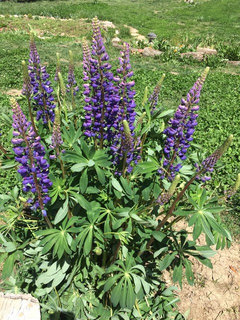
    I have a big gap in May, between the tulips and the irises. Lupine are blooming, as is allium, so I’ve planted more of them. I also put in some late-blooming tulips, peonies, and anemone blanda, which I’ve never tried before. Fingers crossed! Spring is also starting much later this year, so that should shorten the gap as well. I’m new enough in this space that I don’t know if last year was early, or if this year is late. I also had some dianthus blooming in May, I believe.

    Paul NY 5b-6a thanked Faith
  • 8 years ago

    Oh, I have nothing against Actinidia kolomikta, but it was uncharacteristic for Scott-James. She seemed to prefer subtlety (English restraint?). I've never seen it in the winter.

    Variegated-leaf brunnera: I'll write more about the webinar with Margaret Roach later, but one of her points is that foliage can provide visual interest over a longer period than do flowers. She is particularly fond of plants with golden foliage and grows many, many of them (in a very large garden), but variegation works the same way.

  • 8 years ago

    I used to prefer green leaves on all herbaceous perennials, but my friend, David Tomlinson, talked me into also including perennials with variegated leaves. Initially, however, it was the fact that perennials with variegated leaves are often better behaved than the all-green versions (e.g. yellow loosestrife) that persuaded me to use them.

    I guess what is truly "irrational' is not being able to learn and try out new things.


    Paul NY 5b-6a thanked sunnyborders