Software
Houzz Logo Print
tropicofcancer

Fig identification help

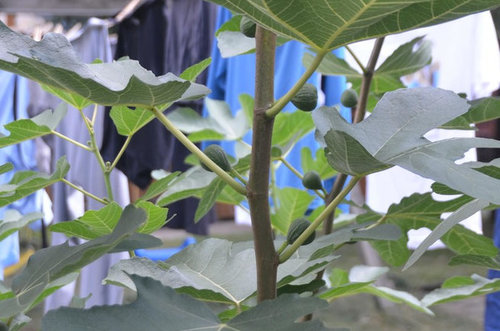
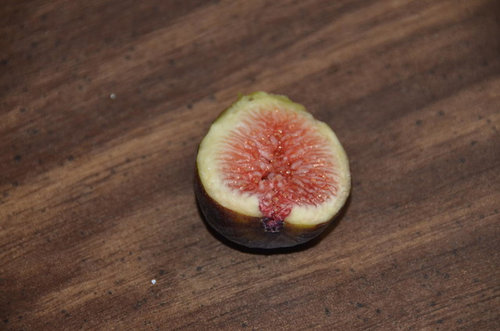
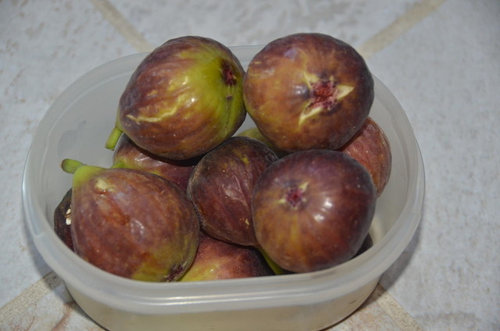
We have this fig tree in our yard that came with the house. My estimate will be it is at least 30 yrs old. It was quite mature when we bought the house 20 yrs back. It produces quite well although last year for reason it was not great. Anyway, I would like your help to figure out what kind it is. These are the pictures I have:

Leaves:


Fruit:


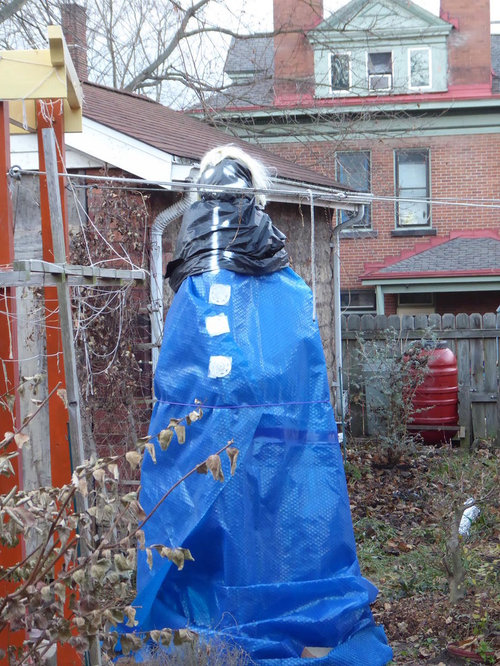
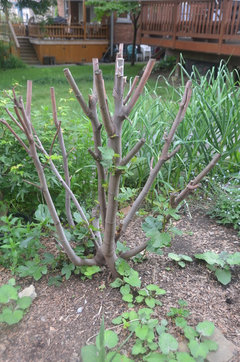
And for entertainment purpose, here is a pic of the tree with winter protection. The actual tree is 4ft or so high after chopping it for the winter.


Comments (11)

  • 8 years ago

    Thanks Moses for the info. I was thinking that it could be Chicago Hardy or Brown Turkey. Both I have seen and tasted. I have never seen or tasted Celeste. In any case, god to know it is likely one of the three.

    Yes the original tree was probably more than 30 yr old for sure. It is planted in ground. When we moved in 18 yrs back one of the trunks was 5-6 inches diameter or so near the base with couple of more 2inch thick trunks. Initially, I never protected it and it did somewhat OK. One bad winter it nearly died back all the way to the ground. Since then it recovered and I started protecting it in winter. So in some sense the you can say that the current tree is may be 10 yrs old.

    Thanks on the details of pruning properly. I need to start doing that more carefully. Why only keep 1 yr old shoots? Is it because the older thicker shoots may have less buds or the shoots will have less fruit? I have started researching on google on this topic. If you have any other pointers or resource it would be very helpful.

    This is a picture from last April. I am sure there are many things I am doing wrong here. Let me know.


  • 8 years ago
    last modified: 8 years ago

    ToC,

    That's a nicely shaped fig tree! It will be a charm to work with.

    It takes time to wrap your head (me too...still learning more year by year), around the principle of fig pruning in our climate. We have a small window of opportunity to get a crop of good figs, the majority of which, on a given tree, must ripen by the end of September. Figs do not all ripen at once.

    Figlets form at the base of each large leaf on an emerging spring shoot, as the fig tree leafs out. The older leaf on the stem produces the first figlet. As the stem grows, figlets form at the base of each leaf up the stem all summer long. On any stem, the figs are progressively smaller the higher up the stem they are, but each one will reach full size eventually, but 90 days from when it first formed.

    Figs will ripen progressively over a seven week period from early August until late September.

    Early ripening varieties, which yours probably is, are what you grow around here. There are fig varieties that take 120 days of more to ripen. These varieties are not sensible to grow here.

    Early ripening fig varieties take at least 90 days from the time a tiny, smaller than a peppercorn sized figlet, is first seen at the base of a leaf, to ripen under IDEAL, Mediterranean climate conditions....very hot, very sunny, and very dry. We do not have IDEAL conditions to grow and ripen figs. Therefore, we must 'fiddle around,' with Mother Nature to get results from our fig trees.

    First, we either pot culture our fig trees, as I do, or we grow them in ground, as you do. In ground, winter protection is mandatory if you want to maintain a trunk and branches that are two years old or older. Without winter protected old wood on a fig tree, death of it to the ground almost always occurs. It will grow new growth from its roots every spring, and figs will form at the base of each leaf on these stems, but just a handful of figs will be the crop.

    I'm going to stop here, and post tomorrow or very soon, what I recommend you do when it's time to uncover your tree and prune it to get a good crop.

    Moses

  • 8 years ago

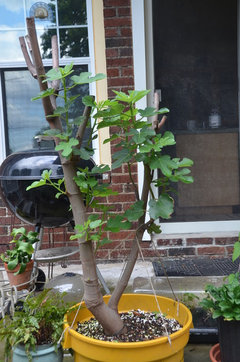
    Thanks for the info. It is still under wraps with a pile of leaves inside the wrap. We are still not out of the woods yet with regards to sub-freezing temperatures. Last spring I dug out one of the thickish stem and potted it. It is now in the shed and I will use it as an indicator for when to unwrap the mother plant. Also the container fig will allow me to experiment with pruning/maintaining and compare with the in-ground one. Here is a pic of the plant in container from early July last year:


    It did try to produce a few figs late in the season. I should have probably pruned those off.

  • 8 years ago
    last modified: 8 years ago

    ToC,

    That's a really nice fig in that pot! You're no slouch, you are serious.

    Here is my advice for you.

    Always put off as long as possible unwrapping your fig tree. It's better to be a little late in doing so than early. Figs are very sensitive to even mild spring frosts, especially newly emerging growth. I estimate no earlier than mid-April...three freeze nights predicted for next week!

    After your fig tree is unwrapped, go through and only cut out all last year's growths to the point on each stem just above 4-5 nodes from where the last year's stems emerged from an old branch. Cut nothing else yet, wait.

    You can easily distinguish last year's growth from older wood by: 1.) the stem diameter (narrowest on the tree); 2.) color- brown, tan, or greenish, as compared to old wood that is graying, and turning lighter gray the older it gets; 3.) Clearly visible leaf scars from last year's leaves that fell off in the fall, up and down the stem at each node; and 4.) the presence of apical buds-chunky, cone shaped buds at the tips of each last year's growth. You may have trimmed some away last fall to accommodate your winterization.

    Having pruned each and every last year's growth back, leaving 4 to 5 node sections of those last year's growths still attached to the tree, stand back and look at your fig tree.

    The usual diseased looking, damaged, crossed, and dead branches are removed now. It's easier to get at to them now with all the initial pruning out of the way. The tree should look as balanced and symmetrical as possible.

    Now visualize what it will look like come August if every node of those last year's growths sections you left on the tree, each sends a new growth this year. Each new growth this year is expected to produce 5 figs on average. That's 20-25 figs per each last year's growth, 4-5 node section that is on the tree.

    You probably have far too much potential growth for the tree to support easily. Over working a tree is no good.

    Go through the fig tree and thin out the superfluous last year's growth, 4-5 node sections to the point where your judgement tells you to stop. Crowded areas are prime for thinning.

    The height you keep your tree is important so that you do not have to drag out a ladder to pick figs, since you pick figs daily during harvest time. If I had to do that I would definitely have a major 'fall of the ladder,' injury before long. When your tree is done being pruned this spring what is left should be no higher than app. 4', IMHO.

    As you already know fig trees are extremely prunable, and very forgiving of heavy pruning and blunder jobs. They also are a snap to propagate from cuttings or sections from multiple trunked trees, as you have done.

    Why prune last year's growth to be the primary location for this year's growth to emerge and make figs? The newest growth has the freshest, most vigorous and quickest to break forth dormant buds at their leaf scars. Old growth has sleepy, lazy dormant buds that will wake-up and grow if pressed into action, but are slow to do so, delaying figlet set by a week or two...too much wasted time for us here.

    The youngest growth has been exposed to disease for the shortest period of time, and has the best chance of thriving.

    Older dormant buds have to "push" their way through stiff, rigid bark. New buds have no such opposition.

    Time is of the essence in our short growing season. Figlets that form the earliest come from early breaking dormant buds....the ones on last year's growth, not older dormant buds on older wood.

    I've got one more important, easiest to do, pruning technique to share with you that forces earlier, more abundant figs, but please digest my suggestions above for now.

    Moses

  • 8 years ago
    last modified: 8 years ago

    ToC,

    When you have come to the end of pruning your fig tree, the dormant buds will start to swell and shoots will break forth with growth. These shoots' first leaf or two are usually small, never getting as large as the subsequent leaves that appear farther up the new shoot. When the shoots grow their 6 th. leaf, not counting the first or second small leaves if they indeed are small (which they usually are), pinch with your fingers or nip with little scissors, the growing tip right off. Do this procedure when every shoot reaches its 6th. leaf. They will not all reach this nipping point on your fig tree on the same day. Go over the tree every few days and nip tips when 6 leaves are reached on the shoots.

    Before you nip right above the 6th. leaf, let that leaf get about 2.5-3" big, then nip. You will then have a more mature 6th. leaf left behind that will feed its figlet better.

    What will happen because you nipped tips, is the energy that was going to the growing tip will now go to the vestigal figlets waiting at the base of every remaining large leaf on the nipped shoot, forcing it to form and grow quickly, hastening it's ripening come August and on.

    When you remove an apical bud, which is what you are doing, the energy that was destined for it from the fig's roots has to go somewhere. It goes to the figlets forming at the base of remaining leaves on that shoot.

    Each large leaf on your nipped shoots should produce one fig at its base, sometimes two and rarely even three figs will form at the base of one leaf. My Black Mission, because of its variety, often does multiple figs like that, and mature trees like yours are often very fecund that way, too.

    After you nip a tip it is remarkable how quickly a figlet will form at the base of each leaf on the nipped shoot.

    Every large leaf on a well cared for, healthy, mature, correctly pruned, not over worked fig tree is very capable of feeding one nice sized fig all by itself.

    (Did you know it takes 7 well sized leaves on an apple tree to properly feed one apple. If an apple tree has 100 apples on it, there should be at least 700 leaves on that tree to produce a good crop.)

    Continue to nip growing tips at the sixth leaf until the first week of July. Generally, figlets that begin forming after then do not have enough time to get large enough to ripen before season's end. They are often just wasted figs.

    Shoots that have been nipped properly early in the summer, will often grow a new shoot or two in the area of the 6 th. leaf. Nip these shoots when they have reached 3-4 good leaves, not 6 leaves...not enough time to wait for two or three more leaves, and figlets should form at their leaves' bases also. They will ripen if the figlets there started forming by the first week of July.

    Figlets that form from early July on are a gamble. If there is a warm, dry, and long fall before frosts, they may ripen. Because of cool nights and short days, figs that ripen from October on, often lack flavor, are fibrous, dry, and lack sweetness. They are edible if soft, but nothing like an August-September fig.

    I wish you well with your figs!

    Moses

    tropicofcancer (6b SW-PA) thanked Moses, Pitt PA, cold W & hot-humid S, z6
  • 8 years ago

    Moses: Thanks a lot. That is one of the most detailed explanation of the process of pruning and maintaining a fig tree I have seen. Thanks it is pretty clear to me what I need to do. And makes a lot of sense too. I will try to remember to report back on progress this season.

    I have some Peter's honey cuttings that someone from Citrus forum sent me. I have yet to start them. They are in the fridge now. I need to figure out some suitable space indoors first.

    What will be another fig variety suitable for zone 6b that will be good contrast to what I have (one of Hardy Chicago/Celeste/Brown Turkey as you said)?

  • 8 years ago
    last modified: 8 years ago

    ToC,

    Stay with smaller statutered ones that grow that way naturally. Easier to winterize. Easier to prune. Easier to harvest.

    Short season ripeners are very imperative, and of course as winter hardy as possible.

    Many French figs show early ripening and cool weather tolerance. I have and recommend: Violette de Bordeaux, Petite Nigra, and Little Miss Figgy ...all early ripeners. Madeleine de deaux Saisons is due in soon, another cool and early ripener, supposedly.

    Olympia is another cool weather, short season fig I have and like.

    Surprisingly my Black Mission is early, but not considered winter tough, may give you headaches.

    The top recommendation is one I don't have, but hope to, soon enough, and it is Ronde de Bordeaux. Early, winter tough, with protection. As soon as I can find a source for a plant, not a cutting, at a reasonable price, I will give it a try. It is in demand and plants are very overpriced now.

    Keep me posted on your progress.

    Moses

  • 8 years ago

    OK. Thanks for the info. Researched them a bit on google and I think I will go for one or both of the dwarf ones - Petite Nigra or Little Miss Figgy

  • 8 years ago

    Hi guys.

    topicofcancer I agree with you that these is The most detailed explanation of the process of pruning and maintaining a fig tree I have ever seen ! Thank you Moses I appreciate every word

    Anna.

    tropicofcancer (6b SW-PA) thanked Bluemoonlight
  • 8 years ago

    ToC & Anna,

    Thank you!

    Moses

Sponsored
NME Builders LLC
Average rating: 5 out of 5 stars2 Reviews
Remodeling Company in New Albany, Ohio