Software
Houzz Logo Print
nj_mom

Vent Hood issues

8 years ago
last modified: 8 years ago

The problem with the discussion boards on Houzz is that you end up learning more than you ever thought you needed to know, which leads to more questions than you thought you needed to ask. The latest: range hoods and make-up air.

The issues:

1) I learned about make-up air last night, and now I'm paranoid about air quality and ventilation. We're Indian, which means lots of oil and spices. I also cook on a gas stove daily, so good venting is a high priority. From what I understand, we don't need a make-up air system if the hood is less than 400 CFM. Would 400 CFM be enough for a heavily-used kitchen, or do I have to install an expensive make-up air system and put up some boring, cheap, white, subway tile backsplash?

2) Is there such a thing as a ducted under-cabinet range hood? Even on the Broan and Vent-a-Hood websites, they don't actually tell you if the under-cabinet hoods are ducted or recirculating. $$$-wise, we might not even go with something that high-end, but if the industry leaders don't have a ducted under-cabinet hood, what are the chances that a GE or Whirlpool would give us the ventilation we need?

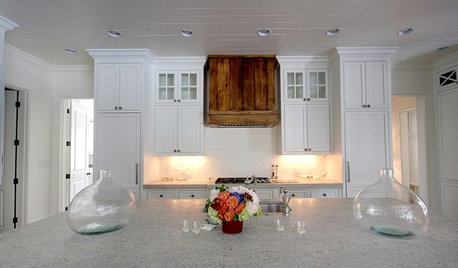
3) My husband, who hasn't been thinking about design stuff at all, saw a picture of a chimney-style hood, decided he hated it, saw a picture of a beautiful custom built-in hood, decided he loved it, realized it was way more money than he was willing to spend, and now I have no idea how to keep him happy so I can possibly spend a bit more on some statement backsplash tile. (Maybe I need to find some free online marriage counseling instead?)

Comments (32)

  • 8 years ago

    Start here: https://www.gardenweb.com/discussions/5161173/hood-faq

    By 'under cabinet' do you mean a hood that's over the range but below cabinets above it like along the ceiling? Nearly all hoods of this variety are externally ducted which is what you want. Recirculating are mostly ineffective.

    NJ Mom thanked opaone
  • PRO
    8 years ago

    A pretty wood vent in an I ndain kitchen will be a mess in no time , you need more than 400 CFM for good venting IMO and just call a vent-a hood distributor and ask all the questions thay are my favorite brand of hood.

    NJ Mom thanked Patricia Colwell Consulting
  • 8 years ago

    Patricia, I agree. I would rather have a stainless, chimney-style hood that's easy to clean, and have a pretty, simple backsplash all the way to the ceiling. Ugh, why is design so much more fun to think about than safety and code?

  • 8 years ago

    "A pretty wood vent in an Indian kitchen will be a mess in no time"

    Not if designed properly.

  • 8 years ago

    Hi NJMom,

    Greetings from a fellow east coaster!

    We have the Broan recirculating fan above our 24 inch Verona gas stove, we also heavily use our tiny kitchen.

    OH, if I could go back and get a property ducted vent during our reno. The Broan fan would be fine for someone who doesn't use their kitchen much. We just bought a new wok, hubs was tempering it yesterday, even with ceiling fans blasted and windows open, it was unbearable. Ugh.

  • 8 years ago

    Joseph, the make-up air issue is different from the design issue. Whether settle on the look of a chimney or a built-in, the number of CFMs and need for make-up air will be the same. Is the 400 CFM number adequate for someone who cooks a lot of oily, smelly food? Would we need to get a lot of expensive HVAC work done to put in a make-up air system, or is it a "minor" fix compared to the total cost of the remodel?

  • 8 years ago
    last modified: 8 years ago

    What are you cooking all of that food on? A giant BTU Bluestar? A Bosch induction? A plan old Maytag?

    In none of those cases would 400 CFM really do the job when the chilies and mustard seeds hit the oil. How far above 400 CFM you need depends on bypass heat as well as style of cooking. Your style is challenging to ventilation needs.

    MUA will depend on climate as well as the CFM of the hood.

    NJ Mom thanked User
  • 8 years ago

    Sophie, we haven't settled on any specific appliances yet, but it will be gas, 30", and something "ordinary" like a Maytag or Whirlpool. Maybe a Frigidaire if the stock market does well.

    What is "bypass heat"? I appreciate all this education I'm getting, but it's really anxiety-inducing! I've seen some makeup air dampers online that are less than $200. Am I right in assuming that I'll get what I pay for with those?

  • 8 years ago

    It really depends on how important it is to you that you exhaust most or all of the odors from cooking and how much greasy build-up on surfaces around your kitchen you are willing to tolerate. If you can tolerate a bunch of the odors lingering for a bit and some grease build-up then 400 CFM and no MUA will be fine.

    If you want to get rid of the odors and grease then you'll need something in the 800-1200 CFM range and you will need a powered makeup air system.

    That $200 MUA is just a vent for passive MUA and not nearly sufficient.

  • 8 years ago

    When I planned our kitchen, I was ignorant of MUA and didn’t include it. Now I’m not Indian, and don’t do that sort of cooking, so it hasn’t been an issue.

    I got a Bosch 600 cfm stainless vent hood. I rarely turn it above the 2nd speed (out of five or so). It gets noisy when you turn it up.

    Big advantage was by buying three Bosch appliances, one of which is a five-burner 30” gas stove, I got a discount. By ordering online there was free shipping and no tax. Don’t overlook opportunities for savings like that. They add up!

  • 8 years ago
    last modified: 8 years ago

    Bypass heat is the amount of heat produced by your cooking appliance that heats the room, not the pan.

    Gas is the worst offender, about 60% of the heat that your burners produce bypass your pan and heat the room. Gas needs more CFM ventilation because of that.

    Radiant electric also puts about 30 % of its heat into the room. It gets worse if your pans aren’t flat.

    Induction cooking is the most efficient at 99%, with the only heat being put into the room coming from the heated pan and not the range, It does need magnetic pans, but those are very easy to find.

    Planning for more CFM and the MUA that goes with it is usually the best approach. You can always turn it to low. But you can’t create more air flow from nothing when you’re gassing yourself out with pepper smoke.

    NJ Mom thanked User
  • 8 years ago

    Well, I absolutely need a gas stove. Induction cooktops look beautiful and are very energy efficient, but completely incompatible with a lot of the traditional cookware I use. Honestly the smell doesn't bother me at all -- it's home cooking and who doesn't love the smell of home cooking? My home just smells different from yours. But the grease is a huge issue, as it gets all over the cabinets right now. (Currently have a crappy recirculating thingy under my microwave).

    I had a random brainwave - don't know how well this would work. If I were to get a larger hood, say 36", over my 30" gas stove, could I get away with a lower CFM? I'd even sacrifice a few inches of upper cabinets, if it's likely to avoid expensive HVAC work.

  • 8 years ago
    last modified: 8 years ago

    You’re already supposed to have a 36”Wx24”D hood above a 30” cooking appliance. That’s standard best practice design. Wider and deeper than that won’t mske any difference if the CFM isn’t there to pull the vapors and grease out of the kitchen.

    I’d want at least 600 CFM in your situation, with a consumer grade range. But, I’d also want to upgrade to something like a Bluestar. Because you’re already in for a penny, so in for a pound. A 900 CFM blower and appropriate MUA isn’t going to be a huge incremental increase. And you would get a LOT more capability and enjoyment out of it than you will a wimpy Maytag.

    NJ Mom thanked User
  • PRO
    8 years ago

    For that style of cooking, I'd seriously consider restaurant style venting. Bluestar's Prizer Hoods have a heritage in the restaurant business modified for residential use and their hoods are high BTU and perform very well. Not a cheap date, but I think this is a splurge well worth having given your needs. P.S. They do a ton of customization, too--color, metal finishes, etc.

  • 8 years ago

    Thanks for the advice Sophie. I'll stick with a "wimpy" Maytag. I don't see the advantage of spending twice as much on a professional grade range if I'm just cooking dinner for my family. Plus I'm not a fan of the design. I will look into a more powerful hood and MUA, though.

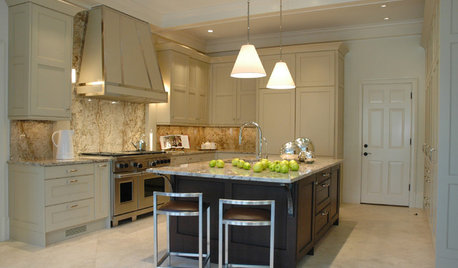
    DO you have any recommendations on brands for hoods? And if I don't want to spend the money on custom, is there any sort of variation in the design other than "shiny pyramid", "curvy glass" or "flat steel box"?

  • PRO
    8 years ago

    @NJ Mom, Zephyr makes a number of hoods that you can hide within upper cabinets. They are very reasonably priced. Get the one with the greatest CFM they make.

    NJ Mom thanked Sabrina Alfin Interiors
  • 8 years ago

    Thanks Sabrina. The Zephyr hoods look beautiful (even the shiny pyramids seem to have some character!), and are more in line with what I'm willing to spend.

  • PRO
    8 years ago

    The Zephyr hoods also have low sones ratings (how noisy they are). If your kitchen is open to a family room, this is especially important.

    NJ Mom thanked Kristin Petro Interiors, Inc.
  • 8 years ago

    It's not open to the family room, but I like to listen to music as I cook, so a quiet hood is a huge plus!

  • 8 years ago

    This topic has been beaten to death here so thoroughly and for so long that all that is left of it is a thin film.

    The function of a hood is to capture and contain cooking effluent containing hot air, steam, grease, odor, and smoke.

    Capture requires that the hood entry aperture overlap the cooking plumes that are rising and expanding as they rise from hot pan bases. Plume portions that miss the hood will go into the room and potentially deposit grease and moisture on surfaces. Some uncaptured effluent may eventually be captured and removed by being entrained in the air flowing to the hood .

    Containment requires that the portion of the plumes that is captured gets pulled though the hood filter (baffles) and expelled from the house without reflecting back out of the hood aperture. This task requires, for general residential use, up to 90 CFM per square foot of hood entry aperture in the presence of pressure losses.

    From those considerations, along with a safety requirement that the hood not pull the household pressure down enough to cause combustion appliances to backdraft, one can size the hood, size the flow rate, size the blower required to cause that flow rate when operating against various pressure losses, and establish the manner and complexity of providing make-up air. All of this is repeatedly described in various messages in this forum in excruciating detail.

  • 8 years ago
    last modified: 8 years ago

    Kaseki, to be honest, I already knew why I need a vent hood, but make up air? I had NEVER heard of makeup air before two days ago! Posts about vent hoods and the number of CFMs don't mention that you'll need MUA. The kitchen remodeler I spoke to this weekend, the one who told me to buy a 600 CFM hood, never mentioned MUA. Google sends me to very general articles about why MUA is necessary, but nothing about the details of getting it done, or even who does it!

    If makeup air is so important, then why is there no information about it, but there are ten gazillion posts about marble backsplash tile and which exact color the veining should be in your countertop?

  • 8 years ago
    last modified: 8 years ago

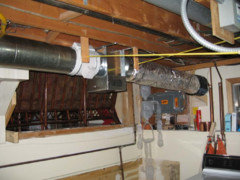
    There are myriad posts about it here. Search on "kaseki" and "MUA" to find some in the Appliance forum. (The Kitchen forum is for marble vs. granite vs. soapstone, inter alia.) Here is a link to and image from a 2012 thread. There are earlier ones.

    http://ths.gardenweb.com/forums/load/appl/msg0711051415510.html

    For a better understanding of what is going on with kitchen ventilation, I also recommend reading the first dozen of so pages of the Greenheck Guide:

    http://www.greenheck.com/media/pdf/otherinfo/KVSApplDesign_catalog.pdf

    We can start at some basic principles. One is that no air goes up the vent hood without getting into the house to begin with. Hence there is always make-up air, but it might be insufficient to meet all requirements.

    Another principle is that if moving air up the vent hood reduces the pressure in the house relative to outdoors, several undesirable things happen:

    - You may back\-draft combustion appliances (hot water heaters, fireplaces, etc.) and cause a safety hazard from carbon monoxide
    - You may pull outside air moisture into the walls
    - You may unbalance your heating system, if moving air based
    - You certainly will reduce the flow rate you are getting from the hood blower.

      • I would prefer not to address your MUA options in the context of your architecture and hood until you have become familiarized with the issues and selected a hood and blower that meet your ventilation requirements.

    As to "why?" there wasn't information put in front of you, it may be that the people who should be advising you are ignorant of basic HVAC issues, quasi-informed but too lazy to delve more deeply to fully learn their trade, or not in the business of selling MUA system components.

  • 8 years ago

    Sophie Wheeler One minor point. The coupling of the induction coil to the pan is highly efficient, as the field lines pretty much have no place else to go, but the induction cooktop power supply and coil power generator are not 100% efficient.

    Like most modern high efficiency power supplies, mid 90's % efficiency would be considered excellent, particularly when also accounting for the fact that the loss in transfer of power from the coil to the pan cannot be better than (roughly) the ratio of the coil's copper wire conductivity and the steel pan base's conductivity. (This is why they don't design to also heat copper or aluminum pans with induction, even though it is possible -- the coil would need water cooling because of these metals high conductivity sharing the power with the coil.)

    The wall plug power that is lost due to imperfect efficiency is removed from the cooktop assembly by its chassis fan(s) thereby heating up the air in the cooktop cabinet (or via vents to the air above in some examples of Electrolux and its clones).

    kas

  • 8 years ago
    last modified: 8 years ago

    None if this is your fault, but part of the reason for my anxiety about this is being thrown completely for a loop. And I can't be the only consumer who is suddenly dealing with this. The need for MUA means a $500 vent Hood actually costs several thousand dollars. Homeowners planning a renovation should be informed of the TRUE cost of proper ventilation, including MUA, and I haven't seen any of that in my research.

  • 8 years ago
    last modified: 8 years ago

    Once upon a time, say 60 years ago, US residential kitchen vent hoods were too feeble to cause much pressure drop and house leakage provided all the MUA needed. When the ranges started trying to emulate pro cooking appliances, combined with the homeowners general dislike of greasy walls, ventilation needed to be upgraded. Cook like the pros, ventilate like the pros. But pro ventilation includes make up air, as you will see reading the Greenheck guide.

    In historical Asian cooking before electricity, there were other approaches taken. In some Chinese homes, the kitchen was attached outside the main house perimeter. In Japan, the cooking area was only ventilated by a roof aperture. I recall seeing a video taken of cooks working in a Beijing hotel a few decades ago. The cooking surface comprised coal fired ports; there were no hoods and the walls, ceiling and floor were all tile -- easy to clean with a steam lance. I am not familiar with approaches that were used in India.

    Last, let me point out that within your comment you may discover the basic fact that many salespersons wanting to sell hoods don't want to bring up the MUA issue as it may lead to a lost sale.

  • 8 years ago

    For example, there are several stories on HOUZZ about choosing a range hood. Only one even mentions the need for MUA, and it's an afterthough in a paragraph at the end, under "Other considerations".

    https://www.houzz.com/magazine/how-to-get-your-range-hood-right-stsetivw-vs~91131534

  • 8 years ago

    In my area, any hood with cfm over 400 ( so 401 +) requires mua by code. I didn't know about it, but my gc did.

  • 8 years ago
    I haven't thoroughly read all the comments and I'm no pro but just wanted to mention that I'm pretty sure you can usually do 600cfm without MUA. We have a 600cfm vent a hood insert and it's GLORIOUS, no mua needed.
  • 8 years ago
    Ah, just saw comment above. Must be variations in code. Worth checking what the code for your area is. Ours is definitely 600cfm.
  • 8 years ago
    last modified: 8 years ago

    National building code is 400CFM. Local can only be more restrictive, not more lenient. 600CFM requires makeup.

    IF you live in a leaky old house, those leaks may be sufficient at 400-600. But only a blower door test can tell you that. A leaky old drafty home isn’t a good thing from far too many other fronts to even consider that as something that doesn’t need addressing.

    If you live in a cold climate, your state may require heated makeup air. That is a whole other level of engineering and expense. One woman on here in either MI or MN spent 12K just on heated makeup.

  • PRO
    8 years ago

    TL;DR. I wouldn't install anything less than an 800 cfm, 36" wide hood over a 30" gas range. Make up air is necessary, especially when there are competing appliances and fans (water heater, dryer, open fireplace, bathroom fans). External blowers or baffle-type filters are the way to go to reduce noise. There are make-up air systems that go way beyond opening a window: PlusAire MUA system

    P.S. I do not work for PlusAire, I just think they are cool.