Software
Houzz Logo Print
dinner_s

Sandy-feeling soil that doesn’t drain well?!

8 years ago
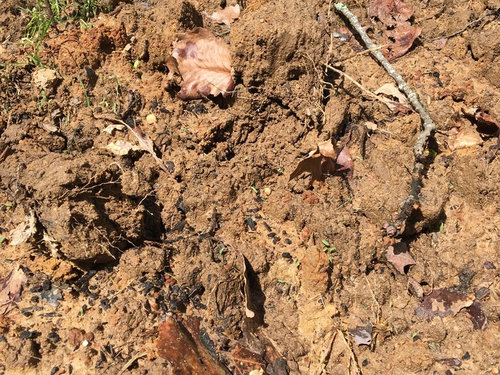
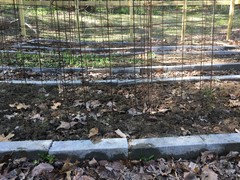
I’ve had a backyard veggie garden for the last 9 years, with varying degrees of success. All my previous soil experience is with SC and AL red clay. This is our second year in a new place, and I need help figuring out this crazy dirt!

It is soft, light gray, and fairly easy to dig through until you hit a streak of clay. But it holds water and puddles up like nobody’s business! Once it dries out, it turns into solid clumps of rock-hard stuff, but if you crumble those with your fingers they disintegrate into sand.

When it’s wet, it’s so soggy and takes so long to drain that I’m worried the plant roots will rot. When it’s dry, it’s so brittle the roots can’t expand.

What is this stuff called? Any tips for how to keep it medium-moist?!

I’m in zone 7 in the southeast.

Comments (21)

  • 8 years ago

    You could have a fine "silty sand" ... it's a bit gritty but doesn't drain easily because of the extra-fine silt particles. Sometimes called "weak clay".

    I had a yard full of it in AZ.

    The best way to deal with it is to thickly mulch it with the watering system (drip tubing) under the mulch, and don't dig while it's wet, and don't tromple it. 4+ inches of shredded and chipped trees on top, replacing as needed when they decay.

    Dig as little as possible when you plant or transplant.

    When you clean out the season's veggies, slice them off at the base and leave the roots behind to decay and add organic matter deep into the dirt.


    dinner_s thanked User
  • 8 years ago
    last modified: 8 years ago

    "When it’s dry, it’s so brittle the roots can’t expand."

    This sentence isn't particularly valid really. Roots are incredibly well-designed structures. A root can completely destroy the foundation of a house. I've seen weeds bust through a newly paved and steam-rolled street. Roots routinely lift sidewalk slabs. The physics through which they grow means they can expand any where. And where they can't expand easily, they exude acids which corrode and erode.

    It's tough to know by photos and descriptions what type of soil you have, but if you till and introduce air and amendments - compost being one of the best possible - you'll probably see some improvement.

    If you want to better understand your soil structure, a professional soil test through the local Agricultural Agent will provide the make-up of your soil, as well as it's nutrient, pH, and organic matter profiles. To get the detailed results, some labs require the basic test and an advanced test. But, in most of the Southeast, especially when you've encountered problems, it's not too expensive. Often, for such issues, it's well worth the $15 - $30 dollar fee.

  • 8 years ago

    Ditto on the soil test to identify the type of soil. Or you can do a jar test, that would be easy and fast.

    I was thinking it could be a sandy clay too, in just the right ratio that it makes concrete when it dries.

    From its appearance it does not look very high in organic matter, so generous additions of compost (with tilling) in the short term should help its behavior regardless of what it is. As the texture improves you can cut back on digging around in it and let it develop a natural and permanent spongy structure, mostly feeding it only from the top with compost top dressings.

    dinner_s thanked toxcrusadr
  • 8 years ago

    The soil jar test suggested up-thread sounds like a good place to start. Here is one procedure. Mason Jar Soil Test – Tips For Taking A Soil Texture Jar Test .


    Even a couple of university sites give instructions. Google ~ soil jar test ~.


    dinner_s thanked albert_135   39.17°N 119.76°W 4695ft.
  • 8 years ago

    I'd put tons of rotted organic matter in there.

    dinner_s thanked blue_skink
  • 8 years ago

    Thanks for all the ideas!! You all are so helpful.

    Lazy_gardens: I will have to look up “weak clay.” I don’t have a good mulching material right now, but once we we start mowing I will devote grass clippings to that end. And we did 4-ft wide beds to keep our feet out, so sounds like I’m on the right track there.

    rgreen48: Good point! I didn’t know about roots exuding a corrosive substance. I guess I’m thinking of plants with extra delicate root systems-baby lettuce, radishes, other greens, or small transplants. For example, my radishes won’t “radish” without taking extra care to keep dirt extra soft. And thanks for soil test idea-so they’ll tell you sand/silt/clay proportions? Will look into it!

  • 8 years ago

    Toxcrusadr: I actually did do a jar soil test in February, but I had a hard time interpreting the results. I could only see two clear layers, and I couldn't tell if they were silt snd clay, sand and silt, or sand and clay. I had a photo but must have deleted it. Maybe I can do it again. Thanks for digging tips-i guess you have to dig/stir at first to mix the organic matter in, then taper that off? We did add 10-12 Lowe’s bags of black kow, black velvet, and a local product. I am working on my compost. Seems like what we added barely made a difference!

  • 8 years ago

    Albert_135: see above for my jar test result. I thought your link was interesting bc it used less soil in the jar than mine. Could that possibly make a difference?

  • 8 years ago

    And blue_skink: yes indeed! But how to get tons of it without paying an arm and a leg... little by little?

  • 8 years ago

    @dinner_s. Thanks for your comment. Well, I am not sure, 'cuz everyone's situation is different. In my own case, the soil in our yard is ghastly, more sand than anything, so what I did was go with tools and a wheelbarrow to the edge of a forest 1/4 mile from my house, over a period of years, to obtain some high-organic-matter soil. I had it tested. It was average to high in everything but phosphorus. Going deeper into the forest, I would locate large old trees that had been overturned in storms. That soil is so easy to just scrape off into buckets! After all the digging at the edge of the woods.


    As Lazy Gardens suggest, cut your crops off at the root. However, you could also dedicate a good sized portion of your garden (for now) to a crop of something with large roots, such as Chinese radish, then just let it rot in place. This is Instant Humus.

    Now, about your moisture problem. Maybe you have a high water table?

    Good luck. I still work hard at putting organic matter in there, mostly through kitchen wastes (of which we have a lot) and grass clippings and whatever I can find.

    dinner_s thanked blue_skink
  • 8 years ago

    To get an idea of what you're working with... How big of an area is the garden? Unless it's a much larger area than what the photos show, I think that the amount of compost/organic matter you'll need is obtainable. Do you have a large, or small yard? Do you have any unused space, or can you make a little space? Have you ever made a compost pile?


    One thing you'll find once you start amending the garden is that it will begin to raise above the surrounding ground. Some people build 'walls' around the area - in your pics I see just some border pavers. I don't have walls around mine, but they raise an average of 6" - 8" above the surrounding ground level. This will help mediate the moisture issue. Raised beds drain much better, and dry conditions are managed with irrigation - watering once a week or so when needed.

    dinner_s thanked rgreen48
  • 8 years ago

    If your jar test has too much soil in it, it can interfere with the settling I would think. But if you got two distinct layers that's good. Next time, after it settles, carefully pour off the water and stick a spoon down in and get a sample of the top layer. Is it very slick like clay, or does it have a little fine grittiness to it? That's more like silt. Then dig down into the lower layer. Sand you will know when you feel it.

    I suspect the "weak clay" mentioned earlier was meant as 'fine silt'. There is of course an endless continuum of grain size rather than sharp cutoffs between sizes. There are also different mineral compositions in soil, so one clay may behave differently from another even if they are the same grain size.

    It does take time to get soil amended, but as it improves year after year, you can taper off the amendments as well as the digging. The more you do up front, the faster you get to that stage, but there is also a limit to how much compost you can add at once without creating other problems.

    dinner_s thanked toxcrusadr
  • 8 years ago

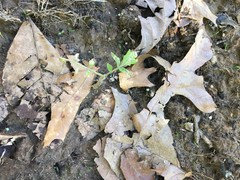
    Blue_skink: good idea on the forest, and getting that soil tested too! We actually have a fair amount of woods behind our house, but i’m thinking the dirt there is probably the same stuff? I’ll see what i can think of though. We have some places that have had leaves sitting for years. Maybe under there is some good stuff?

    I will definitely consider the big-rooted crop idea. Is Chinese radish the same as daikon?

    And yes, we do have a high water table. When we dug 3-4 foot deep postholes for fence posts, the holes back-filled with water overnight. It seems strange because we are on a mountain, and near the top of it too.

  • 8 years ago

    Rgreen48: actually yes, it is much larger we have 3 beds, about 4x20 feet each. Not huge by a lot of people’s standards but big enough to take a lot of dirt.

    And I didn’t really want to do a full-on raised bed option because I felt like it would be finicky since it’s essentially a large container and I haven’t had good success with containers in the past. The pavers (they are half-width cinder blocks laid on their sides with some buried in the ground) did allow us to raise the level of the beds several inches obove surrounding soil. Maybe it’s our best option with a high water table though? (See above comment.)

    I am working on my compost! With moving and a new baby last year, I didn’t re-start until a few monhs ago.

  • 8 years ago

    Toxcrusadr: I will try that on the jar test. Great info-thanks! I’m guessing there is a lot of silt. It sort of sticks together like clay but is gritty.

  • 8 years ago

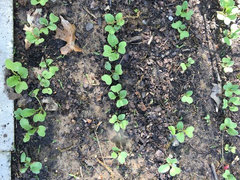
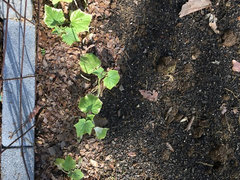
    Ok, so not only is the crazy dirt not draining, stuff isn’t growing! We had 3.5” of rain last weekend and then unseasonably cool weather. As it warmed up this week, I expected the transplants and cool-weather plants to take off growing. No such luck.

    -English/Snow peas: doing the best

    -radishes, lettuce, arugula: direct-sowed and they have sprouted and kind of tapered off here.

    -tomato and cucumber transplants: I don’t think these have put on a single new leaf and they are slowly losing their green color. Tomatoes are planted in 2 places and both doing same thing.

    Would you think these issues are related to the poor drainage?

    Last year, before these beds, I put the last of my compost in each hole at planting instead of back-filling with native dirt. The tomato and cuke plants grew well at first but didn’t fruit a lot or ripen well. I was expecting that by prepping a nice bed and adding the organic matter things would improve but they seem to have gone backwards!

    Suggestions? Should I dig these up and replant them with bagged garden soil in each hole instead or something?

    If things continue like this we will have spent a whole bunch of money for a deer fence and 3 empty beds.

  • 8 years ago

    @dinner_s. Yes, white radish is the same as Daikon. The point is that they get nice and big and so you'll get all the more compost.

    dinner_s thanked blue_skink
  • 8 years ago

    @dinner_s. I think your toms & cucs are looking poor because, if I understand you correctly, you put them out before the weather turned warm. Those 2 crops can't stand to be chilly at all. If you did put them out after the weather turned warm, then I'd blame poor drainage. However, I'm not an expert.

    dinner_s thanked blue_skink
  • 8 years ago
    last modified: 8 years ago

    Blue_skink: yes! After some googling, I think that’s probably it-the cooler than average weather/soil. We did have a few warm days (high 70s) but it keeps returning to unseasonably cold. I won’t give up on them, but will keep my other seedlings on the porch till the forecast improves. Thanks! I guess I feel like the southeast in late april shouldn’t be borderline for transplanting but maybe it is this year! And I guess I’ve never really seen the effects of cold weather on them at this stage.

  • 8 years ago
    last modified: 8 years ago

    Given your post hole experience, raised beds may be the answer. Don't think they're the same as large containers - regulars here need to weigh in on this.

Sponsored
Miller Woodworks
Average rating: 5 out of 5 stars23 Reviews
Franklin County's Trusted Custom Cabinetry Solutions