Software
Houzz Logo Print
kay21_utahzone5

Shishigashira .... What Happened?!

8 years ago

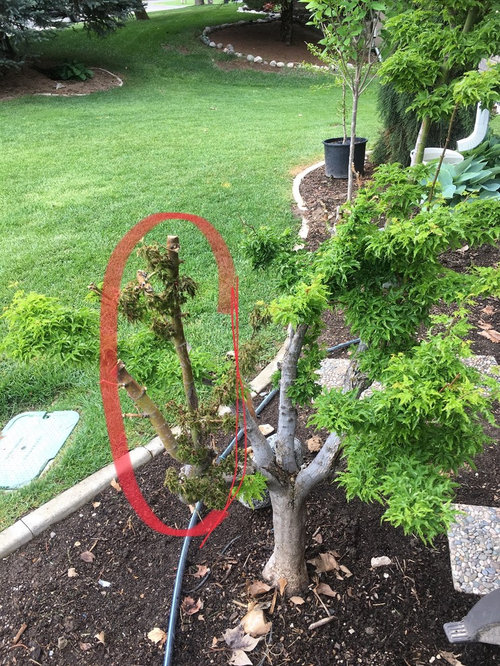
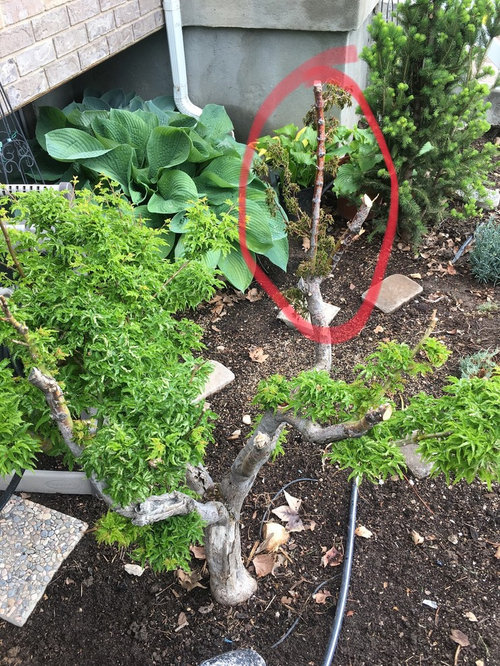
I’ve had this little Shishigashira in since 2009. We’ve had our ups and downs - what with being planted too deep and dug up to raise up .....4(ish) years ago - but it has been doing so well the last couple years.

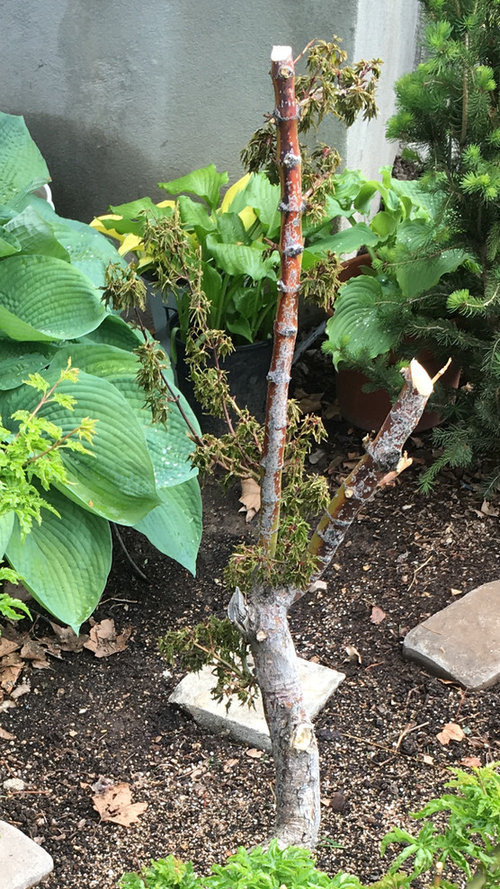
Winter and Spring have been pretty dry so I started watering plants by hand in March. The leaves came out quite nicely on the Shishi (other than the regular little bit of die off at some of the higher points). This limb in question was leafed out well then suddenly the leaves all wilted and died. I think the entire limb is dead.

It has been watered regularly. The rest of the tree looks great. I see no signs of bug problems. I haven’t done anything to disturb the roots around it. What could have caused this death and will it happen to the rest of my favorite tree?

Kay

Comments (5)

  • 8 years ago

    That is usually a sign of a soil pathogen that has invaded and compromised a portion of the vascular system. I'd watch the plant very closely to see if the damage spreads elsewhere on the plant, which could signal its ultimate demise.

    If nothing else happens this growing season, remove the dead limb where it joins the trunk, using sterilized pruning tools.

    kay21_utahzone5b thanked gardengal48 (PNW Z8/9)
  • 8 years ago

    Ugh - that sounds bad. I know nothing about soil pathogens, and that never crossed my mind; the idea raises many more questions.

    Do I need to wait to remove the dead limb or can I do it now? Where do pathogens come from and what about the rest of my garden? Should I call an arborist or can I wait until I know for sure one is needed.

    Now I'm Sad Kay

  • 8 years ago
    last modified: 8 years ago

    The one time I got verticillium in maples here was when some purchased "black dirt" was dumped under some existing vine maples that had come up from seed. (Vine maple is related to Japanese maple). I see the soil around your tree looks dark, damp and compacted, perhaps you bought - or made, as in home made compost - some material for this bed that was is infested with verticillium.

    Otherwise Japanese maple cultvars seem to be blighting off in my area rather often these days, I think most of the time here it is actually bacterial blight rather than vericillium. Anyway look up verticillium wilt and bacterial blight (of maples) for background.

    kay21_utahzone5b thanked Embothrium
  • 8 years ago

    I've been looking up verticillium wilt this afternoon and it fits what has happened to my shishigashira. But I've just looked up bacterial blight and that fits, too. (So many open tabs!) In fact, that JM has always struggled with tip die back, a branch or two not leafing out every spring, and areas of dark, discolored bark. This is the first time I've had a branch leaf out in the spring then suddenly wilt and die. (I've never worried about this stuff because it's so dry here we're not too susceptible to fungal issues, or other diseases as far as I know, and dealing with the dry seems a fair enough trade.)

    Yes, the soil is dark. It's clay (maybe that's why it appears compacted?) so I amend by topping with a lot of organic material (not against the trunk - learned from that mistake a few years ago).
    Embo - you're right about the homemade compost suspicion. But does verticillium specifically need to be introduced to the compost bin or does it create itself at some point? If the problem is bacterial blight I think it came with it when I bought it, but that was nine years ago.

    I have hostas so I'm big on sanitizing tools but a few weeks ago, before that Shishi branch started wilting, I trimmed off winter tip die back from three of my four JMs, starting with the Shishi, without sanitizing between cuts. Now what do I do?

    Kay

  • 8 years ago

    The Verticillium pathogen is extremely widespread and exists in most soils. It is an opportunistic pathogen and can remain inactive for decades until stimulated into life by some sort of unknown "signal", usually that of a plant under stress or mechanical damage (often at the root zone). So no, it does not need to be 'introduced'!! It is very likely already there!!

    In more than 30 years of growing, selling and consulting on Japanese maples and their care, I see very few cultivars that are affected by bacterial blight, most often those that present a brightly colored bark. But I have seen dozens of instances of verticillium wilt on all different types of Japanese maples - they are extremely susceptible - oft times fatal but sometimes with just a single branch or two dying back.

    You can cut off the affected portion now if you wish and take it into your local extension office for a proper diagnosis. They will be able to determine exactly what pathogen is causing the dieback and how to control, if possible (there is no control for VW).

    kay21_utahzone5b thanked gardengal48 (PNW Z8/9)
Sponsored
J.Holderby - Renovations
Average rating: 5 out of 5 stars4 Reviews
Franklin County's Leading General Contractors - 2X Best of Houzz!