Software
Houzz Logo Print
gables007

Is this a Lily?

8 years ago
last modified: 8 years ago

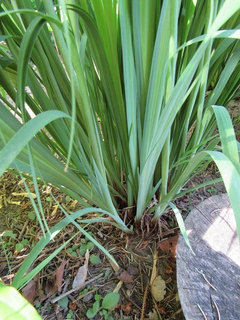
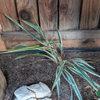
Is this a lily? If so, does anyone know what kind? It took a year for the leaves to grow but I have not yet had flowers. Granted, I haven't added fertilizer yet so which fertilizer would you recommend? The local nursery said since I am keeping this in a container, anything could be used, including all-purpose Miracle Gro but I am assuming certain fertilizers will yield better blooms than the nursery's recommendation. Any help is appreciated. Thank you.


Comments (11)

  • 8 years ago
    This looks like an iris to me, the way the leaves are growing in a fan shape.
  • 8 years ago
    last modified: 8 years ago

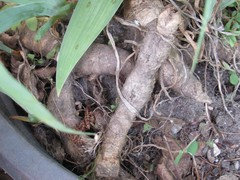
    Does it have rhizomes? It looks like iris to me too...

    Iris rhizome should not be buried deep. If yes, it may not bloom. I have few different irises, in containers or ground, and they bloom every year.


  • 8 years ago

    Miracle Gro but I am assuming certain fertilizers will yield better blooms than the nursery's recommendation.

    If you are referring to the "Bloom Booster" types of fertilizer, don't bother with them, they are nothing more than a marketing gimmick. It's kind of like old incorrect adage about medicine, If some is good, more is better." More could cause a great deal of harm.

    Bloom boosters with high amounts of phosphorous (i.e. 10-52-10) can cause stunted roots, leading to stunted growth, harm to beneficial root fungi and cause zinc and iron deficiencies.

    Stick to the all purpose, or get some Dyna-Gro foliage pro. You'll probably have to get it on line, or if you have a hydroponics shop in your area.

  • 8 years ago

    I love Miracle Gro Bloom Booster! I use it in all my outdoor container plants that flower. It really makes them bloom beautifully. I use regular Miracle Gro for foliage plants. (I don't work for them either. Haha.)


  • 8 years ago
    last modified: 8 years ago

    Plant looks normal in picture. Unless soil deteriorates too much beforehand re-potting will not be needed until the tip of the root-stock(s) reaches the wall of the pot. Time to handle (divide and/or re-plant) bearded iris is during summer, after the leaves have shriveled but before the next set of roots grows.

  • 8 years ago
    last modified: 8 years ago

    @Embothrium, thank you. How would I find/see the tip of the root-stock(s)?

  • 8 years ago

    All your problems will be solved if you plant your iris in the ground :-) The are not very well suited for container culture, they do best in full sun with the top of the rhizome exposed, in well drained soil and really do not require much of anything in the way of fertilizer. But do wait until later in the summer to transplant, as Embothrium suggests.

    I'd also agree that "bloom booster" fertilizers are pretty much a waste and tend to supply excessive amounts of amounts of P, which is seldom deficient in most soils. Side by side testing with a "standard" fertilizer (like anything with a 3:1:2 ratio {MG, or Foliage Pro} or even an all purpose like the 10-10-10) will produce pretty much identical results afa flowering or fruiting).

    btw, the 3:1:2 ratio has been scientifically proven to be the ratio in which most plants access nutrients for optimum growth......and that includes both flowering and fruiting.

  • 8 years ago

    Except such things vary regionally, with some areas having significant deficiencies of certain primary nutrients that others do not have at all. For instance here in the P.N.W. nitrogen is usually the only one that needs to be supplemented on a routine basis. So more like 3:0:0!

    With the outer coast differing in that there extra P may also be needed. So maybe then 3:1:0.

  • 8 years ago
    I’ve never tried planting iris in a pot, but agree with those who say they take little attention if planted shallowly in the ground. The ones I’ve had spread like wildfire and needed to be divided every few years, even though I’m never fertilized or watered them. Every time I dug them up, I noticed tons of earthworms snuggled all around them, so there must’ve been a happy symbiotic relationship going on. I doubt you’d get that kind of natural arrangement in a pot.
  • 8 years ago
    last modified: 8 years ago

    gables

    I have way too many irises, in ground and in pots. Growing them for probably 15 yrs and never fertilized. I just make sure their rhizomes are not buried, and that they have very good drainage. I seldom water them too, they get whatever mother nature gives them in form of rain. They are in quite 'lean' soil, in spots with lots of sun. They seem to grow and bloom best if 'baked' in sun, and not overwatered. In my previous house, I had many growing in a rockery, amongst hardy succulents.

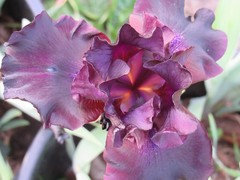
    Here is quite overgrown clump, in a pot, that has been there for over 2yrs (with idea to be divided...I never got to it yet :) As you can see, rhizomes are above ground. Plants are OK, overwinter in my zone, and bloom every year. This is Bearded iris:

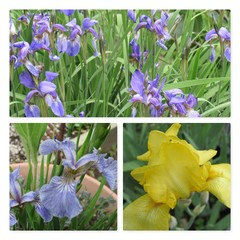
    Another type, in this case Siberian iris, has smaller blooms and likes bit more water. It has differentIy shaped leaves, more grass-like, and will form big clump over time that needs to be, eventually, divided:


    There are irises that grow in ponds too...there are many species of iris (IIRC, about 300).

    I have quite a few flowering plants in garden (ground or pots) but have never used any specialized fertilizer. Those that need fertilizer, get what I use for vegetables and some fruiting shrubs, fertilizer with 3:1:2 ratio. Personally, I do not believe in using anything that has excessive amounts of N or P or whatever...

    ETA: corrected rhizome instead of tuber. Thank you Embothrium !:)

Sponsored