Software
Houzz Logo Print
drc_215

Mock Orange Mystery

8 years ago
last modified: 8 years ago

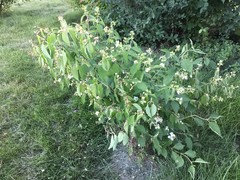
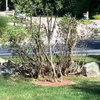
Can anyone tell me why my Mock Orange continuously droops? I planted it last year, in full sun, zone 5b. It gets a least 1” of water every week. There are curling leaves but I see no evidence of insects. Whyyyyyyyy???? Thanks!


Comments (19)

  • 8 years ago

    Of course the pictures did not get attached! Houzz, you are destroying this forum!!

  • 8 years ago

  • 8 years ago

    I would love a bit more info.

    Do you ever weed-n-feed the lawn?

    Have you actually stuck your finger down into the soil a few inches to see how moist or dry it is several inches down, both before and after watering? That will give you more info as to what is going on, such as water running off rather than soaking in or that the original potting soil has become too dry to absorb water or the soil is overly satuarated. Have you checked to see if whatever is providing the inch of water a week is actually doing so? Emitters can get clogged or water pressure changes can influence where water actually falls if it is coming from some type of watering system.

    Regardless, remove the grass around the base and back at least a foot and give it mulch instead. Grass is fairly thirsty, and competes with nutrients as well, so can be a problem.

    Deb 215 SEWI5 thanked NHBabs z4b-5a NH
  • 8 years ago

    I have stuck my finger down there to check the soil, but not right after watering so will do that, If it hasn’t rained, I lay the hose at the base and run a slow trickle for an hour. One of my projects this year is to remove the grass in a large arc from around the privet to the left to about three feet riight of the mock orange, so will work on that today. Thanks for your help!!

  • 8 years ago

    And yes, my husband hires a lawn company, and they did a weed-n-feed a couple of weeks ago but the shrub has been looking like this before that happened. It never stops drooping, even after watering.

  • 8 years ago

    i think its just immature ... and needs to fatten up its trunks.. to put on size ...


    i would remove the grass in about a 3 foot circle ... and mulch it.. to keep the nut with the lawnmower and weedwhip away from it .. as well as the spray dudes ... babs theory is as good as any for the spray drift ...


    is it shaded [on review i see you say fulll sun] .... it looks like its leaning out to the sun .... i might pound in a stake.. and tie it up.. to make it straighter.. with the hope that as the trunks fatten.. they might be more upright ...but on the other hand.. sometimes it just takes a shrub a season or 2.. to get its act together ... and patience is the key ...


    MO is kind of an unruly child ... and time will get it the way you want it ...


    ken


    Deb 215 SEWI5 thanked ken_adrian Adrian MI cold Z5
  • 8 years ago

    Thanks Ken! Will definitely be removing that grass!

  • 8 years ago

    Being immature won't cause it to droop as it is. It isn't just that the branches are healthy but floppy. The leaves are dry, pale and curled looking and both leaves and flower racemes are drooping. There's something going on at the roots.

    Deb 215 SEWI5 thanked floral_uk z.8/9 SW UK
  • 8 years ago

    After removing the grass will give it a side shovel to get a look at the roots. We have had voles in previous years, but have not seen any evidence of them the last two summers.

  • 8 years ago

    Try pushing on the soil surface. If voles have been tunneling there should be some softness or collapse. For what it is worth, in my vole-ridden garden, the mock oranges aren’t bothered although other species of shrub have been killed, but there are several species of mock orange so that yours may be more delectable.

    Deb 215 SEWI5 thanked NHBabs z4b-5a NH
  • 8 years ago
    last modified: 8 years ago

    If the hose isn't making a puddle over the entire root area before the water soaks in you are wetting a column of soil probably deeper than is needed below where the hose ends rather than getting the plant well watered.

    Also you should mulch around the plant so the sun does not strike the soil directly and bake the moisture out of it during summer conditions.

    Deb 215 SEWI5 thanked Embothrium
  • 8 years ago

    Grass is now removed, area mulched. If it does not rain tonight will put a circle sprinkler on the area.

  • 8 years ago
    last modified: 8 years ago

    If you aren't getting buckets of rain there it probably hasn't been enough to skip watering sessions. Even established plants (that aren't specifically drought adapted kinds) still need a minimum of one inch per week of rainfall. And those that haven't rooted out well yet may often need to be watered as heavily during dry weather as though they were still in the pots. Looking at the top of your shrub I suspect if you poke around in the original soil ball you will find it has been chronically dry.

    Deb 215 SEWI5 thanked Embothrium
  • 8 years ago

    I am a waterer, lolol. If we don't get enough rain we put the sprinklers out, watering each section for over an hour. But a thought occurred to me this morning. Twenty-five feet to the south, we lost a purple smokebush to verticillium wilt about ten years ago. Could this be what is wrong with the mockorange?

  • 8 years ago

    Not known to be susceptible to Verticillium wilt. But it can be susceptible to bacterial blight, Pseudomonas syringae, and that could cause similar symptoms of wilting and leaf drop.

    Deb 215 SEWI5 thanked gardengal48 (PNW Z8/9)
  • 8 years ago

    Thank you, that is good to know!

  • 8 years ago
    last modified: 8 years ago

    I see no spotted or blotched leaves, no blighted shoots in photo of plant asked about.

    https://pnwhandbooks.org/plantdisease/host-disease/mock-orange-philadelphus-spp-bacterial-blight

    What it does look like is that the roots are dry. If there is a dried out potting soil root mass that is resisting wetting it almost doesn't matter how much rain or watering there has been. Especially if the watering has not been done in such a way that the potting soil has been re-wetted all the way through. On my soil here I have to run sprinklers at least 2 hours in one spot to get any significant penetration at all - because the precipitation here is deficient for months during the growing season commercially installed sprinkler systems are often set to run for short periods daily. If watering methods being used do not seem to be able to accomplish it sometimes it may actually be necessary to dig recently planted, chronically wilting plants back up and plunge their root masses in clean water until they stop bubbling.

    I dug up a maple because it froze years after planting and the original potting soil root mass was completely dry. The tree was alive and growing before it froze because it had rooted into the native soil around the potting soil, was no longer dependent on the potting soil for all of its moisture. Before a plant installed with an intact potting soil (or field soil, for that matter) root mass manages to root out well it must be watered during dry periods as much or almost as much as if it was still in the pot.

    If it happens you did this also amending of planting hole back-fill adds the involvement of a third area of soil texture, that often adversely affects how water enters and exits the amended planting hole. Plants in amended holes have to get across this amended zone in addition to escaping the original potting soil or field soil root masses in order to become connected with the unmodified existing soil beyond the planting hole. Existing soil that often has a much more stable moisture situation.

    Deb 215 SEWI5 thanked Embothrium
  • 8 years ago

    Thank you E! I just finished watering the entire area with a sprinkler for over an hour. Later today I will dig around the roots to see what is going on.