Software
Houzz Logo Print
wantonamara

Eradicating Johnson Grass in field.

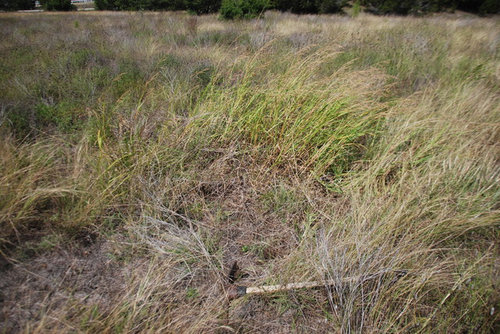
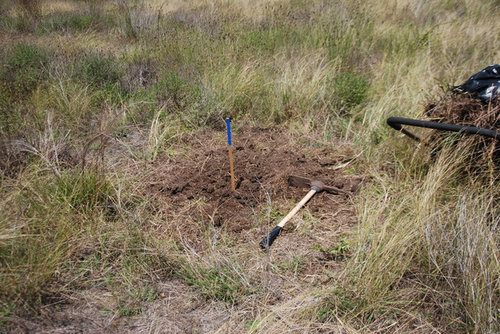
Last year, I noticed a small clump of Johnson grass. I pulled the seed stalks and poisoned the blades and I think all I did was make it angry. It is four times bigger , 6 times more plants all with deep roots. The ground finally was rain softened and I went out and I pulled the clumps out and dug up the roots but I bet I did not get them all. I am marking the area . Got to go find some iron stakes and paint them blue or pink and then come back and repetitively poison them with strong round up. Any suggestions out there???? Should I solarize before I poison of what. If I solarize, is clear better than black plastic? Now I am angry. I forgot to take water out there and almost over heated. Any special poison beside roundup.....Grass Begone.


I had already dug up half before I took the photos and I still have to go out and dig up more roots. I know I don't have all the roots.


Comments (25)

  • 8 years ago

    I am hearing some say to till the land in fall and poison with roundup.

  • 8 years ago
    last modified: 8 years ago

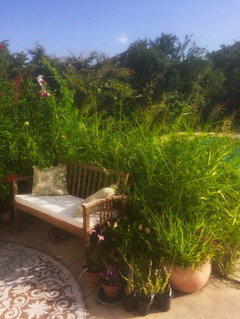
    I have a weakness for thugs. Maybe is gratitude for growing in my sh@tty soil? Anyway, I let it grow in this spot in the garden because I like how the sun lits the panicles.

    Omar

  • 8 years ago

    I don't want this to become 5 acres of it. This is really a bad bad plant out in the rural areas.

  • 8 years ago

    I have found no fool proof method of getting rid of this hellish plant. I am waiting to see if anyone else has. And, Omar, when the seeds scatter and it comes up in places you don't want it, what then???

  • 8 years ago

    I understand, Mara.

    Carrie, my garden is small. If a volunteer grows where I don't want it, I yank it out.

    Omar

  • 8 years ago
    last modified: 8 years ago

    Seeds are viable for 10 years . I will be going and getting pre-emergent oil stuff since the plant had gone partially to seeds (bad me) . I have been so busy that I could not get out and pull the seed heads.

    Omar, make damn sure you get all the roots out. I think I chased one for 5 years. I always thought I had all the roots and it kept coming back. It was just one small plant.

  • 8 years ago

    :D I have been letting it grow for 5-6 years. It was a "gift" from the birds. By the way, finches really like their seeds and they stay vibrant green when lot of plants scorch during summer.

    Omar AKA Thugs Lover

  • 8 years ago
    last modified: 8 years ago

    Yea and then those finches fly over my land and poop this invasive noxious weed on it. Every year that plant makes thousands of seeds. It is considered one of the worlds worst invasives. Definitely one of this countries worst. Many states require land owners to irradicate this perp, and fine them when they don't. I still like you... LOL

  • 8 years ago

    Man, I need to seriously talk to my finches. They shouldn't fly 40 miles to poop Johnson's grass seeds in your property. Sorry, Mara. (Just kidding. I understand)

    Omar

  • 8 years ago

    me too.

  • 8 years ago

    This weed occasionally becomes a major warm-season time drain even in our small urban lawn - especially since we cut back on preemergent use. Much sympathy for having to try to bring it under control in open fields. I had assumed the doves that are prevalent here year-round were the greatest "gift givers", but finches certainly pass through enough to play a role.

  • 8 years ago

    What percentage is good for the gradual kill?

  • 8 years ago

    I killed some out at my parents place. From spray to totally dead was about a week. Got a gallon at Lowe's and mixed according to directions. I believe it was 6 oz. to a gallon of water. Round Up was specifically designed for Johnson grass.

    wantonamara Z8 CenTex thanked Carla
  • 8 years ago

    You want to make sure that the Roundup just has active ingredient Glyphosate. Roundup Plus I believe adds an ingredient that causes the plant to turn brown faster. People do not like spraying and 3 or 4 days later plants are still green.

    I can't really give a rate; due to the varying rates of concentration. They all have rates stated on the label, just use a medium spray. It will say spray some so many tablespoons for annual weeds, more for perennial weeds. I would use somewhere in between. If it does not work after a week apply another more concentrated application.

    wantonamara Z8 CenTex thanked garybeaumont_gw
  • 8 years ago
    last modified: 8 years ago

    garybeaumont's information is accurate so I'll only expand on it. Might be more than you really wanted to know but use what you want and leave the rest. The statement about grazing having an impact translate's to homeowners mowing and string trimming. The stuff even has a defense system to discourage animals from overgrazing on it. It's called prussic acid and kill's ruminates within 15 minutes of consumption. I'll leave the details of grazing,haying and silage for now but we can discuss farther if anyone is interested. The defense is at it's peak between aproximatly 3" and 18"when plant is most vulnerable so that's the ideal time to spray, mow,weedeat or chop down with a hoe. A single application in early summer during first burst of growth is usually 95% effective. A second well timed application should be all that's required. So what to do now that plant has reached maturity? Cut it back then wait for new growth before spraying. Glyphosate if you don't mind killing everything else it contact's. MSMA if you want to spare Bermudagrass. Above all,read and understand the label. I almost forgot,vossy has hogs she will give you. Hogs love the roots but evidently vossy's hogs never re-fill holes when finished.

    wantonamara Z8 CenTex thanked klem1
  • 8 years ago

    We lost a heifer and a young bull that just layed down and died and we thought maybe it was Johnson grass. It happened in the same pasture about a week apart. They were both as healthy as can be so no other reason other than that grass. Now I'm going to have to look for it.

  • 8 years ago

    Don't jump to conclusions. Anywhere cattlemen geather,you can get a dozen conflicting opinions about Johnsongrass (Sorghum and Sudangrass as well) for hay or grazing. I do agree you should look into it if the pasture is still being grazed. Tons of all three are fed every year without causing trouble. I would estimate 50% of pastureland in Eastern half of Tx has some amount of Johnsongrass . The problem usually involve's a pure or near pure stand that is suddenly grazed. A classic case was when my uncle lost 3 head while he was watching. It had been a dry year,pastures were overgrazed and grass in his catch pen dried out and turned brown. To cut fire danger to his barn,he mowed the dead grass. It began raining and pastures were in recovery. The highly fertile soil around barn combined with lots of rain was soon overgrown. Having just came through a period of grass shortage,he opened the gate to alow cows access to the lush growth. When he noticed a cow having trouble,he realized his mistake and rushed to shoo the cows out. Within 20 minutes of letting them in,three cows lay dead. The only thing that saved others was they concentrated in an area with more Bermuda. Point being there's no need for alarm if you have some here and there and cattle are continuously on the land.

  • 8 years ago

    The levels of prussic acid is dependent on stressed (dry) plants that suddenly gets a good rain. It can get to levels to kill in about 4 hours if I remember correctly. It last about 10 to 14 days and then the Johnsongrass is good to graze. When I was in west Texas a co-worker would call home to see if it was raining on his farm. If it was he would drive home and pen the cattle off the field. If only takes a mouthful to kill a cow. One plant may be fine, the one beside it could kill.

  • 8 years ago
    last modified: 8 years ago

    "Stressed" might be the watchword. In addition to dry conditions followed by good rain,frost followed by warm weather and new growth(common in Tx),cut and baled,bushhogged,or even first growth after winter can also do it. Every horse I've owned was closely managed and fed within confined space but I'm lead to believe they are not as susceptible as sheep and cattle(ruminates). IMO horses look for ways to be injured,become sick or die. For that reason,I never desputed hay buyers if they felt hay containing any amount of Johnsongrass put their horses at risk. I do know of several horses that were fed hay without consequence. What have you experienced related to horses and Johnsongrass?

  • 8 years ago

    All of this is very interesting and way above my bow (as in hair ribbon). I am just amazed that grazing animals manage to live out there at all. There are so many toxic plants. Malta star thistle causes horses to not be able to swallow. Others make animals abort. Its a big bad world out there.

  • 8 years ago

    That make's two of us because using that mattock digging grass roots in this weather is above my bow. I hope the garden experts didn't get bored and run off without offering solutions for your grass patch.

  • 7 years ago

    Put a fence around it and turn in a few hogs. They will root it out and eat the roots. My husband did this for me on my vege garden. It works.

  • 7 years ago

    Prussic acid breaks down in a couple of weeks. So it would not be a problem when cut for hay. Many people use johnsongrass hay with no bad effects. It can have low protein if cut too late.

  • 7 years ago

    You might want to use a translater.

Sponsored
Custom Home Works
Average rating: 4.6 out of 5 stars10 Reviews
Franklin County's Award-Winning Design, Build and Remodeling Expert