Software
Houzz Logo Print
irissto

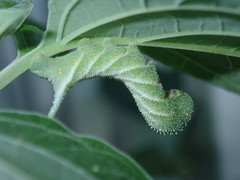
Poor, doomed caterpillar

8 years ago
last modified: 8 years ago
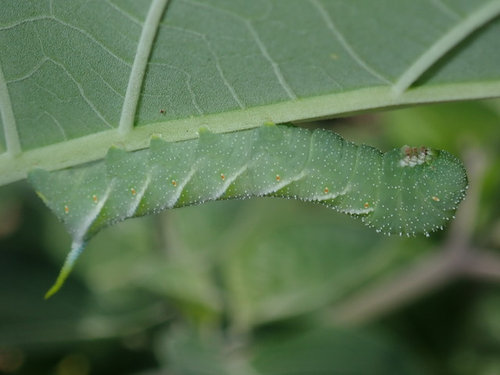
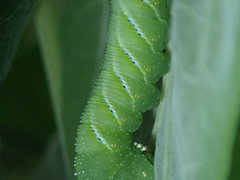
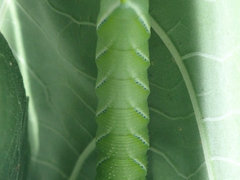
I didn’t even notice all the spots until I uploaded the pictures from my camera.. Poor guy. Nature is rough. I know they are considered a pest by many, but it makes me sad.


Comments (28)

  • 8 years ago

    What do the little white specks mean? Since I'm assuming that's why you are saying it's doomed ...

    Iris S (SC, Zone 7b) thanked BlueberryBundtcake - 6a/5b MA
  • 8 years ago

    You know if you want you can take a container with a lid, you can keep it as a pet. It's what I do with many caterpillars. Feeding it leaves you pick from your plants - personally I don't mind removing a few leaves or a branch or two at a time. To me it looks fine unless you know something parasitized it, or it got into poison.

    Iris S (SC, Zone 7b) thanked Sarah Wolf
  • 8 years ago

    So the white protrusions are part of the caterpillar or not? Why is it doomed?

    Iris S (SC, Zone 7b) thanked BlueberryBundtcake - 6a/5b MA
  • 8 years ago

    Nice healthy specimen!

    Iris S (SC, Zone 7b) thanked rhizo_1 (North AL) zone 7
  • 8 years ago

    Rhizo, are you sure it is healthy? I have not seen one with these spots before. I tried looking it up and all I found are parasites. I have seen them before with the big cocoons (?) though. It would be great if this one is healthy. I was worried.

  • 8 years ago

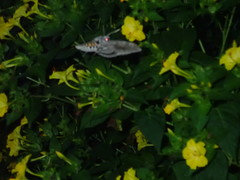
    That’s a relief. I have never noticed the little bumps. Maybe it’s not such a good thing I did get a new camera. Other than the eggs, your caterpillar looks smooth. Is it because the one in my picture is still kind of small? The plant is not even a tomato. It’s a weed, but I keep it around for the caterpillars. Also love seeing the adults diving into the flowers.

  • 8 years ago

    Iris, what is the plant?

    The white thingies on jay's picture aren't eggs, by the way. Those are the cocoons of maturing Braconid wasps; the eggs are long gone by that time, hatched inside the doomed caterpillar. Minute wasp larvae feed on the internal organs of the caterpillar as the hapless creature continues to munch on foliage.

    When the wasp larvae are ready to complete their development, they chew through the hornworm's epidermis and begin the final pupal stage in the cocoons. A teensy braconid will emerge in a short time to fly away, mate, and begin the whole process again on a new caterpillar. The original caterpillar, of course, is a shriveled corpse by that time!

    Iris S (SC, Zone 7b) thanked rhizo_1 (North AL) zone 7
  • 8 years ago

    Rhizo ,thanks for the refresher course in parasitic wasp. I was thinking the coccoons were eggs. So removing the cocoons won't do the ravaged cat any good. The worm in the photo looks healthy. I don't know why some appear smooth and others have those little nubs. It looks like this cat was feeding on a Datura. Is that correct Iris ?

    Iris S (SC, Zone 7b) thanked Jay 6a Chicago
  • 8 years ago

    Yes, it is a Datura. Maybe Jimsons weed? All I know for certain is to not eat any part of it. The caterpillar is looking even bumpier. I looked if I could find another one to compare, but no luck. I am glad you say it’s ok, it’s just very new to me. I looked through my old pictures, they all looked smooth.

  • 8 years ago
    last modified: 8 years ago

    Iris, I just googled tomato hornworm and looked at images. Some of the cats were completely smooth, but a few had those same little bumps. I don't really understand it, or what causes it, but otherwise your caterpillar seems healthy, so I wouldn't fret about it, cause there's nothing you can do about it anyways. lol

    Iris S (SC, Zone 7b) thanked Jay 6a Chicago
  • 8 years ago

    Slightly different species? Genetic mutation? Or maybe it depends on what they eat?

    Iris S (SC, Zone 7b) thanked BlueberryBundtcake - 6a/5b MA
  • 8 years ago

    Let's hope his little bumps keeps him from being a wasp's dinner! Or at least give him a better chance lol. Hopefully you can get some photos of when he cocoons.

    Iris S (SC, Zone 7b) thanked Sarah Wolf
  • 8 years ago

    It's always hard, knowing who to root for. I get sad to see tomato hornworms infected with the cocoons of the braconid wasp.......but we need those wasps too! I guess the best thing to do is let nature do its thing.....since it knows "balance" more than any of us humans.

    I found a couple hornworms on my tomatoes recently, eating the top leaves. I'm not sure I have the weeds that they also eat, so I didn't move them. I love hummingbird moths......plus those moths have a place in nature too. It drives me crazy on the tomato forum where everyone wants to kill them. :( I think the biggest one I had on my tomatoes has gone underground. but there's still a tiny one I can't find again. If we were starving and dependent on the tomatoes for our existence, then my choices might be different. But for now.......I'm trying to live in harmony with these beautiful creatures.

    Your hornworm covered with all those little white spikes is interesting. Keep us posted on if they enlarge/go away/ or whatever. It would be nice to know.


    Iris S (SC, Zone 7b) thanked catherinet
  • 8 years ago

    I just found one of those moth cats on my tomato plant 2 weeks ago today and it was already parasitized. Those wasp are doing us a favor because those moths are so destructve. I just let it be and it is sitting in the same spot. I know it is alive because it flinches if I touch it with a leaf. As someone else just said, that cat is doomed anyway. It will never pupate. If you bring that in the house to hatch those wasps larvae you may have lots of regrets later if they get loose.

    Iris S (SC, Zone 7b) thanked harold100
  • 8 years ago

    I found a second smaller one without bumps. Also saw my original one today. Even not going far, they do blend in. Good news, he seems to get smooth from the back to the front.

    I have no problem having them eat a weed. My neighbor has brought over her caterpillars in the past when there were too many on her tomatoes (and usually some tomatoes later on). I really enjoy watching the adults at night. Beautiful creatures.

  • 8 years ago

    Just went outside. Taking a picture that is not some blurry blob is going to be a Summer project.

  • 8 years ago

    They are just so fast. It works when they are sitting somewhere like this little one. Any tips?

  • 8 years ago

    @ harold100 - Caterpillar damage to plants can be hard but, you have to remember one thing harold, they don't multiply as quickly as some other pests. Like beetles. They have months before they can possibly reproduce. Likewise, as I have said, if you keep them in a container and give them leaves that perhaps you were going to pinch off or just remove to keep tidy, you can let them live AND not let it do much damage.
    Plus, unless the caterpillar goes to gnaw off the trunk, a few holey leaves wont hurt the tomato unless it's weakened from some other state.

    A lot of people fear produce wont be good if the caterpillar bites into it. Personally, I just eat around a little 'pock' mark. If the tomato is really eaten, either let them just have it, maybe collect the seeds from it for next years plants or, if you have other farm animals let them eat it.

    Right now the only 'pest' I am having to deal with are cucumber beetles. A few holes in the plant don't bother me but, it's the sad part that they carry bacterial wilt (which has claimed the life of two plants of mine), which is why I have to remove their existence. If squash plants were as hearty as my tomatoes I'd not bother them. Especially if they produced as much fruit.

    Iris S (SC, Zone 7b) thanked Sarah Wolf
  • 8 years ago
    last modified: 8 years ago

    @ Iris S (SC, Zone 7b) -All I can recommend is set the shutter speed to 'action'. Or perhaps get a butterfly net and put your hand or a stick inside and try to let the moth calm down and be somewhat of a 'resting' camera subject. Maybe even with a little bit of water in some small dish.

    Iris S (SC, Zone 7b) thanked Sarah Wolf
  • 8 years ago

    The reason most of us hate to see hornworms is that they are voracious eaters, not nibblers. One or two can reduce a healthy tomato to spines (leaf ribs) in a couple of days.

    Iris S (SC, Zone 7b) thanked rhizo_1 (North AL) zone 7
  • 8 years ago

    Well, turns out this poor caterpillar was doomed after all. He seemed fine this morning. Now he is kind of black at the ends and hangs there all limb.

  • 8 years ago

    Hmmm.....I wonder if there is another parasite besides the braconid wasp that can cause death? Sorry!

    Iris S (SC, Zone 7b) thanked catherinet
  • 8 years ago

    A virus maybe? I am going to have to look into it. It looked awful.

  • 8 years ago

    It is really hard to find anything about the hornworms that does not involve pest control. Looking at other caterpillars, maybe it was a virus? But in case of Monarchs it said a lack of appetite. This one was good looking and eating at about 10:30 this morning and in it’s sorry state by around 3.


  • 8 years ago

    Is he hanging upside down? He could be readying to cocoon. I do hope he's ok. But, you might be right it could be some sort of virus.


    @ catherinet -For hornworms I don't know. However, I get Salt Marsh Moth caterpillars and they tend to be done in by a biting fly. Lays an egg right inside them. Have tried several ways in which to 'kill' the fly larvae without hurting the caterpillar but, so far no such luck. I think normally by the time I notice the larvae it's already done too much damage.


    Which is why I have such a hard time seeing or thinking of these poor things getting parasitized by anything.


    I do recall a reason/disease for the Mourning Cloak Butterfly when the caterpillar would try to cocoon but, rather than turning into a chrysalis it would simply hang limp there in a 'J' shape. I can't find the actual thing though. I think this too was some sort of virus. But, it's been a few years so I can't say for sure.

    Iris S (SC, Zone 7b) thanked Sarah Wolf
  • 8 years ago

    He was hanging by the middle part. He is gone now, probably died and fell down. I took pictures, but figured nobody would want to see that. What if it was the Black Death virus? I am worried how this would affect other things in the garden. I have read that 6 hours of direct sunlight kill the virus, but that’s hard to get with the weird weather we have been having.

  • 8 years ago

    It could be. I wished they had autopsy for these guys. It would be nice to know what exactly it is. I wonder if a plant grow light could do the same thing if you're not getting enough sunlight. Since it's designed to mimic the sun's rays. Trouble is that means spending money and bringing the little fellow inside.

    I would do it but, I also know I have a major love for these guys more so than most xD;.

    Iris S (SC, Zone 7b) thanked Sarah Wolf