Software
Houzz Logo Print
hzdeleted_35844888

Do cold frames work to overwinter trees in pots in Zone 3?

8 years ago

I will have some small potted trees to overwinter this year.

My garage is too cold during December, January and February. So I was thinking about some sort of cold frame, against the outside of the house. It would be 2'x3', sunk in the ground 12" so the top is flush to ground level. I could put 2" foam board on the bottom of the 3/4" plywood door for insulation. The sides would be 1.5" treated lumber back filled with soil. Of coarse, it would be imperative that snow fall is sufficient to pile a deep layer on top of the door to keep the extreme cold out. That or put bales of hay/straw on the door for insulation.


My question is, does anyone my/our zone (-35dF), or colder, winter potted plants outside? And to you use an enclosure similar to what I described? Or how do you do it? Does it stay warm enough (above ~20d F) so that the roots don't freeze? These would be zone hardy trees I'm talking about not sensitive to our temps.


I'd like to hear from people that have actually had success or failure doing this, so I can out what works and what don't.

Comments (23)

  • 8 years ago

    Thanks!

    I'm thinking there's a reason no one has responded, probably bc no one does it. :-)


    It would be better, I think, to have an old style 'root cellar' type, where you were actually under the ground, there it stays 40d F all winter. I'm thinking a shallower 'cold frame' would still need some kind of cable and thermostat, for those few winter nights with no snow and sub zero cold enters the picture.

    So it's getting to sound like too big of a deal to mess with just for keeping a few pots. I may make a small cold frame anyways and use it early spring when I start putting things outside.


    I'd love to hear what you do for rodent protection, every time I start piling leaves/grass, it's mouse city around here. But if it's a company secret, I'll understand. :-)

  • 8 years ago

    I put trunk protection on maples, crabs, and anything else that has been chewed on by critters in winters' past. White corrugated protectors or the flat style that can be wrapped around the trunk. The flat style is nice because it can hug the ground and lessen the chance that rodents can squeeze in underneath and have room for a nest. I suspect neighborhood cats, owls, etc have also been helping out.


    Be careful if you choose to winter the pots in an area that will always stay above freezing. Without some moisture, the pots can dry out too much and the trees could be dead come spring.

    User thanked mntreegrower
  • 8 years ago
    last modified: 8 years ago

    Might take me some time to figure this one out. I could leave them in my unheated garage until late November, depending on how soon the cold comes. Then move them to the basement where it normally could be as low as 50d by then and could be made even colder with an open window. Then move them back to the garage end of February.

    Dunno. Have to think about it some more and is it really worth all the work to do that.

    Could just dig them into the ground and put a pile of mulch on top and a tote over that with a few bricks on top to keep the mice out. And if I put all that in the same area where I was placing the cold frame, it's out of the sun so any snow piled on top would stay a long time. IF we get snow.

    No hurry so there's time to think about it.

  • 8 years ago

    Doesn't look like I'll have any potted trees to overwinter after all. So I'll give this one more time, maybe do something about it next season. Thanks! :-)

  • 8 years ago

    Lucky you, Bill! I planted too many seeds and seedlings in pots a few years ago. I didn't expect so many to take AND grow so well. Now I have too many trees to give away and not enough people to take them. Why do I continually do this to myself? :D

    User thanked mntreegrower
  • 8 years ago

    I'm already seed collecting for next spring. We might see this thread pop up again before next season. :-)

  • 7 years ago

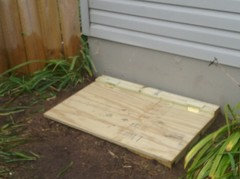
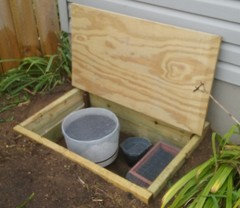
    Ended up putting in a small, below ground frame. Not so much for potted trees but I had some seeds with long stratification needs so thought I'd try planting them now and letting ma nature do her work over winter. My garage can get sub zero temps so not the best there.

    Might have to throw a foam board on for insulation if we don't get snow by December.

    I'll find some use for it no matter what and it's in an 'out of the way' location so no problem. Crappy phone pics but you get the idea...


  • 7 years ago

    What sort of seeds do you have in there?


    I am not too thrilled with the temps going down below freezing tonight. While new growth looks done on everything here, some of the branch tips don't look like they have completely hardened off yet. Lacking that "woody" appearance still.

    User thanked mntreegrower
  • 7 years ago

    Last year, some of my maples didn't look hardened off but came through just fine. Sometimes an inch or two of leader tip will die but it doesn't seem to affect the tree at all.


    OstryaVirginiana, CeltisOccidentalis, Tsuga canadensis and Thuja occidentalis. I have extra seed inside that I'll stratify in the fridge in March. Wanted to try this to see how it works. Could be a real time saver.

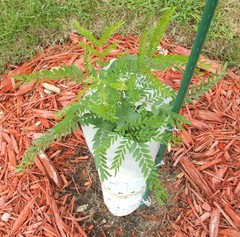
    My Gleditsia triacanthos from seed, came out good from this spring, It's looking like a good way to get some trees I wanted. This picture is from the end of August. I planted several out on my land in the country and gave a bunch away to a local nursery. Over 2 ft tall and wasn't germinated until first part of June. Looks hardened off lately.


  • 7 years ago

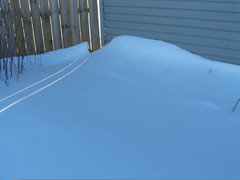
    It's in there somewhere.

    We got over a foot of snow the last couple of days.

    Just in time for the cold weather they're predicting.

    -14d for tonight.


  • 7 years ago
    last modified: 7 years ago

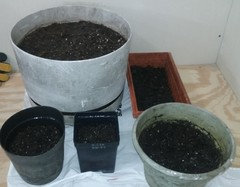
    Snow melted back enough to get the door open so I brought the pots inside where they could get warm enough to germinate. The soil in the large pot seemed a little icy and frozen but the rest seemed more like loose soil but very cold.


    The large pot is Ostrya virgininana, the terra cotta rectangle pot iirc: is Tsuga canadensis, Pot on lower right appears to be Thuja occidentalis, the black square is obvious Picea abies and the far lower left must be the Celtis occidentalis. They should have been stratified plenty long enough so we'll see how this all works out in the next week or two. :-)

  • 7 years ago

    I hope your honey locust is thornless. We had some three fully mature wild type trees on the farm I grew up on with the thorns. They are wicked enough to puncture tractor tires and the seeds seem to all be fertile; so extremely thorny thickets are possible if not carefully tended. Some of the seedless, thornless types, like Imperial or Sunburst, are real nice trees but cannot be grown from seed. FWIW not all the seed from thornless varieties grows thornless progeny either.

    User thanked OldDutch (Zone 4 MN)
  • 7 years ago

    Thanks OD but it's really no big deal. The ones out in the country have little chance of surviving. With high populations of deer, poor soil and harsh, near zone 2 winters, there's absolutely no chance of these ever becoming an 'invasive species'. Maybe if I was in a warmer zone. Heck I'll be lucky if I can get the one here in town to survive!

    But thanks anyways! :^)


  • 7 years ago

    I forgot that we are close to the northern boundaries of honey locust hardiness. My parents farm was in NW Iowa and the honey locust trees we had were fully mature and very large, also very fertile with lots of pods and very thorny. Here in the Twin Cities I have used the more decorative, thornless steriles for attractive specimens in landscaping. IIRC they are all grafted.

    User thanked OldDutch (Zone 4 MN)
  • 7 years ago
    last modified: 7 years ago

    Back to the original question: Back in the 80's when I had my hardy perennial nursery here in what was then zone 4b, I dug the 6" pots and 1 gallon cans right back into the nursery row to winter and had pretty good survival. A lot did depend on how hardy the actual plant species and variety was though. I had more loss when early spring rains failed to arrive on time, what I called spring drought in those days. That is essentially what we now have with a spring wild fire season. Early and careful irrigation is as important as anything else, if the plant stock is hardy in the first place.

    The second question about cold treatment: I got almost 100% germination on golden delicious apple seeds by layering them between wet paper towels and then sealing them inside a small tupperware type container that got put in the back of the refrigerator and then just waiting them out. I am not so sure you need to get any colder than refrigerator temps to get your cold treatment. Definitely don't for tulips and similar spring flowering bulbs or garlic; prolonged stay in the refrigerator is used by a lot of deep south folks who grow them there where it would otherwise not get cold enough for long enough to stimulate flower production. I sorta doubt you need to put them outside or in really harsh temps to get your proper treatment. From what I have seen of honey locust, you may not have to cold treat them at all in the first place.

    User thanked OldDutch (Zone 4 MN)
  • 7 years ago

    This thread has morphed a little from the original question.

    Originally, I was intending on using this cold frame to keep rooted conifers and other small trees from seed, over their first winter. My garage is too cold (we had -40's last winter & 50 mph winds) and I don't want to dig up my yard to winter pots in the ground.

    After not having any of my cuttings root and no other trees to over winter, I put pots with seeds in the cold frame, just for something to do, a test if nothing else.

    Next winter, I may have some small rooted cuttings to over winter. Do you think this cold frame will allow me to keep potted zone hardy trees in there for the winter?


  • 7 years ago

    Update:

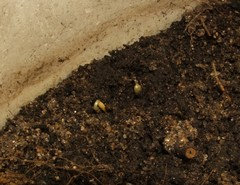
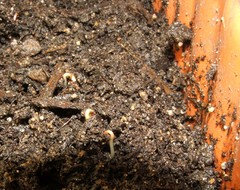
    I brought the pots in on Monday and today I noticed seeds germinating. Less than 5 days?

    Due to circumstances beyond my control, I got late starting both my cuttings and cold seed stratification so all my fridge seeds were way short of recommended days in the fridge.

    Because of that, I was still lacking germination of Tsuga canadensis and Ostrya virginiana.

    And remember, these were pots full of leftover native soil and peat potting mix that I was too lazy to dispatch, so nothing special here at all. I'm sure there's more to sprout so it's looking promising. :^)


    Ostrya virginiana: Sandy native soil mix. These were spread on top with the little coverings still on the seed and covered with a thin layer of soil.


    Tsuga canadensis: Mucky peat potting mix, like mud in texture. Here too, scattered seeds and sprinkled soil sparingly on top.


    This will complete getting the seedlings I wanted to grow for this year. :o)


    Sometimes, it's not the destination...but the journey. lol

  • 6 years ago
    last modified: 6 years ago

    Update:

    I did have some small potted conifers to put in the cold frame this Fall. I'll post up with the results this spring but wanted to add a link to that thread (above in italics), to aid someone searching this subject. :o)

  • 6 years ago

    Worked good! (see link above). :-)

  • 6 years ago

    I’m up in zone 3a and have egress windows I am going to try this Fall/Winter.

    User thanked rose3
  • 6 years ago

    As long as the temps stay in the 30's and 40's you should be fine. They'll be able to get colder than that for conifers that but if temps go up into the 50's, things will come out of dormancy earlier than desired.

  • 6 years ago

    It looks like you've had a lot of answers... My two cents from Zone 4a. Last year, I overwintered Prunus subhirtella, Pinus longaeva, Pinus contorta var latifolia, Ulmus americana, Abies alba, Gleditsia triacanthos, Morus alba 'Tatarica', Rosa x rugosa, Monarda didyma, Delphiniums (Cliveden Beauty), Day lilies, Malus baccata 'Mandscurica', Pyrus communis, and others in Root Pouches, above ground, with no protection, in a paddock blocked on 2 sides by a barn. It gets pretty windy in this area, and we get a lot of snow (VT at about 800ft.) Almost everything survived or did well. The only plants that did poorly were Quercus robur, Gleditsia triacanthos, Amelanchier canadensis, and Morus rubra. The Quercus robur had a lot of die back. And they are growing poorly this year. The Gleditsia almost all died. All the Amelanchier are dead. The Morus rubra are like the Quercus.

    User thanked Addison in VT z4a
Sponsored