Software
Houzz Logo Print
webuser_703875041

Does Inline blower make sense ?

8 years ago
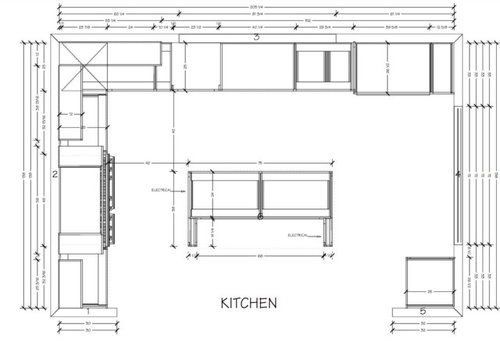
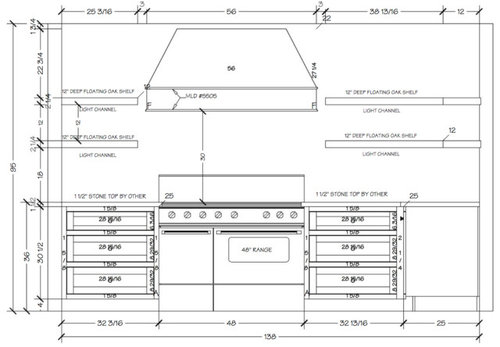
We are getting a 48" Wolf range with a custom wood hood above. After reading through Gardenweb we decided on the Modernaire liner with 1200 cfm. However my friend has a 1200cfm Wolf hood with an internal blower and it is LOUD. At the highest it sounds like you're standing next to an airplane. Our kitchen is open to our dining room so noise is definitely a concern.


As a solution, we want to do an inline blower and Modernaire suggested the Fantech 10XL. The only issue is our home is one story and the attic above the kitchen is very shallow. There is about 9 inches of attic space above our hood at the 22 inch hood projection point. The attic peaks in the center of the kitchen above the island with 27 inches above the ceiling.


Question: Is it pointless to do a inline blower when our attic is that shallow? Is it better to use an internal blower that vents less than 9 inches straight up to the roof? Will attempting to do an inline blower reduce noise enough in our situation? Also we will have no access point to the kitchen attic if anything goes wrong with the inline blower.


Fantech FKD 10XL: http://www.fantech.net/enca/home/Products/fans--accessories/circular-duct-fans/circular-duct-fans-with-ac-motors/fkd/fkd-10-xl-230v-mixed-flow-fan/

Fantech LD10 silencer: http://www.fantech.net/products/fans--accessories/accessories-ventilation/silencers/ld/ld-10-silencer/


OR we could go with Wolf inline blower if it's better? Not sure if there's a silencer included?:

http://documents.subzero.com/AnswerAdvisor/1100%20CFM%20Inline%20Blower%20Install%20808332.pdf?_ga=2.198017641.732928262.1534434001-1716571042.1528096383


Thanks!

Comments (14)

  • 8 years ago

    Unlike a hood blower, an inline blower or a roof blower allows (if there is space) a silencer to be used between the blower and the hood. Otherwise, I think the differences between these latter two blower configurations are somewhat second order to your space and noise issue, and over short distances without a silencer the difference in noise will be modest for similarly sized blowers.

    One scheme that will reduce noise without a silencer would be to use an oversized blower on the roof and run it at reduced speed. A commercial style up-blast blower can be configured to have any of a range of blower flow rates depending on motor selection, fan selection, and belt sheave ratio. The lower the blade tip velocity, the lower the noise (usually).

    al diego thanked kaseki
  • 8 years ago
    last modified: 8 years ago

    Thank you @kaseki . I met with the contractor this morning and actually there is only 5-6 inches between where the duct is placed to the roof. Based on this he said there is not enough room to have a 90 degree turn with a 10" duct and then to place the inline blower or remote blower in another part of the kitchen attic. Seems to makes sense that there's not enough room. He says I can either do:

    1) a remote blower that would be directly behind the exterior hood wall (which won't work because there's a walkway there)

    2) an internal blower that vents up through the roof. Will a vent that only runs 6 inches up to the roof be fairly quiet because there's no turns, just a straight duct up. Since there won't be much friction, would it remain relatively quieter? I know regardless there will be air intake noise at 1200cfm, just trying to reduce blower noise.

    3) a remote blower that sits just 6 inches above on the roof. I've been told that a remote blower is only benefial if you can locate it away from the hood?


    And @kaseki are you suggesting I get higher than 1200cfm in any configuration?


    Thanks!

  • 8 years ago

    There are companies that do nothing but ventilation and have all the answerss3az. Hire one of them to do the install. Their wages are no higher than other trades and they are through in half the time so there's no reason to have plumbers or cabinet makers install vents.

    al diego thanked klem1
  • 8 years ago

    @klem1 Our HVAC guy (who we already paid to install heat/air in the whole house) doesn't have experience with inline or remote blowers so he doesn't want to do it. We reached out to him initially because Wolf and Modernaire both said to discuss with an HVAC person.

    We reached out to a handful of companies on Angies List but only one responded and their tech is on vacation for another week. So our contractor decided he would take a look and decide what our options were however he also has never installed an inline/remote blower before. :/

    Is it too small of a job for HVAC guys to do stand alone? Maybe they have much bigger jobs instead because it's the middle of the summer?

  • 8 years ago

    Does anyone know if an internal blower that vents straight up to the roof with a run of 6 inches will be a) quiet because the run is straight and short or b) loud anyways because the blower is inside the hood?

  • 8 years ago

    Generally, internal blowers that are capable of high flow rates will not be quiet, although they might be tolerable. The issue is turbulence from the fan blades. The closer the turbulence is to the ear, the louder it will sound. When the duct is short, little of that noise will be attenuated if the blower is moved out of the hood into the duct or onto the roof.

    Also, the air moving through the baffles will make noise due to turbulence, although in my experience (with a Wolf hood made by Independent) the noise is a hiss and easily tolerated.

    And yes, once you have determined the actual required flow rate (90 CFM per square foot of hood entry aperture recommended) then the rated flow rate of the blower can be estimated or analyzed. If the blower chosen has a large diameter blade design and is run at lower-than-maximum speed, there can be plenty of flow at the pressure loss that results from the flow.

    I was recommending an up-blast style blower (which would be mounted on a roof pedestal) because such blowers can be tailored to the user's needs. A catalog cover from Greenheck is shown below to clarify what an up-blast blower looks like. (You wouldn't likely need one the size the average restaurant needs.) A company like Greenheck could advise on model selection given a desired flow rate, likely pressure loss (also a factor of MUA design), and the goal of low noise. My only concern is whether there is enough room for a pedestal mount at the edge of your roof.

    Ultimately, you will need (a) a HVAC person who can provide the estimate of pressure loss and also aid your selection of a solution to providing make-up air, and (b) an intelligent installer who can read and follow directions, and has some skill at adapting installations to the existing architecture.

    I recommend reading at least the first dozen or so pages of the Greenheck guide:
    http://www.greenheck.com/media/pdf/otherinfo/KVSApplDesign_catalog.pdf

    al diego thanked kaseki
  • 8 years ago

    P.S. Do not finalize a hood, duct, and blower design without also finalizing an MUA design, which can easily be more architecturally and controllability complex.

    al diego thanked kaseki
  • 8 years ago

    Al, how did you decide you need 1200 CFM of air flow for your stove? Is 1200 CFM really necessary?

    If this were an HVAC installation you would need 16 inch diameter duct in order to supply 1200 CFM. If you use something smaller you create more friction which reduces the air flow and causes more noise. In other words, the blower has the potential of moving 1200 CFM of air, but if you add small duct work with several bends you get much less air flow.

    If you are concerned with noise, then scale back the air flow. I am not expert on stove ventilation, but from what I have read a 400 CFM air flow should be sufficient for a stove that produces 40K BTU of heat.

    al diego thanked mike_home
  • 8 years ago
    last modified: 8 years ago

    The reason a 10-inch duct works is, first, that the "1200 CFM" blower will only move 1200 CFM hanging naked in the air; in a reasonably-ducted ventilation system it will move maybe 2/3 of that flow rate, mainly due to the second factor, the air loop pressure loss. The greatest restrictions in the loop from range top to outside and back to range top are due to the baffles in the hood and the make-up air path losses, due to filters and heaters. A 10-inch duct has to be tens of feet long to dominate these pressure losses.

    A hood with an entry aperture of, say, 50-inch width excluding the sides, and 24-inch depth, allowing some depth for lights and controls, has an area of 8.33 sq. ft. This calls for an actual flow rate of 750 CFM using a 90 ft/min rule. An actual flow rate of 750 CFM will likely require a blower rated around 1100 to 1200 CFM at zero static pressure. I think I'm on the same page as ModernAire with that rating, as well as with Greenheck, who use an 85 ft/min standard for commercial cooking activities similar to the hotter residential cooking activities. ("Medium" column, Figure 4, page 9, op.cit.)

    (Note that both the IMC value of 300 CFM/hood foot, also from that column, and the folk-lore rule of thumb of 100 CFM per 1000 BHUh, would in this case require even higher actual flow rates.) [Edit: I mistakenly wrote these values when they should have been 1 CFM per 100 BTUh.]

    I haven't dealt with whole house forced air HVAC systems, but conjecture that they are designed with blowers that have different fan curves than kitchen hoods, and require relatively lower pressure loss in order to move large volumes of air.

  • 8 years ago

    In your own words,@klem1 Our HVAC guy (who we already paid to install heat/air in the whole house) doesn't have experience with inline or remote blowers so he doesn't want to do it. We reached out to him initially because Wolf and Modernaire both said to discuss with an HVAC person.

    We reached out to a handful of companies on Angies List but only one responded and their tech is on vacation for another week. So our contractor decided he would take a look and decide what our options were however he also has never installed an inline/remote blower before. :/

    Is it too small of a job for HVAC guys to do stand alone? Maybe they have much bigger jobs instead because it's the middle of the summer?


    All those people admitted they have little to no experience and some even said they don't want the job. Common sense tell's us Moderaire doesn't have their ducks in a row,otherwise they would have a list of recommended installation contractors. Why then do you persist in asking others (internet buds) with even less experience how it should be done? Your range is commercial,call a commercial ventilation company to price a turnkey job,ask your questions and for reccomendations on noise suppression. I'm no expert in every aspect of construction and renovation but decades of experience has tought me to know when to bring in the experts. Decades of experience has also taught me that A. Asking how something should be done then telling a contractor that doesn't know how is a loosing game. B. Almost as bad is telling a competent contractor how to do his job based on what people on the net says. To prove the point,here's a question for you Al and anyone else reading this. In your profession,beit cpa,baker or candlestick maker,how do you fell when your client tell's you how to do your job based on what they gathered off the net?

  • 8 years ago

    In HVAC system design, the air flow has to be close to the the rated sized of the system. For example a 3 ton AC needs about 1200 CFM to operate properly. If you restrict the air flow so say 750 CFM the coil will freeze and you have no cooling. If you have same conditions for a gas furnace, the it will overheat, shut down and you have no heating. Even if you had enough air to operate, the amount of noise generated by the undersized duct work running hours each day would not be pleasant.

    However in the kitchen ventilation it seems the practice is to install a big ventilation fan and then put in the ducting that will fit. Why install a blower that will be very noisy which can never reach its air flow capacity?

    The rule of thumb of a gas stove ventilation is 100 CFM per 10,000 BTU. So this Wolf stove would require about 1000 CFM. But realistically how many times will you have all burners and the griddle running at maximum capacity at the same time in a residential kitchen? Commercial stoves have high outputs because they are used in restaurants to cook large quantities of food for many hours each day. I suppose you could hit that maximum capacity for an hour each time you cooked, The question is what bad things would happen if you had less air flow? Would the house fill up with cooking odors and smoke?

    Kaeski makes a good point about solving the make up air issue. That is an even harder problems to solve. Installing a commercial stove in a tight residential house has its challenges. I feel there are few professionals out there that really know how to solve the issues. Commercial restaurants do it by installing large duct work that goes out the back of the kitchen. Their make up area system is leaving the back door to the outside open year round.

  • 8 years ago

    Actually, hood ducting is supposed to be sized to allow the air velocity in the duct to fall into the range of 1000 to 2000 feet per minute, with a preference for the lower end of the range if the duct will be cold when used. I believe these limits are based on different types of grease condensation processes onto the duct walls. Unless one is a truly unrelenting greasy food cook, the accumulation of grease in a residential hood duct will be modest over long time spans, so the more realistic limits for most are the maximum size of the duct that will fit versus noise and pressure loss if too narrow. In any case, hoods usually have recommended duct sizes that the hoods are configured for.

    The reason I suggest air velocity and not likely total BTUh be the determining factor for good containment is that we can't (without some difficulty) tailor the air flow to the particular part of the hood that is over the cooking zones in use at any particular time. Each individual plume has to be captured and contained, and this requires proper flow through the relevant baffles being impinged upon by the plume. If the hood is well designed, the flow rate will be equal across the entire area of the entrance aperture.

  • 8 years ago

    With that short a run, I wouldn't bother with an inline blower, but a roof-mount/external unit.