Software
Houzz Logo Print
mrjoshua101

Landscaping dilemma

8 years ago
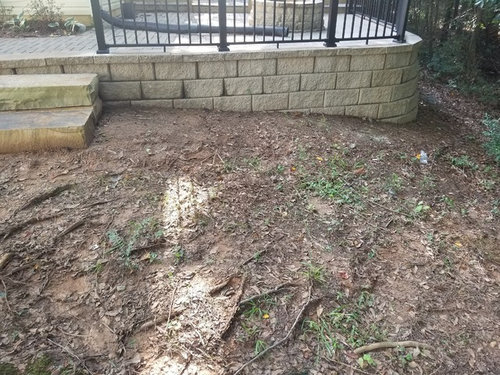
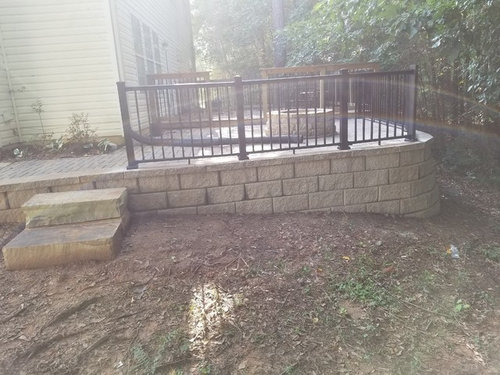
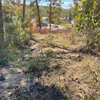
I have a patch of ground over run by tree roots. The ground gets muddy in the rain and nothing grows there because of the roots. What can I do or plant to make this area more presentable?

Comments (20)

  • 8 years ago

    Fix the drainage in this spot. Is a gutter dumping water here? Plant a ground cover here. What is your garden zone?

  • 8 years ago

    Need the garden zone and what type of soil please.

  • 8 years ago
    I live in Lithonia, Ga..near Atlanta. I believe I have "Peidmont " soil and garden zone 7B..
  • 8 years ago

    mondo grass, ajuga, and Lenten rose (heeleborus) are some options.

  • PRO
    8 years ago

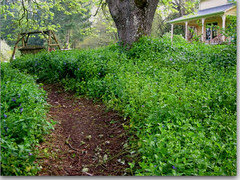
    First, get rid of all weeds before you plant anything. The tree roots aren't stopping plants from growing. More likely it is the shade, so plant a groundcover that tolerates shade. Dwarf mondo is a possibility. I used to live in Atlanta area and for me it would have been English ivy as I had no trouble taking care of and controlling it. Another possibility might be Asiatic Jasmine.

  • PRO
    8 years ago

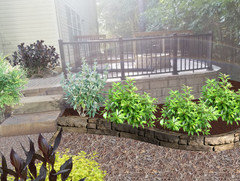
    ideas:


  • 8 years ago

    As Yard suggested, a groundcover is the only way to go. You cannot successfully plant or establish anything larger gowing as the rooty environment will hamper both establishment and growth. I would also take his suggestions for possible plant selection as I am just not familiar enough with what would do well in that location (planting English ivy here would be a huge no-no!!)

  • 8 years ago
    Gardengal48, why no English Ivy?
  • PRO
    8 years ago
    last modified: 8 years ago

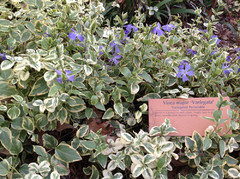
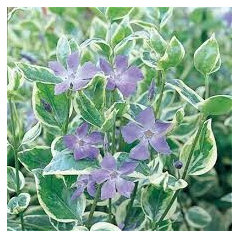
    consider Vinca major


  • 8 years ago
    You probably lost your topsoil due to erosion, and exposed the tree roots. You’ll need to replace the topsoil so you can plant anything.
  • PRO
    8 years ago

    Presuming several different groundcovers would like the conditions, you'd pick one that had the right amount of aggressiveness for the spot. Though I've seen English ivy maintained in some quite small areas, I'd consider it best for areas that are 200' square feet or larger. I just wouldn't want to bother with keeping it in a small area, as it grows about 3' per year (edging.) Here, we can't see the totality of the space so it's hard to be certain what's best for you. In a smallish area, I might consider a needlepoint ivy as they are like dwarfs. But they are something you buy in the houseplant section, so would require more involvement (propagating over time) to cover a landscape area. An ivy will climb pretty much anything, so you'd need to either trim it manually or with herbicide at the walls. If you wanted something that looked like a mowed lawn, dwarf mondo would be about the closest. I'd consider vinca major too tall & rough looking. V. minor is better looking & smaller. I did not have luck with it when I lived in Atlanta so can't guess how your success would be. I don't know what it's problem was.

  • 8 years ago
    last modified: 8 years ago

    Yes, vinca is what I was going to say. Grows easily, isn't expensive, great ground cover. Small flowers in the spring. Green all year long...


  • 8 years ago

    Along the west coast and specifically in the Pacific Northwest, English ivy is a significant invasive species. It has invaded and taken over vast stretches of woodlands, as well as more urban parks and greenbelts, and hundreds of thousands of dollars are spent each year on its attempted removal. Few responsible nurseries even offer the plant for sale. It is also a primary habitat for rats and other rodents in more urban areas.

  • PRO
    8 years ago

    "... and hundreds of thousands of dollars are spent each year on its attempted removal." Totally wasted effort.

    "Few responsible nurseries even offer the plant for sale. It is also a primary habitat for rats and other rodents in more urban areas." Not because it is food but because it is cover ... so invites hiding as any foliage does.

  • 8 years ago
    What about considering dichondra hound cover. It beautiful year around.
  • 8 years ago

    Not totally wasted at all!! If these projects were not undertaken, we would have lost any number of parks to the encroachment of ivy. And the DOT routinely has to clear it from utility right of ways just for accessibility. And all that costs on top of all the volunteer efforts from organizations like the No Ivy League

    That's what 'habitat' means - shelter or preferred surroundings. And it is not just hiding - rats live under the dense cover the ivy provides. It is not at all uncommon when attempting to clear an established patch of ivy from any PNW garden to disturb colonies of rats that have set up housekeeping under its shelter.

    Please, do not attempt to justify the planting of English ivy to anyone who currently lives in the PNW!! It is simply ecologically irresponsible to plant known invasive species. And it is not just the west coast that has this issue....English ivy is a listed invasive species in 23 states, including much of the eastern seaboard, from New England to Georgia.

  • PRO
    8 years ago

    Some of us think that relying on the government or politically minded organizations to tell us how to think is often the epitome of the-worst-thing-you-can-do. Speaking for Georgia alone, since I lived there and am certain about H. helix being manageable, I'm perfectly comfortable with recommending it for the right-sized place ... in spite of the fact that mountains of whiners think it is too much to cope with! They are also to lazy to find out. I could not care less what they say.

  • 8 years ago

    You are comfortable with recommending planting a listed invasive species?? Excuse me if I do not agree with that very cavalier attitude. Personally, I find it rather deplorable!!

  • PRO
    8 years ago
    last modified: 8 years ago

    It might be a shock to you Gardengal, but organizations make mistakes all the time. Since I know Ivy very well, I have no problem with it. Call it cavalier or whatever you like. The burden should not be wrongly imposed.

Sponsored
Schlabach Woodworks
Average rating: 5 out of 5 stars21 Reviews
Franklin County's Reclaimed Wood Professionals