Software
Houzz Logo Print
pk_241011

Hibiscus in pots

Hi,
I am planning to put hibiscus in pots for lack of space. However I am thinking which will be better? 511 mix or normal potting soil.
I have my lemon trees in 511 mix. But I think Hibiscus are water hungry and hence feel that it will be better to put them in normal potting soil which will not drain like there is no tommorow and retain a bit of water to handle summer heat.

Comments (18)

  • 7 years ago

    I can't speak directly for your climate. My climate is very dry with very intense sun. My potted hibiscus plants go outside in the summer in filtered sun (either under a tree or shade cloth). I have two of them in 5-1-1 type mix. They do like to be watered every day when outside.

  • 7 years ago

    Do you have a few Hibiscus in normal potting soil to compare them against the ones in 511 mix?

  • 7 years ago

    Usually when they are new purchases they have regular potting soil. Even those want to be watered every day when they are outside here. When I bring them inside, I water them whenever they sulk which is about every 3 or so days.

  • 7 years ago
    last modified: 7 years ago

    Totally agree with tropicofcancer, the same experience with my potted tropical hibiscus! If indoors spray them regularly. I grow my trees in a regular potting mix.

  • 7 years ago

    I think it is a tropical Hibiscus given its large flowers and large shiny dark green leaves.

    The roots were all over the place in the little pot it arrived. Now I am not sure if it is a good idea to keep the guy in pot !!!!

  • 7 years ago

    I have poor soil - at least in my back yard - that will not drain properly, and so I kept one hibiscus in a whiskey barrel planter. When it got root-bound in that, I planted it in the ground, as I figured it had developed enough roots to withstand the bad soil in my back yard. I have three hibiscus in the front yard in the ground, and two are doing well, but one does not want to grow, and it is the one with the most interesting flowers. It doesn't die, but it just grows very slowly, and I've had it for several years. The front yard gets watered by my sprinkler system three time a week.

  • 7 years ago

    Lars - it's likely due to severe root congestion in the root mass at planting out time. All root issues should be corrected at repot time or planting out time, even if it requires you to bare-root, or they retain the limitations imposed by the congestion.

    JS - I'd use a fast draining mix high in organic material (like the 5:1:1 mix) for hibiscus. The gritty mix would work fine, but it would be over-kill for plants that absolutely want to be repotted every spring, and that includes hibiscus.

    I'm not sure if you're aware that hibs have need for a fertilizer that's different than most plants. Hibs don't like much P, so NEVER use a bloom booster on containerized hibs, and only use it on those planted out if a soil test shows P as deficient. They like about twice as much K as N, and about 1/6 as much P as N. So something along the lines of a 3:1:7 ratio (a fertilizer's RATIO is not the same as its NPK %s) would be good. Too much P (in relation to N) and not enough K (in relation to N) can cause all sorts of unwanted symptoms and problems.

    Al

  • 7 years ago

    Al, Any suggestion on boosting K when using Foliage Pro? Protekt is high in K but is quite alkaline too. I also have Sulfate of Potash (0-0-22) but has Sulfur and Mg in high quantities too (22 and 11 respectively). Or is there better solution altogether?

  • 7 years ago
    last modified: 7 years ago

    I use ProTeKt 0-0-3 or Espoma potash 0-0-60 as a supplement to FP 9-3-6. I like the Pro-TeKt better - plants seem more vibrant. I've never seen any symptoms I could attribute to high pH, like chlorosis, e.g..

    Al

  • 7 years ago

    @tapla I wanted to ask a question. I have seen that when I fill in empty milk containers and dump the water in one of in ground Hibiscus before throwing the bottle in bin, the blooms got bigger and of deeper color. Is it some K related story with milk?

  • 7 years ago

    If the container is empty, any increase in the size of blooms couldn't be attributed to milk. If you're talking about what little residual milk might remain in the container after the container is nearly emptied, I would have to think it would more likely be the reduction in drought stress that accompanies you providing the extra measure of water.

    Al

  • 7 years ago

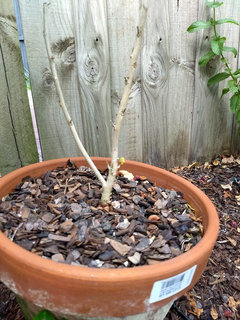
    Thanks AL. One last question. I pruned a hibiscus too hard and it is almost dead though I still water it. It is in 511 mix. It is in shade now. But just two twigs with no leaves on them. Should I keep watering it or is it a gone case?

  • 7 years ago

    Ted was scratched by a cat on Friday. On Saturday, Ted came down with a fever. Ted died on Sunday from Cat Scratch Fever. This is an example of a very common logical fallacy referred to as a 'post hoc fallacy'. It occurs when it's contended that because B followed A, A must be the cause of B, when in fact A might or might not have been the cause of B, and something entirely different than A might have caused B. I mention this because hibiscus is genetically very vigorous and tolerates hard pruning very well. Unless your shrub was circling the drain when you pruned it, such that it wouldn't have been in the plant's best interest to undertake the operation until the plant rebounded to a higher state of vitality, it's not likely the pruning would do it in. More likely, something else in it's recent past, culturally speaking was causal. I'm not saying you're right or wrong - just leaving the door open to an underlying cause you might not have entertained.


    I'd make sure the soil remained damp or moist (never wet or soggy) in order to give the plant a shot at coming back around.


    Al

  • 7 years ago

    I pruned it in winter end. Maybe that did it in.

  • 7 years ago

    Winter's end and spring are very close neighbors, so that shouldn't make a lot of difference from the perspective of timing. I'd keep the soil moist/damp and be patient be patient so you can see what Mother Nature has in mind.

    You might clear the mulch away from under the pot, then scrape up a small volcano/cone of native soil. When that's done, set the pot over the cone and twist it as you push the pot down. The object of this exercise is to make sure you have contact between the soil in the pot and the soil beneath it - a soil bridge, if you like. The bridge is a part of turning the earth into a pretty large wick - sort of like the pot-in-pot method of growing w/the earth acting in stead of the second pot. This should remove/eliminate any perched water that would otherwise tend to remain in the pot -practically guarantees you can't over-water.

    Don't fertilize until you see your plant is pushing new growth.

    Al

  • 7 years ago

    Late to the party but all of mine are in normal potting soil and seem to be doing just fine. My oldest is around 10 years old now.


  • 7 years ago

    HVH has some good potted culture care on their website. Its pretty much the mix I grow mine in..not their name brand but composed of the same thing. Scroll down on the page for potted hibiscus care.

    http://www.hiddenvalleyhibiscus.com/care/potting.htm

Sponsored