I have not been able to get beet seed to germinate for the last several years. I Googled the question "Why didn't my beets come up?" and I got lots of selections. I found a forum where there were lots of suggestions that made sense. I'd include the URL, but I did so in my last post and the entire post just disappeared. I'm not sure if that's why, or if it was the fact that I edited the post a couple of times, but it takes me a long time to write a post and I'm not risking losing it this time.
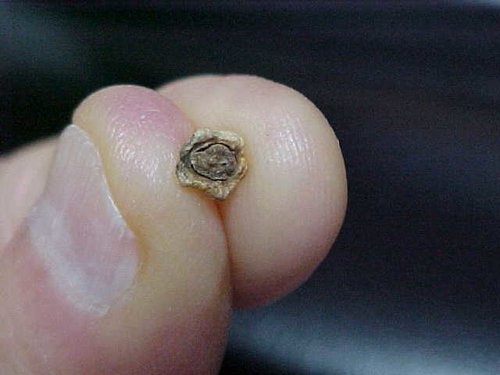
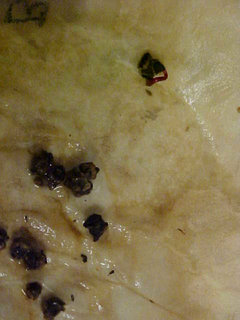
The number one reason given for why beets don't come up is because the seed is planted too deeply. Seed size is very misleading with beets, because what you get in your seed packet is a bunch of "pods". On close examination, they are sometimes just one, sometimes several grouped together. You can actually pry off the little flat "cap" and there will be tiny, flat, teardrop-shaped seed inside. This is easier to do after the pod has soaked for awhile in water.
This is why, no matter how carefully you space beet seeds, you will always have to thin if they do come up.
The second reason offered was that the seed can dry out after it starts the germination process. Knowing that it's encased in a pod makes it easier to see how this can happen. I bet it uses up a lot of energy trying to punch through the pod. It was suggested that the "seed" be soaked for 24 hours prior to planting, and then after the row is planted and watered in, a board, or something that will slow evaporation of moisture, should be laid down on top of the row. They said that it's ok if the seedlings are under the board for awhile because they can live without light for awhile. But I have tried this method before and have found that if the seedling becomes accustomed to the moist and the dark, it is very delicate and has a hard time adjusting in the open. It may become damaged in the rain, if in fact it doesn't dehydrate and die if there is any wind at all. And I live in Oklahoma, "where the wind comes whippin' down the plain". So it would be necessary for me to watch them very closely at this time.
I don't understand why seed producers don't shatter these little pods. They do so for lots of other kinds of seed. It seems like that would decrease the germination time and prevent gardeners from planting too deep. This is a quote from that forum regarding germination time: "At a 41 degree soil temp the emergence period is 42 days. At a 50 degree soil temp the emergence period is 16.7 days. At a 59 degree soil temp the emergence period is 9.7 days. At a 68 degree soil temp the emergence period is 6.2 days. At a 77 degree soil temp the emergence period is 5 days. At an 86 degree soil temp the emergence period is just 4.5 days. Above 86 you start to lose days again. " That makes me wonder if it wouldn't make more sense to cover the rows with something like clear bubble wrap, and use those boards to hold down each side of the bubble wrap. I've bought those big rolls of continuous bubble wrap at WMT before. They would be reusable from year to year. I wouldn't recommend leaving the bubble wrap on after the seeds have been planted, especially if there's a warm, sunny day. Could get too warm then.
Lately I have been planting Crosby's Extra Early Egyptian beet seed that I have ordered from Shumway's. Shumway's sells different quantities at different prices, and I got the one-ounce size this time. An ounce of beet seed totally fills a 3x5" paper seed packet. I remember a time when seed packets were 3x5" for a reason. You got a lot of seed for your money. I am really losing my patience with paying $3 for a packet of seed that only contains one little row of seed down in the very bottom of the envelope. The envelope probably costs more to produce than that amount of seed does. Shumway's shipping is kind of high, so that's another reason to buy their seed in larger amounts. They sell hybrid Candy onion seed in quantity, too. Now that we know how long seed can be kept viable in the freezer, we could buy several years' worth of several kinds of seed at one time.
Crosby's were attractive to me because of the "Extra Early" thing, and also because they are OP, so if I wanted to, I could leave some of the plants in the garden till the following spring and then gather my own seed. I love beets and I get hungry for them every spring. Many people consider beets "a super food". It makes no sense for me not to try to grow them, because there is lots of room in the garden during the time that they grow. And that early in the spring, there are not as many insects around. When I calculate how much it would cost me to can or freeze the same quantity of purchased beets that I might be able to grow if I could get past the germination thing, the economy is obvious.
I also wonder, since the germination time is so long, why wouldn't it make sense to soak the seed longer, or at least, after the 24-hour soaking period, if they couldn't be drained and poured out onto a damp paper towel, then rolled up and put into a ziplock bag for a week or so, and THEN planted? Have those planned rows in the garden already covered with bubble wrap, warmed by a few sunny days and waiting for the seed.
Well, these are just my thoughts. I'm going to press the "Next" button now, after I highlight and copy my text into a word-processing document to save just in case I lose this post, too. Oh. I see it won't let me do THAT, either. --Ilene


 7 years agolast modified: 7 years agoUser thanked jacoblockcuff (z5b/6a CNTRL Missouri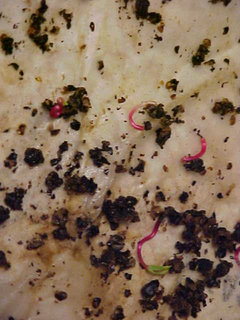





dbarron