Software
Houzz Logo Print
alainaplants

Begonia appears to be dying (wilting stems)

7 years ago
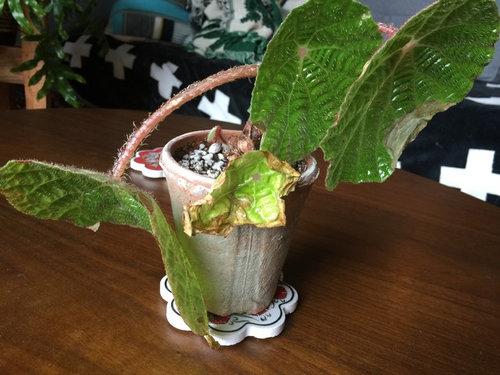
Hi everyone, I purchased a Begonia paulensis ("Spider Web Begonia") a few weeks ago and I've been having a hard time keeping it happy.


When I first got it, it was very perked up and most of the leaves had some browning on the edges. The plastic pot it came in had extremely compacted soil, so I repotted it in a same-size clay pot.


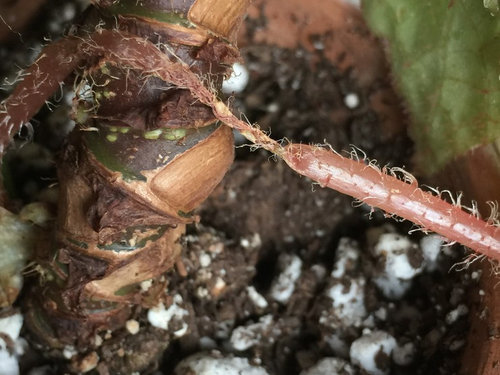
I read that this plant likes quicker drying soil, so I mixed in some orchid bark and perlite and gave it a thorough watering. But now it looks like this:


The largest leaf on the left has completely dropped; the stem no longer holds up its weight.


The stems are now really weak; my finger is on one where you can clearly see it turning mushy and bending.


Another example...this one, the stem is almost completely detaching.


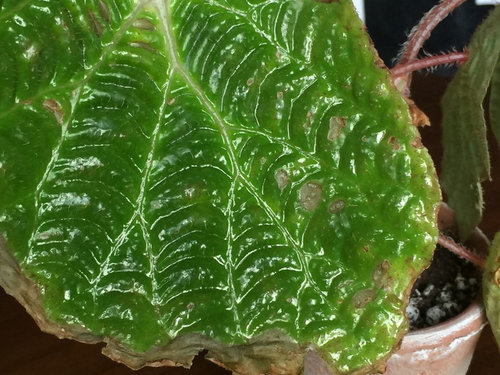
On the largest leaf, I also noticed some brown spots appearing on the leaf itself and the brown edges getting crispier.


Any idea on what's been going on? I've been trying to keep it in the shade with indirect light and only water when the soil is dry 1-2 inches down.

Comments (5)

  • 7 years ago

    My previous paulensis was always thirsty - maybe it was the soil it came in but I gave it generous watering when I watered everything else. It surprisingly did very well. When I moved it outside is when it went into a tailspin, eventually losing it. I don't know how fast draining your soil is (or retentive). Most begonias today I go easy on water every 2 to 3 days and they grow so much better (this is indoors for winter though). There are exceptions and it depends on the size of the plant, the pot size, the pot type, media, and of course the begonia type itself (I go very sparingly on some more succulent type begonias).


    2013

    I even had a new one this past year and I guess after spending the summer outside (shady) it is a mere pittance of what it was. Maybe I should just keep this begonia indoors from now on.


    PS - take your fallen leaves before they get too soft and start some new plants. Worth a try.


    Alaina thanked hc mcdole
  • 7 years ago
    last modified: 7 years ago

    As a rule, begonias and I don't get along very well. They do great for periods, then they go into long decline, with occasional recoveries, then decline again.

    I've never figured it out in trying intermittently for 15 years. I currently have two living begonias, one a shrub type and one a rex. I've had the former for 3 years, but tries really hard to die every early winter.

    The rex, I let get too dry in early fall, and it's just now getting a good set of leaves again. It's on it's 2nd year with me.

    I killed a mini rex last year over 2 years of lingering decay.

    Too many others to remember have been lain in shallow graves over the years (or probably composted).

    I can grow almost everything (but not begonias). Whatever plant language they speak, I apparently don't. :)

    Alaina thanked dbarron
  • 7 years ago

    I think we all have different methods of transplanting the touchy ones. I, after watering the plant thoroughly, let it drain on paper napkins, replacing them when they get thoroughly wet. And keep doing that until the bottom of the pot has no moisture showing on the napkin, then cover it with a full plastic bag, then set it in a cool spot with no heat or direct light. In a day or two, if the plant (still) looks good, I treat it like any other transplant which is touchy and try and move it to normal conditions, but keep an eye on it. A lot of my small species do better grown full time in small terrariums, at least there is a chance of getting blooms and seeds that way for me. (I should have said 'clear plastic bag' above. Happy New Year!

    Alaina thanked Woebegonia
  • 7 years ago

    @hc mcdole Wow, what a gorgeous begonia! Thanks for the advice. @Woebegonia Thanks for the tip! I think lack of humidity is a problem, so the plastic bag is a great idea.

  • 7 years ago

    I found that most rhizomatous and rex begonias do not like repotting with bare-rooting or even disturbing the roots. and they need to be tented.

    it looks like you removed original soil and prolly cut off a lot of roots in the process - hence the wilting.

    your stems were quite long - you prolly bend/damaged them while transplanting.

    a trick that I use with fragile leaves is put a flower sleeve from supermarket (cone shaped) so that it covers the leaves, but not the soil - so that when I handle the plant the leaves don't flop everywhere. I do it with orchids in bloom with long flower stalks too. and I managed to repot them in bloom without damage.

    as a rule I do not disturb my begonias right after the purchase for a couple of months. but when the soil is too wet and peaty what I do is uppot it in pure perlite 1 size up.

    I remove the soil bundle without disturbing it out of the original pot. take new 1" larger pot (I use plastic), wet the perlite (regular. not big size), put .5 - 1 " of it in the bottom, tamp it down. insert empty original pot, fill with perlite around the sides, tamp it down with chopstick or spoon handle,

    lift the inside pot, insert root ball. and you have it sitting in perlite layer - it dries faster and wicks moisture from root ball. I also put a thin perlite on top to cover the soil completely to prevent any contact with stems/leaves.

    if the pot is small 3-4" I even insert a wick for self-watering in perlite, going up the side and it was ok for 2 weeks when I was gone. normally it would rot in original peaty soil if put on wick. so perlite aeration helps a lot.

    I left it growing like that and it was fine, as it grew larger with more leaves small peaty soil-ball stopped being a problem.

    Alaina thanked petrushka (7b)
Sponsored
Mary Shipley Interiors
Average rating: 4.8 out of 5 stars34 Reviews
Columbus OH Premier Interior Designer 10x Best of Houzz