Software
Houzz Logo Print
kcandmilo

East facing window sill

7 years ago

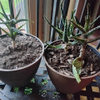
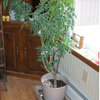
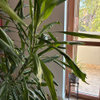
Having recently decided I wanted more than just a pot of pothos or spider plant around, I got a bunch of indoor plants, calathea, philodendron, a few ivies. I have them mostly on an east window sill, which is working fine in winter. It is a lovely long window sill, and I would love to keep the plants there all year long. Is it a terrible idea? It gets a bright morning sun from about 6 am to 10. Will it be too harsh come summer? Are there any plants that might like to live there?

KC

Comments (20)

  • 7 years ago

    I hope not, because I am going to be moving a lot of my violets and succulents into an east facing window. I want to get one of these:

    https://beautifulviews.net/

    I will have mini blinds in the window, so I can close in the winter and tilt up in the summer. I have the big eaves that block a lot of the sun in summer and let it in in the winter.

    kcandmilo thanked User
  • 7 years ago

    Sherry, I do have bamboo roller blades that let a filtered light in, and I could roll them down during a heat wave! Thanks, I'm going to leave them there and see what happens!

    KC

  • 7 years ago

    My cat, who was twelve this December, decided last year, to eat all my houseplants. He never bothered them before. Of course, all of them looked great and were the ones that are bad for cats. I have hauled them in and out of the greenhouse that was not designed or bought for houseplants. I can't see them over the winter unless I am dumping water on them. I have decided to just get rid of them and replace with cat friendly plants inside. African violet and succulents should be fine and that is what I want to put in the window.

  • 7 years ago

    Ok, sorry, but that made me splutter with laughter. What on earth made him suddenly getting a craving for poisonous plants!! Will African violets do ok with that much light though? I thought they preferred a north facing window? Good luck with your plant selection! Those plant shelves look amazing!

  • 7 years ago

    Who knows? I only have east windows. He is an idiot. No north, only the front door side windows to the west and the only south windows are in the two small bedrooms, that won't work for plants. So,,,,,,,,,,,,,,, east it is. I am going to try anything that is cat OK. If it croaks, well...... The beautiful Dracena marginata, Peace lilly, and snake plant Pftttttttttttttt. He ate them and they are not okay!

    I hope yours work out okay.

    kcandmilo thanked User
  • 7 years ago
    last modified: 7 years ago

    My mom has a east facing bay window so the plants she has there get full eastern sun light all the time. The curtains are on wall so they don't block the sun on the bay window. Pretty much everything does well in that window. Orchids, African violets, succulents, cyclamens.

    kcandmilo thanked Izzy Mn
  • 7 years ago

    Good to know, thanks Izzy!

  • 7 years ago

    Many plants will do quite well in an east facing window. Depends upon on the strength and duration of the light received. Cacti and succs generally require more light to grow their best. Thanksgiving/Christmas cacti and lower light succs like Haworthia would be exceptions. Also many orchids would grow well there as well as the aforementioned AVs.

    kcandmilo thanked Paul MI
  • 7 years ago

    Ah, It gets a full, bright, strong sun from morning to 11. Harsh even. And then a bright enough light all day. My worry was that it is too much light!

  • 7 years ago

    I really don't think you can get too much light from an east window. That is easy to fix with sheers or mini blinds. if needed.

  • 7 years ago

    Calathea will quickly let you know if they are not happy. For the window, I'd be careful of direct sun in the non winter months. Then keep them just moist, and humid. Check often for spider mites.

    kcandmilo thanked hibiscus909
  • 7 years ago
    last modified: 7 years ago

    My best African Violets ever grew in a east facing window sill in an apartment. It was very low rise and no buildings or trees gave any shading to the window and I did not cover the window with sheers or anything. I wish I had east facing windows in my home, as I've never had success like that with them in the 28 years following. Morning sun is much less strong than afternoon sun inside or out. Of course I'm not in Zone 9, but I imagine it's still a great location for African Violets.

    kcandmilo thanked mary_rockland
  • 7 years ago

    Thanks, hibiscus, that's what I was worried about, direct morning sun through glass in the summer months. Mary, thanks, yes, I would worry more with a west facing window for sure. I do have one African violet but it is by a north facing window, and seems pretty happy!

    I've got them all on the sill for now, and they seem pretty happy so far!

    KC

  • 7 years ago

    An extremely high % of inquiries about how much light plants grown indoors can tolerate are being misdirected, this, because the main determining factor is usually to what degree heat from passive solar gain raises leaf temperatures.

    We all know that a portion of the energy contained in light waves turns to heat when it strikes an object. In the glass/glazing world, this light-to-heat change is called passive solar gain, and the leaves that do so well at capturing photons and turning their energy into carbohydrates (the plant's real food) are also capable solar collectors that turn light energy into heat, and therein lies the rub.

    Almost all homes now use IGUs (insulating glass units) with at least 2 lites (a 'lite' is a piece of glass) of glass. With the sun at 30* to the horizon, an IGU with no special features (plain glass) will transmit about 79% of the visible light that strikes the IGU's surface, and 70% of the light that strikes the window will be turned to heat energy. That's a lot of heat. Just for comparison, IGUs with pyrolytic coatings like low-e, might transmit 69% of visible light and turn only 27% of the light that strikes the IGU into heat energy. Add a tint to the IGU with a low-e coating, and the visible light transmittance changes to only 48% while the light-to-heat change rises to 50%, which seems an anomaly, but isn't. If there is interest, I'll explain.

    What you should take away from the comparative numbers is that window features can have a profound impact on your plants' well being, and heat build-up is actually a larger problem than photo loads (light levels) in most cases.

    We know that light energy striking leaves creates heat which is absorbed by the leaves. surrounding leaves is a layer of still air called the boundary layer. It's primary job is to raise humidity and slow evaporative water loss from leaves. Unfortunately, dead air, which is essentially what the boundary layer is, is an excellent insulator that very effectively acts to trap heat within its boundaries. This can quickly raise leaf temperatures high enough that severe death or damage to the leaf is inevitable.

    Heat damage is much different than damage from high light loads. Light loads that are too high actually produce H2O2 peroxidase. H2O2 is hydrogen peroxide, which destroys/oxidizes chlorophyll and any other organic molecule it contacts.

    What we've learned:

    * Almost all plants are capable of withstanding the photo load that passes through windows without suffering photo-oxidation (sunburn).

    * The problem is more often heat build-up in leaves than damage from light (but plants do need to be acclimated to significant increases in photo loads).

    What you're going to learn if you stuck it out this far:

    There's a fix for heat buildup. Put a fan in the room during the brightest part of the day. The moving air disrupts the boundary layer and allows heat to escape the leaf and be lost to the surrounding air.

    Al


    kcandmilo thanked tapla (mid-Michigan, USDA z5b-6a)
  • 7 years ago

    Thank you, Al! Very educational, as always. And yes, we do have a fan on in that room when it gets warm, however, when the sunlight is most directly in the window, our temps are still pretty low (even in summer our nights don't go over 50 usually), and I don't usually turn on the fan until 11 am, when the sun is already climbing.

    However, your post got me thinking (as you no doubt intended) that I put some of my recovering or ill plants on the window sill to help them grow, and that may actually be putting them under a light/heat overload?

    I think I'm going to have to measure temperatures in front of different windows and educate myself on this. Fascinating stuff, and my son is a studying physics (thermo and optics!) so it will be fun to surprise him with some of my learning :)

    PS: How are you doing with the polar vortex? Hope you and your plants are doing well!

    KC

  • 7 years ago

    Just did a quick check. Room temperature around 62F. Leaf temperature varied from 60F (in shade) to 70F facing Sun. Leaves closest to window is cooler. The window frame is at 57F inside. Outdoors is 10F.

  • 7 years ago

    Thanks, tropic! You're up in the snow belt as well, but not like the midwest! I'm learning so much and I don't even kill my houseplants, so I thought I was doing well!

    KC

  • 7 years ago

    I feel bad for the folks in midwest. We once had -20F weather with -45F windchill. I was dogsitting for a friend. When I managed to take the dog (English Sheepdog I think) out that day to do its thing he did it right outside the door and came right back inside within couple of minutes. I was thanking him for not making me walk around in that brutal weather.

  • 7 years ago

    No matter how skilled we are or think we are, there will always be plenty of room for improvements and additional tricks to be added to our skillset. Information is always on the wind, but it's up to us to raise our sails.


    Al


    kcandmilo thanked tapla (mid-Michigan, USDA z5b-6a)
Sponsored
Miller Woodworks
Average rating: 5 out of 5 stars23 Reviews
Franklin County's Trusted Custom Cabinetry Solutions