

How was your garden last year (Oklahoma)?
May seem like an odd question, but gardening never left my mind while I've been working. When doing yard work last year I kept thinking "This would be a great year for gardening!" Probably just missing it.
So was 2018 it a good weather year?
Comments (20)
 7 years ago
NO, Bon! Well, it got off to a rough start. It was so cold in April couldn't set out tomatoes and peppers. I know a lot of us got tired of taking them in and out of the house every day. It was a bad pest year for us here--Japanese beetles and aphids. I love getting rain regularly this past fall, though and even into January. So I guess every year has its upside and downside, right?
bon thanked Nancy RW (zone 7) 7 years ago
Hey Bon. It was a harder year, really. We had those late frosts. I started tomato seed around February 1 and they were two feet tall before I could plant them outdoors. They outgrew the light shelf. I just couldn't get them hardened off. It was either too sunny, too windy, too cold. Finally, I just stuck them in the ground, planted on their sides. And covered them with shade cloth. They produced but not like normal...other than the Sun Golds. They did well, other than splitting when the rains came.
Also, I hurt my foot at the end of July and it slowed things down for me. Things got neglected.
My columnar apple trees didn't make fruit, but gained height.
I killed all the elderberry sticks that were gifted to me.
I didn't know what I was doing and pruned the hydrangea the wrong way and it didn't have blooms.
Onions were okay, but didn't do as well as in the past.
There were some good things. I grew Armenian Cucumbers for the first time and that was fun. It was the first year (year 3) that I got to harvest my asparagus. So nice, but asparagus bugs found me.
Oh, and the ashe county pimentos! Nancy gifted me with a plant and it's my new favorite. That was a garden positive--discovering that pepper. In general, my peppers did well.
And my greens bed did well. It was new last year. Melons did okay until something large (human or animal???) carried off most of them.
Anyway, you asked about the weather, but I went outside the box of weather.bon thanked hazelinokRelated Professionals
Sebring Landscape Architects & Landscape Designers · Reno Landscape Architects & Landscape Designers · Orlando Landscape Contractors · Athens Landscape Contractors · Bloomington Landscape Contractors · Vincennes Landscape Contractors · Concord Landscape Contractors · Yuma Landscape Contractors · Eugene Landscape Contractors · Spokane Landscape Contractors · Joplin Accessory Dwelling Units · Bloomington Accessory Dwelling Units · Traverse City Accessory Dwelling Units · Modesto Accessory Dwelling Units · San Luis Obispo Accessory Dwelling Units
bon
Original Author7 years agoSo good to be chatting with ya'll again.
Nancy, that bringing them in and out just kills me. It amazes me how few I lose by that time of year because I sure dread hauling them in and out of the house! Looks like Nancy nailed the problem of late frosts, too. I think it was the summer rains that made me think it would have been a good year since I don't have good irrigation, but the bugs crossed my mind. The gosh darned bugs.
Hazel
I'd be a far better person if I had the diligence you do and the memory to go along with it.
Why didn't the apples fruit?
I've lost so many things that were gifted to me ... ha I know you missed those hydrangea blooms, because you love them so much!
I think those asparagus bugs are hard to get rid of? I'm so sorry to hear they found you. That's just awful.
How did you use up the pimentos? I've considered them from catalogs but never bought any. I'm always looking for unique flavors to saute.
Melon thief, huh? Ha Weird stuff. I'm thinking to make a greens table. My son adores greens. I think it's because of the gardening and he loves tomatoes too. He's looking forward to some more home grown tomatoes.
I love to hear about it all. Write away.- 7 years ago
I remember the late start and having to wait to transplant was definitely frustrating and I didn't have great expectations. But overall it turned out pretty decent.
Tomato production was good, peppers, except bell varieties all did very well, but okra was a little below average. It was a great year for onions and I still have several stored. Squash, zucchini and cucumbers were just average, but we had enough I guess.
Even with the less than ideal weather I'd say overall I'd rate it a B- if I were grading it.
bon thanked okoutdrsman - 7 years ago
Bon, I was disappointed that the pimentos really just tasted basically like other peppers. I hadn't realized that canned pimentos taste the way they do because of the way they're canned! BUT, I agree with HJ--they are delicious--those and the Gambas were my favorites last summer. Nice thick fat little walls. :)
How old is your son? He must be a gardener, then, right?
Haha, Bon. Yes--it was a nightmare hauling them IN and OUT and IN and OUT. I ended up potting them up four times before it was all over with. PLUS cutting the tops off! We were were all fit to be tied! And I think all of us were in the same position. Yep the late frosts caught us all!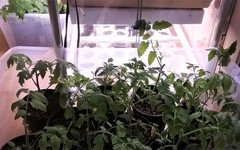
If I start anything that early this year, it will be plants that grow really slow!
We didn't get many potatoes; the onions weren't very big, so I chopped em all up and froze them. I planted potatoes too late and ordered the onions too early, so they were pretty beat up by the time I got them in the ground.
The peppers started producing well again after the heat let up a bit. Sungold, Cherokee Purple, Cherokee Carbon, Heidi--those did awesome. The rest, not so much. I miss tomatoes. Maybe I WILL plant just a couple now, in case we have a nice April. . .
My most fun last year were garlic, herbs, and flowers. I was so excited to get several verbena bonariensis, more echinaceas, the black and bloom salvia, ammi majus and ammi visnaga, lavender, and all those lovely petunias! The NG impatiens, brugmansias, ipomoeas (except for the moonflower vine) got eaten by bugs. The coleus didn't like the heat, so quit growing.
I'm certainly excited I got actual coral honeysuckle going last year and I hope it'll grow like crazy this spring.
I got sidetracked by a ball game. I just see Bruce's comment. B- sounds good. Better than 19" of rain in May and June, resulting in lots of mildew and fungus.bon thanked Nancy RW (zone 7) - 7 years ago
C is average, right? I give my 2018 garden a C.
To me, the Ashe County pimento tasted like a better bell pepper. It was delicious chopped up in a salad or sautéed with other veggies.
I think the April freeze ruined apple production. Maybe?
I hope my coral honeysuckle takes off this year. The cardinal vine covered the west side of the chicken pen just fine last year, but I really want the coral honeysuckle to do that from now on...Bon, it's good to be chatting with you again, too. Let us know who your greens table works for you.
bon thanked hazelinok - 7 years ago
Spring and summer were lousy. Very few tomatoes, almost no peppers. Squash bugs galore! Then fall hit and everything went crazy. I finally finished my tomatoes at Christmas, and sadly had to toss a few that rotted before they turned ripe. I learned a valuable lesson: clay soil is hard to work with, but the nutrients in it are amazing. I have hope that this year will be better.
bon thanked jlhart76 - 7 years ago
Oh, I don't know, Nancy? I'd say I've been fortunate enough to have an A garden a lot of years, but then I guess that's on the Oklahoma garden grading scale?
I think some of us yoyo garden, I know I do! By that, I mean if we have a slow year we tend to plant enough the next year to make sure even minimal production will be adequate to fill the freezers or otherwise store. Lol! Then the way it usually seems to work is we have a B+ or even an A year!
I don't mind that in the least unless the friends and family I usually give produce to, also have a bumper crop!
bon thanked okoutdrsman - 7 years ago
It was a challenging year, but our garden produced very well anyhow. I won't go through all the cold weather issues because everyone else already covered the late cold, which was an issue down here just like it was everywhere else. I'd give my garden an A because it still produced everything we could eat and everything I was willing to process and preserve, with plenty left over. We did have a horrible drought down here in the late spring and summer months and the garden and I struggled in the heat and the lack of moisture. The rain that kept hitting the rest of OK, including about 75% of our county, just kept missing us, and there's not much you can do about that other than water when you can. I think the heat bothered me more than it bothered the garden. I finally just stopped watering because I refuse to have a water bill that is high enough to be a car payment, but the garden kept on keeping on anyway. It clearly was strong enough to survive by the time I stopped watering, but I already had watered very heavily through that point in time.
At one point the heat was so bad (around 115 degrees) that I feared for the chickens' lives, so I covered our entire mudroom in clear plastic sheeting taped down to hold it in place to protect the floor and the walls and then I brought the chickens, their feeders and their waters into the mudroom. I already had carried all the mudroom furniture, the shoes and boots, the umbrellas, etc. into the house and put a white folding plastic table in the mudroom for the chickens to perch upon. It also was wrapped in plastic. They survived several viciously hot days when high temps in the 112-115 range and overnight lows probably in the 80s (I don't remember now) and stayed in a pretty good mood about it. Of course, I fed them greens and fresh fruit to make up for the fact that they weren't able to free-range for several days. They seemed to stay calm and patient and to understand that they needed to be indoors in the air conditioning, which surprised me because I figured being trapped indoors would drive them insane. I can't remember how long I kept them inside--maybe around 3 to 5 days and nights, just until that worst part of the heat had passed.
The best thing about the garden last year was how resilient it was. My plants got hit at least 5 or 6 times in spring and early summer by herbicide drift or herbicide volatilisation (which I think is becoming more common than plain old drift), and at various times I lost all sorts of plants, including tomatoes, watermelons, okra and various herbs and flowers to the herbicides that somebody else set loose in our neighborhood. I just replanted or nursed along herbicide-hit plants and eventually got a good harvest of those items anyway.
Asparagus sprouted really early because of the hot winter weather. I think this was the third year in a row it had produced a crop roughly 4-6 weeks earlier than usual. The potatoes and onions loved the early heat and grew quickly in it, but I had to cover them up from April Fool's Day and beyond when the late cold hit.
With early warm weather in February and March, I planted a huge bed of brassicas and greens. I don't know its exact size---probably 30 or 35' long and 6 or 7' wide. We had that bed filled very early with broccoli, brussels sprouts, cauliflower, collard greens, all kinds of mustard greens, lettuces of many kinds, etc. I had to cover it up on multiple nights when the temperatures dropped too low in April, but I didn't mind doing it---by then, those plants were producing a harvest and I wasn't willing to sacrifice them to the ridiculously late cold. Even though they are cool-season crops, all of them have their limit, and they need prior exposure to cold (which they didn't get since Feb and Mar were so warm) in order to be really cold hardy.) Covering them up was annoying since they rarely need that sort of protection but with the backwards weather of early heat followed by late cold, I simply had to do it. I grow tons and tons of extra greens for the chickens, so was feeding fresh greens to the chickens for months. They became very spoiled.
I planted tomatoes on time despite the weather, and planted several kinds of bush beans with them as well as a lot of lettuce beneath and around them as a living ground cover. Y'all know that for me, on-time is early, as in mid-March through late-March. I knew that I'd likely have to cover up tomato plants at some point in time, so just planted the bush beans with them, knowing that they'd be covered up from the cold any time the tomato plants were. By the time the April cold hit, we had tomatoes close to full-sized and not too far off from ripening. I also had herbs (chives, basil, etc.) and flowers (marigolds, zinnias, purple coneflowers and more) companion planted in that big bed. Those plants thrived in March's very warm weather, but I think I had to cover them up on at least 4-6 nights in April. They were fine. If anything, being covered on cold nights kept them so warm that I was harvesting bush beans and tomatoes before the end of April. I was really relieved when the cold ended and I could stop dragging out the row covers at night.
I did add a Min-Max thermometer to the garden itself after I found cold damage on plants in the brassica/greens bed on what my Min-Max thermometer showed was an above-freezing night. That puzzled me, although I knew part of the reason for the cold damage was that the weather had been so warm that these plants never had to develop tolerance of any cold, so they just were not conditioned to the cold. So, with the thermometer in the garden so I could compare its overnight lows to the overnight lows 300' away in the yard just outside the house, I learned that the garden runs 3 or 4 degrees colder than the yard. Now that I know that, I'll watch the garden weather more carefully in late winter and early spring.
We had huge tomato harvests but I was giving myself a year off from canning, so I had planted a lot less plants than usual. We still had too many tomatoes to eat fresh, so I processed a lot of them as if I was going to make salsa and then I froze the tomatoes in 8 cup quantities so I could make salsa later (which I did in late November and early December) when our on-hand supply from 2017 began to run out. After it got hot and I got tired and cranky, I just threw excess tomatoes into ziplock gallon bags and froze them. My freezer was full of them, but I very slowly am using them up in cooking and such. I probably am down to only 8 or 10 gallons of whole tomatoes in the freezer now, and probably 3 to 5 gallon bags of salsa-ready processed tomatoes.
Peppers produced very well, both in summer and in autumn, but then they always do. Okra was slow to start producing, but the herbicide had hit it pretty hard. We grew Stewart's Zeebest and it is a monster producer. The heat doesn't slow it down. Finally I got tired of it and just stopped picking.
Green beans produced heavily and I froze a lot of them. Later on, I was glad I had planted them in late March and covered them up as well as I did on the cold nights because the heat and drought would have made it hard to get a good yield from beans planted later on (at what most people would think of as the normal time). Southern peas? Well, the heat doesn't bother them and doesn't slow them down in the least. The drought did stunt the plants a bit after I stopped watering, but they still produced just fine. Lima beans, planted later on in a different bed, produced well but they were really late to produce, probably because of the late cold. They really like heat and sulk if exposed to too much cold air.
We harvested tons of onions and quite a lot of potatoes. It is hard to eat up all the potatoes before they start sprouting so I'm going to plant fewer potatoes this year. Our onions lasted into the new year in storage, but I also had chopped and frozen a lot of them because I knew we had more than we'd ever eat fresh, so I still have enough frozen onions to carry us through until we begin harvesting fresh onions again.
Melons were a bit late after they got hit by herbicide, but they produced tons of melons in the heat once they recovered from the damage and started growing again. I did have to replant watermelons a couple of times where the plants were unable to overcome the herbicide damage, but that just meant the replacement plants were producing later than the earlier plants, so it spread out the watermelon harvest over a longer time frame. We had all the melons that we could eat fresh and plenty left over to feed the chickens, so it was a great melon year. The flavor was superb because they had exactly the weather they love---hot, dry, and low moisture. Squash did very well. I grew the usual zucchini and yellow summer squash and also the three Korean summer squash varieties from Kitazawa Seeds that are C. moschata and are not killed by squash vine borers. At some point, keeping up with picking the Korean summer squash late in the summer was wearing me out, so I just let it go. The summer squash plants then produced huge winter squash type looking fruit that I just piled up on the porch and inside the house and used as pumpkins for autumn decorations. I kept up with the squash bugs pretty well early and into the middle of the season, but not so much once we were insanely hot and dry. By then, we had plenty of squash and I didn't care, so I pulled up the zuke and yellow squash plants, put them in black trash bags, taped them securely shut with duct tape and set them out in the hot sun for a couple of weeks to roast to death any squash bugs and squash eggs on the plants and then we hauled all that off with the househouse trash.
We lost all the peaches and most of the plums to the late cold (and pecans as well), but some of the native sand plums bloomed late enough to beat the cold and I got enough of them for two batches of plum jelly (an obvious violation of my no-canning year, lol).
The herbs and flowers produced like gangbusters as well, though the heat was pretty hard on some of them in July and August. Overall, though, I cannot complain. I work really hard to plant early enough each year to beat the heat and drought to the extent that it is possible to do so, and it almost always pays off as long as I can cover up those early plantings and keep them from freezing. We never have anything less than an A- year here, and I'd call most years an A+. The only year we had poorer yields was in 2011 when we had such insane heat accompanied by drought that ranged from Severe levels in early summer to Exceptional levels by late summer. Even in that year, some things produced very, very well even though I basically abandoned the garden for most of the summer because we were out fighting fires day and night and night and day and sleep was in very short supply, leaving no time for the garden. We were super short on rainfall that year, receiving less than 12" of rain between January and mid-August, so it took a lot of water just to keep the garden alive, at least up through the point where I gave up and stopped watering.
To me, the difference in getting good yields from the garden has more to do with how early I plant and how well I protect those plantings from late cold than anything else that happens later on. Down here, it is imperative to beat the heat and the drought by planting early, so as long as I do that, I almost never have a bad year. One reason 2011 was so bad is that we started having some 90-degree days in April when I still was putting tomato plants in the ground. I learned from that and now I try to get the tomato plants in the ground before the end of March in case another spring/summer like 2011 is lurking just around the corner.
In 2018 I did have to fight stink bugs and leaf-footed bugs like crazy most all season long, and squash bugs too. Grasshoppers also were a big problem, but we have had much worse grasshopper years. The SVBs weren't as much of a problem, but that's largely because most of the varieties I grow can withstand them. I almost never have aphids, but always have spider mites. It is rare for the spider mites ever to progress to the point that they kill plants though, so my plants may show a lot of spider mite damage at times, but they always rebound really well.
Once rain returned in late September and continued nonstop through December, that rain was harder on the garden plants than the heat and drought had been. That is typical in clay soil though, even well-amended clay. Once plants are standing in water, they just aren't going to be happy. The peppers, planted in the raised bed at the highest end of the garden tolerated the heavy rainfall better than plants growing in raised beds at lower elevations, so the peppers kept producing until frost.
Because we were hot so very early in the year, I chose to grow only in the front garden and didn't use the back garden at all. I think that was a wise decision as there is no way I could have afforded to keep both of them well-watered. This year I intend to plant both gardens, as the tomatoes are moving to the back for crop rotation purposes. If it gets too hot and dry to keep all of it watered, it is the front garden this year that will see its water cut off first so I can keep the back garden going. I think if we'd had good early harvests from the back garden (if I had planted it), it would have been an A+ garden year in 2018 instead of only an A.
I did take off the year from cucumbers once I decided not to plant the back garden. It was just one of those cases of there not being enough space in the front garden for everything, and we had tons of pickles stored from 2017, which pretty much made cucumbers expendable.
bon thanked Okiedawn OK Zone 7 bon
Original Author7 years agoSir Thor just turned 14 and is at that with awkward growth stage. Little Miss is now 11, but looks 17 in build, stature, voice and height. It's genetic. About 2 months ago they arrested a local pedo middle school teacher. I thumb my nose at all those locally who dissed me for homeschooling. Both kids are safe, organic, happy, overly creative and big enough to take on responsibilities.
They'll be enslaved to technology for the rest of their lives and I want to give them a chance to be free as much as possible and to continue to learn simple wisdom from the garden. From the garden, not me. LOLThank you everyone for satisfying my curiosity and helping me focus on our climatic challenges.
The only other pervasive thought I had was, "I bet Dawn is having a great cool crop season!" Sure nuf.
You present an excellent argument for row covers and other protective measures. With my memory of struggles, bug problems and more compared to your wealth of gardening knowledge, you infer to me that my focus should be on symmetry, irrigation, protection and cleanliness.
I have my Big Red Bucket sitting in my kitchen right now. She's all clean and shiny and ready for her tools. I fired up the second frig and its freezer is already full from processed for-sale groceries. The compost bucket is back in use and the mated pile is fortified.
I continued my compost obsession for almost a year after cessation of gardening. I found that using a tarp over a moist pile surrounded by CMU blocks to bring the most satisfying results. The bigger the pile becomes, the less I need a tarp. We are far too windy here.
Last year a 3rd of my back yard was a blanket of black eyed susans. Was hard to mow some of it down.
Here's to potential A+ gardens in 2019! 7 years ago
I didn't have enough help getting started last year, and we had the new puppy (named Honey by the people we got her from. Nicknamed Sasquatch for the size of her feet.) She was (and is at 70 pounds) a destructive force in the garden. Then my mother had health problems. I rarely watered.
I started brassica seeds, but they didn't make it in the ground. No lettuce, either. My okra didn't do much, either, probably because it got started late. Same with cukes. Ashe county pimentos did great. Pimentos have thick walls and are sweet when ripe. I also grew a purchased sweet pepper named Elephant Ear which I liked, kind of a long flattened out bell. Tomatoes were ok. When I think about it, I was hampered most by not having a dog safe place to harden plants.
I have long lists of things I want to grow this year. We'll see if it's better this year. It's good to see you!
bon thanked AmyinOwasso/zone 6b- 7 years ago
Bon, your HS adventure sounds lovely. I know many who've done a beautiful job of home-schooling. We have a nearly expert gardener in our midst who is home-schooled? Any of you others out there who are home-schooled. I think it's a relatively new phenomenon, don't you? Never heard of it when we were growing up. Now, with the information highway and so many excellent resources, a whole different situation--and better in many cases. Probably depends mostly on the dedication of the parents, don't you suppose?
I DIDN'T have a long list of things to grow, but as some know, it's getting longer with every cold week.
You said a mouthful with that last post, Dawn. Amen.bon thanked Nancy RW (zone 7)  bon thanked Lisa_H OK
bon
Original Author7 years agoThanks Dawn!
Amy and Lisa, I've missed ya'll so much. Amy I miss your methodology in gardening. I sure hope your mom is okay and you're doing well. Within eight months we had a litter of puppies and lost both adult dogs. I consider myself tough, but this got me good. In the end, Little Miss kept one and it made it all worth while. They are like peanut butter and jelly. I trained. She loved. He shadows her all the time with stupid love while I know he'll chew the face off anyone that tries to hurt her. ha!
You are awesome for caring for a new dog, It's quite a task for us I couldn't have done it without her help. She named him Goober. "Goooober!" Um. Yeh.
Lisa, I'm so tickled with my black-eyed susans than just keep coming. They've been a real joy.
Nancy, HS is increasingly popular. Sir Thor has a buddy who will be starting college next year at the age of 15. Public school can be very limiting for some. We're studying artificial intelligence right now (bots). We're looking into free online MIT classes for next year, maybe. He's more of an entrepreneur type. He's ready to start a biz and all that.
They come up with this motivation by themselves if they're not trapped in an institution. 7 years ago
All our kids were homeschooled. All turned out great. Certainly no problem with social adjustment.
Last year's garden was a mixed bag for us. Our potatoes made nothing at all. Tomatoes were "okay," getting better later in the season. Beans were okay, also improving as fall came on.
I only planted AfricanX okra, a strain developed by Glen Hamner, down in Panama. Turns out it only produces late in the season. So, until late summer we were dying for okra. Then, after entering late summer, we had lots and lots of okra, even when regular kinds had quit. In the coming season I plan on planting both AfricanX and Stewart's Zeebest. Must have a constant supply of okra!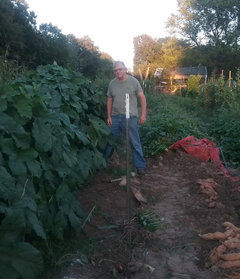
Here's the AfricanX okra on 9/11/2018. This okra doesn't have any spines on it. One can pick okra in short sleeves, in the heat, and not itch.
Sweet potatoes produced at about 40% of what they might have, if we had no rodents. That was an improvement of 100% from 2017. We now have a cat, who came into maturity last fall. He's a fantastic help with rodents. I have high hopes for 2019.
I planted Mesquakie Indian corn quite late in the season (June 12). I had to water like crazy for about 2 weeks, but then, we had very well timed rains, to bring it to fruition. That was an excellent crop. Who'd have thought it would happen so late?!
My squash barely produced. I'm not sure why, though probably residual herbicide contamination had a part in it.bon
Original Author7 years agowe were dying for okra N-o-o!
You were whistling dixy about the time I was wonder if ya'll were enjoying the rains.
African X a late producer, huh? By about how long? I like the idea of later okra in the freezer that would stretch just a bit longer.
Been thinking about ya the last week, because I'm trying to figure out what to order. Just broke ground today. The garden is overloaded with weed, but the soil is fabulous. I need something to grow to cover it. Thinking to toss in some more sweet taters.
Ima hop over to Stillwater Ag and nab some cover crop peas. Tough stuff but looks like a luscious blanket atop the soil.- 7 years ago
I planted it May 30 and the first pod was ready to eat August 10. Production did not slow until nights were consistently quite cool, only a week or two before we had frost. Up until then, this one cranked out lots of pods. Bon, I have seed if you want any. It's not commercially available.


Okiedawn OK Zone 7