Software
Houzz Logo Print
girl_wonder

master bath ventilation: venting skylight or fan?

7 years ago

Any opinions on master bath ventilation? I'm adding a skylight so I assumed I'd get a venting one. But I've heard they can be error-prone. Even my electrician suggested a manually venting one or just go with a good fan. My current fan was installed 10 years ago. Someone said there are better fans available now. Thoughts?


BTW, after a shower, how long should you run a fan? I saw this note on the NuTone website:

"The Home Ventilating Institute recommends that a fan should be left on for 20 minutes more to clear humidity adequately and to ensure moisture and condensation in the fan body or ducting is minimized. "


I usually run it only until the fog clears. Maybe that's my problem.

venting skylight--electric or solar
venting skylight--manual
fan
open the window or door
other

Comments (13)

  • 7 years ago
    Get a high quality fan if you have normal height ceilings. And yes, they should run after using the shower, but I think 20 minutes is overkill.
    girl_wonder thanked Anne Duke
  • 7 years ago

    Morz8, thanks. I assumed the vent would replace the fan. Good to know. Would you bother getting a venting skylight or just a regular skylight and fan?. BTW, do you remember how big the skylight was? And the location in the room? My architect suggested 2x4 skylight and putting it over the vanity so the window reflects off the wall. (somehow I imagined putting it in the middle area, but what do I know?) The only other window in the room is a 2x2 in the shower. There’s a 5x3 window across the hall outside the bathroom.

  • 7 years ago

    My skylight was 2x4 and was over the wet area (tub, toilet, separate shower. It was installed E facing in a sloping roof and had the best morning light ever. That morning light came through a pocket door into the vanity area....if one could pass muster at that vanity in the morning you were good to go anywhere.

    We are an open window household even in winter (coastal Z8) so I enjoyed the fresh air vent in addition to the fan - I wouldn't have eliminated the fan to exhaust humidity from showering. I had the skylights in two bedrooms also - rarely closed the vents in the two in the master. You could hear rain more loudly with them open, but I could sleep like a log with the sound of rain on the roof windows. (the skylights in the master were also E facing so morning light)

    girl_wonder thanked morz8 - Washington Coast
  • 7 years ago

    voted for a fan.... get a good one & have on a timer. :) our electricians will be back to do some small items & this will be one of them, along with dimmers & to hook up the kitchen hood fan- as they missed this outlet when last here.

    girl_wonder thanked Cheryl Hannebauer
  • 7 years ago

    I just got a Panasonic with a humidity sensor that turns the fan on and off for us. I love it! I did not grow up with a fan, so I blame that for my inability to remember to turn one on. This fan requires no thought because we leave it always in the "on" position and it turns itself on and off.

    girl_wonder thanked Nancy in Mich
  • 7 years ago

    Morz8, thanks for your extra info.


    Thanks everyone for your comments and votes. So no venting skylight for me. Yay. One decision made (and I saved a bit of $)


    Nancy, thanks for mentioning the humidity sensor. Someone recently told me they didn’t like that feature for some reason (he couldn’t manually turn it off?) but I’ll look again.

  • 7 years ago

    At least in some of the Panasonics, you can override the humidity sensor. It depends on how the fan is wired (and what other modules you have installed in it).


    With bathrooms especially, you need a certain range of air exchanges to completely exhaust after a humid event. There are calculators you can find to tell you how much CFM you will need for a particular size room, and how long the fan needs to run to achieve the desired air exchanges.


    n.b. in some of the newer Panasonics, there is an 8-10 second delay from the operation of the wall switch that appears to be the "boot up sequence" of the fan. Most expect a fan to turn on right away when you flip the switch; these actually will take a few seconds, then do a slow ramp up to speed. They do shut off immediately, however. It's just something to be aware of.

    girl_wonder thanked Michelle misses Sophie
  • 7 years ago

    Thanks Michellle. Yeah, it seems like you should be able to override anything that’s automatic, but I’ll look into this. Last night I checked Home Depot’s website and there were a million Panasonic bathroom fans! (Ok, only 29 but still. A lot of sift through). Any opinions on the built-in light or heaters? I’m going to have tile floors and will put heat under the floor. When we remodeled the guest bath 10 years ago, we put the fan directly over the shower/tub and put a built-in light. So I guess it depends on the location of the fan.

  • 7 years ago

    I do have a wall switch if I want to turn the fan on or off manually. Plus the model I have also has a motion sensor. It turns on when someone is in range and moving. I did not think I would like this, but since the fan is so quiet, I don't mind it, though in our tiny bath (5' x 8.5', plus the shower to the side), we did turn it so the sensor is not pointed toward the door. It was turning on if anyone was even in the hallway. Now you have to enter the room to make it turn on.


    We keep the door closed now in cold weather because we have a separate heater in the room for supplemental heat. We can now go into the bathroom and be toasty warm for undressing. I had Broan heater/light/fans in the past and burned out the heating element several times. I decided that with the remodel, the room's supplemental heat needed to come from a different source. I have something called a Cove Heater that is electric radiant heat that is run by thermostat and is mounted up near the ceiling and it "shines down" radiant heat that warms objects in the room, silently warming the entire place. It works a whole lot better than the heater fan that blew heat down, and has no air movement that cools the wet skin as it also tries to heat the room.


    Both the humidity sensor and the movement sensor have the ability to adjust their sensitivity, I believe.

    girl_wonder thanked Nancy in Mich
  • 7 years ago

    Oh, Girl_Wonder, I got my Panasonic at a kitchen and bath showroom. If you don't find the combination of features that you like at HD, you can go to a showroom that carries Panasonic and go through their catalog and order just the one you want. I had an existing 6" duct, so needed a fan that would work with that set-up, and most Panasonics use 4", so needed to special order the one that would work for me. I have a regular light and a nightlight feature. In all, there are three switches just for my Panasonic.

    girl_wonder thanked Nancy in Mich
  • 7 years ago

    I'll have to look up the ones we have in our build. They have selectable flow rates (50-80-110) and accept several modules (they do not have the light option, though, as we had plenty of other lights). They also accept both 4" and 6" duct - the output flange of the fan is stepped.


    50 is fine for a powder room, 80 for a regular bath, 110 for a larger bath. Then there are fans that move even more air (and are still selectable). This is why you need to figure out the room size and number of air exchanges you need to figure out which CFM to get.

    girl_wonder thanked Michelle misses Sophie
  • 7 years ago

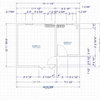
    Thanks Michelle. My contractor suggested a 110 CFM fan. The bathroom is 6' wide by 11' deep with a window at the shower wall and on the hallway outside the bath. (to cross ventilation is possible, at least in theory). You raise a good point. It's possible that the one I have now is only 80. thanks