Software
Houzz Logo Print
misssherryg

March Monarch Eggs!

7 years ago
last modified: 7 years ago
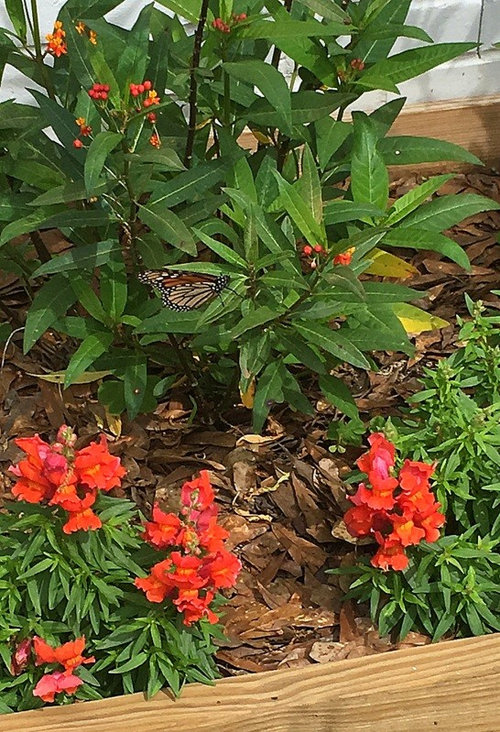
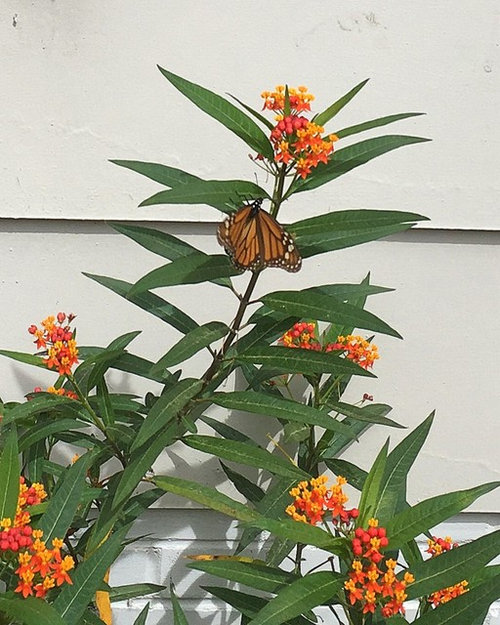
I planted a lot of A. curassavica/Mexican or tropical milkweed last fall, knowing how much monarch caterpillars eat. They're planted along a south facing wall, which is a part of a corner that includes the east facing wall. My thermometer shows this place to be at least two degrees warmer than other spots, and, judging by the way these milkweeds have stayed green all winter, I think there must be something more at play there, maybe the absence of so much NW wind after cold fronts, also the fact that the winter sun shines on this area a LOT! Anyway, a female monarch has been laying egg after egg on these milkweeds. When pipevine swallowtails laid eggs on my pipevines in March, it would take the eggs a lot longer to hatch than it takes in summer, so I assume these will take a while, too.

The weather is cold here, at least by south Mississippi standards. It got up to 69 degrees here today. No freezes are predicted, but the forecast calls for 38 degrees Tuesday night, Anybody have any advice about raising monarchs in cold weather?


The snapdragons I paid a whole dollar for have stayed green all winter, too and started blooming several weeks ago.

Sherry

Comments (54)

  • 7 years ago

    Did you report your butterflies on the Monarch website Journey North? It tracks the migration using information that regular folks report from their yards.


    Awesome to see Monarchs in March!


    -Amy

    MissSherry thanked Amy W.
  • 7 years ago
    last modified: 7 years ago

    I just reported her, Amy. 'Didn't realize there was a monarch journey reporting site.

    Sherry

  • 7 years ago
    last modified: 7 years ago
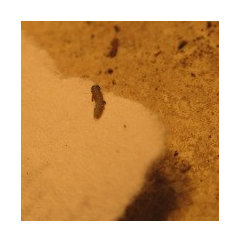
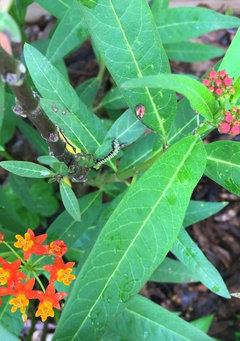
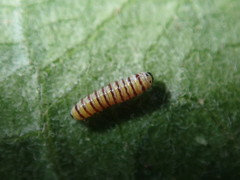
    I noticed yesterday that all the monarch eggs had 'disappeared' so I checked today and found a hatchling caterpillar. It is SO tiny, I had to zoom in a lot with my camera/phone then crop it more to make it visible in a picture. But I'm really happy to be having monarch cats in March!


    Now that I look at it, it looks like a skipper, but it has to be a monarch. I'll have to look up what monarch hatchlings look like - I've forgotten.

    Sherry


    I just looked it up, and monarch hatchlings do have a dark head.

  • 7 years ago

    Congratulations! And thank you for reporting your sightings. I am a bit worried about my milkweed not showing up yet, so I checked the map. The first adult Monarch are about a 3 hour car ride away.

    MissSherry thanked Iris S (SC, Zone 7b)
  • 7 years ago

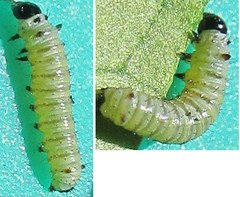
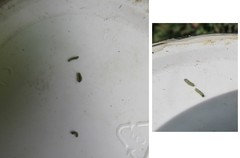
    The tiniest are entirely black. I have not tried to determne for how many hours they remain black. I just know, whenever I see non-black tinies, that they are not recently hatched. Your photo makes me want to have a magnified look at some in the morning.

    MissSherry thanked four (9B near 9A)
  • 7 years ago

    Today's tinies already are striped. I always see either black or striped, giving me to conclude that they do not transition through solid light.

    Also, turns out that your attention to the head was well placed, because the head-to-body ratio is strikingly higher than that of Monarch.

    MissSherry thanked four (9B near 9A)
  • 7 years ago

    Four, I don't really live in milkweed country (central U.S. seems to have much more MW) so I don't know that much about the caterpillars. When I have gotten cats on the Mexican MW I bought, usually in late summer or early fall, I go out to the garden and find 1" cats that look entirely like late instar monarch cats, usually at the top of the plant. I've never studied the earliest instars. This MW never even lost its leaves this winter, much less die. The southeast corner of the house is great - maybe these plants will be here for a long time, and I can raise a lot more monarchs!


    Sherry

  • 7 years ago

    > "never studied the earliest instars."

    That little guy brought you into it. :- )

    Digital cameras often blend adjacent color boundaries, and sometimes will exaggerate a feature; so, be sure to reality-check with eyes (plus magnifying glass if desired). At close view in light, stripes if any would have been evident even without magnifier.

    MissSherry thanked four (9B near 9A)
  • 7 years ago
    last modified: 7 years ago

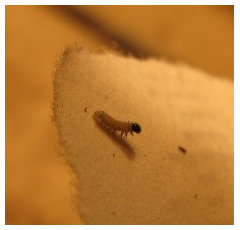
    In poor light, I thought that I had found one that still looked black to the eye; but in more light, striped. Then photos. Stripes not always evident in magnified photos taken in strong indirect light (sun blocked). Sherry's is Monarch.

    Sunlight directly on these:


    MissSherry thanked four (9B near 9A)
  • 7 years ago
    last modified: 7 years ago

    Ok, here's one that would look black in daylight. No stripes. 40W incandescent bulb eight inches above, because he did not make it out of the egg before dark.

    Next, closer to bulb, and camera closer, it doesn't look black:


  • 7 years ago

    Love the education I am getting here! Miss Sherry, hope your little ones are doing well.

    MissSherry thanked Iris S (SC, Zone 7b)
  • 7 years ago

    I've been looking for them, but can't find any caterpillars. I don't know if they've died or if they're as elusive as they usually are at this stage, hiding in the flowers and newest leaves at the top. If they show up, I'll let you know. 'Sure hope they're okay!


    Sherry

  • 7 years ago

    The caterpillars become more bad-flavored with milkweed-toxins as they eat more milkweed, which means the newest babies, like your first instar caterpillars, that haven't been eating milkweed for long, sometimes become someone's (bird or bug) lunch. I hope yours are only hiding!


    This page from Monarch Watch shows the growth of the caterpillars and how they change:

    https://www.monarchwatch.org/biology/cycle1.htm


    Thank you, Sherry, for the updates! It will be awhile before I see monarchs in my area (north of Atlanta), but I am feeling all reassured that they are on their way.

    MissSherry thanked Amy W.
  • 7 years ago


  • 7 years ago
    last modified: 7 years ago

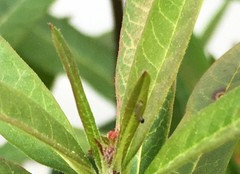
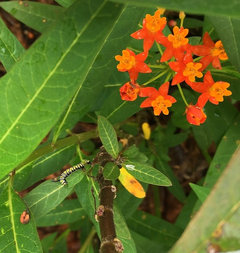
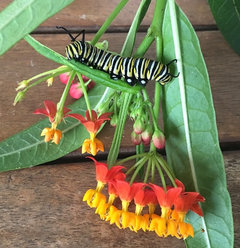
    I squinted my eyes off and found two very small monarch cats hiding in the flowers and newest growth on the milkweed - 'hope there are more! I may bring them in to finish raising myself. Does anybody know if lizards eat monarch caterpillars? This must be the lizard capitol of the world, they're everywhere! When I lived in the country, they never bothered my cats, went strictly for insects, but then I never raised that many monarchs.


    Can you find the little caterpillar?

    Sherry


    P.S. If you click on the picture, you can see the cat much better!

  • 7 years ago

    Found it! Your milkweed looks so nice, not an aphid in sight.

    MissSherry thanked Iris S (SC, Zone 7b)
  • 7 years ago

    My phone camera must not be any good, Iris, unfortunately there are aphids all over the plants! I'd hose them down if not for the caterpillars on them.


    Sherry

  • 7 years ago
    last modified: 7 years ago

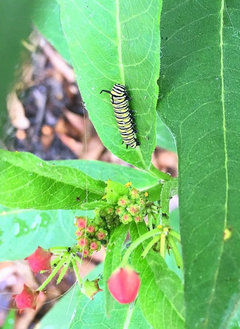
    There are at least 3 cats, probably 4 or maybe more - they do such a good job of hiding! They're still little, but growing -


    Sherry

  • 7 years ago

    Set up a cage, found six monarch cats so far.


    Sherry

  • 7 years ago

    Ha ha. Couldn’t resist taking them in? I still haven’t seen a Monarch. My milkweeds are ready. The common one is more than ready. It’s coming out of the walkway.

  • 7 years ago
    last modified: 7 years ago

    Do you get Queens there? If so, then be alert for this :


    I did not know that it was among the Monarch captives until I changed the leaves.

    Either from collected egg, or was one of the caterpillars taken after sundown.

  • 7 years ago

    Found another one this morning! This is a treasure hunt!


    Sherry

  • 7 years ago

    Got my first Monarch sighting and eggs today!

  • 7 years ago

    Congrats, Iris! I found 6 more caterpillars today, and I'm up to 13!


    Sherry

  • 7 years ago
    last modified: 7 years ago

    Wow congrats on your Monarchs Sherry and Iris. That's very exciting!

    We have only early bulbs like crocus and Pieris blooming here, and only the earliest perennials are peeping up. The milkweeds won't show up for awhile.

    Sometimes the Monarchs don't lay eggs in the yard until late July or even August, but the last couple years it has been late June/early July. Last year I was surprised to find a little 2nd instar cat on the common milkweed in the front garden around July 4th. I had no idea a female had come by and laid eggs so early in the year, hadn't yet seen a sign of a Monarch.


  • 7 years ago

    July?! And here I am always complaining the butterfly less time is too long.

  • 7 years ago
    last modified: 7 years ago

    Don't you live up in Michigan, Terrene? I've seen on TV that there's been a big snow in the north - I'd be tired of it by now, for sure! Here's hoping spring comes your way soon!


    Just found caterpillar #14!


    Sherry

  • 7 years ago

    No I live in Mass, west of Boston, and yes our Monarch season is short. It's longer if you live along the coast, or maybe if you lived in a sheltered warm location, where the temperatures are moderated. But our nights get cold in my 'hood by early October and the Monarchs that eclose in late September or early October get outta here ASAP.

    Sherry are you going to have enough milkweed to feed your babies?

  • 7 years ago
    last modified: 7 years ago

    I think so, terrene. They're getting pretty big now, eating a lot, but I don't think it will be too much longer before they make their chrysalides. I planted 6 MW plants, but they came in a big pot and each pot actually had 3 small plants in it. They've each grown a lot, so I think these 18 plants will be enough. I know of a good stand of A. lanceolata on Hwy. 49 that I've used in the past when I didn't have enough - 'hope I won't have to use it.

    Sherry

    P.S. After a very windy day and a lot of rain last night, I found #15!


  • 7 years ago

    Found #16 the other day. Yesterday, I noticed a good many of the cats had gone to the ceiling of the cage and gotten real still, like they do before pupating. Last night, most of these were in the "J" - they haven't made their chrysalides this morning, but I'm eagerly watching!


    Sherry

  • 7 years ago
    last modified: 7 years ago

    I like that pre-pupation posture because precious food may no longer need go to them. Prior to J, silk pad is best indication that a caterpillar is decided. Often some will resume wandering for food. When those caterpillars again leave food and return to top, then it is more certain that they are finished.

  • 7 years ago

    Yes, four, I've got plenty of food left, so if another monarch arrived tomorrow and laid eggs, I'd have food for the cats. Still more of them have gone to the ceiling, and more are in the "J" - YAY!!


    Sherry

  • 7 years ago

    Wow. That was quick. My one kind of faded looking Monarch has been back 5 days in a row now to lay eggs. Today a fresh looking one showed up. And a lady.

  • 7 years ago

    I wish I'd see an American lady, Iris - they're so beautiful! Your fresh looking monarch is a male, so he won't be laying you any eggs. Congrats on the eggs - hope you have enough leaves to feed your future monarch caterpillars!


    There are 3 or 4 monarch chrysalides on the top of the cage tonight, should be more tomorrow!


    Sherry

  • 7 years ago

    Ha, one of these days I will learn, I guess I just assumed since he was so interested in the milkweeds. At least I didn’t crawl around looking for eggs after him.

    MissSherry thanked Iris S (SC, Zone 7b)
  • 7 years ago

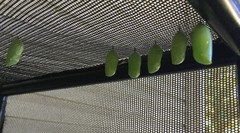
    All of the monarch cats have made their chrysalides - here's some of them all bunched up in a corner -


    Sherry

  • 7 years ago

    This is just great!

    MissSherry thanked Iris S (SC, Zone 7b)
  • 7 years ago

    I didn’t look too closely, but where I looked it’s still eggs. It was just 39 degrees this morning though after the thunderstorms and rain from Friday and yesterday.

  • 7 years ago

    Got caterpillars!

  • 7 years ago

    Woohoo! Congrats, Iris!


    I was surprised how cold hardy monarch cats are, too. 'Probably shouldn't be, though, considering how cold that place is in Mexico (mountains?) where the adults go every winter!


    Sherry

  • 7 years ago

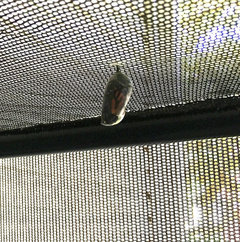
    Bad picture, but I'm about to get my first monarch!


    Sherry

  • 7 years ago

    Wow. Thinks are really moving fast at your place! My caterpillars are still pretty small.

    MissSherry thanked Iris S (SC, Zone 7b)
  • 7 years ago

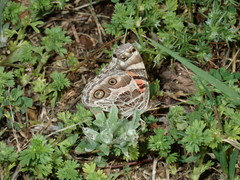
    Has either of you been seeing egg-caterpillar-chysalis activities of any other families?

  • 7 years ago

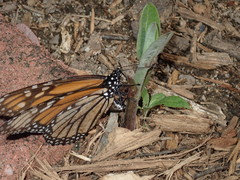
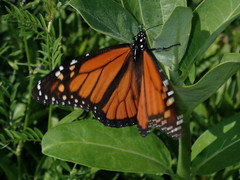
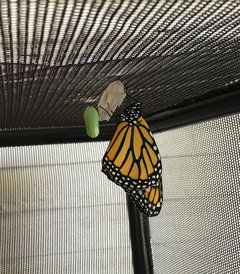
    She emerged this afternoon. Here's a picture of her in the cage while she was hanging out, then a picture of her just before I released her -


    There are about 9 chrysalides in the cages whose bodies you can see - they will be emerging tomorrow!


    Sherry

  • 7 years ago

    So beautiful! Thank you for sharing!

    MissSherry thanked Iris S (SC, Zone 7b)
  • 7 years ago
    last modified: 7 years ago

    I released 7 monarchs a little while ago, 4 males/3 females or maybe 5 males/2 females. One flew out so quickly it may have had those scent glands, and I just didn't see them. 'Made me sad to let 'em go.

    Sherry

  • 7 years ago

    I released the last one - 'hope they know their way north!


    Sherry

  • 7 years ago

    What a great success!

    MissSherry thanked Iris S (SC, Zone 7b)
  • 7 years ago

    I excerpted a clip of each of two longer videos that I took yesterday. The URLs are in text after this graphic containing information that can help in viewing the clips.


    First clip https://1drv.ms/v/s!Aqpk967ef6X6hHcHro08Uhd5JPql

    Second clip https://1drv.ms/v/s!Aqpk967ef6X6hHax--hE34IJvQg7


Sponsored
Peabody Landscape Group
Average rating: 3.5 out of 5 stars8 Reviews
Columbus' Reliable Landscape Design & Contracting