Software
Houzz Logo Print
jeanette_rocha44

Help with new Fiddle Leaf Fig

7 years ago
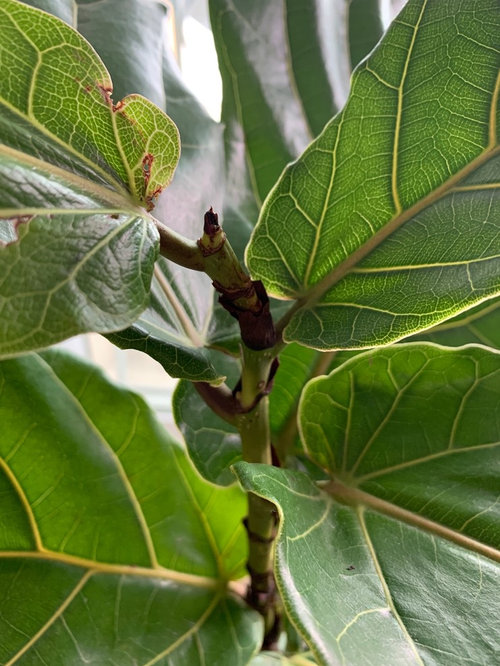
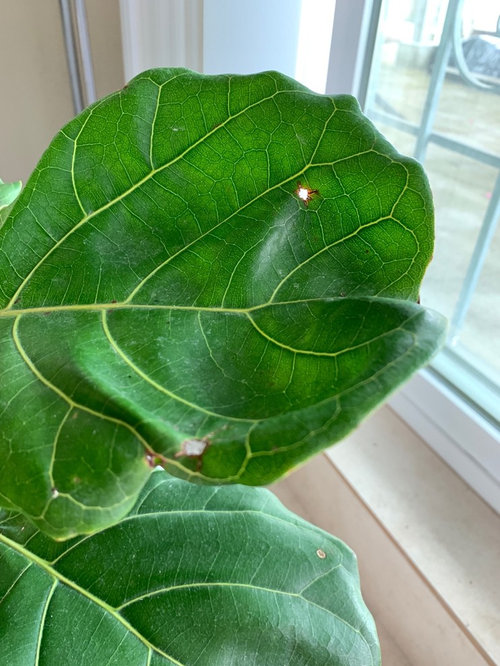
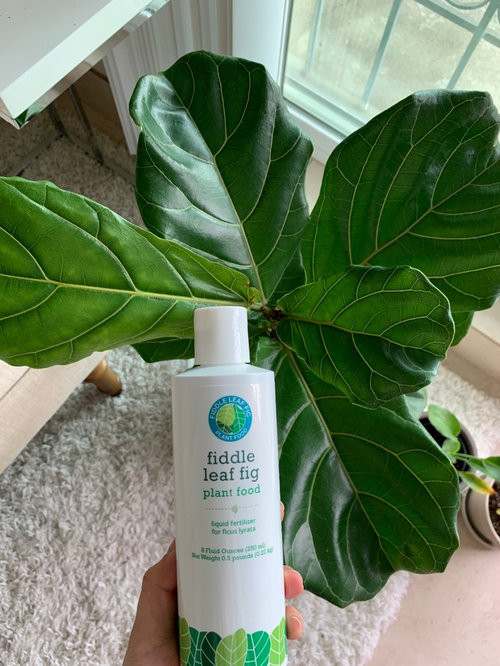
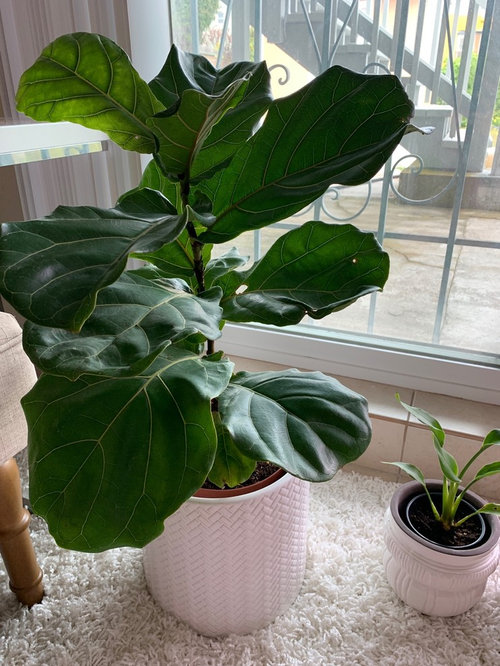
I just got this little guy in early January. The leaves have me a little concerned. I’ve also not noticed any growth. There is a tiny stub on top but I’m not sure if it’s going to turn into a new leaf. I’ve just started giving it some fertilizer, so far, only once (Diluted). I water it until water starts draining out and wait until my moisture meter give me a dry reading and wait a few days for it to dry out a little more until I water it again. I’m more concerned over it being healthy and happy than it growing. I haven’t repotted him since there are no roots coming out from underneath. He is my pride and joy, I just want him to like me!

Thank you all for your help!

Comment (1)

  • 7 years ago

    The first thing I'd like to point out is the fertilizer you are using is so over-priced it's predatory ...... and I don't believe what they say in their descriptions of their product. Here's why - Foliage-Pro 9-3-6 is a 3:1:2 RATIO fertilizer. Their maintenance dose (fertilize every time you water) is 1/4 tsp in a gallon of water, or .002 tsp/oz of water. Your fertilizer "claims" to have NPK % of 3-1-2, so it "should" be 1/3 as concentrated as 9-3-6. That would make the proper maintenance dose to be .006 tsp of their product per ounce, which is 3X as much product. But hold on. They say add a whole teaspoon to 2 cups of water (16 oz), which is .063 tsp per ounce, which is 10.5x as much as the maintenance dose should be if their NPK %s are what they say they are. Since a dose that strong would cause severe fertilizer burn, I'm wondering how they can claim their NPK %s are 3-1-2? If we estimate what the NPK % would have to be for a proper strength solution to be made from a teaspoon of your product in 2 cups of water, it would be much closer to .28-.09-.19 (notice the decimal points). If these percentages are approximately correct. This would mean that Foliage-Pro 9-3-6, a 3:1:2 ratio fertilizer supplies about 32X as much nutrition on a volume to volume basis. Since Foliage-Pro 9-3-6 costs half as much ($10/8 oz), you paid about 64X as much for your nutrients as you would have paid had you purchased the Foliage-Pro.

    The leaves have me a little concerned. I’ve also not noticed any growth. Growth is measured by the amount of increase in your plant's dry mass, so it can still be growing, even if it's not extending. There is something called the LCP (light compensation point). The idea centers on the fact that the plant must be making at least as much energy (food) via photosynthesis as it uses, or it will die - unless that trend is reversed. Same as a human .... we must take in at least as many calories as we burn, or we die lest the trend is reversed. If it's a light issue that is limiting growth (usually is, during the winter) your plant should show signs of growth soon. However, there is no guarantee that light is the most limiting factor at this point. It might be that roots are dying due to over-watering. This causes the plant to produce chemical messengers that tell plant central, "Hey! Do not put on any more top growth until we get this root thing straightened out". That sounds simplistic, but that's what actually happens, except that it's chemicals that do the talking. I think you might benefit from reading this. (click me)
    There is a tiny stub on top but I’m not sure if it’s going to turn into
    a new leaf.
    Just below the dead/dried part of the stub you'll see a green ring. Below that is a green ring, and below that is a thin corky ring. Your new growth will come from a bud you might not yet be able to see. It will be in the crotch formed by the stub and the leaf stem - on top of the leaf right next to the corky ring. I’ve just started giving it some fertilizer, so far, only
    once (Diluted).
    I'd ditch the fertilizer you have and invest in a bottle of Foliage-Pro 9-3-6. The people that sell what you bought were here at the forum a year ago trying to push it, but I told Clair the same thing I shared with you and she had no answer, maybe she'll come around and explain. Maybe not, too. I water it until water starts draining out and wait
    until my moisture meter give me a dry reading and wait a few days for it
    to dry out a little more until I water it again.
    I'll leave a little piece I wrote about using a "tell" for checking moisture levels. I’m more concerned
    over it being healthy and happy than it growing.
    You can't have one w/o the other. 'Grow', is what plants do when they are healthy/happy. I haven’t repotted him
    since there are no roots coming out from underneath.
    Repotting is an essential part of keeping potted trees at their best over the long term. Repotting includes root pruning and a complete (or very near complete) change of soil. Regular repotting ensures minimal limitations associated with root congestion. Potting up ensures your plant can never be free of those limitations. He is my pride and
    joy, I just want him to like me!
    I'm sure he will. You can really impress him by learning what his ciltural preferences are, and trying your best to provide them. If you take a few minutes to think about it, your only job, where your plants are concerned, is figuring out what's limiting them, then fixing it.

    About using a 'tell':

    Using a 'tell'

    Over-watering saps vitality and is one of the most
    common plant assassins, so learning to avoid it is worth the small
    effort. Plants make and store their own energy source –
    photosynthate - (sugar/glucose). Functioning roots need energy to
    drive their metabolic processes, and in order to get it, they use
    oxygen to burn (oxidize) their food. From this, we can see that
    terrestrial plants need air (oxygen) in the soil to drive root
    function. Many off-the-shelf soils hold too much water and not enough
    air to support good root health, which is a prerequisite to a healthy
    plant. Watering in small sips leads to a build-up of dissolved solids
    (salts) in the soil, which limits a plant's ability to absorb water –
    so watering in sips simply moves us to the other horn of a dilemma.
    It creates another problem that requires resolution. Better, would be
    to simply adopt a soil that drains well enough to allow watering to
    beyond the saturation point, so we're flushing the soil of
    accumulating dissolved solids whenever we water; this, w/o the plant
    being forced to pay a tax in the form of reduced vitality, due to
    prolong periods of soil saturation. Sometimes, though, that's not a
    course we can immediately steer, which makes controlling how often we
    water a very important factor.

    In many cases, we can judge whether or not a
    planting needs watering by hefting the pot. This is especially true
    if the pot is made from light material, like plastic, but doesn't
    work (as) well when the pot is made from heavier material, like clay,
    or when the size/weight of the pot precludes grabbing it with one
    hand to judge its weight and gauge the need for water.

    Fingers stuck an inch or two into the soil work ok
    for shallow pots, but not for deep pots. Deep pots might have 3 or
    more inches of soil that feels totally dry, while the lower several
    inches of the soil is 100% saturated. Obviously, the lack of oxygen
    in the root zone situation can wreak havoc with root health and
    cause the loss of a very notable measure of your plant's potential.
    Inexpensive watering meters don't even measure moisture levels, they
    measure electrical conductivity. Clean the tip and insert it into a
    cup of distilled water and witness the fact it reads 'DRY'.

    One of the most reliable methods of checking a
    planting's need for water is using a 'tell'. You can use a bamboo
    skewer in a pinch, but a wooden dowel rod of about 5/16” (75-85mm)
    would work better. They usually come 48” (120cm) long and can
    usually be cut in half and serve as a pair. Sharpen all 4 ends in a
    pencil sharpener and slightly blunt the tip so it's about the
    diameter of the head on a straight pin. Push the wooden tell deep
    into the soil. Don't worry, it won't harm the root system. If the
    plant is quite root-bound, you might need to try several places until
    you find one where you can push it all the way to the pot's bottom.
    Leave it a few seconds, then withdraw it and inspect the tip for
    moisture. For most plantings, withhold water until the tell comes out
    dry or nearly so. If you see signs of wilting, adjust the interval
    between waterings so drought stress isn't a recurring issue.

    Al

Sponsored
AIS Renovations
Average rating: 4.5 out of 5 stars15 Reviews
Custom Craftsmanship & Construction Solutions in Franklin County, Ohio