Software
Houzz Logo Print
richard_keith82

Tomato Armageddon :(

7 years ago
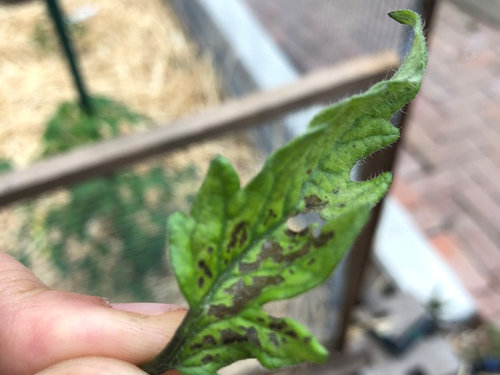
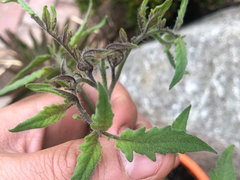
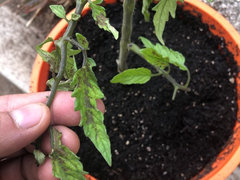
I lost a bunch of plants to herbicide drift (bright yellow crowns) so I pulled them all and now the replacements are getting sick too. Any idea what THIS could be!? This is not my year :(


Also new growth is curling pretty severely at the top. Thanks for you input!!!

Comments (30)

  • 7 years ago

    You just recently pulled the other plants, where did the replacements come from?

    Richard Keith thanked edweather USDA 9a, HZ 9, Sunset 28
  • 7 years ago

    From a store called Fig Earth Supply...

  • 7 years ago

    how do I do that LGTeacher?

  • 7 years ago

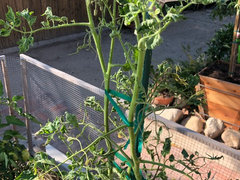
    Hard to tell from one leaf. Would it be possible to see other photos of the plants.?

    Richard Keith thanked edweather USDA 9a, HZ 9, Sunset 28
  • 7 years ago


  • 7 years ago


  • 7 years ago

    California extension should be helpful. Go to the attached link, find your county, click to find your local resources. You will even find a local county office to visit with samples.


    UC Cooperative Extension

  • 7 years ago

    i pulled it and put it in a pot to see if I can save it (and planted a disease resistant hybrid in its spot) because I was really excited about the tomatos it was supposed to yield...

  • 7 years ago

    The upper growth looks ok. The plant looks a bit lanky though, stretching for sun. What are you feeding it?

  • 7 years ago

    Been feeding it John and bobs nourish biosol but planning switch to OMRI Happy Frog..

  • 7 years ago
    last modified: 7 years ago

    @Richard Keith, where are you gardening? If in California, North or South? Inland or Coastal? If you are in the west, a Sunset zone helps. I don't see the very pale areas I've had with glycophosphate,

    Bright Yellow Tomato Leaves


    the brown spots could be some blight I don't usually get in inland NorCal,


    Early blight not common in California


    Tomato Early Blight

    but the purpleish color reminds me of what I see when my tomatoes are too cold.


    My Tomato Seedlings have purple stems

    I don't think this is all one problem.

  • 7 years ago

    The herbicide could be in the soil, hence why the symptoms reappeared on your replacements.

  • 7 years ago

    Think they will survive!? craaaaap!


    i actually planted 3 more in new soil across the yard and they have similar issues so that’s a twist!

  • 7 years ago
    last modified: 7 years ago

    Where are you gardening?

    I didn't think the herbicide glycophosphate/"Round-Up" remained active after it touched soil, so there's that. But what do I know? I'm still pretty cautious with it, and don't have much experience.

  • 7 years ago

    Where are you located? This may be some of the best information to know when you are posting. It is so important, otherwise, people are just guessing. That isn't very helpful for any problems.

  • 7 years ago

    RoundUp can stay in the soil for at least three weeks from my observations. And I have accidentally sprayed fresh grass clippings into the edges of my garden from grass that had been sprayed with 2,4-D almost 8 weeks earlier. And the tomato plants on the edge of the garden all got poisoned.

  • 7 years ago
    last modified: 7 years ago

    Maybe a neighbor is repeatedly spraying Roundup on windy days? The picture of the leaf looks more like disease though :(. I guess the only answer is to invest in a greenhouse!


  • 7 years ago

    I’m in Los Angeles... yeah it could be a combo of poison and disease. And I did only wait 2 weeks between initial exposure and replanting...

  • 7 years ago
    last modified: 7 years ago

    Glyphosate (Round Up) has absolutely no residual soil activity. The chemical binds so extremely tightly to soil particles that it cannot be taken up by the roots of plants. It ONLY affects plants through contact with the leaves and non-woody stems. I have dozens of feet of broccoli, onions, cabbage, lettuce, and potatoes currently growing that can attest to that. I use glyphosate on all my beds prior to planting, and I use the higher rate, a 2% solution for my backpack sprayer, to try and kill any perennial weeds (namely bindweed that has a nasty habit of showing up after any kind of cultivation). If the herbicide that drifted onto your plants was glyposate, any that also landed on your soil simply cannot effect any plants grown in that soil.

    Glyphosate remains in the soil much longer than 3 weeks. Again, as it is bound so extremely tightly to the soil particles, it is pretty much insoluble and barely moves through the soil profile. Soil texture does play a small role in this however. Coarser textured soils cannot "hold" as much glyphosate as finer textured ones, but that is easily alleviated by using a lower rate. The "rate" that may have arrived via drift would be fairly low and wouldn't have a problem binding even to beach sand.

    2, 4-d on the other has shown some residual soil activity in both soybeans and corn. It is recommended (and I think is now on the label) that you wait 7-14 days after applications of this herbicide to plant. Bear in mind a couple things with this. First, this is referring to fields that are directly sprayed with the recommended rate/acre of 2, 4-d. It is not a little bit of drift. The total amount of herbicide in this case would be well below that rate. Secondly it is talking about planting seeds, not larger transplants. So there MIGHT be some potential for 2, 4-d to effect plants subsequently planted in your soil, but I think that it is pretty unlikely.

    Dicamba on the other hand does have a more significant residual activity and can be translocated through the roots. It is commonly mixed with 2, 4-d. However, Dicamba is usually used a pretty high rate, especially if it is being used to target re-emergence of weeds. It is not usually used at these higher rates in the stuff folks buy at the Home Depot and again, the rate of herbicide drift is already significantly reduced.

    Imazapyr and imazapic have long residual soil activity and can both be translocated through the roots. These are mixed with glyphosate in products like Ground Clear.

    Now, there is no real way of knowing WHAT was actually sprayed, but these are about the most commonly used herbicides by the average homeowner. If the yellowing leaves, and eventual death of your prior plants were the only effects, it would point to glyphosate or a glyphosate/imazapic or imazpyr mix, as glyphosate is an an amino acid inhibitor and the other two are enzyme inhibitors none of which cause the curling and cupping like 2, 4-d and dicamba which basically overload the plant with auxin and it grows itself to death.

  • 7 years ago

    The intervenous chlorosis and mottled patches looks like a possible nutrient deficiency (manganese, perhaps, rather than herbicide damage or a specific pathogen.

  • 7 years ago

    Looks like a virus to me. It is 100% not Roundup/glyphosate damage, which has a very characteristic manifestation that is not present there. It doesn't look consistent with other herbicide injury, either, but it sure does look like TSWV.

  • 7 years ago

    FYI, for future reference, this is what glyphosate/Roundup injury looks like on tomatoes. It's very striking and identifiable. The only thing that looks like it is some presentations of iron deficiency, either through actual deficiency or soil pH issues. https://www.walterreeves.com/gardening-q-and-a/tomato-glyphosate-roundup-damage/

  • 7 years ago

    That’s def what I had the first time around. This time appears to be something else. I’ve added azimuth, manganese, and iron and they seem to be doing a bit better

  • 7 years ago

    *Azomite

  • 7 years ago

    This is seen usually in young plants being cold. They are unable to take up the necessary potassium. Mine get that under lights even with 68 degre temp. Put outside and the sun and a mild fertilizer makes them green and beautifu!!

  • 7 years ago

    It’s been very cold here!!!

  • 7 years ago

    most of my other plants have bounced back with azomite, manganese, and happy frog omri fertilizer... except for two that look like they’re trying to become pine trees (though the new growth at the top is a little better)...

  • 7 years ago


  • 7 years ago

    That last photo looks like herbicide injury.

Sponsored
Columbus' Home Design Experts Specializing in Custom Cabinets
More Discussions