Software
Houzz Logo Print
mxk3

Balled and burlapped

7 years ago
last modified: 7 years ago

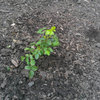
I bought a B&B'd Kousa dogwood, man that sucker was heavy! Now I know why -- the darn thing was almost entirely clay! I spent some time hacking off pieces of clay from the root mass, like a miner minus the pickaxe... By the time the job was finished, the freed roots looked great but nowhere near as large as the original ball. I am blessed with beautiful loamy soil, no way would I ever plant a rootball encased in almost entirely solid clay. Regardless, all is well, and the tree seems to be doing fine this week and leafing out, guess I'm just surprised by the solidness of the mass of clay. Is this the norm? The last B&B I planted was a big river birch, and I don't remember what was going on there -- bought and planted it last fall and was not a young tree so maybe the ball contained a large root mass already.

Comments (16)

  • 7 years ago
    last modified: 7 years ago

    The roots got chopped because of this heaviness of the soil, even as small as it was the ball was still heavy.

    Also there is the problem of all the soil that is removed from the field every time a crop is dug - the smaller the balls, the less soil that is lost. And...

    Most B&B trees are grown in a soil with clay characteristics so that when the tree is dug the
    root ball it will hold its shape: sandy soil will simply fall away from the roots. The clay soil not only
    maintains its shape but also retains water, so that B&B materials are usually more stable in terms of
    optimal water conditions during the time they are out of the ground. When the tree is planted into the
    landscape, however, the clay character of the soil is often different than that of the surrounding native
    soil. Differences between soil textures will impede water movement and therefore inhibit root
    establishment.

    https://s3.wp.wsu.edu/uploads/sites/403/2015/03/bb-root-balls.pdf

    I planted a balled in burlap Kousa dogwood once, without disturbing the field soil ball. I couldn't keep it hydrated during the summer and the top just dwindled away. When I dug the tree out after at least two years of waiting for it to establish and progress there was very little root growth extending beyond the field soil ball.

    Which was dust dry on the inside, despite winter rains and summer watering during the whole time it sat there.

    I have had the same experience with at least one balled in burlap magnolia.


  • 7 years ago
    last modified: 7 years ago

    Probably most ultimately balled in burlap stock is grown in small pots - with the same problem with growers leaving the plants in them too long, as with plants intended to be sold growing in containers - before being lined out in fields.

    Nearly all of the feeder roots are cut off when balled in burlap stock is dig and covered with burlap anyway.


  • 7 years ago

    As usual, your experience is much different to mine. Liners are often directly field planted. And most B&B stock is root pruned prior to digging for harvest...often as much as 6 months in advance. And this is done specifically to cause regeneration of feeder roots within the pruned root mass.

  • 7 years ago
    last modified: 7 years ago

    Well, it's already planted, so what will be will be. I had to hack at it because there were no roots in a large portion of the ball -- just tightly packed clay. Of course, when I finally got down to where I saw roots, I wasn't as heavy-handed, but still -- it wasn't that easy to free those roots. I absolutely believe I did the right thing -- like I said, my native soil is very different in texture; I'm confident the tree will be fine. :0)

  • 7 years ago

    "Proponents against maintain removal pulls off too many of the fine
    feeder roots in what is already a highly compromised root system and
    therefore makes the tree harder to establish and with a longer period
    necessary to do so than if it were left intact."


    Very true. You can see this when buying bare root. The large Oregon nurseries that grow in heavier soil have bare root stock with noticeably less fibrous roots than those who don't. I'm not understanding the reasoning behind completely removing the clay. I definitely know the problems when planting a light soil tree ball in a heavy clay hole. But why the problem the other way around? Why would a tree not easily and readily push roots into the surrounding lighter soil?


    Also, if the people digging the trees are properly trained they would know to always check for the root flare and shave off any excess dirt if need be before finishing the balling process.

  • 7 years ago

    "Probably most ultimately balled in burlap stock is grown in small pots -
    with the same problem with growers leaving the plants in them too long,
    as with plants intended to be sold growing in containers - before being
    lined out in fields."


    Really? The larger nurseries that I know of here in the Twin Cities area are all lining out mostly bare root. The only exception tends to be with oaks, which are being lined out with root bags/grow bags/small dirt balls, etc. Oh, and potted birch clumps maybe.

  • 7 years ago
    last modified: 7 years ago

    My experience echoes GG's...with trees being undercut, sometimes a whole season, but always at least 6 months before digging. Hessian (burlap) seems to be going out of favour (but less so with evergreens such as yew). I have noticed a changeover from nurseries still growing young, field-grown stock to be sold on as maidens, to the long term use of perforated pots on a permanent irrigation line, sometimes for years...because many people are prepared to pay £££ for BIG trees (the fools). In short, there appears to be no overwhelming 'correct' way to do this since the trade is catering to such a diverse set of needs.

  • 7 years ago

    "Also, if the people digging the trees are properly trained they would know to always check for the root flare and shave off any excess dirt if need be before finishing the balling process."


    The flare was completely covered by soil.

  • 7 years ago

    I plant a lot of B&B material and the condition of the plants vary. I only plant woody plants in dormancy, which gives me more latitude in how I treat the roots. I try to get rid of as much of the clay as possible, but I try to do it as gently as possible. FWIW I have never seen any B&B stock with circling or congested roots; the issue that i have encountered is root balls that are too small. .However I have had good luck with B&B stock, even quite large trees (Cercidiphyllum, various Acer, Thuja come to mind).


    Almost all B&B stock is buried too deep, but most container stock is, as well.

  • 7 years ago

    Root pruning being beneficial depends on the replacement roots not being cut off when the plant is dug up later.

  • 7 years ago

    "The flare was completely covered by soil."


    Covered by how much? How deep?


    River birch love clay soil, by the way. The fastest growing trees I have not named "willow" or "poplar." I've had 2' clump liners turn into 10'+ clumps in only 2 years. They root into the clay like mad.

  • 7 years ago

    Does anyone cut the burlap during planting?

  • 7 years ago

    Removal of any burlap around the trunk and off the top half of the rootball is always recommended.

  • 7 years ago

    They are making burlap thinner and thinner these days and it can rot and disintegrate surprisingly quickly. I know wholesale yards where, if a tree remains after a second summer, the B&B tree ball has to either be re-burlapped or wrapped in plastic to be able to ship.

  • 7 years ago

    I have always removed the burlap. In the same vein, I never plant in those fiber/coco pots plants are sometimes sold in. I don't want anything in the way of those roots finding their way into surrounding soil - the faster the better.