Software
Houzz Logo Print
sprtphntc7a

DogProbiotics - which one do u use???

7 years ago

Hi all,

My newly adopted dog, Leo, was having gastro issues, but as of now seems to be clearing up. i would like to add a probiotic with his diet to add digestion and overall health.

he has been through the ringer, long story, so want to keep him on the path to recovery and i feel as though a probiotic will help.

which one do use and why? any brand to avoid?? which strains most helpful overall? are u against probiotics? any and all commentary welcome


these are ones i am considering right now:

nusenstia probiotic miracle, pet ultimates & hyperbiotis.

i do not want any with chicken, duck or turkey, no 'feather's' please!


TIA :)

Comments (41)

  • 7 years ago

    We are currently using Dinovite and I would *not* recommend it. It's expensive (as all probiotics are) and my dog doesn't like it. It's a battle getting her to eat it. My husband bought it, but in looking at the ingredients, I could make it on my own.

    If you need a fast fix, I'd do a pill. But for overall health, naturally occurring probiotics are best, IMO, like those found in yogurt and kefir.

    sprtphntc7a thanked Feathers11
  • 7 years ago
    last modified: 7 years ago

    I used one from Amazon with many 5-star ratings, but I didn't think it did a thing for my pup. I'm glad my friend gave me some from her jar to try because they cost a bit. My dog has occasional problems with his tummy, outbreaks every couple of months or so, and it still happened when he was on the probiotics. I don't remember the name of it, but there many on Amazon. Many people think they are helpful.

    My 2 cents is that if his digestion is getting better, heading towards "ok," don't worry about probiotics. If it ain't broke, don't fix it.

    sprtphntc7a thanked socks
  • 7 years ago

    My nephew is a vet in Minnesota and highly recommends protandim. Humans use them as well. Hubby is on them and in about 6 weeks his psoriasis has been radically improved with their use. Lots of studies and research available on their website.

    sprtphntc7a thanked two25acres
  • 7 years ago
    last modified: 7 years ago

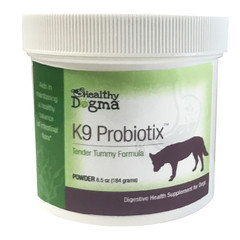
    We use this. It’s a private label for a store that is close to us. The owner has been involved with K-9 supplements for years and developed it a few years back. It’s pricey but it lasts a long time and has worked wonders for our chronically gassy lab.

    https://www.healthydogma.com/dog-supplements/


    sprtphntc7a thanked Lukki Irish
  • 7 years ago
    last modified: 7 years ago

    Should you give your dog probiotics if they aren't having tummy troubles? As a preventive type thing, you think? Or should I stick to if it ain't broke, don't fix it.

    sprtphntc7a thanked always1stepbehind
  • 7 years ago

    Goat's milk is a great probiotic. A lot of pet owners on a Facebook group I belong to feed it to their dogs. They love it.

    sprtphntc7a thanked Jasdip
  • 7 years ago

    Always1step, it’s really just a judgement call. Probiotics are something that build good bacteria in the belly. Just like with humans, it helps to keep their system in balance and promote a stronger immune system. Many kibbles have them included in their ingredients but they’re listed so far down on the list that they offer little to no real benefit.

    sprtphntc7a thanked Lukki Irish
  • 7 years ago
    last modified: 7 years ago

    Good gut bacteria usually gets established on its own and other than when attacked by antibiotics or after poor care (as with use for the recovery to health of a newly rescued animal), such supplements shouldn't be required on an on-going basis.

    I found mixed evidence, and nothing conclusive, about protandim. I'm surprised a vet would recommend something lacking scientific proof of effectiveness.

    sptphntc, find a good vet (many in your area, I think you've said you're somewhere near Philadelphia?) and follow their advice.

    sprtphntc7a thanked Elmer J Fudd
  • 7 years ago
    last modified: 7 years ago

    Trunature Digestive Probiotic Capsules, 100 Count (About 20 Cents a Day)


    Amazon, Costco, all over

    sprtphntc7a thanked User
  • 7 years ago

    Um....I used to let sammy lick the remains out of my empty Greek yogurt containers.....does that count?

    sprtphntc7a thanked amylou321
  • 7 years ago

    I have used Great Life Dog Food Enzymes. A woman in the dog rescue I worked for who was a pharmacist and made her own dog food, etc., etc. recommended it.
    Great Life Dog Food Enzyme


    sprtphntc7a thanked graywings123
  • 7 years ago

    You're suggesting a human pharmacist knows something more than any other person about about canine medicine and/or dog digestive systems?

  • 7 years ago

    Amylou, yogurt can work, but it needs to be sugar free. Plain Greek yogurt is a good option.

  • 7 years ago
    last modified: 7 years ago

    Elmer, a large number of routine medicines given to dogs are the same medications used for humans with just a dosage adjustment so yup, a Pharmacist would know a lot more about Canine medicine than the average person.

    https://www.avma.org/public/PetCare/Pages/YourPetsMedications.aspx

  • 7 years ago
    last modified: 7 years ago

    Yes, I know that SOME human meds are used with animals.

    I don't expect you or anyone else to remember anything about me but this isn't the first time you've commented to try to school me on basic pet things. I appreciate your interest but it's not necessary. If I get something wrong, anyone is welcome to let me know.

    In addition to having a relative who's a vet (a frequent recipient of my questions) I'm a lifelong dog owner. My dog currently takes 5 different medications per day (4 by prescription), 4 of the 5 of which were developed for humans and two of which (one by prescription) I get at CVS. Some human medications aren't effective with animals and some are even quite toxic. Some used on dogs not cats, others used on cats not dogs. Veterinary medical researchers explore possibilities, not human clinical pharmacists nor faculty at pharmacy schools.

    Pharmacists aren't trained in animal medicine. They don't know which meds are and which aren't suitable for use in animals and if so, which animals and if so, at what dosages. This is the domain of vets and veterinary pharmacists. And pharmacists don't prescribe medicines, the attending medical expert (be it human or animal) does.

    Give yourself a few grapes or raisins and enjoy them. Give just a few to your dog and death can result. It's like that with other things too.

  • 7 years ago
    last modified: 7 years ago

    A normally healthy dog on a proper dog diet (a good quality kibble) doesn't need supplements. It could be the food is not agreeing with him. Dogs often have problems with any dietary change. If he was eating one thing and now another it is normal for his gut to protest at first. That is why all new dog foods should be introduced gradually.

    Dogs are dying due to the grain free diet madness. Grain allergies in dogs are quite rare. Chicken,beef dairy,wheat and soy in that order are the most common canine food allergens.

    Deadly Heart Disease linked to grain free diets.
    https://www.vetmed.ucdavis.edu/news/uc-davis-investigates-link-between-dog-diets-and-deadly-heart-disease?fbclid=IwAR1IkwL4wsmTN0QiBy0Mckv-jT4TTVsSB5ha8WnVS1GTPBdutoQ

    sprtphntc7a thanked wildchild2x2
  • 7 years ago

    Watchme— what grains are dog food manufacturers referring to when they say grain free? Rice, wheat, barley? I’m just not sure.

    My vet says grains are fine for dogs. I’ve always felt that feeding a variety of food was best for dogs, just like for people.

    forgive the hijacking Sprt.

    sprtphntc7a thanked socks
  • 7 years ago

    Now I know where to get pet info from some that has a Vet as a relative and does not need to be schooled about basic pet care - even when his or her advice is wrong or moronic.

    There is a special place in Tolodex files for such people. lol

  • 7 years ago

    Too bad for you if you automatically think someone who disagrees with you, or has a different opinion in some way, is moronic.

  • 7 years ago

    I agree with Watchme 100%. A dog without medical issues being fed a quality food should not need supplements. I thought about going grain free when it became popular but after talking to my vet, I didn't go that route. She said, too, that unless there is a real allergy, and that is not a common thing, grain free is more harmful (heart issues) than not.

    I just recently found out that the Merrick I was feeding Carmelita didn't have any phosphorus in it at all. She had to have some bloodwork done and the vet found her levels very low. At her vet tech's recommendation I switched her to Purina Pro Plan Savor and we will test her blood again in a month to see if there is a change. Of course it could be some underlying cause not yet known but the fact that she had been eating that for about 6 months led the vet to believe it is the food. The real upside to changing to Purina is that Carmelita actually likes it and I don't have to add any "bribes" to get her just to eat. I find it very difficult to make decisions like this when there are hundreds of different dog foods available. I'm glad I have a knowledgeable vet.

    sprtphntc7a thanked murraysmom Zone 6a OH
  • 7 years ago
    last modified: 7 years ago

    Elmer, I was not schooling you. You made a statement that came across as a question of sorts and I answered it. I’m well aware of our conversations believe me. I’m going to go back to ignoring you, you’re really not worth the effort.

  • 7 years ago
    last modified: 7 years ago

    I did ask a question, it seemed as if you were of the impression that human pharmacists know which medicines and at what dosages are appropriate for cats or dogs. This isn't something most know.

    If ignoring my comments cuts down on the childish personal insults you like to hurl at me, then please do. Join saltidawg in that club.

  • 7 years ago

    My vet strongly recommended to NOT use a grain free dog food. Because of the link to cardiomyopathy. Didn't matter in the long run because my dog refused to eat it. Switched him to Purina One Smart Blend--the turkey & venion variety which he loved.

    sprtphntc7a thanked ci_lantro
  • 7 years ago
    last modified: 7 years ago

    hi all,

    thanks so much for the helpful input.

    just some bullet points:

    he is not on grain free diet, never was. he was on antibiotics for an extended period of time. his whole gastro tract was inflamed and he was not eating, they presumed, due to that. vomiting & diarrhea. blood & mucus in his stool

    had 2 ultrasounds, bloodwork etc... went to an actual Hospital for his care, not just my vet's office.

    Foods he was on:

    nutro w/ sweet potato - the runs

    canidae chicken and rice (more easier digestible) - the runs

    Fromm chicken variety ( increased the fiber) - runs& vomiting

    VeRus: Lamb, brown rice and oats - doing much better (changed the protein source)

    we really think it was the chicken.

    He was on Hill I/D prescription and had the runs as well. when u took him off the the I/D completely and just gave him the VeRus, his symptoms subsided.

    all this over the last 2 1/2 months so that's why i thought a probiotic would help him along.


  • 7 years ago

    Wow, you've been through a lot. I can understand why you would be looking at probiotics. Best wishes for success helping your dear dog.

    sprtphntc7a thanked socks
  • 7 years ago

    Like you, I recently did lots of research for a probiotic and finally found one that had a variety of strains. I was surprised at how many brands just had lactobacillus as the only strain followed by a list of miscellaneous items. Fera Pet Organics is the brand I ended up going with.

    My dog has a sensitive stomach and usually any supplement upsets his stomach. I also discovered certain proteins and sometimes too many carbs would bother his stomach. I checked Dog Food Advisor and if this is your dog food you'll notice it has a high amount of carbs, so you may want to watch how he does long term on it. I've found a 'limited ingredient diet' of just protein, a vegetable, and maybe one starch works best for my dog.

    So far, the Fera probiotic hasn't bothered my dog's stomach but I have to admit I haven't used it for awhile since everything is going well for him at the moment.


    sprtphntc7a thanked annztoo
  • 7 years ago

    thanks socks! yes its been rough to say the least!!

    he needed to be neutered so we did that within the first 10 days of getting him and on day 5 post surgery, he opened up the incision and had it had to be re-done. so almost 2 surgeries in 6 days. day 5 was a Sunday. which was our fault b/c we gave him a break from the cone and in about 3 minutes, chewed a stitch and opened it up...UGH we were so angry at ourselves. on antibiotics

    about 3 days after second surgery, developed a cough which was due to having 2 surgeries and they called it trachea irritation -from the tube. that took about 2 weeks to clear. on antibiotics

    about a week after 2nd surgery, he was not eating, lethargic and did not even get up... off to the hospital on Sunday and his entire GI tract was inflamed. on meds for nausea and antibiotics. on I/D diet for about 2 weeks... slowly incorporated the Canidae... seemed to be doing better... developed diarrhea and vomiting....slowly switched him to new food, Fromm, 4 days in, he was worse... on meds for that... took him off all dry food and on i/d .... really no better and losing weight...but always hungry!! that was the bright spot!!

    on Friday before Easter, he threw up hard chunks of plastic., off to hospital again for another ultrasound to be sure it wasn't twisted around intestine or a blockage. none of that. they drew blood and his platelets were low, some of his "phils" were off., 3 of them. they thought he might have cancer, parasitic disease, IBD, tick borne illness... we were devastated. we figured he got the plastic when our cat opened the pull out trash cab and took out the plastic from wrapped meat. the cat licks the 'juice' and Leo must have gobbled up the plastic :(

    our vet did not think he had cancer and we decided to ride it out. kept him on the I/D. OK. he continued to lose weight, on and off soft/diarrhea with mucus and blood, so we decided to give him regular food (VeRus) and slowly decrease the I/D. really at this point we had nothing to lose..he slowly improved. the I/D was turkey with chicken added so we think that was the culprit....

    so as of today, he is only on the VeRus, no treats absolutely nothing else. we now have a lock on the trash cab. cut a hole in the door so he can't eat the cat poop. watch him every second. still seems a little lethargic at times so we are still concerned and not out the woods completely.

    there are more nuances to this but that's the highlights (lowlights :( ).... so draining!!

  • 7 years ago

    Kool Beans,


    You're right, ignore the moronic posts from the guy that thinks he knows a lot about everything. I can not be absolutely positive, but I am quite sure that he has given advice that has caused pain and suffering to pets - if not actual death.

    He has posted under various User Names on Garden Web and Houzz... he has said that he has, at least.

  • 7 years ago

    My dog has a plethora of GI issues and our vet prescribed antibiotics with dog-specific probiotics . The instructions included the following " Feeding human probiotics to your dog is not recommend. Humans and dogs have significant differences in their digestive systems—including different levels of stomach acids, different digestive enzymes, and and different probiotic strains that will contribute to ideal health. For those reasons, you should give your pet a probiotic supplement made specifically for dogs."

    sprtphntc7a thanked nannygoat18
  • 7 years ago

    Nothing about the use of probiotics just a general comment. All animals digestive tracks are of differing lengths. Like humans things are digested in various portions of the track.

    It is one of those things that has puzzled me about the use of probiotics when people talk about them adjusting the flora in the large intestine. Since most are digested way before reaching that portion of the body: How do they do that? My mind can not wrap around the idea that once digested they enter the blood stream and are carried to the large intestine and only dropped into the lining there or are they completely undigested and only become entrapped in the large intestine once they arrive. While I can understand that they and many other things can adjust the PH level in the body allowing various floras and faunas already living there to flourish more thinking that the probiotics that one my take by mouth will directly add to the flora and fauna in the large intestine is beyond me. Now a suppository or enema is a totally different method that might work.

    sprtphntc7a thanked User
  • 7 years ago

    annztoo: what food are u feeding your dog??

    nannygoat18: i agree, must be dog specific. which probiotic are u using?

  • 7 years ago

    We use Purina's FortiFlora and Glandex which includes probiotics.


    According to thieir website, it "helps to support healthy anal gland function in pets and was created by veterinarians specifically for this problem. Glandex® patented formula is the only product that targets all of the underlying causes of anal gland problems. Made in the USA with all-natural ingredients including Pumpkin Seed, Probiotics, Omega Fatty Acids, Digestive Enzymes, & More."


    We had been having weekly vet visits for the past two months for vomiting, diarrhea and a severely infected anal abscess. In the past we successfully relied on holistic supplements. This time the issues rapidly worsened and a ten pound dog doesn't have much reserves, We found a new vet that recommended this regimen which seems to be working. Fingers and paws crossed!

    sprtphntc7a thanked nannygoat18
  • 7 years ago

    sprtphntc, I started making my dog's food 2 years ago when he was diagnosed with Cushings (he's 14 yrs old). Any commercial food I tried would cause him to have a mild pancreatic attack every few weeks. My current recipe is either fresh, low fat, ground chicken (not really comfortable with the amount of fat they claim is in it) or canned chicken from Costco. Over time I figured out which cooked vegetables my dog could tolerate (he loves them all but his stomach doesn't!) and am now feeding chicken, a few green peas and beans along with a small scoop of Royal Canin Hepatic canned food. Eggs, cottage cheese, sardines, yogurt, and maybe a little baked potato are also rotated in. I added rice for awhile but he seems to do so much better without it so I eliminated it altogether. Also, I have to watch the cottage cheese since it can cause constipation in my dog. Sometimes I add carrot or zucchini, but I still have to watch for any changes in his stool. I add the small amount of Hepatic food just to get some extra nutrients in my dog, plus he was diagnosed with a mass on his liver 2 months ago. I cannot feed him any dry food or he'll end up with stomach pain within 24 hours. The diet I make sounds pricey, but when I compare it to high quality commercial, or prescription diet canned food, it ends up being half the cost.

    With everything your dog has been thru I'm not surprised a lot of his test readings came back high/out of range. It has to be difficut to go thru all this with a recently adopted dog.....especially since you probably have little history on him. Only thing I can suggest is to watch the meds your dog is on and read up on side effects. The majority of meds do horrible things to my dog's system. He can't handle Carprofen, but Galliprant works for pain. And he can't go a day without his Pepcid. ;)

    Have they tested your dog for pancreatitis? My dog never shows the classic symptoms but he's definitely tested postive for it.

    sprtphntc7a thanked annztoo
  • 7 years ago
    last modified: 7 years ago

    nannygoat18: all the best with the new regimen!! its so hard figuring out what your pet needs and what works for them. we just started to eliminate things that might be bothering him. i found a very good resource at my independently owned feed store and he recommended changing the protein source. so that's how i started him on lamb.

    he was vomiting square chunks and we thought it was sweet potato from original food but it wound up being carrots from treats. those went right in the trash!! i think they were a milk bone variety we bought the day we adopted him.

    annztoo: i did look into his present food and there are a lot of carbs., so i am going to do some research on the right mix. i am afraid to give him food with a high fat content b/c they thought that could be a problem for him when he had the gastric inflammation. when he had the GI inflammation they did say he had pancreatitis. on the 2nd U/S, no inflammation in the GI tract. Good for you that u make his food and you found something that works for him!!!

    whatever happened to the days of "you get a puppy and they go on Purina Puppy Chow and then "graduate" to Dog Chow!! our 1st two dogs were on that and both lived to 14 with no gastro issues!! back in the 80's & 90's.... way back :)

    right now he is on no meds!

    i really think between switching foods from the foster in texas, then the long ride to Jersey, then the Jersey foster, then us, his system was in disarray. in the fosters and rescue group they feed them whatever is donated so he could and probably had his food changed 3 times in 3 weeks. not good!!

    then we lavished him with treats, 2 surgeries in 6 days and his system has totally out of wack!! then multiple cycles of antibiotics, stress, plastic and more than likely a chicken intolerance, its no wonder he's been sick !!

    now we just need him to gain weight and keep moving forward! in the last 2 weeks or so, he has been much better. so we are sticking with VeRus, no reason to switch. all the blood in stool is gone, mucus is gone, did have semi-loose stool for a day and half but that's cleared up. i have added Firm Up! pumpkin and cranberry supplement to his food once a day. i only give 1 teaspoon. it say he can get 1-2 tbspns for his weight but as with everything with him, i go slow!!

    the only thing 'not right' is he does get lethargic at times and he is ALWAYS hungry!! so the food might not be filling him?? we are getting him tested for whipworm. our vet cannot do it, special test, they have to send it out. just waiting for a fresh sample to drop off!

    DH was looking into possible parasites and whipworm came up and he did fit some of the criteria. most importantly its seems to be a problem in the South -check-and does cause lethargy and hunger - check. so we shall see!

  • 7 years ago

    maifleur01: after much reading, there are claims by some companies that their probiotics can survive the stomach acid and reach the large intestine intact. whether its true or not, i don't know. but some make that claim. for dogs - don't know about humans.

  • 7 years ago
    last modified: 7 years ago

    What a path you’ve been on sportphntc7a. Lucky Leo’s sure lucky to have finally found such a loving home. I hope he continues to get better. He’s such a cute boy.

    sprtphntc7a thanked Lukki Irish
  • 7 years ago

    Sprtphntc7a and maifleur01, your questions sent me down the Google rabbit hole and I found this useful explanation:

    https://www.whole-dog-journal.com/health/probiotics-boost-canine-overall-health/

  • 7 years ago

    nanny, first that rabbit hole mentions that they change the PH of the body. Further down it does mention the enteric coated ones, similar to some aspirin whose coating does not dissolve in the acid of the stomach. While those might finally reach the large intestine it appears for them to flourish, if I am reading things correctly, the PH must be changed. It would be interesting to know if vets would use an anal swab on one of those PH sticks on a dog with stomach complaints to see if the PH was within "normal" range.


    I did find it interesting the mention of lack of dirt in an animal's environment. While not good for a sick dog and not something that many would allowing play time in a dusty environment could be helpful.


    I did take acceptation to the idea of "loosing potency". Any of the fermented products reach a point where the bacteria becomes inactive because most bacteria is active only within a certain PH range and once that range top or bottom is reached it becomes inactive. While some will die others simply are no longer active. This is why if you dry something like yogurt or kefir then add to another food source, milk, cream, etc. it will reactivate the bacteria until it again stops fermenting.

    sprtphntc7a thanked User
  • 7 years ago

    While I was down the rabbit hole, I read some other articles regarding human and dog probiotics and their respective microbiomes and they really provoked my curiosity. We have a follow up with the vet on Saturday and will pose these questions to her.

    sprtphntc7a thanked nannygoat18
  • 7 years ago
    last modified: 7 years ago

    nannygoat, be careful. The article you linked to was written by someone who, by her own admission, has no training or experience in animal or veterinary medicine. On a website that seems to advocate chiropractic and homeopathic "techniques" for pets, among other things.

    So yes, anyone whose pet seems to be having digestive or other such problems, understand that your animal may need to be seem by someone with more training than a GP vet, like a board certified veterinary internal medicine specialist. They often work at referral practices with other boarded specialists and not at general practices.

    For the guy who likes to trash talk, you can probably again slime this comment as being another instance of my making recommendations that may not be in the best interest of animals. And in doing so, you would be every be as wrong as the past time you did so.

    sprtphntc7a thanked Elmer J Fudd