Software
Houzz Logo Print
eric_lee98

How to correct for compact/clay soil in container pot - cherry tree

7 years ago
last modified: 7 years ago

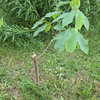
Hello, I planted seven cherry trees a year ago in large pots. They grew well during the first year. However, in early spring of this second year, two trees have died and another looks sickly (green leaves wilted brown very quickly).

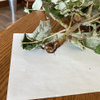
The cause appears to be the compact soil I took directly from the ground. I didn't add any peat moss or coco coir to soften the soil so the soil/clay appears to be suffocating my cherry trees.

Does anyone have any advice on how I can save these trees? I'm considering adding earthworms but another blogger noted that the worms may (will likely) eat the roots (organic material). For the near-dead trees, I've transplanted them into another pot with 50/50 natural soil + coco coir. My concern is with the three that appear to be healthy. One has fruit but some of the fruit appear to be dieing. The only thing I've done is add Bonide 412 root stimulator.

For the healthy cherry trees, how can I best treat for the compact soil? Will the earthworms help? Should I transplant and when is the right time to transplant? Or is there a better option?

Comments (5)

  • 7 years ago

    Have you considered removing the soil and replacing it with an appropriate potting mix?

  • 7 years ago
    last modified: 7 years ago

    Dump the tree out, wash the inside walls of the pot off and replace the soil with potting medium formulated and packaged for the purpose. Something labelled along the lines of "general purpose". Perform this operation as quickly as possible so the tree doesn't sit out in the air very long. You will probably have to wash a coating of the original soil off of the roots of the tree right before putting it back in the pot also.
    Set the newly repotted tree in a shaded position for a time, until it stops drooping or until it seems clear it is not going to droop, as a result of the root disturbance.

  • 7 years ago

    There is a very good reason virtually any resource you find on container gardening will recommend strongly against using garden soil for potting purposes. It is too finely textured, too dense and without adequate aeration and fast drainage. I am surprised any of your trees made it back for a second growing season!!

    A purchased potting soil mix - one intended specifically for containers - is a much better choice but even then less than ideal. Most of these are peat based and do not hold up well for long term container growing and generally should be replaced annually. You really want the durability of a bark based mix which will provide the texture and aeration and fast drainage the trees need together with the ability to hold up for multple growing seasons.

    I would suggest you spend some time reviewing posts on the Container Gardening forum. You will learn how to create your own soil mixes best for this type of gardening or successfully amend existing packaged mixes to work better. And you will learn all the methodology on how to grow trees in containers, including proper container sizing, how, when and with what to fertilize, the need for root pruning and up potting and even winter protection, should that be required in your climate. As it will be in most colder winter areas (USDA zone 6 and below....possibly even zone 7).

  • 7 years ago

    In addition to gardengal's excellent discussion, a pot (and roots) is completely warmed by outside air temperatures and not the cooling effect of evapotranspiration in normal soil. If you're growing cherry trees, you're likely not down here in Texas. We have to be very careful what plants we put into pots due to the heat.

  • 7 years ago

    There are several issues inherent in using large fractions of topsoil and coir in a medium intended for use in containers. The main ones are excess water retention and insufficient aeration. The excess water retention can be fixed as easily as judicious use of ballast or partially burying the pot into the ground such that the bottom of the pot is a few inches below the grade level. This turns the entire earth into a giant-size wick and will remove all or nearly all excess water. While this increases o/a air porosity by virtue of the conspicuous fact it removes excess water, it still might not ensure there is enough air porosity to keep the plants content.

    Coir doesn't retain loft well (it compacts easily), and holds more water than peat. There are also chemical considerations associated with using significant fractions of coir and CHCs in potting medium (more than 10-20%).
    All coir/CHC products are very high in K, very low in
    Ca, and have a potentially high Mn content, which can interfere with
    the uptake of Fe. Several studies have also shown that the
    significant presence of phenolic allelochemicals in fresh coir/CHCs can
    be very problematic for a high % of plants, causing poor growth and
    reduced yields. The pH of coir/CHCs is high enough that the use of dolomitic lime is precluded as a source of Ca/Mg, and both have potential to have excessive EC/TDS (salt) levels.

    Repotting now would require you free yourself from the dogmatic convention that you should never remove top growth when you repot or transplant. That's fine advice when all you're doing is dropping a B&B tree or a tree fresh out of a nursery can into a hole in the ground, even though that's a decidedly poor strategy as well, unless you bare-root and correct root issues which brings you full circle to the fact it's pretty much necessary to significantly reduce trees' top mass or completely defoliate if you do significant root work, and especially if you bare root. Appropriately reworking the roots requires your tree is healthy enough it has enough in the way of energy reserves to push a new flush of growth. If you fear it doesn't due to recent/current low vitality levels, best bet would be to remove the tree from the pot as is and put it in the ground until just before bud movement next spring, at which time it can be relifted and the root issues corrected w/o need to reduce the canopy. This is true because quiescent buds of deciduous trees tend to remain in that state until the tree's chemical messengers signal plant central the volume of roots is sufficient to meet the water needs of new breaking buds coming on line.

    Al