Software
Houzz Logo Print
webuser_384903594

Indian Hawthorn bottom leaves yellowing

7 years ago
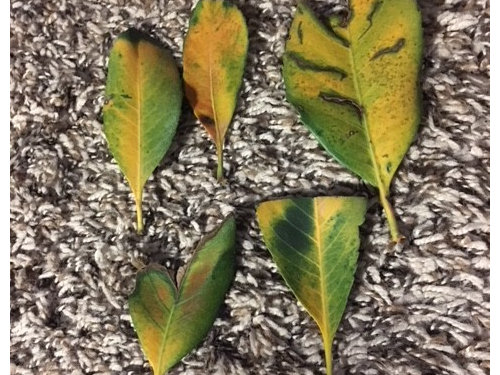
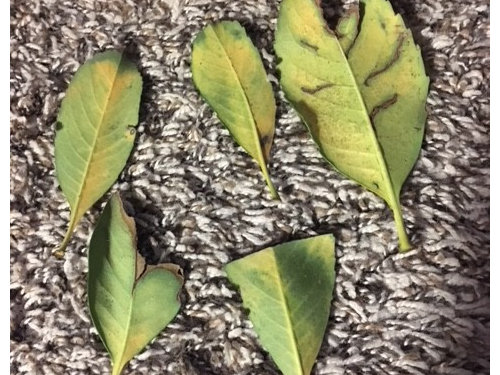
I live in west Texas and planted a couple of Indian Hawthorn's about a month ago. Amended soil (we have clay solid here) with some regular sand and some gardening soil. After a couple of weeks plants started to show a lot of yellowing on lower leaves (some dropping off). I watered daily for the first week and have kept top 4-6 inches moist since then; however, we have a had a lot of heavy rain here the past week. Any ideas about what this might be and if I should be concerned? Fungus? Over-watering? Something else? Thanks in advance! I have attached some pics of leaves.


Comments (8)

  • 7 years ago

    Indian hawthorns are grown successfully all over Texas regardless of soil pH. The more likely culprit is the addition of sand and bagged soil, which tends to create a bathtub effect and may eventually impede root growth. The shrubs won't survive if their roots are in standing water at the bottom of the bathtub.

  • 7 years ago

    Interesting, I added the sand on the recommendation of the nursery to help the soil drain better as it doesn't drain well. You are saying I shouldn't have done this? Wouldn't it be worse if they were in completely clay soil that didn't drain at all? Thanks

  • 7 years ago

    Any reputable nurseryman would know that clay + sand = adobe. If roots struggle in clay, imagine the difficulty they'll have in brick. If you want to grow your Indian hawthorns in a lighter soil, you'll have to dig out your native soil in an area that covers the entire future drip line (root zone) of the mature plants and replace it with e.g. sand or decomposed granite. The more practicable alternative is to amend your native clay with lots and lots of quality organic matter and nothing else. This will improve the texture and drainage. I say "lots and lots" because our growing season is so long and intense that a small amount of organic matter will be depleted in no time. For the same reason, you'll want to replenish the organic matter as a generous top-dressing on an annual basis.

  • 7 years ago

    I had a response almost identical to Irving's all typed out ready to send but hit something random on the keyboard and it disappeared and I was so miffed, I just left it :-) Let's hope this one works better!

    "clay soil that didn't drain at all"

    Of course it drains.....otherwise your garden woud be covered in water every time it rains!! Clay just drains more slowly than lighter, more aerated soil. Which is what happens when you amend planting holes in clay - the lighter, amended and well watered soil is just unable to drain well inside that bucket of clay and the soggy soil rots the roots of whatever is planted. As noted, the way to overcome this is to amend the clay with copious amounts of organic matter over as large an area as possible....never individual planting holes. And never with sand!! I am surprised any nursery worker would ever recommend adding sand to clay.....very bad advice!!

    But Rapheolepis does tolerate clay soils and you can plant successfully in unamended clay as well. Just dig a very wide but quite shallow planting hole - like a big dish or saucer - and site the plant so that the top of the rootball is several inches above grade. Backfll firmly with the soil you dig out, breaking it up well. And then use your 'garden' soil or topsoil or whatever other amendment you have on hand (no sand!) to mound up to the top of the rootball. This eliminates the bucket or bathtub effect and allows the shrubs roots to gradually move out and penetrate the denser clay.

    btw, the hawthorns do not require acid soil, either. They are quite happy in slightly alkaline conditions and are popular plants in areas where this is common, including various parts of the southwest.

  • 7 years ago
    last modified: 7 years ago

    Thanks for the advice. Based on the pictures does it look like over watering to you? Do you think the plant can survive or do I need to replant it? Thanks!

  • 7 years ago
    last modified: 7 years ago

    our growing season is so long and intense that a small amount of organic matter will be depleted in no time

    As will any amount of organic matter - making the organic amending fundamentally pointless. (Unless a body is growing flowering annuals or annual vegetables - kinds that also like a highly organic soil - will be able to replace the amendments on a routine basis, due to the plants being removed and replaced every year). And after "lots and lots" has decomposed there will be significant sinking of the amended area. There is also the matter of what effects large amounts of organic material might have on planting site soil chemistry, as well as materials like nutrient rich compost producing polluting runoff that may get into nearby water sources.

    With long term plants like woody shrubs the answer is to either choose kinds adapted to the existing soil, replace the existing soil with soil the kinds chosen are adapted to, or dump this soil on top of the existing soil and plant in that, without blending the two soils (existing and purchased) together. (So that the existing soil does not change the makeup of the purchased soil, in an undesirable way).


  • 7 years ago

    "Nutrient rich" compost?? Compost is by no means nutrient rich.....in fact, it carries a minimal nutrient load - far less than most other type of organic amendments or fertilizer. And since it takes time for whatever nutrient load it carries to become available, the chances of it leaching "polluting runoff" are pretty much nil.

    And the only alteration it might have on soil chemistry is to neutralize pH.

    Amending with organic matter is never fundamentally pointless. Yes it does decompose and break down over time and in some conditions much faster than others. But the introduction of OM into any soil, and especially clay soils, does alter soil structure so that the clay forms peds or aggregated clumps, which then allows for better water penetration and oxygen exchange.

    Pretty darn basic soil science.

Sponsored