Software
Houzz Logo Print
bahram03

Is this Bacterial Canker?

7 years ago
last modified: 7 years ago
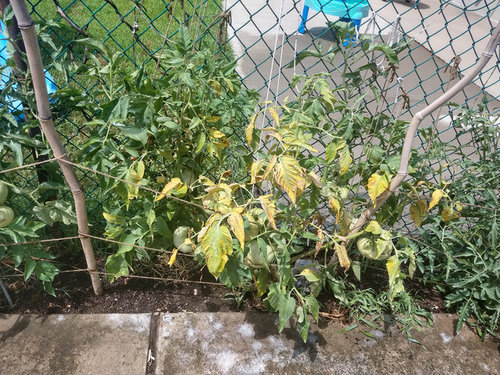
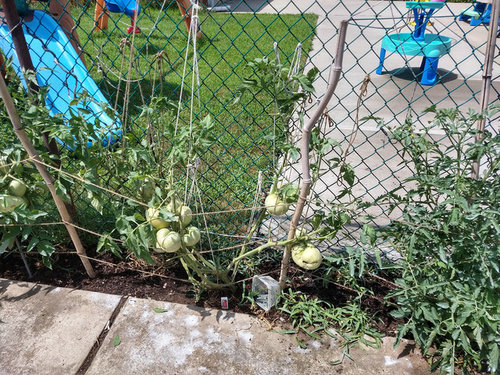
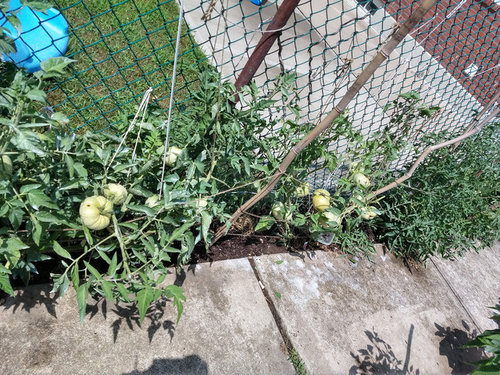
I didn't label my tomatoes this year. All of them are heirlooms and this one most likely is a brandywine. At first I thought it was spider mite damage that was so heavy it went beyond the usual spotting on the leaf. I looked it up and it looks very similar to Bacterial Canker. Is that what I have?

Before I pruned today:


After I pruned today: (Now there are no leaves to cover the tomatoes)


Comments (15)

  • 7 years ago

    Spider mites cause stippling on the leaves, which I don't see on your photos. It could have been a fungus if you had moist weather. I'm in southern California, where we had a cooler than normal June with cloudy skies and lots of fungus. My plants look sort of like yours - bare on the bottom but with healthy new growth at the top and lots of tomatoes - Mortgage lifters. I started spraying neem oil weekly to combat the fungus.

  • 7 years ago

    It is surrounded by concrete. I have tomatoes planted all along the row. This is the only one with the issue. I water them all the same way. I know that one spot could be very different than the next in a row. This is a relatively new bed that I have started to use and I do give each plant liquid fertilizer.

  • 7 years ago

    What should i do?

  • 7 years ago

    I tend to agree with party_music50 suspecting a nutrient deficiency. What I see you can rule out bacterial canker disease, resembles nothing like it nor do I see signs of wilts, blights and leaf spot fungus so those can be ruled out also.

    name the fertilizer you use and how much and how often it is applied and I'll tell you if your fertilizer is right.

    But first take a thin rod and probe it into the ground around the plant and see what you hit. There could be a layer of gravel or concrete debris under the plant and common around the edges of a poured slab and even more so at the corners of a slab. Most contractors just cover excess at the edges with dirt and a common practice. If you can't get it down a couple of feet you have a problem.

    The plant is located in the corner of two slabs and there may be bad soil below it. Tomato roots go down an average of 2 feet so the above may be the problem and there is no harm in checking.

    Also be aware anything spilled on the slab gets washed to the edge. Oil, salts, ect...

    If there is trash below the plant then pull the plant and dig out the trash, replace with good soil and prepare for next year, or try to increase fertilizer rates to get it through the season.


  • 7 years ago
    last modified: 7 years ago
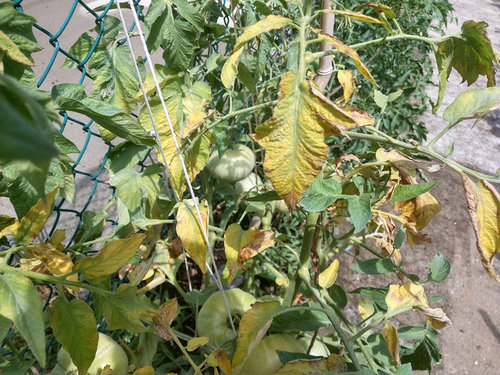
    I have not tried digging that deep in this area. If I go down around 6-8 inches I hit subsoil like I do in my backyard. There are some rocks that I find which is normal but no concrete or anything like that.

    I am using Miracle-Gro Water Soluble All Purpose Plant Food 1.5lb. Its very high in fertilizer which I know is not good to produce fruits. I do 5 gallons with 3-4 large spoonfuls in it. I don't really remember how often I fertilized it. Im pretty sure I fertilized it with 3 spoonfuls 2 weeks ago. Last week with the same thing. Then this week with 5 spoonfuls to give it a larger dose. I water the plant with 3-5 cups of the fertilizer. It has not helped and more leaves are turning brown and yellow.

    Thats the same feeding I do for all the tomatoes in this row. Even the ones that are truly between two slabs of concrete have no issue. This one is right at the edge of the second concrete and has room to grow into my neighbor's backyard

  • 7 years ago

    I'm sorry but something is effecting the root growth or the roots ability to take up nutrients for that one plant only. Either the plant or the soil below it and is what I tend to suspect.


    I looked at the fertilizer analysis of the miracle-gro and mixing instructions and really don't see a problem on your part.

    My first thing I thought when I looked at your pictures was a potassium deficiency and/or a Magnesium deficiency but your fertilizer has Magnesium in it and potassium, (but not enough) and you're not OVER fertilizing it (toxicity) so I may be stumped here.


    My only suggestion now is to Take 3 TABLESPOONS of the miracle gro and mix it with a quart of water and feed that one plant only with it all at once. I do know the miracle gro you use lacks enough potassium for tomato plants with tomatoes hanging and the subject is taken up by myself in detail in this Houzz topic.

    https://www.houzz.com/discussions/5732208/what-s-wrong-with-my-tomato-plants#n=3?hz_ref=aHR0cHM6Ly93d3cuaG91enouY29tL3w5ZGE4NmUwNi1lNTRjLTQxYjUtYmMxNi04ODFiYjdlZDg1MWV8MTU2MjA3ODM1OTE1OQ

    Included are pictures of a few of my tomato plants. Again, sorry and good luck.


  • 7 years ago

    If you are truly giving it ample fertilizer (MG solution), then I'd guess that something is blocking the nutrients from being absorbed by the plant. I would mix 1 tbs epsom salts w/ one gallon water and water the plant thoroughly with it. Then I would water the plant with normal solution of fertilizer the next day. If that's the problem, you would see improvement within a couple days -- however, you've removed what looks like pretty much ALL the leaves from the poor plant, so I'm not sure how you'll tell anything at this point.

  • 7 years ago
    last modified: 7 years ago
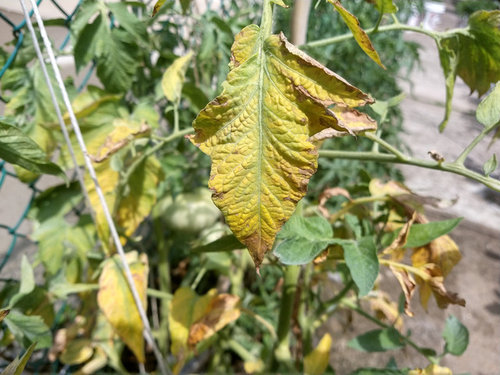
    I mainly started after I saw this happening. Even with the fertilizer and pruning the issue is spreading. The leaves that are left have turned yellow or brown and dried up. This is happening to some of my other tomatoes that are in the backyard. I fertilized this plant last night and again this morning. i didn't want to overdose in a single time.

    Does epsom salt provide potassium? What would it do to help here?

  • 7 years ago
    last modified: 7 years ago
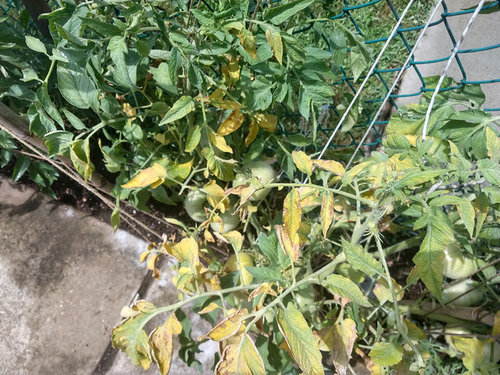
    Epson salt is Magnesium sulfate. 9.5% available magnesium and 17% sulfate of sulfur, two micro nutrients plants require. Party_music's recommendation isn't excessive and reasonable. Magnesium is needed for photosynthesis and a deficiency would turn the leaves yellow and often mistaken as a nitrogen deficiency. It can easily be leached from the soil by to much rain or watering and the location of the plants between the two slabs could indeed be the problem.

    It's a process of elimination, because it moves from lower leaves up the plant, it is a mobile nutrient deficiency and consists of 6 different nutrients. 5 of them will turn your plant light green to yellow and the focus is on them. Eliminating the most common, nitrogen and potassium party_music is moving to the next most common cause and that would be magnesium. Let us know.

  • 7 years ago

    July 30:

    I mixed some Epsom Salt and Fertilizer in a 5 gallon pot. Watered this plant and everything else I have growing with the mixture.


    Today August 7:

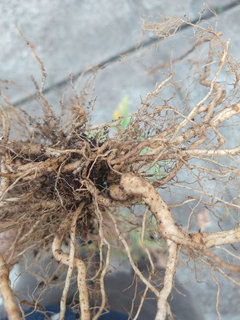
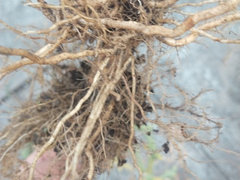
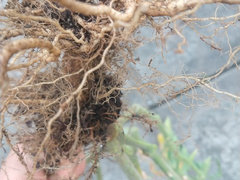
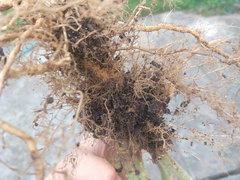
    The plant only got worse with most of what was left turned brown. It didn't show a lot of signs of new growth. I pulled it today. These are the pictures of the roots. (I may move an eggplant that its in a small container to replace this)


  • 7 years ago

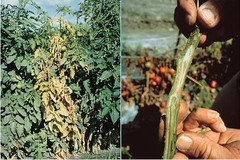
    slice the stem down the middle and look to see if tan streaks in the water conducting tissue just below the stem surface . If so could of been Fusarium or Verticillium, something you don't want to get. The plant you planted tells you if it is resistant to those two wilts if it stated "VF" on the seed pack or plant label.


    Signs of Wilt.


    More on wilts.

    https://cdn.shopify.com/s/files/1/0145/8808/4272/files/A2617.pdf


    Every year something new happens and even after 25 years it still does.


  • 7 years ago
    last modified: 7 years ago
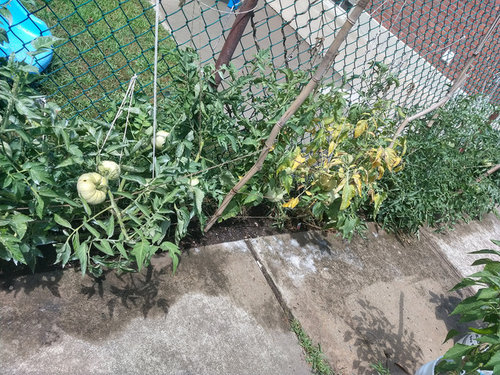
    I put it straight into the compost bin for pick up by the city. It's not a disease resistant variety.

  • 6 years ago

    8 months late but the soil you planted in may have a very high PH. The concrete is made with limestone that is basically calcium carbonate and will raise the PH of soil. High PH effect the plant's ability to take up nutrients and boom, they die. If you plan on planting in the same spot again I would advise you to check the PH. Soils that have an elevated pH above 7 are usually caused by calcium carbonate or in your case the leaching of limestone from the concrete into the soil.

  • 6 years ago

    Thanks. I have planted there for a few years already. Its been the best place to grow for me. I don't think that is the issue.

Sponsored
NME Builders LLC
Average rating: 5 out of 5 stars2 Reviews
Remodeling Company in New Albany, Ohio
More Discussions