Software
Houzz Logo Print
webuser_561797362

Can I hard prune spirea shrubs?

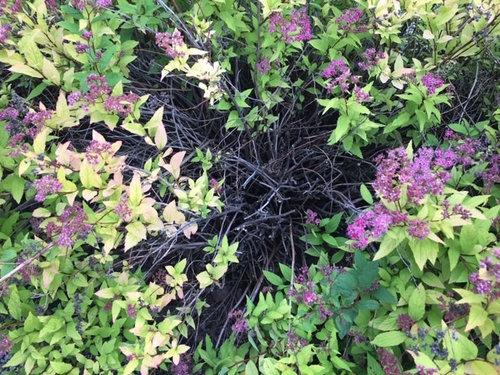
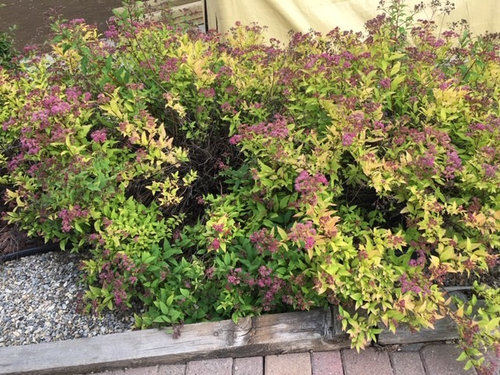
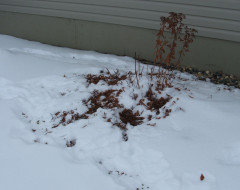
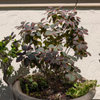
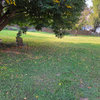
I have several of these shrubs throughout the front yard that are not quite as nice looking as they should be. The previous owner haven't really being taking care of them, so I'm wondering if I can tidy them up with some hard pruning or it is a lost cause? If remove them, what can I replace them with? I prefer to have drought tolerant flowering shrubs in these areas. They are in SW side of house and gets about 6+ hrs of sun.


Comments (10)

  • 7 years ago

    I have routinely cut spirea back to 3-4 inches in spring, to keep them in check. I’ve never done it this late, but the plant certainly doesn’t care about a hard spring pruning.

    MaMaison _ Zone 4 Southern AB thanked indianagardengirl
  • 7 years ago

    Thanks. I can wait till next spring to cut them down. So about 3-4 inches from the bottom is fine? Are they quick growing? Also, I'm hoping to maybe plant lilacs next to one of them. Do they grow well together?

  • 7 years ago
    last modified: 7 years ago

    My Spiraeas sometimes get squashed in winters when we have to rake snow from the roof. So mine get pruned down to just a few inches shortly before the buds swell, and within about 4 weeks later I have tidy, full mounds of foliage several inches high that expand rapidly and are back to their previous size by their normal midsummer bloom. I don’t do it every year, but every few years when they are looking untidy.

    From the tight photos you show, I don’t think that you have enough room between the edge of the bed and the building to grow lilacs, though I cannot be sure from that view. Lilacs are wide shrubs regardless of variety.

    MaMaison _ Zone 4 Southern AB thanked NHBabs z4b-5a NH
  • 7 years ago

    if you wait just a bit longer in spring.. and actually can see the buds.. then you would know how far back to cut ... it helps ease the stress ..


    that said.. i once had a project the required a move a couple huge plants ... in august in MI ...


    i cut the sides enough to dig a 2 or 3 foot ball .. and then literally dragged them a hundred feet and plopped them in a new hole.. and then cut the tops off ... and they lived.. there really is no way to kill them ... imo .. unless you really want to ...


    now.. they didnt look great for a couple years.. but they didnt die ...


    just do it.. whatever you decide ...


    ken


    ps: even alleged dwarf lilac.. get large.. if not tall.. very wide ... i agree.. you probably dont have room for lilac there ..


    MaMaison _ Zone 4 Southern AB thanked ken_adrian Adrian MI cold Z5
  • 7 years ago

    You could run over these things with a lawn mower and they'd be fine.

    MaMaison _ Zone 4 Southern AB thanked Sara Malone Zone 9b
  • 7 years ago

    After cutting mine back in the spring for two years, I didn't get around to it this year but did those things grow more than they ever have. There wasn't any reversion to the dark green leaves as I've seen in the past on some on the branches either. :-)

  • 7 years ago

    No need to look for buds as the plant back-buds profusely after being pruned back hard; and, since it blooms on new growth, no need to worry about a hard pruning depriving you of blooms for an entire growth cycle.


    Something I wrote about how plants age vs how animals age, and why cutting a plant back hard rejuvenates it:

    We tend to think of the age of plants in the same manner we think of age of age in humans or animals, chronologically. We, like plants, go through several life stages - embryonic, juvenile, adolescent (intermediate in plants), and mature, are human stages roughly mirrored in plants. Where we vary greatly is in the way our cells age. In animals, body cells all mature at approximately the same speed. Plants grow by consecutive divisions of cells at the growing points (meristems), so their various parts are different ages (the top of the plant, or the ends of branches and stems are younger than the basal (lowest part, just above roots) portions, chronologically, but there is another way of aging plants.

    The ontogenetic age of plants is related to how many times a cell has to divide to make that particular portion of tissue. Basically, the closer the tissue is to the roots the younger it is ontogenetically, even though chronologically, it is the oldest.

    Why is this important & how does it apply to rejuvenation? Dormant buds retain the ontogenetic age at which they were formed & retain the same vigor as well. When numerous stems/branches are pruned back hard, production of a hormone (auxin) that suppressed the growth of the dormant juvenile (and very vigorous) buds is greatly diminished. When he removed the source of the hormone (primarily the growing tips of the stems) the dearth of auxin causes another hormone (cytokinin - an antagonist to auxin) to become dominant, which activates the dormant buds nearer the roots which retained the vigorous growth characteristics of a juvenile plant, causing the plant to respond with what is actually vigorous juvenile growth.

    Those of you who are familiar with rejuvenation pruning of multi-stemmed shrubs in the landscape are familiar with the procedure, but might not have known the actual mechanism which drives the results.


    It's typical for plants that grow in the shape of a flame or a pyramid standing on its point to be sparsely foliated proximal to the widest part of the plant and almost fully foliated distal to the widest part of the plant for 2 reasons. A) Apical dominance dictates the plant will spend something like 2/3 of the sun's energy it trapped by way of photosynthesis on the top 1/3 of the plant. B) The widest part of the plant shades the branches and stems proximal to that point.

    Al

  • PRO
    6 years ago
    last modified: 6 years ago

    Hi MaMaison, look personally, I think what those spireas need is a rejuvenation pruning. Since light pruning will not be enough to achieve the change you are looking for in those bushes.

    If you look at this article on the cutting of the spirea bush, you will see that it recommends two types of rejuvenation pruning, one that is done on a scheduled basis for three years and the other that is more severe and is done in a single season. If you dare, I would opt for the second option, I don't think you feel like waiting so long.

  • 6 years ago

    The Rabbits pruned mine for Christmas. :-)