Software
Houzz Logo Print
green_vibes

Moss? Lichen? What is it?

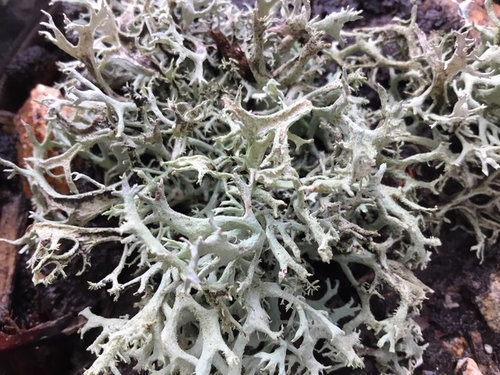
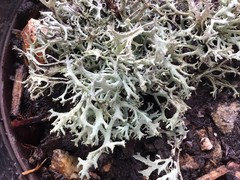
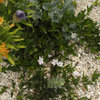
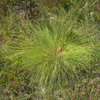
I found this over the weekend in an alpine forest, unattached, all dried up, at the base of a pine tree. It looks different from the moss I'm used to seeing; I re-hydrated it in water for a few minutes and placed it on some rocks and soil to see what happens.

Does anyone know what it is? Thank you.


Comments (13)

  • 7 years ago


  • 7 years ago

    Thanks, floral_uk - you mean, if I'd bothered to look up, perhaps I would've seen more?

  • 7 years ago

    Well yes.

  • 7 years ago

    Various trees both in and surrounding my garden are liberally adorned with this :-) I often find clumps of lichen on the ground or stuck in other plants, as they can blow off in wind or be easily dislodged by squirrels, racoons or birds. In fact, birds like to collect it for nest building material.

    green_vibes (z. 7/8) thanked gardengal48 (PNW Z8/9)
  • 7 years ago

    pretty sure it doesnt need water either ...


    i cant recall the term .. maybe if i keep typing.. it... perhaps symbiotic ...


    it gets NOTHING from the tree ... just something to hang on .... and i believe it gets what it needs from the air ...


    i have them growing on my plastic mailbox .... it is said its a sign of clean air ....


    sorry .. i dont have time to research it.. if i am wrong.. i am sure someone will correct me ...


    ken

    green_vibes (z. 7/8) thanked ken_adrian Adrian MI cold Z5
  • 7 years ago

    Ken, to be more specific, it’s parasitic. Parasites harm their host. Symbiotic is the general term for a relationship between two organisms. It describes parasitism, and also mutualism and commensalism.


    If if you want to know more:

    mutualism is when the two organisms have positive benefits. Think like two mutual friends. Commensalism is when the host is unaffected and the other guy benefits.

    green_vibes (z. 7/8) thanked katie
  • 7 years ago

    That's the first time I've heard it claimed that Lichens are parasitic on trees. If they were how would it live on rocks and plastic mailboxes? My understanding is that the organisms that make up the lichen do have complicated relationships, but with each other, not the tree.

    green_vibes (z. 7/8) thanked floral_uk z.8/9 SW UK
  • 7 years ago
    last modified: 7 years ago

    The differing opinions above prompted me to conduct my own research.

    A fungus, an alga, and sometimes cyanobacteria living symbiotically are referred to as lichen. Whether their symbiosis is mutualism or parasitism in its nature is a matter of debate, since the relationship is fairly complex and not yet fully known.

    As I understand, the relationship is the following (in a very simplified way): the fungus, through its thallus structure and through release of certain beneficial fungi chemicals, provides its photobionts (alga and cyanobacteria) with optimal living conditions. Additionally, fungus absorbs minerals (mainly carbon and nitrogen) from the air and water, and makes them available to its photobionts. In exchange, alga converts carbon to simple sugars which the fungus feeds on, while cyanobacteria provides the fungus with nitrogen, converted to a form the fungus can actually use.

    Many view the above relationship as mutualism; others argue it’s parasitism, because the fungus consumes more than half the sugars produced by the alga, sugars which the alga also needs for itself.

    Whatever the case may be regarding the nature of the symbiotic relationship between the lichen-forming organisms, I think it’s generally agreed upon the fact that the lichen does not parasitize the substrate it lives on; so it won’t harm a tree or other thing it attaches itself to, because it doesn’t feed on that substrate.

    My question was whether or not anyone could tell me if it’s a moss or a lichen, and perhaps even identify it by its name. However, I’m glad the discussion took this turn, because I’ve now gained a great deal of appreciation for lichens. Still, if anyone happens to know the name of this particular lichen, please let me know. Thanks everyone.

  • 7 years ago

    Just to be perfectly clear......lichens are NOT parasitic with respect to their support structure!!! All they are looking for is sunlight exposure and anything, living or not, that can provide that in a semi-stable manner is fair game. 'Epiphytic' would be a much better descriptor of their growth habit. As they are just as inclined to grow on non-organic, non-living support systems - rocks, walls, wooden fences or other structures, plastic mailboxes, the roof of my car - as they are on living plants, perhaps even more so, they are not deriving any benefit from this structure other than exposure.

    The interaction between the organisms that comprise the lichen are far more complex and has been noted, can be parasitic, mutualistic or commensalistic.

    And since there are at least 20,000 known species of lichen, narrowing down an ID is going to take someone much more knowledgable about these organisms than you are likely to find here :-)

    green_vibes (z. 7/8) thanked gardengal48 (PNW Z8/9)
  • 7 years ago

    Compare your lichen to oakmoss, Evernia prunastri

    green_vibes (z. 7/8) thanked fatamorgana2121
  • 7 years ago
    last modified: 7 years ago

    Thanks, fatamorgana2121. Oak moss (Evernia prunastri), Iceland moss (Cetraria islandica), and deer moss (Cladonia rangiferina) - neither of which is moss, in case anyone is wondering - look so similar, and all can be found in this geographical region. However, based on the exact location where it was found, I think it's actually Iceland moss (Cetraria islandica).

  • 7 years ago

    well hot spit.. it sounds like we all learned something new in this post ... congrats ...


    ken